20 Low Ceiling Small Attic Room Ideas
That awkward attic with the sloped walls and the ceiling you can’t quite stand up straight under — it’s not wasted space. It’s potential space waiting for the right idea.
Low ceilings actually force a kind of design discipline that most rooms don’t require. Everything has to be intentional, low-profile, and well-considered. The result, when done right, is a room that feels cosier and more personal than anything in the rest of the house.
Here are 20 ideas that work with the architecture instead of fighting it.
1. Cozy Reading Nook
Difficulty: Easy / 1–2 Days Est. Cost: $300–$800
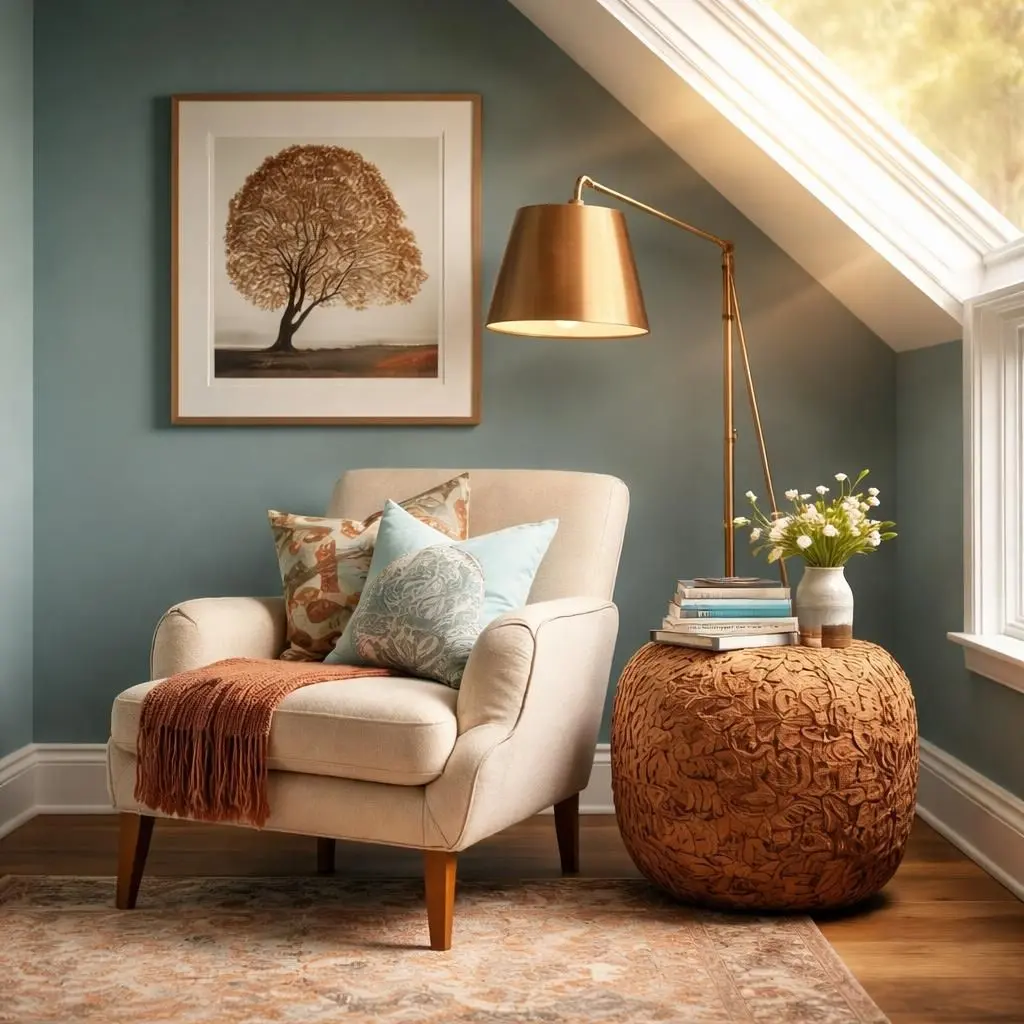
The angled wall under a roofline is the exact shape a reading nook was born to fill. A built-in bench seat with a cushioned top sits perfectly against the lowest point of the ceiling, putting the seat at a natural height while the slope rises above it. Add thick cushions in a warm linen or velvet fabric and stack throw pillows against the wall for back support.
Pull a narrow side table up next to the seat for a lamp and a drink. Keep the lamp low and warm-toned — this is a space for slow evenings, not task lighting. A small built-in bookshelf running along the wall beside the bench means every title is within arm’s reach without needing to stand up.
Paint the nook itself in a shade slightly warmer or deeper than the rest of the attic to give it a sense of enclosure that makes it feel like a dedicated space rather than just a corner of the room.
Budget version: Skip the built-in bench and use a narrow chaise lounge or a loveseat pushed into the angled wall. A floor lamp and a small stool as a side table achieve the same atmosphere for a fraction of the cost.
2. Home Office
Difficulty: Easy / Half a Day Est. Cost: $400–$1,200
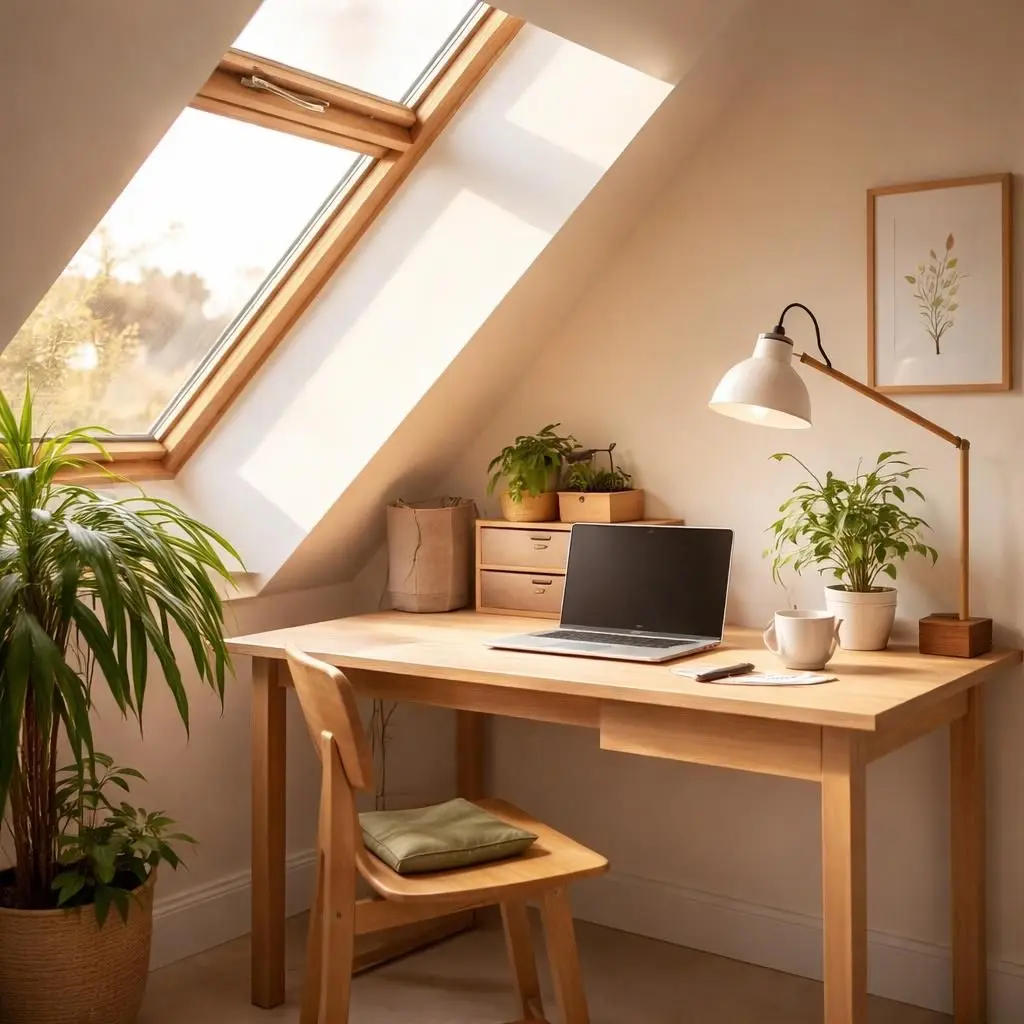
A desk positioned directly beneath a skylight is one of the most productive setups possible. Natural light falling from above eliminates the shadows and glare that come from side windows, which means less eye strain over a full working day.
Choose a desk with a slim profile — deep desks push the chair into lower ceiling territory unnecessarily. A floating desk mounted to the wall is even better because it keeps the floor clear and makes the space feel more open than a freestanding piece. Add a monitor arm to raise the screen to eye level without stacking it on books or a stand.
Keep storage off the floor. Wall-mounted shelves above the desk and to the sides hold everything needed without encroaching on the headroom in the center of the room. A slim rolling cart that slides under the desk handles supplies and accessories without taking up permanent floor space.
Productivity tip: Add a small pegboard panel above the desk for hooks, clips, and small shelves. It keeps the desktop clear and puts frequently needed items at eye level without requiring drawers.
3. Kids’ Playroom
Difficulty: Easy / 1 Day Est. Cost: $200–$600
Children don’t need full ceiling height. A low attic ceiling is actually an asset in a kids’ playroom because it makes the room feel scaled to them rather than to adults — a quality that children respond to immediately and instinctively.
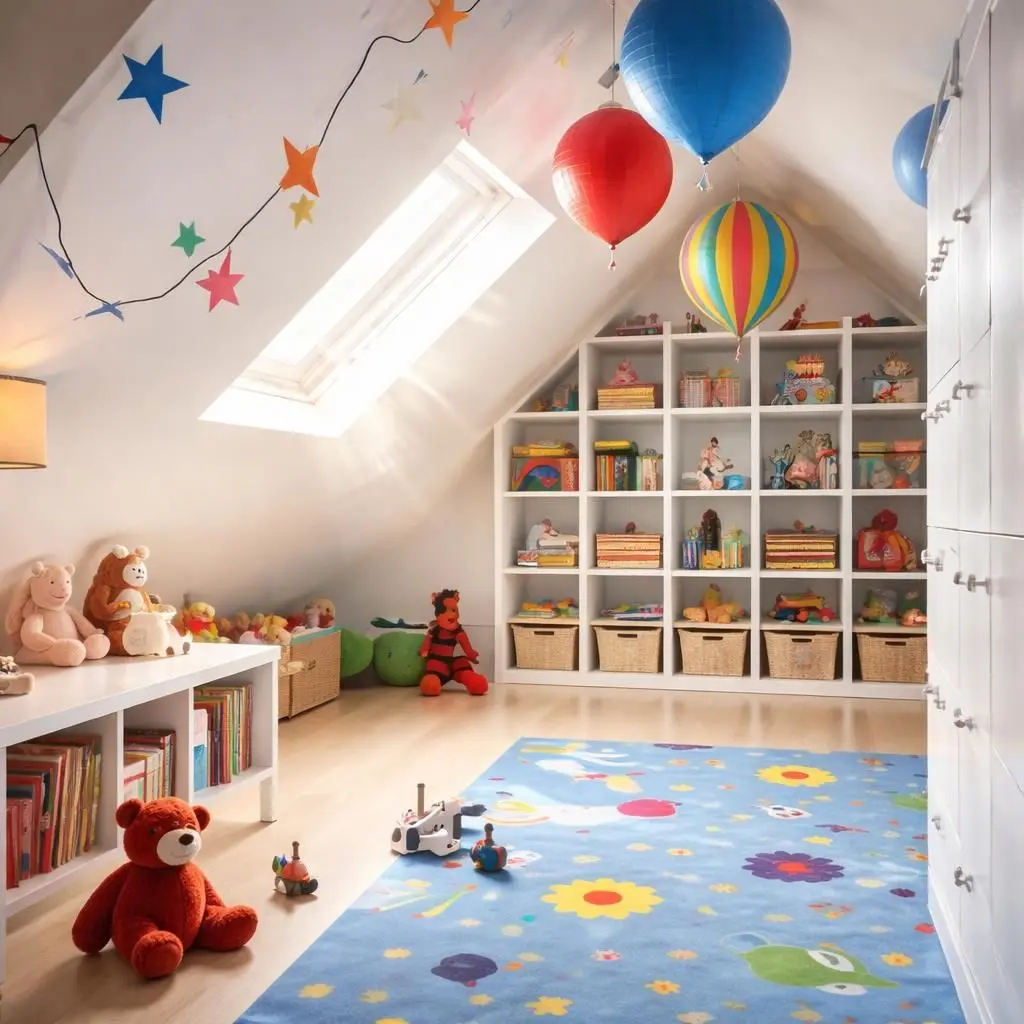
Cover the floor with interlocking foam mats in bright colors for a soft, safe surface that requires no installation and can be rearranged freely. Line the lowest wall sections with open storage cubbies and flat bins so children can reach everything themselves without climbing. Label each bin with a picture rather than words so even very young children know where things belong.
Hang string lights along the ceiling ridge to add warmth and a sense of magic without taking up any floor space at all. A small chalkboard panel mounted on one of the flat wall sections gives kids a creative outlet that doesn’t require supplies to be left on the floor.
Safety note: Check that all storage units are secured to the wall studs in an attic space. Angled floors in older homes can cause freestanding furniture to be less stable than expected.
4. Meditation Zone
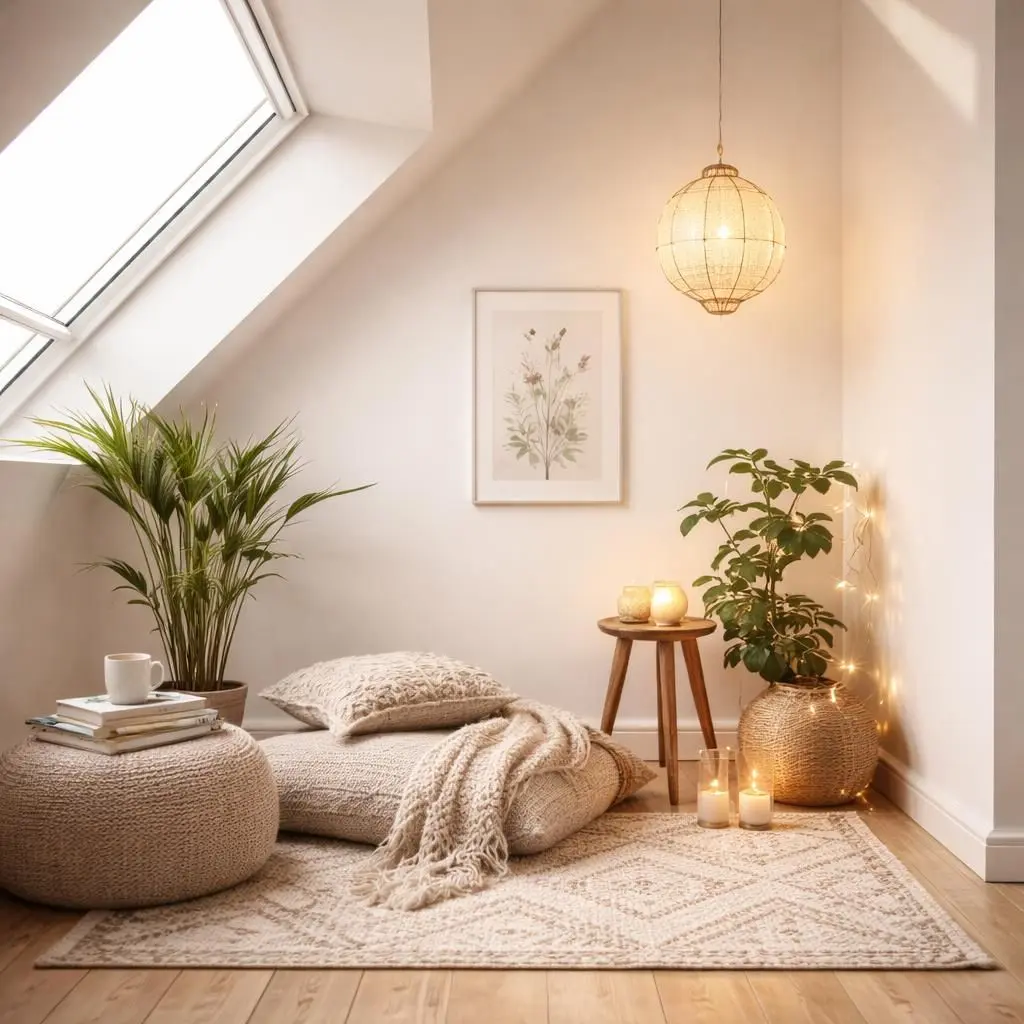
Difficulty: Easy / Under 2 Hours Est. Cost: $150–$400
A low ceiling is not a drawback in a meditation space — it’s an architectural feature that naturally encourages stillness. The enclosed feeling that would feel claustrophobic in a bedroom actually promotes the sense of retreat that meditation requires.
Clear the floor completely. A single large meditation cushion or a folded wool blanket on a natural jute rug is all the furniture this space needs. Keep a small wooden tray nearby for a few candles, a singing bowl, and whatever grounding objects feel meaningful. The tray keeps these items organized without introducing clutter.
Paint the walls in a muted sage, warm off-white, or soft clay tone. Avoid cool greys and stark whites here — the warmth of earthy pigments contributes to the calm of the space in a way that feels immediate rather than subtle. Install a simple dimmer switch so lighting can be adjusted without needing to add or remove lamps.
Scent tip: Diffuse eucalyptus or sandalwood in this space rather than burning candles if the attic ventilation is limited. Essential oil diffusers are safer in enclosed spaces with limited airflow.
5. Guest Bedroom
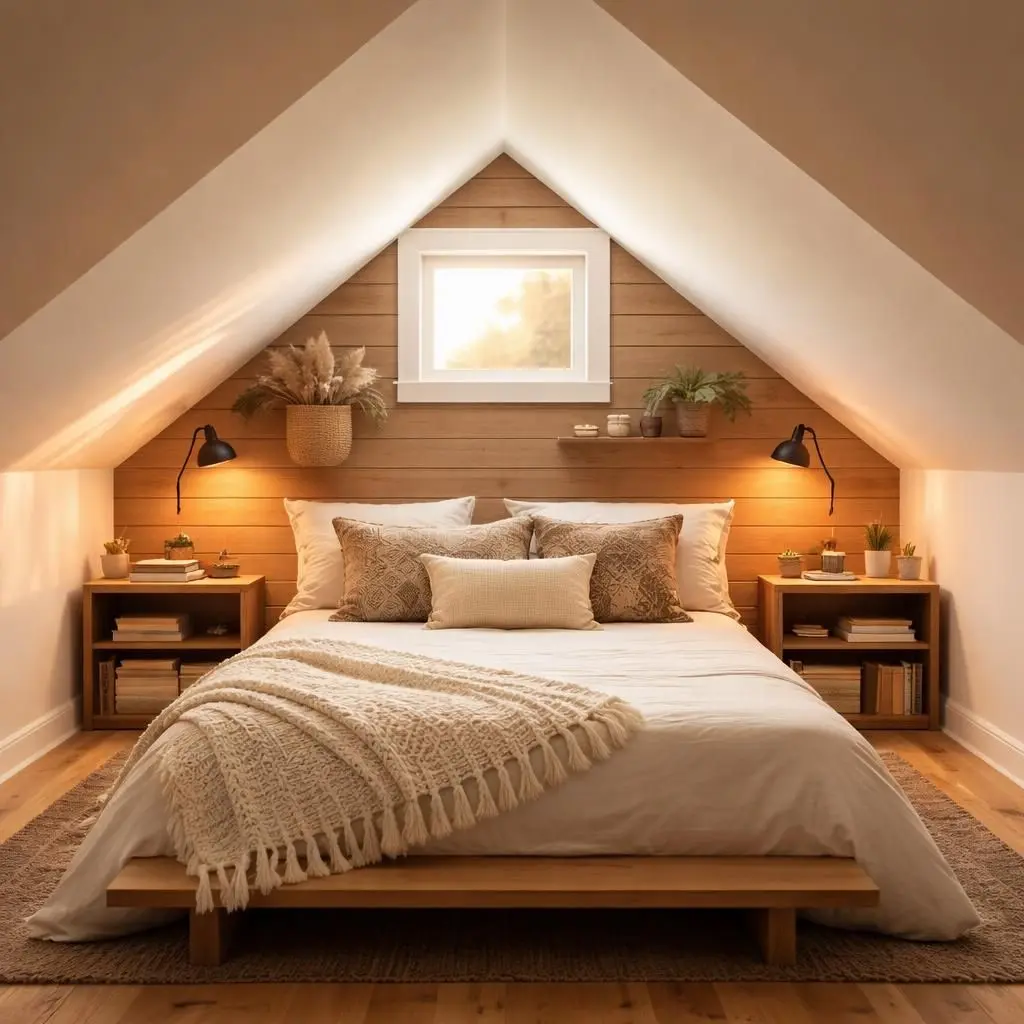
Difficulty: Medium / 2–3 Days Est. Cost: $800–$2,500
The key to a comfortable attic guest bedroom is getting the bed as low to the floor as possible. A platform bed frame with no box spring, or a Japanese-style futon frame, keeps the sleeping surface low enough that the ceiling directly above it doesn’t feel oppressive. Guests wake up and sit upright without hitting their heads — that’s the benchmark for success.
Mount wall sconces on either side of the bed rather than using bedside lamps. This keeps the nightstands narrow — just deep enough for a phone, a glass of water, and a book — and removes any chance of a lamp shade brushing the ceiling during the night.
Use the eave space on either side of the bed for built-in drawers or small wardrobe cabinets. Guests staying for more than a night need somewhere to put their things, and the space under the lowest part of the ceiling is exactly the right height for storage rather than standing.
Comfort upgrade: A reading light mounted directly to the headboard or wall at pillow height means guests can read without disturbing each other and without needing a lamp that takes up table space.
6. Art Studio
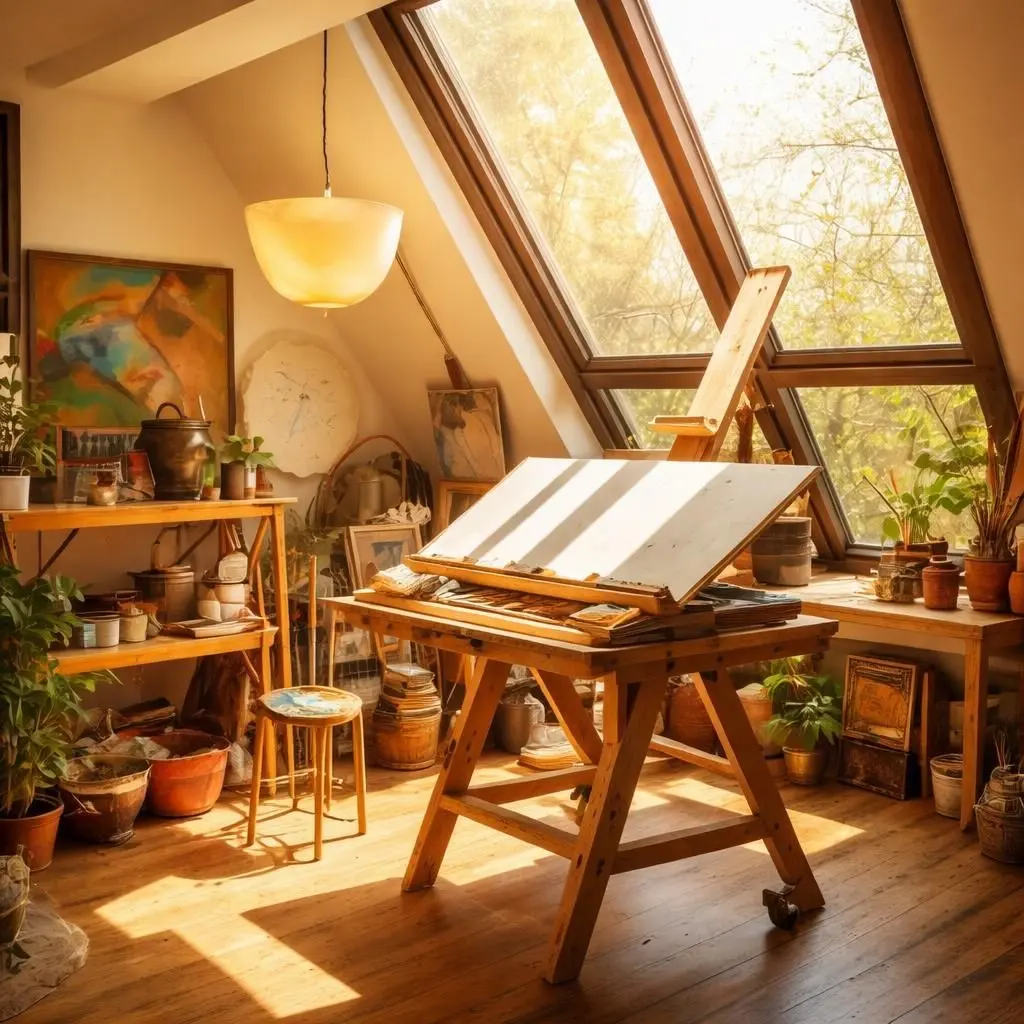
Difficulty: Medium / 2–5 Days Est. Cost: $500–$2,000
Attic art studios have a long, legitimate history for a reason: the light from a skylight is diffused, consistent, and comes from above rather than the side, which means colors read accurately and shadows fall naturally. This is genuinely valuable for any kind of visual work.
Position the work table or easel directly beneath the skylight for maximum benefit. Keep the table surface clear of permanent storage — tools and supplies should live in rolling carts or wall-mounted organizers that can be pulled in and pushed aside as needed. The work surface itself needs to be large and unobstructed.
Line the lowest sections of the sloped walls with open shelving for paints, brushes, canvases, and paper. These sections are too low for comfortable standing anyway, so using them for storage is simply practical. A durable, wipeable floor covering — sealed concrete, vinyl planks, or a large sheet of linoleum — makes cleanup faster and removes the anxiety of accidental spills.
Lighting addition: Install a full-spectrum LED overhead panel for working after dark or on overcast days. Full-spectrum light renders colors more accurately than warm-toned household bulbs.
7. Dressing Room
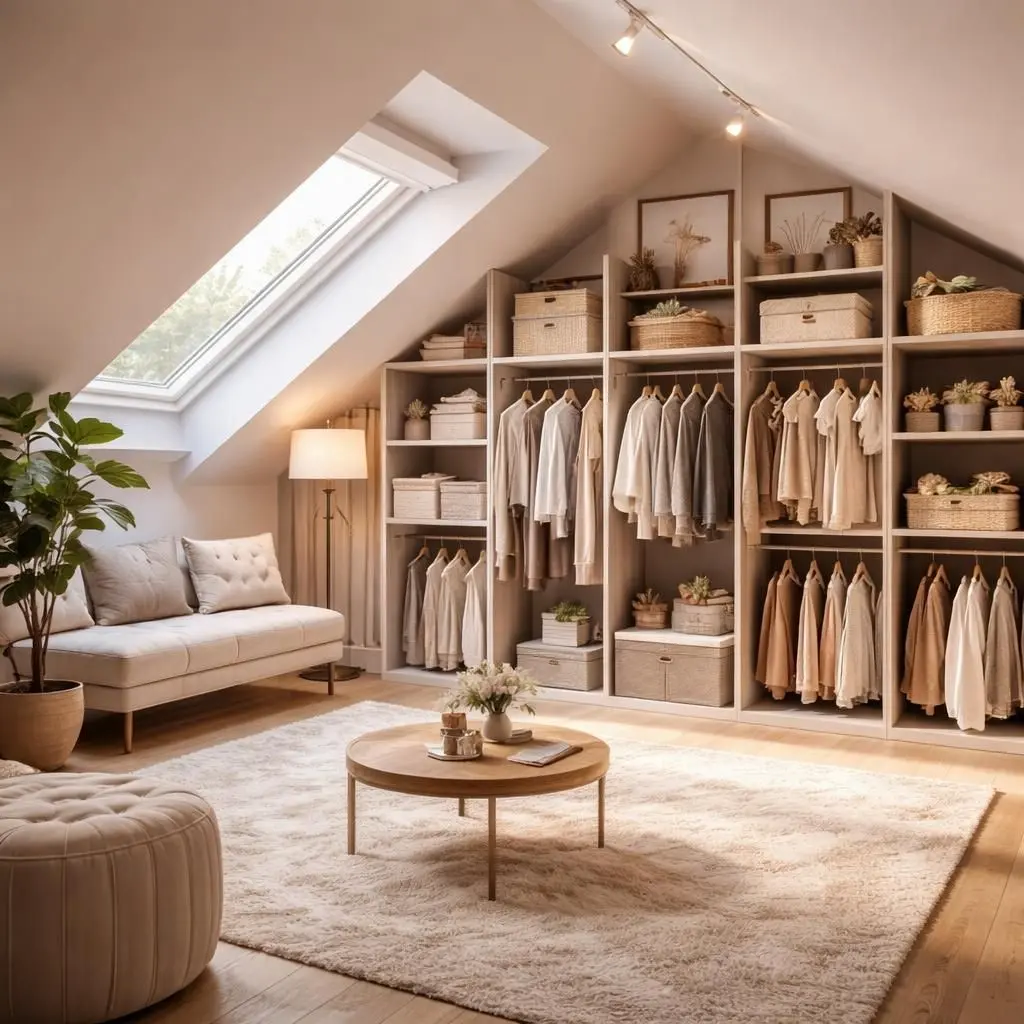
Difficulty: Hard / 3–7 Days with Carpentry Est. Cost: $1,500–$5,000
A small attic becomes a remarkably functional dressing room when the storage is designed specifically for the space. The angled walls that make the room awkward for living become assets here — the lowest sections are exactly the right height for hanging short items like shirts, jackets, and folded trousers on a low rail.
Install a hanging rod along the length of each angled wall at a height that works with the slope. Below the rods, build shallow drawers for folded items, accessories, and shoes. Reserve the central area of the room — where the ceiling is at its highest — for a small mirror and a stool or bench for sitting while dressing.
Mount a full-length mirror on the end wall if one exists, or lean a large framed mirror against the flattest available wall. Good lighting is essential here: install bright, even LED strips along the top of the shelving units rather than relying on a single ceiling fixture.
Organization tip: Separate clothing by category and color within each section. The visual order of a well-organized dressing room makes the entire space feel larger than its actual square footage.
8. Music Room
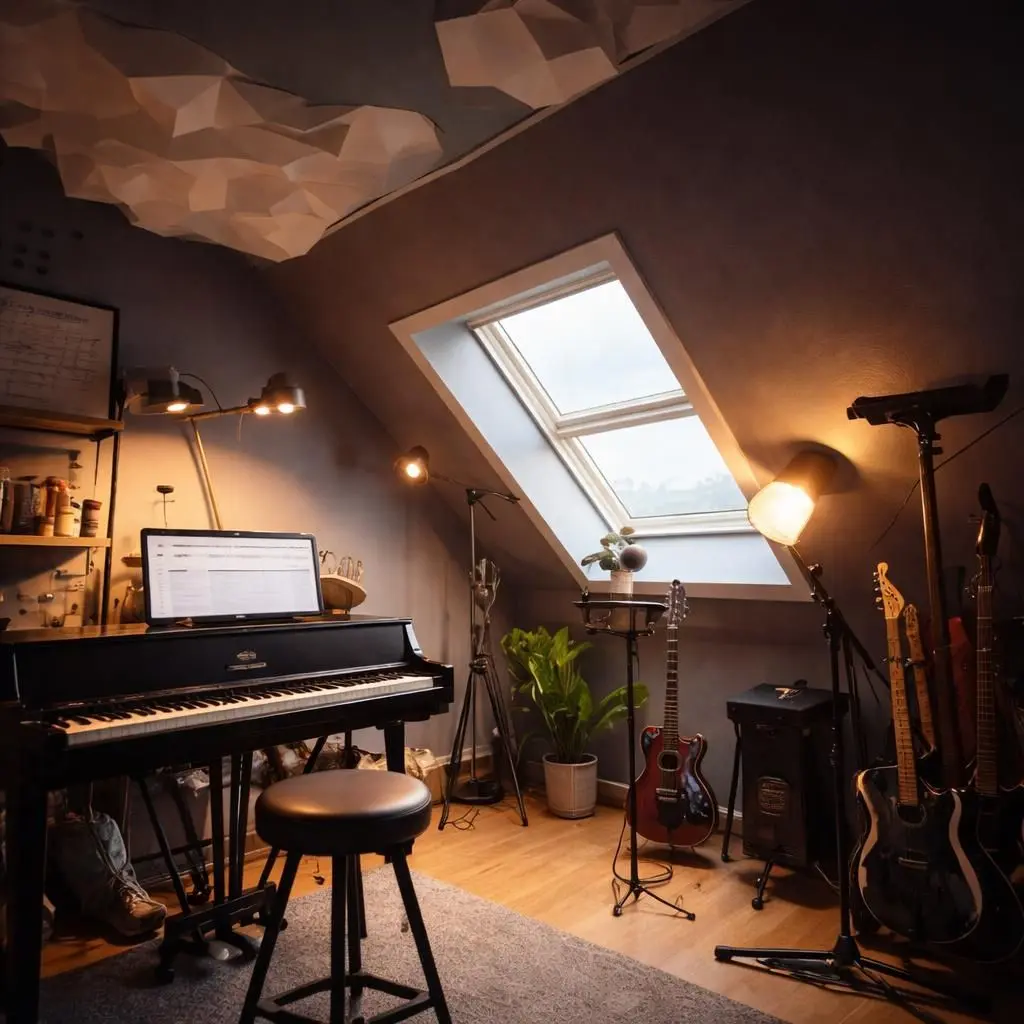
Difficulty: Hard / 1–2 Weeks Est. Cost: $2,000–$8,000+
Attics are naturally somewhat isolated from the rest of the house, which makes them better candidates for a music room than most other spaces. The separation means practice is less disruptive to whoever else is home, and the sound doesn’t travel through as many walls and floors.
Add acoustic foam panels to the angled walls and the ceiling before any instruments are moved in. The panels don’t need to cover every surface — strategic placement at the primary reflection points is sufficient for practice quality sound control. Mount instruments on the flat sections of wall between the angled slopes to keep them off the floor and accessible.
A keyboard stand, a guitar wall mount, and a small recording interface on a desk fit into even a modest attic footprint. The skylight above serves as a connection to the outside world during long practice sessions, which matters more than it seems after a few hours.
Acoustic tip: Thick rugs on the floor and heavy curtains on the window absorb additional sound without requiring any structural work. These two additions make a noticeable difference in how live or dead the room sounds.
9. Storage Haven
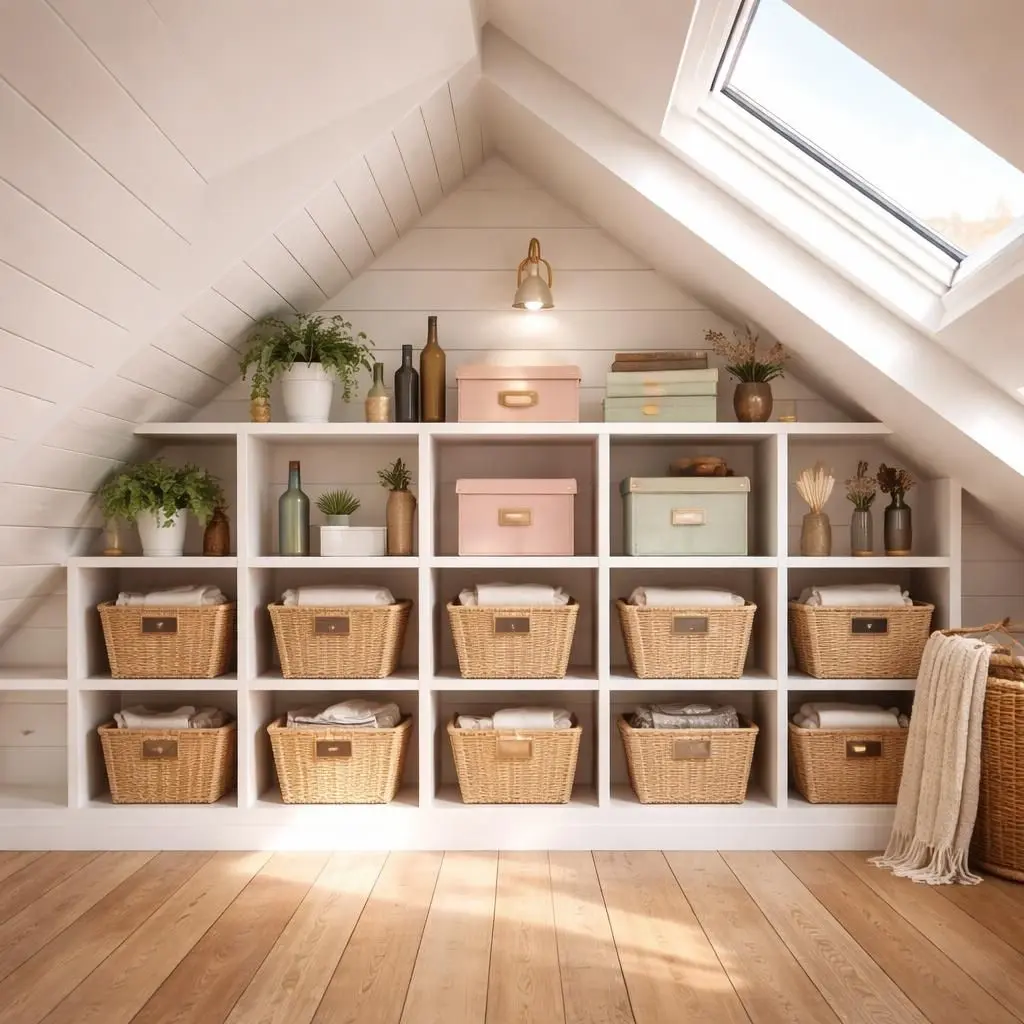
Difficulty: Medium / 2–4 Days Est. Cost: $500–$2,000
If the attic is primarily for storage, the goal is to maximize every cubic inch without creating a disorganized pile that makes finding anything a project in itself. Built-in cabinets running along the full length of the lowest wall sections do this most effectively.
Use the floor-to-slope section for closed cabinet doors that hide seasonal items, luggage, and anything used infrequently. The slightly taller section above it — if the roof pitch allows — can take open shelving with labeled bins for items accessed more regularly. A clear labeling system is the difference between a storage room that works and one that gets abandoned.
Keep a central walkway clear so everything is actually reachable. The worst storage attics are the ones where items get stacked in front of other items, and nothing near the back is ever retrieved until a move. A clear center path and a logical organization system make the entire space usable rather than just theoretical.
Preservation tip: Install a small dehumidifier in attic storage spaces. The temperature fluctuation in uninsulated attics creates humidity conditions that damage fabric, paper, and wood over time.
10. Compact Home Gym
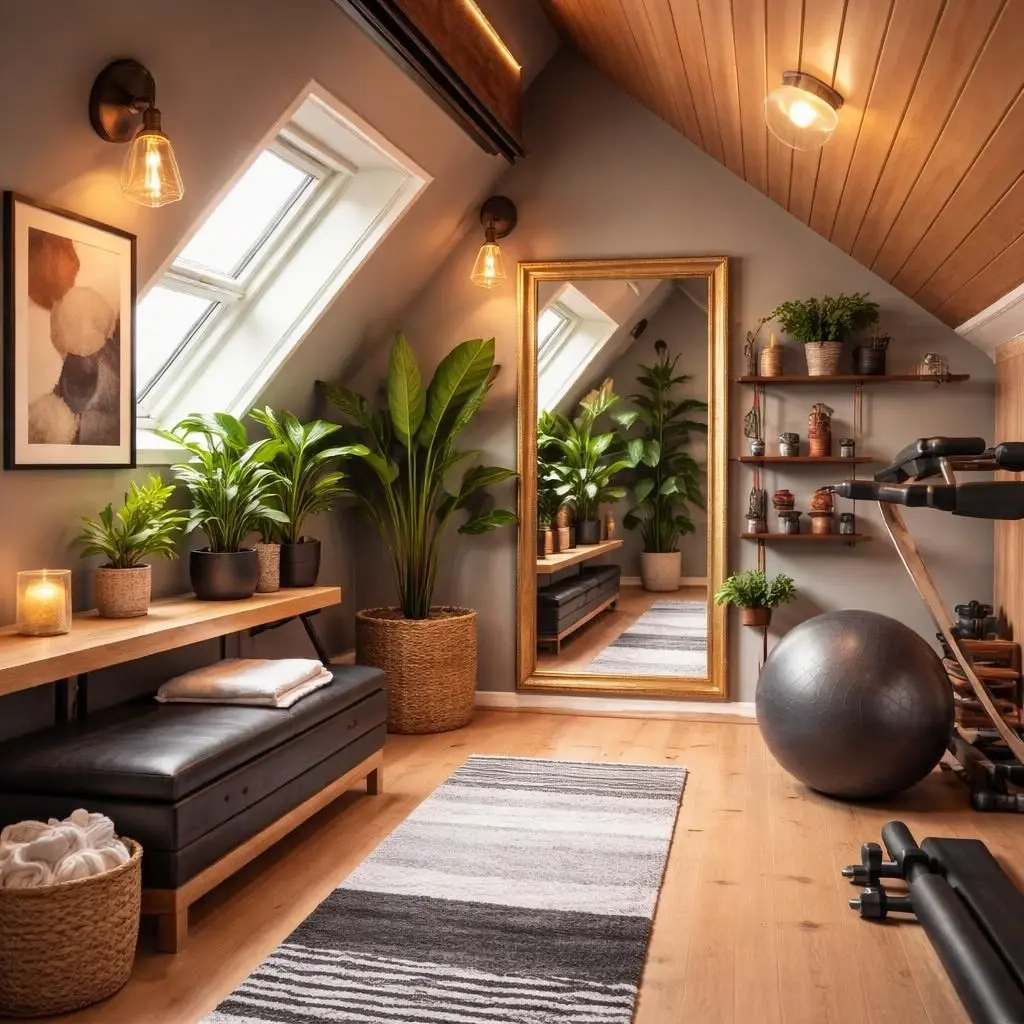
Difficulty: Medium / 1–2 Days Est. Cost: $400–$1,500
Low ceilings rule out pull-up bars and overhead barbell work, but they don’t eliminate most forms of effective exercise. A compact attic gym focused on floor work, resistance training, and cardio equipment that doesn’t require vertical clearance is entirely practical.
Lay down rubber gym flooring across the entire floor — the interlocking tile style is easiest to install and can be removed without damage to the floor underneath. Position any cardio equipment like a rowing machine or a stationary bike in the center of the room where the ceiling height is greatest. Keep dumbbells, resistance bands, and mats along the lower sides where the ceiling is too low for standing exercises anyway.
Mount a large mirror on the end wall to make the space feel larger and to allow form-checking during exercise. Keep the room uncluttered — a gym with clear floor space feels larger and more functional than one where equipment crowds every corner.
Space tip: Foldable equipment is worth the investment in a small attic gym. A folding bench, folding mat, and resistance bands stored in a small basket take up almost no space when not in use.
11. Craft Room
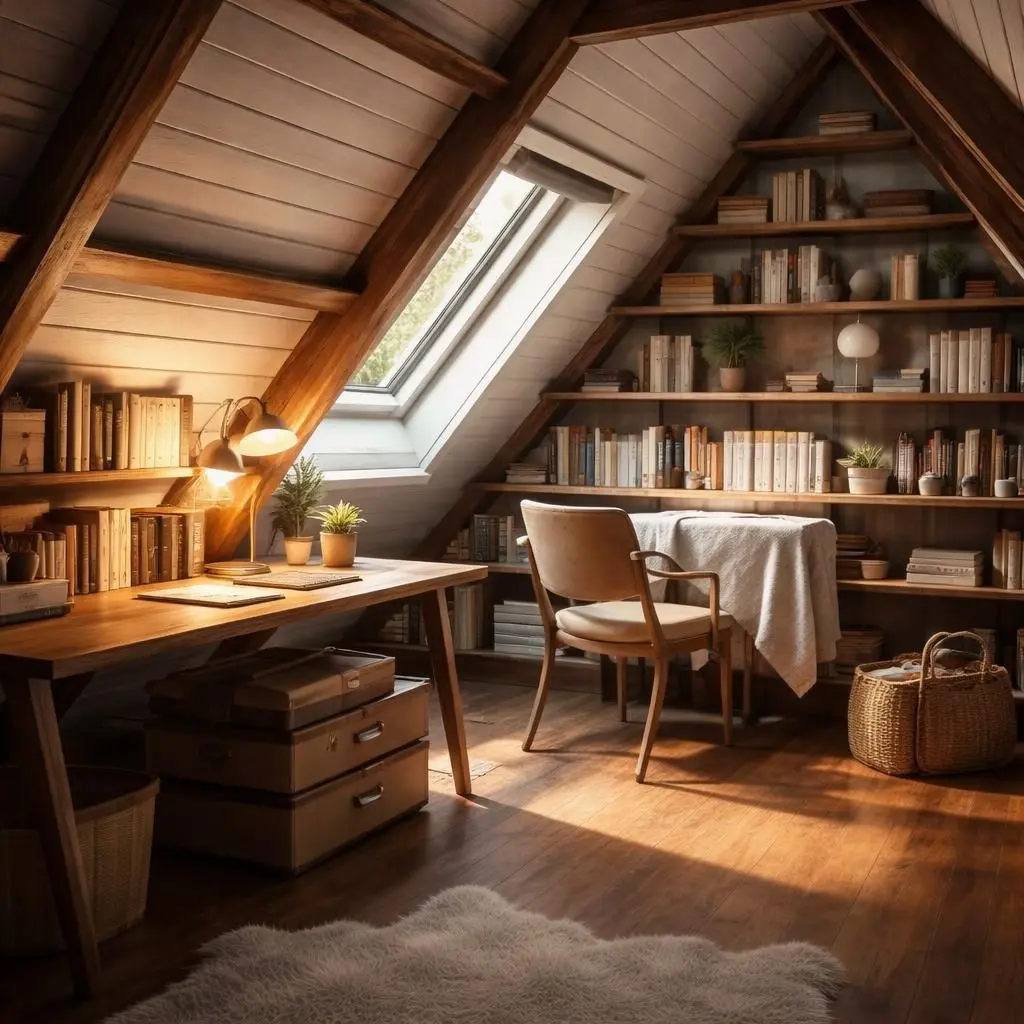
Difficulty: Easy / 1–2 Days Est. Cost: $300–$900


A craft room works beautifully in an attic because the slightly separate nature of the space means projects can be left mid-completion without affecting the rest of the house. The attic becomes its own creative world that doesn’t need to be cleared off the dining table before every meal.
Install a long work surface along the longest flat wall — a solid-core door laid on two filing cabinets makes an inexpensive, extremely sturdy craft table with built-in drawer storage underneath. Wall-mounted pegboards above the table hold tools, scissors, ribbons, and frequently needed items on hooks without taking up any counter space.
Use the angled wall sections on either side for built-in shelving that holds fabric, paper, yarn, and supplies organized by type. Clear acrylic bins or labeled baskets make it easy to find materials without pulling everything out to search.
Lighting note: Craft work requires good task lighting. Install an LED strip light under the upper cabinet or shelf above the work surface so the table is evenly lit without shadows from overhead.
12. Loft Cinema
Difficulty: Medium / 1–2 Days Est. Cost: $500–$2,000
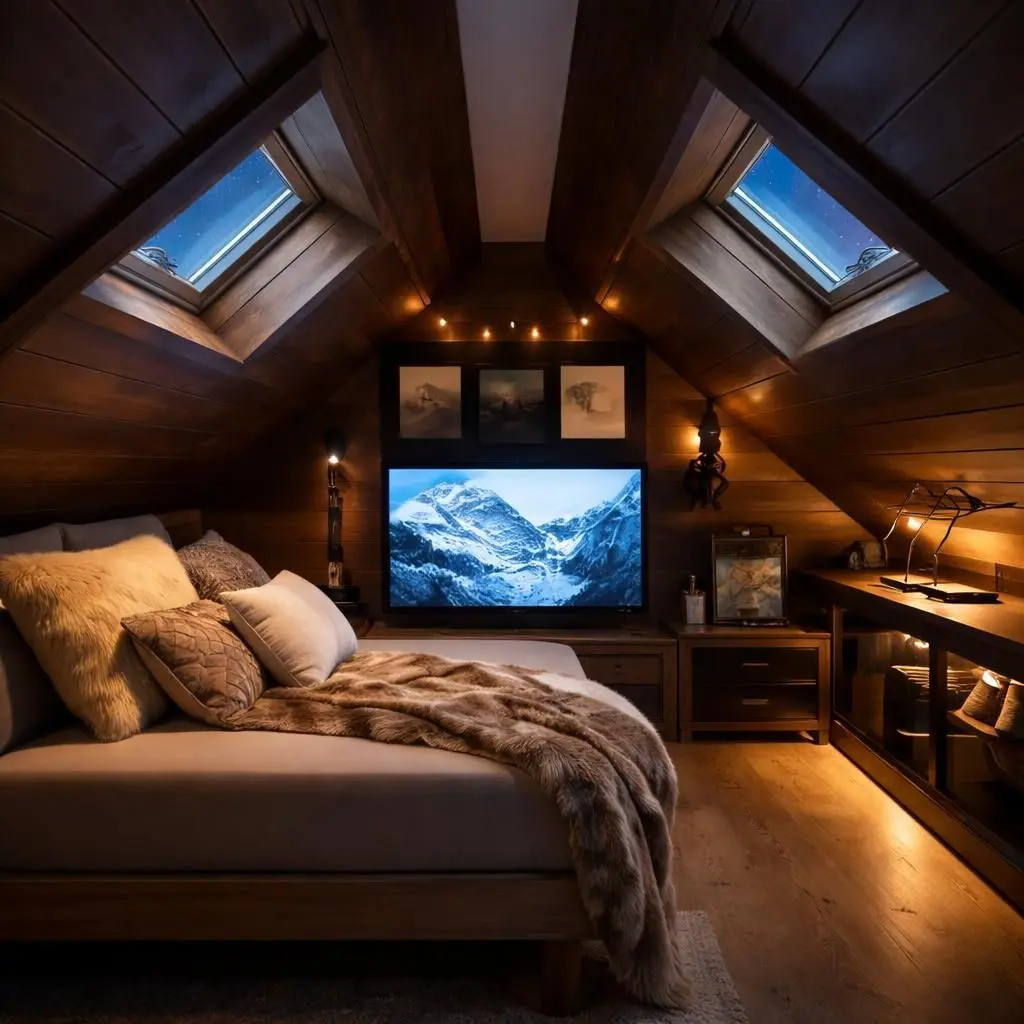
Low ceilings are genuinely advantageous in a home cinema setup. The enclosed feeling that the sloped walls create contributes to an immersive atmosphere that a large open room cannot replicate — it feels like a proper screening room rather than a living room with a big television.
Mount a projector to the ceiling ridge at the back of the attic and project onto a pull-down screen or a painted white wall at the front. The low ceiling means the projection distance is short, which keeps image quality high without needing an expensive long-throw projector. Alternatively, a large flat-screen television mounted to the end wall works equally well for smaller attic footprints.
Lay floor cushions, large poufs, or a low sectional sofa on the floor for seating. Line the walls with heavy curtains or acoustic panels to absorb sound and prevent echo. String lights along the ceiling ridge create a cinema foyer atmosphere that makes the whole experience feel more deliberate.
Sound tip: A soundbar mounted below the screen or television handles audio far better than the television’s built-in speakers and requires no complex wiring or ceiling-mounted speaker installation.
13. Library
Difficulty: Medium / 3–5 Days Est. Cost: $600–$2,500
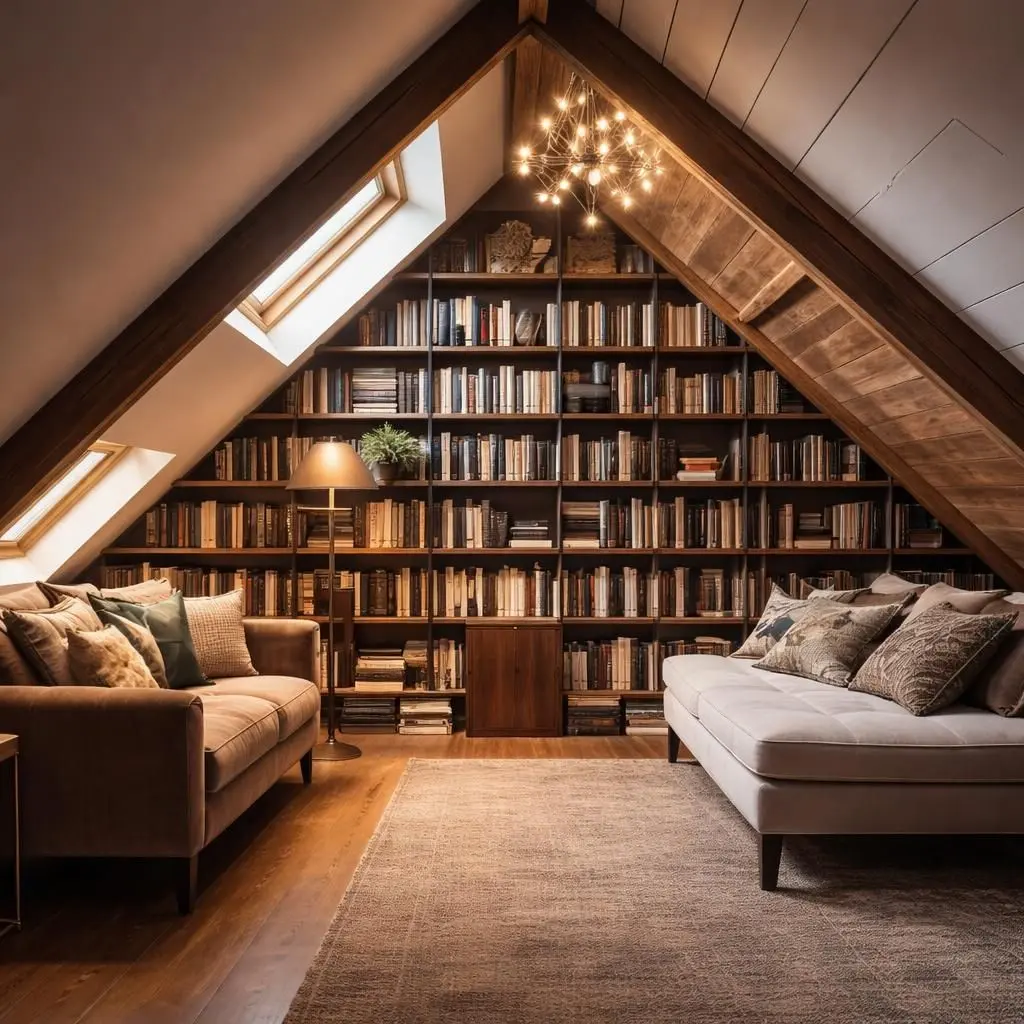
Wall-mounted bookshelves built into the angled sections of an attic library create a floor-to-ceiling book wall that looks extraordinary and uses space that would otherwise be completely dead. The lowest shelves hold oversized art books and reference volumes that don’t need to be pulled out often. Eye-level shelves hold current reads and frequently referenced titles.
Paint the walls a deep, saturated color — forest green, navy, burgundy — to give the library a serious, dedicated character that separates it from a casual reading corner. Dark walls in a small room can feel claustrophobic, but in a library they create a sense of enclosure that reads as deliberate and atmospheric rather than oppressive.
Add a comfortable reading chair — low-backed and wide — positioned under or near the highest point of the ceiling. A small side table and a focused reading lamp complete the setup. This room doesn’t need much else.
Preservation tip: Avoid storing books directly against exterior walls in attics. Temperature and humidity fluctuations near uninsulated exterior walls cause pages to yellow and covers to warp over time.
14. Toy Train Room
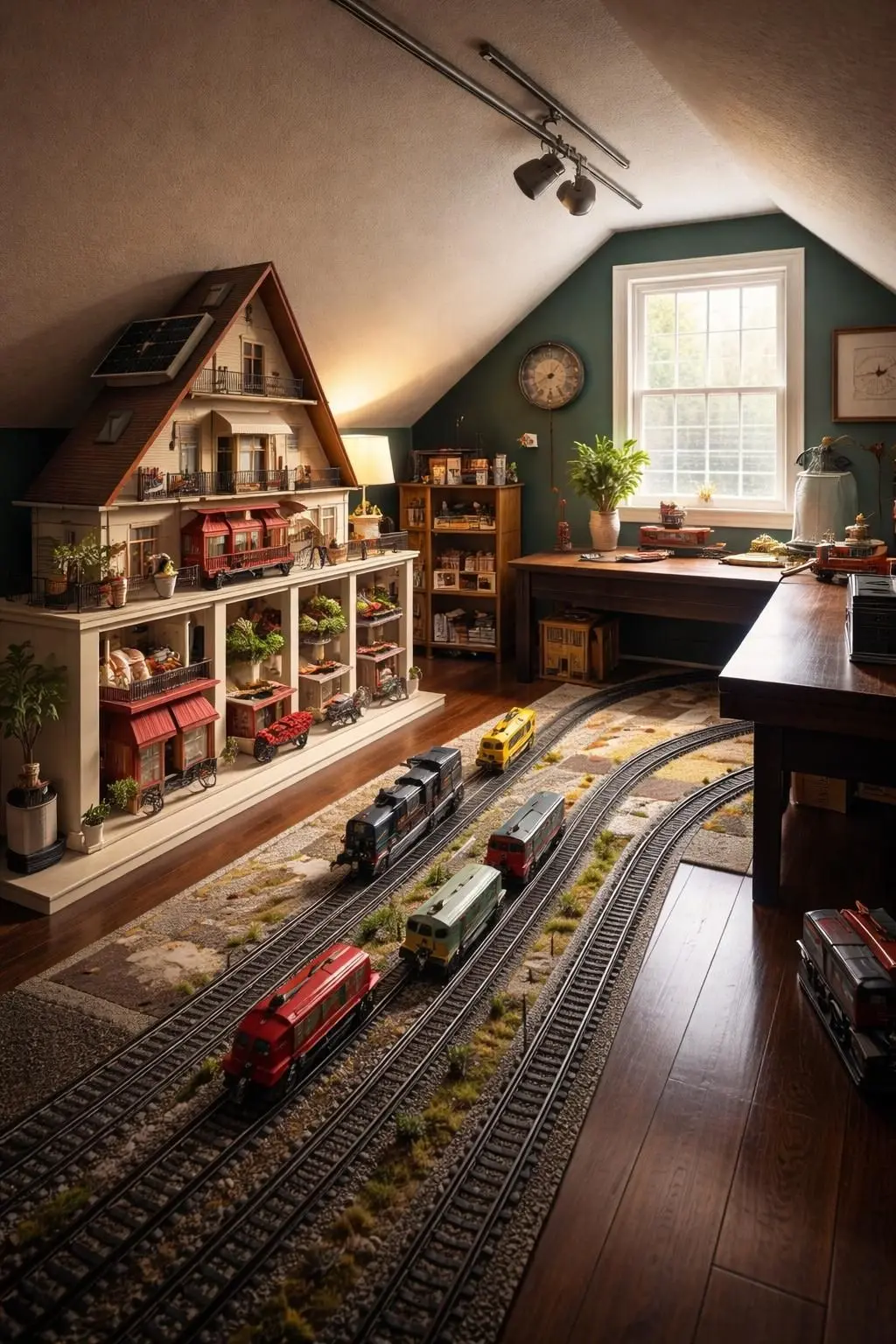
Difficulty: Easy / 1 Day Est. Cost: $200–$800
An attic toy train room is one of those uses that makes the space genuinely memorable. Children remember these rooms for decades. The key is building the layout at floor level rather than on a raised table, which works naturally with the low ceiling and gives the trains more floor area to cover.
Lay track directly on the floor across a large section of the attic. Use modular track that can be rearranged as interest evolves, rather than permanent built-in layouts that lock in a single configuration. Scatter small painted wooden buildings, bridges, and tunnels through the layout and add realistic ground cover — model grass, gravel, and foliage — to turn a toy layout into something that looks like a proper miniature world.
Store extra track sections, accessories, and spare cars in shallow under-eave drawers built into the lowest wall sections so they’re accessible without digging through a storage bin.
Extension idea: Paint a simple town scene mural directly on the lowest section of the angled walls at child eye height — roads, rivers, hills, and buildings that connect visually with the floor layout below.
15. Sewing Room
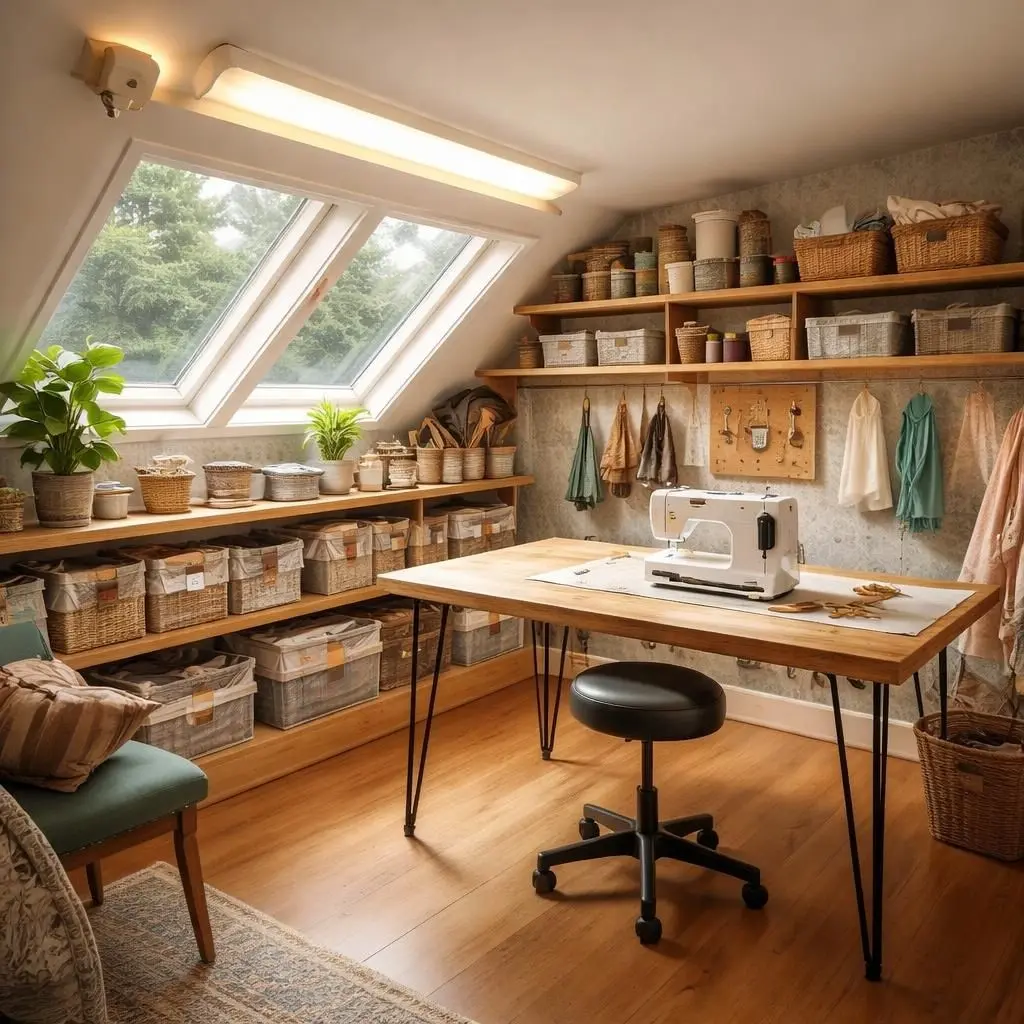
Difficulty: Easy / Half a Day Est. Cost: $300–$1,000
A sewing room benefits from the same things a home office does: good task lighting, an organized work surface, and storage that keeps everything within reach without cluttering the table. The attic delivers on all three.
Position the sewing machine table under a skylight or directly in front of the main window. The natural light makes color matching, cutting, and detailed work far easier than any artificial light source. Add a dedicated LED task light above the machine for evening use or overcast days.
Use the angled wall sections for fabric storage — open shelves with fabric folded neatly in color order look beautiful and make selecting materials for a project genuinely enjoyable rather than a rummage through a bin. Hang a dress form in the corner with the highest ceiling clearance, and mount a full-length mirror nearby for fitting purposes.
Organisation tip: A clear acrylic thread rack mounted to the wall holds spools visibly and keeps them from tangling. It functions as storage and as a small piece of visual interest at the same time.
16. Green Room
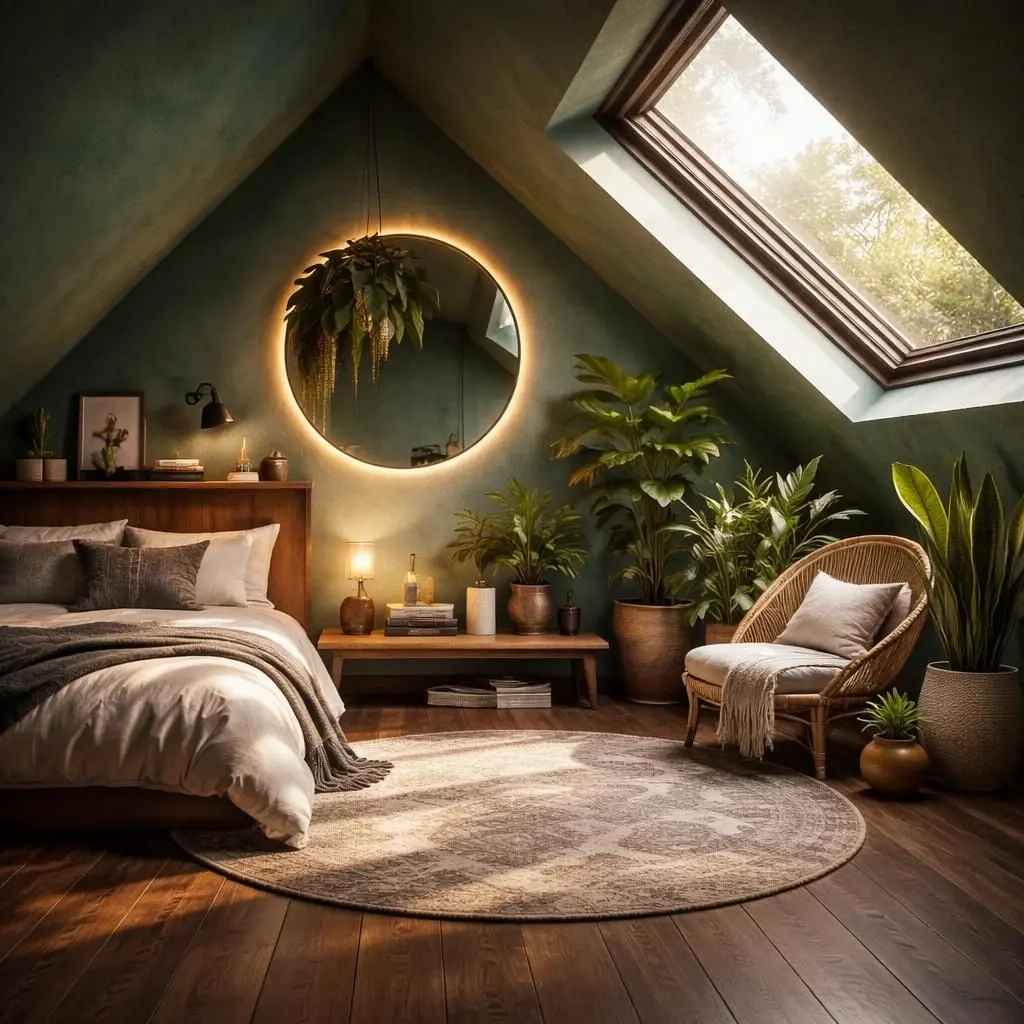
Difficulty: Easy / 1–2 Days Est. Cost: $200–$600
An attic filled with plants — a genuine green room rather than a room with a few plants in it — is one of the most unusual and rewarding conversions possible. The key is choosing the right plants for the specific light conditions, because attic light varies considerably depending on orientation and the presence of skylights.
North-facing attics with limited natural light suit ferns, pothos, snake plants, and philodendrons — all genuinely low-light species that thrive rather than merely survive in indirect conditions. South-facing attics with good skylight coverage can support a much wider range including tropical species, small citrus trees, and succulents.
Cluster plants at different heights using a mix of floor-level pots, wall-mounted planters, and hanging baskets attached to the ceiling ridge. The layered greenery softens every angle of the room and creates an atmosphere that is genuinely unlike any other room in the house. Add a single wicker chair and a small water feature for the complete effect.
Humidity note: Group plants together to raise the local humidity through transpiration. In dry attic environments this helps every plant in the cluster thrive without requiring individual misting.
17. Teen Hangout
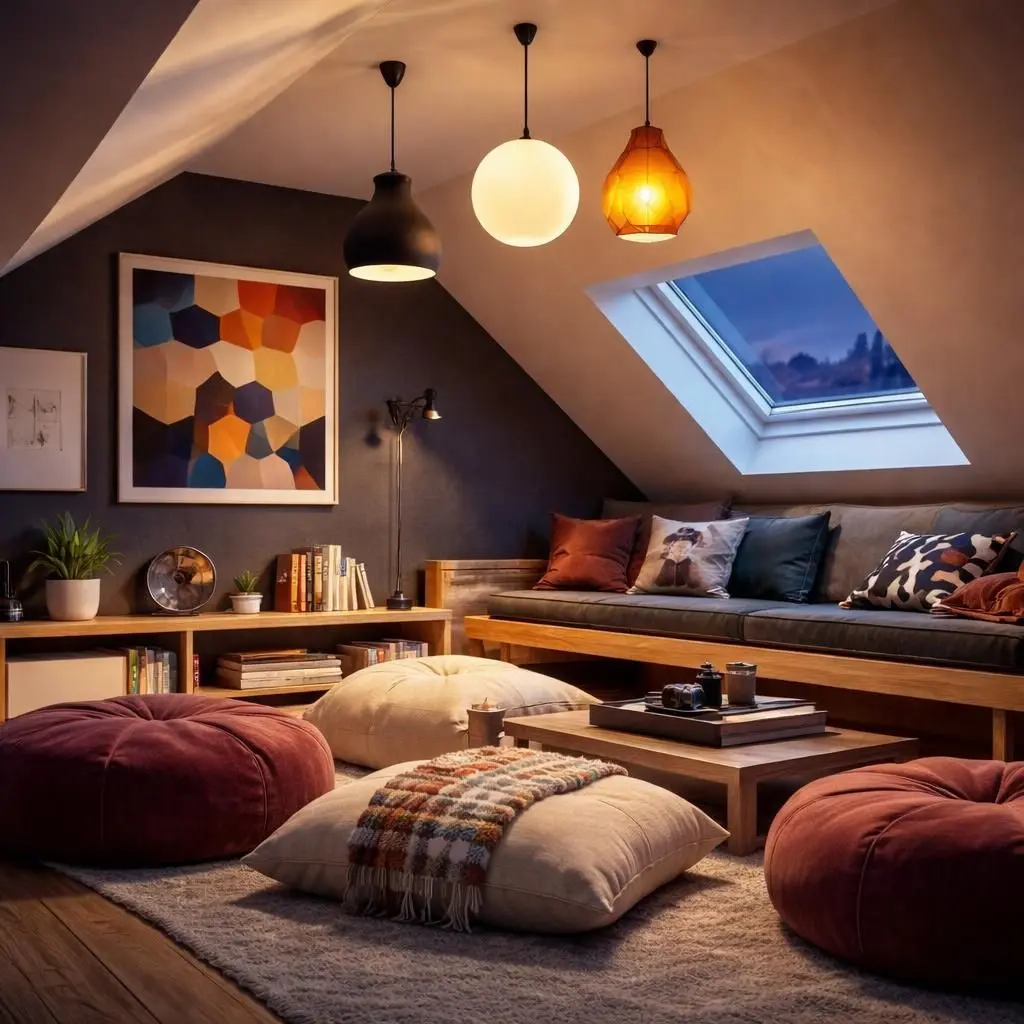
Difficulty: Easy / 1 Day Est. Cost: $300–$900
Teenagers want a space that feels genuinely theirs — not a room decorated by an adult’s idea of what teenagers like, but a space they’ve had real input in creating. The attic is perfect for this because its separation from the rest of the house gives it an autonomy that a bedroom does not.
Start with the seating: oversized floor cushions, bean bag chairs, and a low futon sofa arranged informally around a central area. No need for matched sets or a coordinated color palette — the mix of textures and forms is part of what makes the space feel owned rather than assigned.
Mount a television on the end wall or use a small projector for gaming and streaming. Run string lights along the ceiling ridge for ambient lighting that can be dimmed when watching something and brightened when people are hanging out. Let the occupant choose one wall for posters, artwork, or a pegboard filled with whatever matters to them right now.
Acoustic addition: A bluetooth speaker that lives permanently in this space removes the constant back-and-forth of borrowed devices and makes the hangout room feel more self-contained.
18. Photography Studio
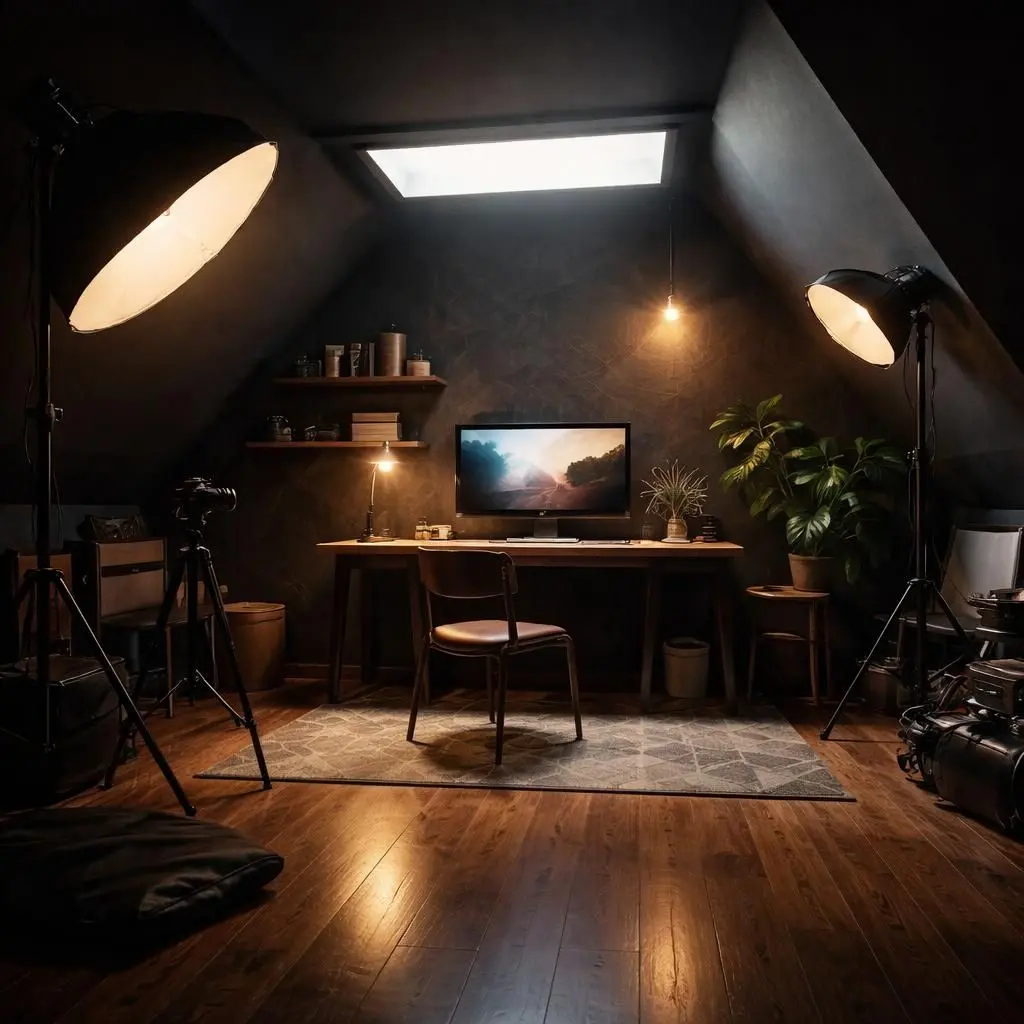
Difficulty: Medium / 1–2 Days Est. Cost: $400–$1,500
An attic photography studio functions differently from a traditional studio in that the architectural quirks of the space become assets rather than obstacles. The sloped walls, exposed beams, and unusual angles create natural backdrops that no roll of seamless paper can replicate.
Keep one section of the attic clear for a portable backdrop stand with interchangeable paper or fabric backdrops for shots requiring a clean background. Use the rest of the space — the angled walls, the wooden beams, the window light — as a textured environment for lifestyle and portrait work.
A skylight provides beautiful, diffused natural light for overhead fill. Supplement with two portable continuous LED panels on adjustable stands for directional control without the complexity of flash equipment. Store all lighting equipment flat along the lowest wall section when not in use so the shooting space stays clear.
Practical addition: Install a dimmable overhead light controlled by a switch near the door so the full studio can be lit for setup and then taken to zero when shooting with artificial lights.
19. Yoga Studio
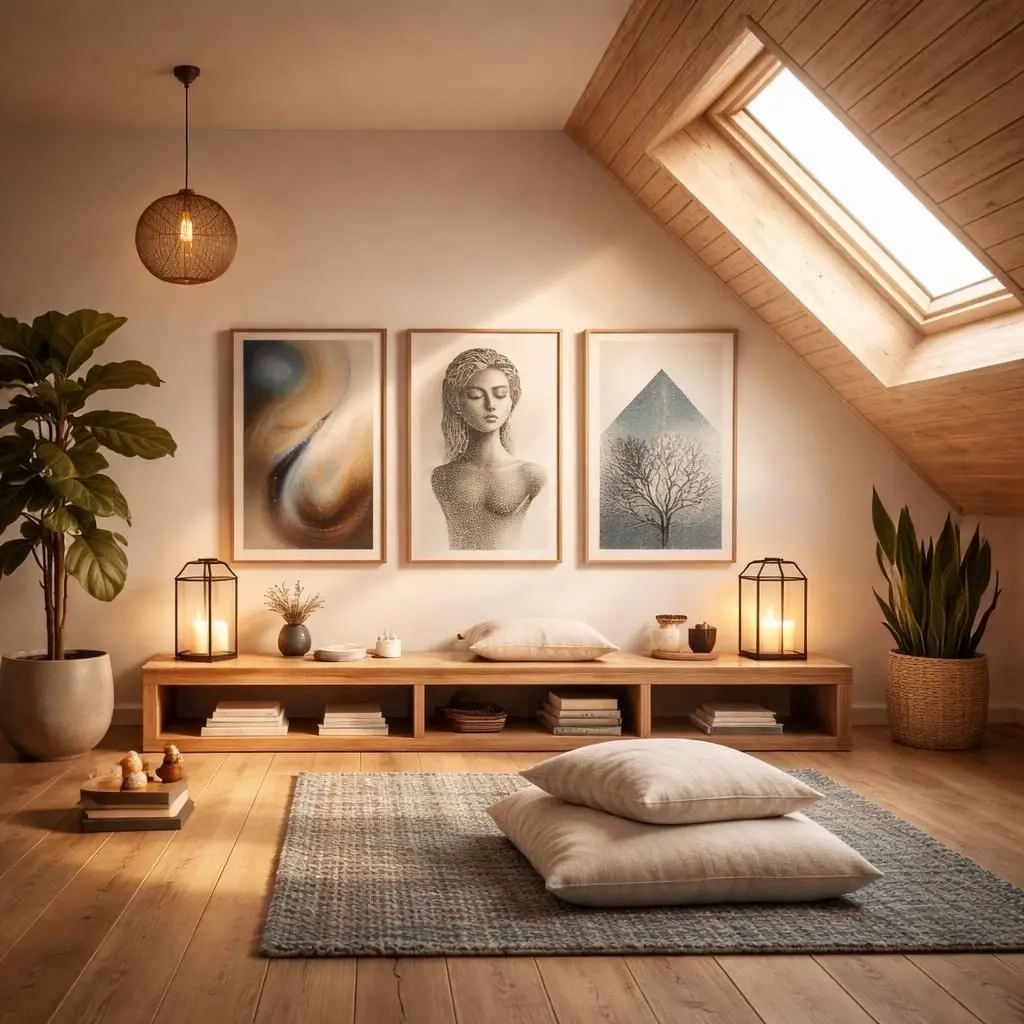
Difficulty: Easy / Half a Day Est. Cost: $150–$500
Yoga requires surprisingly little ceiling height for most practices — standing poses and flows need clearance, but the seated, kneeling, and lying sequences that make up much of a regular practice fit comfortably in a low attic. Position the mat in the center of the room where the ceiling is at its highest point for the poses that require it.
Lay a large natural fiber rug across the floor before placing the yoga mat on top — the rug softens the floor and defines the practice area visually without requiring any structural work. Mount a few pieces of calm, abstract artwork on the flat end wall to give the eye somewhere to rest during balance poses.
Keep the room clear of everything that isn’t directly related to practice. A small basket near the door holds blocks, a strap, and a bolster. A candle or diffuser on a low shelf adds a sensory element that makes the transition into practice feel more intentional. Nothing else is required.
Sound addition: A small bluetooth speaker playing ambient sound or music contributes to the mood of the space without requiring any wiring. Mount it to the wall at ear height when seated to keep the floor clear.
20. Game Room
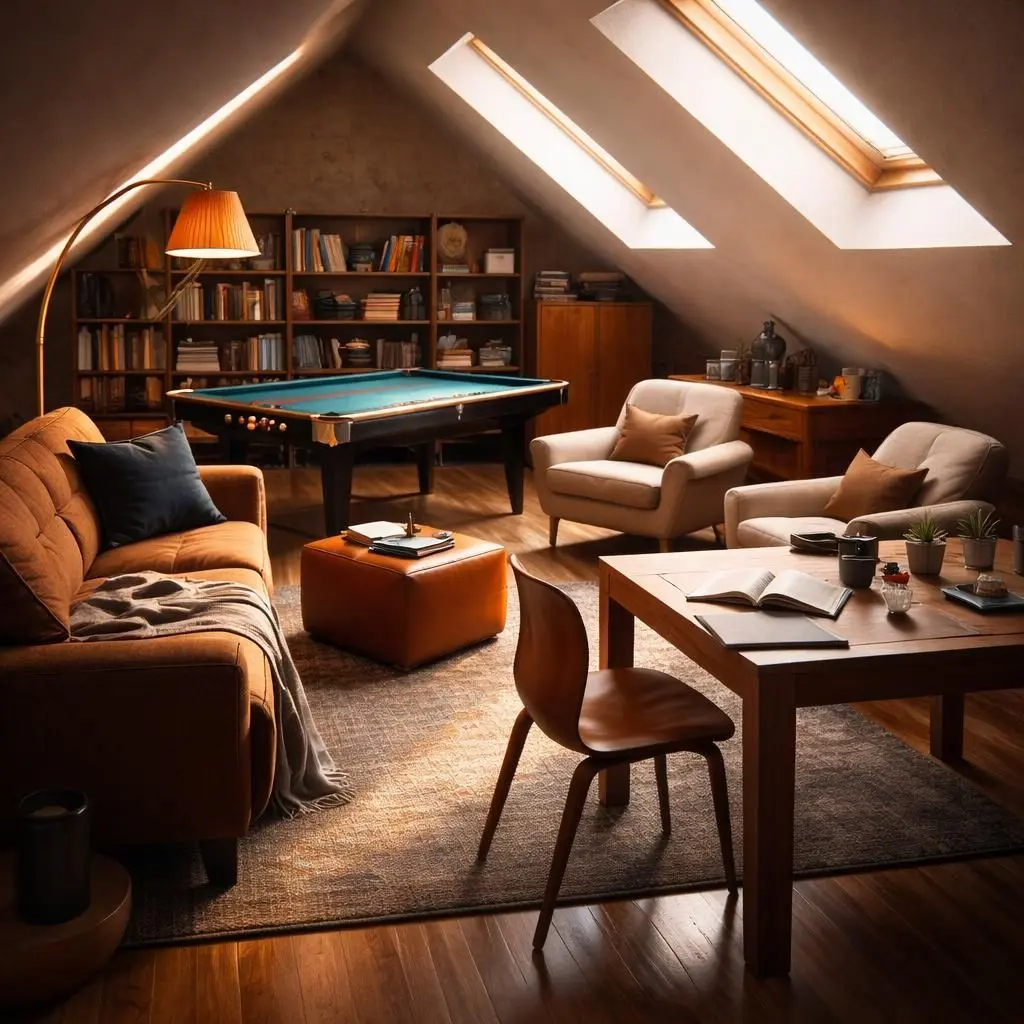
Difficulty: Medium / 1–2 Days Est. Cost: $400–$1,500
A dedicated game room in the attic removes the inevitable compromise of sharing a living room television with competing interests. Games can be set up and left mid-play. Controllers live on a shelf rather than in a drawer. The setup is permanent rather than provisional.
Mount the television or monitor at eye level on the end wall and position seating — a low sofa, gaming chairs, or floor cushions — at the appropriate distance for the screen size. Run all cables through the wall or along the baseboard before furniture is placed so the room is clean rather than tangled.
Dedicate one section of the room to a table for board games and card games with chairs that can be folded and stored when the table isn’t in use. A small shelf or credenza holds games, controllers, and accessories organized by type. Good overhead lighting on a dimmer handles everything from focused board game sessions to darkened cinematic gaming.
Acoustic tip: Add a thick rug under the seating area and curtains on any windows. Both elements absorb sound and prevent the hard surfaces of a small attic room from making game audio echo uncomfortably.
Making the Most of Attic Architecture
Low ceilings stop being a limitation the moment you stop trying to pretend they don’t exist. Every one of these conversions works because it accepts the constraint and builds around it rather than fighting it.
The sloped walls create natural zones within the room — one section for activity, one for storage, one for seating. The enclosed quality that the low ceiling creates becomes an atmosphere of intimacy rather than a feeling of compression. The separation from the rest of the house that attic rooms naturally have becomes privacy rather than inconvenience.
The best attic rooms are the ones that couldn’t work anywhere else in the house. When the architecture and the purpose are matched properly, the result is a space that feels genuinely special rather than just cleverly salvaged.