15 Small Living Room Ideas That Make Tiny Spaces Look Huge
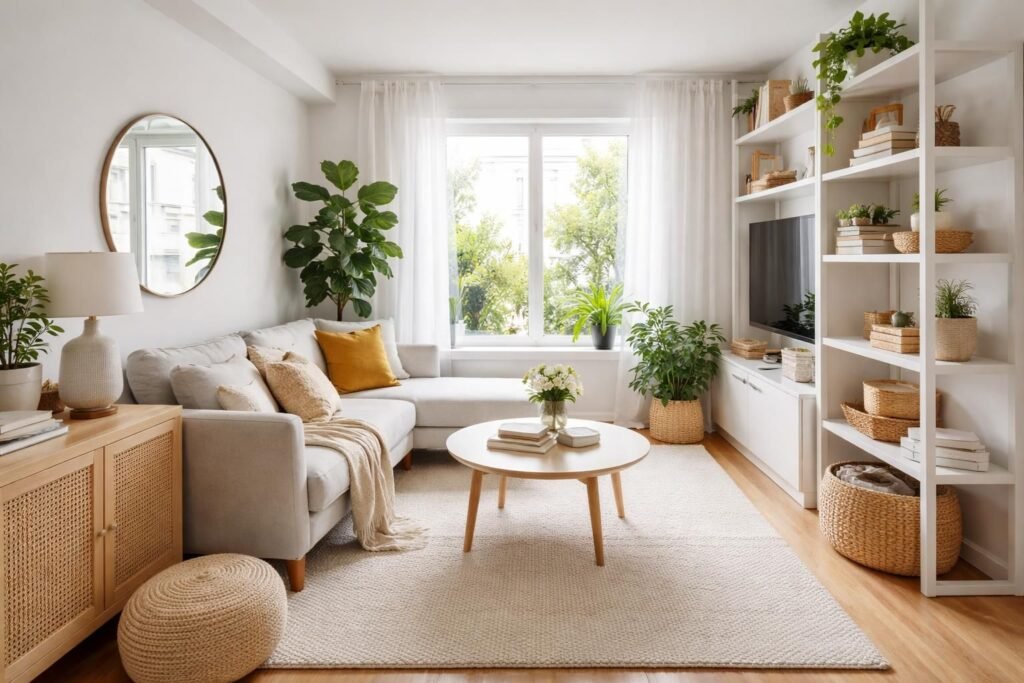
A small living room does not have to feel cramped or chaotic. With the right design choices, even the tiniest space can feel open, airy, and stylish. The secret lies in smart furniture selection, strategic lighting, and clever visual tricks that fool the eye into perceiving more space than there actually is. Whether you are decorating a studio apartment, a starter home, or a cozy city flat, these 15 small living room ideas will transform how your space looks and feels every single day. Let’s dive in.
1. Choose a Light and Neutral Color Palette
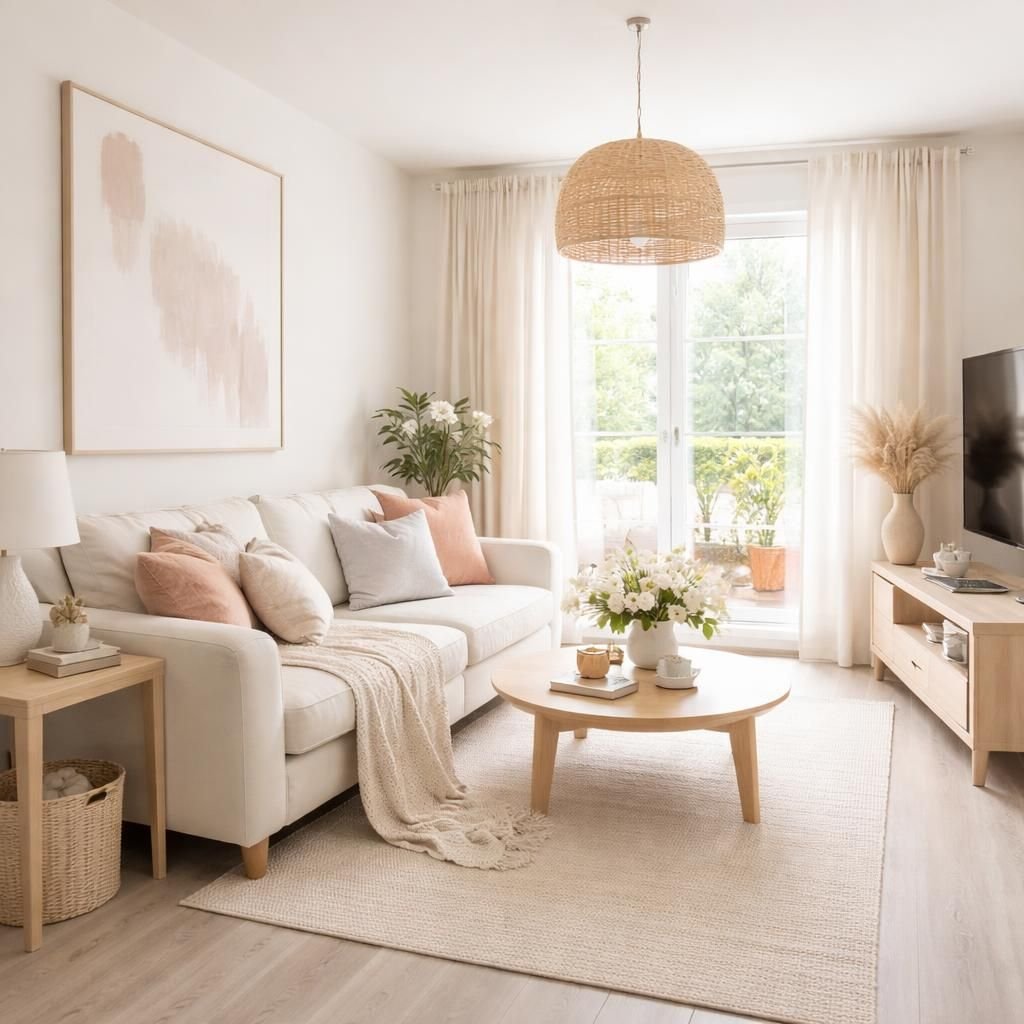
Light colors are the number one tool designers use to make small rooms feel larger. Soft whites, warm creams, pale grays, and blush tones reflect natural light and push walls visually outward. When your walls, ceiling, and large furniture pieces share a similar light tone, the room reads as one seamless, open space rather than a collection of separate elements fighting for attention. Avoid heavy contrast between walls and furniture in a small room. Instead, layer different shades of the same neutral family for a sophisticated, airy look. Add personality through cushions, throws, and artwork without overwhelming the space.
2. Use Mirrors Strategically
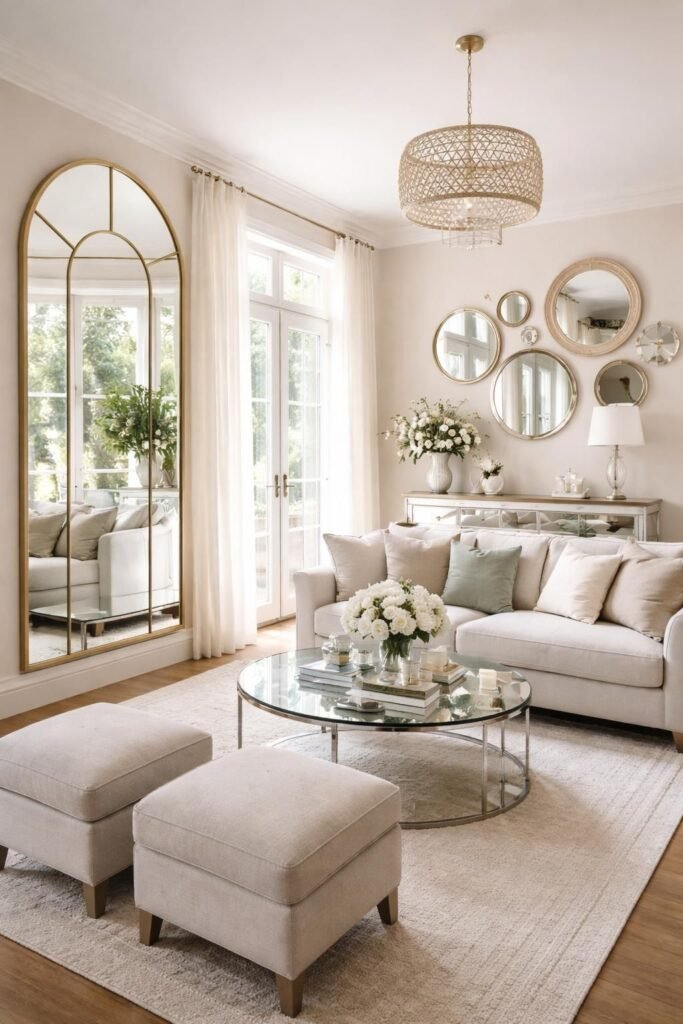
Mirrors are the ultimate small space secret weapon. A large mirror hung on a wall instantly doubles the perceived depth of a room by reflecting light and the space back at you. Place a full-length mirror opposite a window to bounce natural light deep into the room and create a bright, open feel throughout the day. Gallery walls of smaller mirrors work beautifully too. Mirrored furniture like coffee tables or side tables add glamour while serving the same light-reflecting purpose. Even a mirrored tray on a shelf contributes subtle sparkle. The more reflection you introduce, the bigger and brighter your living room will appear.
3. Invest in Multi-Functional Furniture
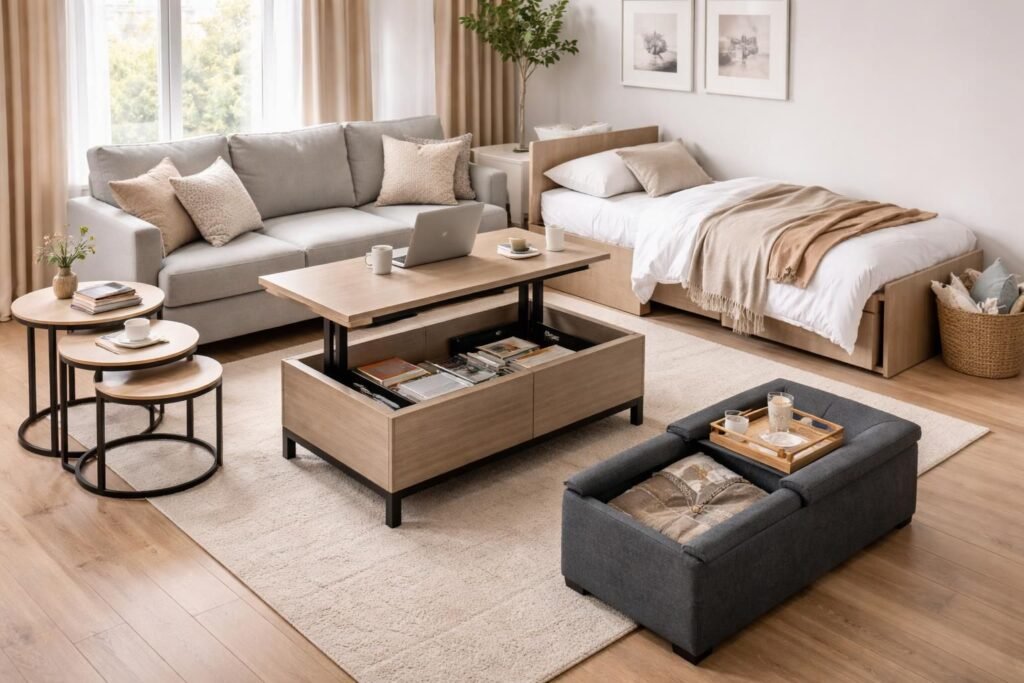
In a small living room, every piece of furniture must earn its place. Multi-functional furniture is the smartest investment you can make. A storage ottoman doubles as a coffee table and a place to stash blankets and remotes. A sofa bed transforms your living room into a guest room overnight. Nesting tables tuck away when not needed and expand for entertaining. A lift-top coffee table provides hidden storage and a work surface. Choosing pieces that serve two or three purposes means you need fewer items in the room, keeping the floor plan open and uncluttered while still enjoying full functionality in your daily life.
4. Hang Curtains High and Wide
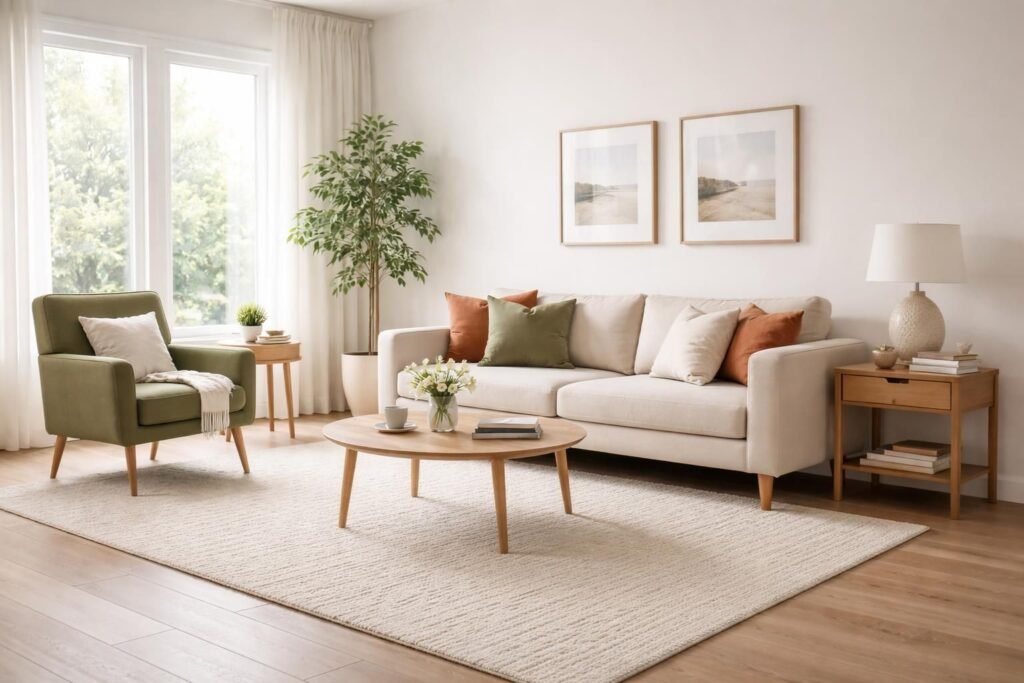
Window treatments have an enormous impact on how tall and wide a room feels. Hang your curtains as close to the ceiling as possible, not just above the window frame. Then extend the curtain rod well beyond the window on both sides. When the curtains are open, they frame the window without covering any glass, maximizing light. When closed, the full height of fabric makes ceilings feel dramatically taller. Choose light, sheer fabrics in soft neutrals to maintain an airy feel. Avoid heavy drapes in dark colors that absorb light and close in the walls. This single trick adds instant architectural grandeur to even the most basic small living room.
5. Declutter and Embrace Minimalism
Nothing shrinks a living room faster than clutter. Visual noise created by too many objects, mismatched items, and overcrowded surfaces tricks the eye into seeing a smaller, busier space. Embracing a more minimal approach is one of the most effective small living room ideas you can try immediately, at zero cost. Edit your décor ruthlessly. Keep only pieces you love and that serve a purpose. Store everything else out of sight using baskets, cabinets, and built-in storage. A clean, curated room with breathing room between objects feels calm, spacious, and intentional. Less truly is more when square footage is limited, and simplicity always looks effortlessly elegant.
6. Choose Furniture With Exposed Legs
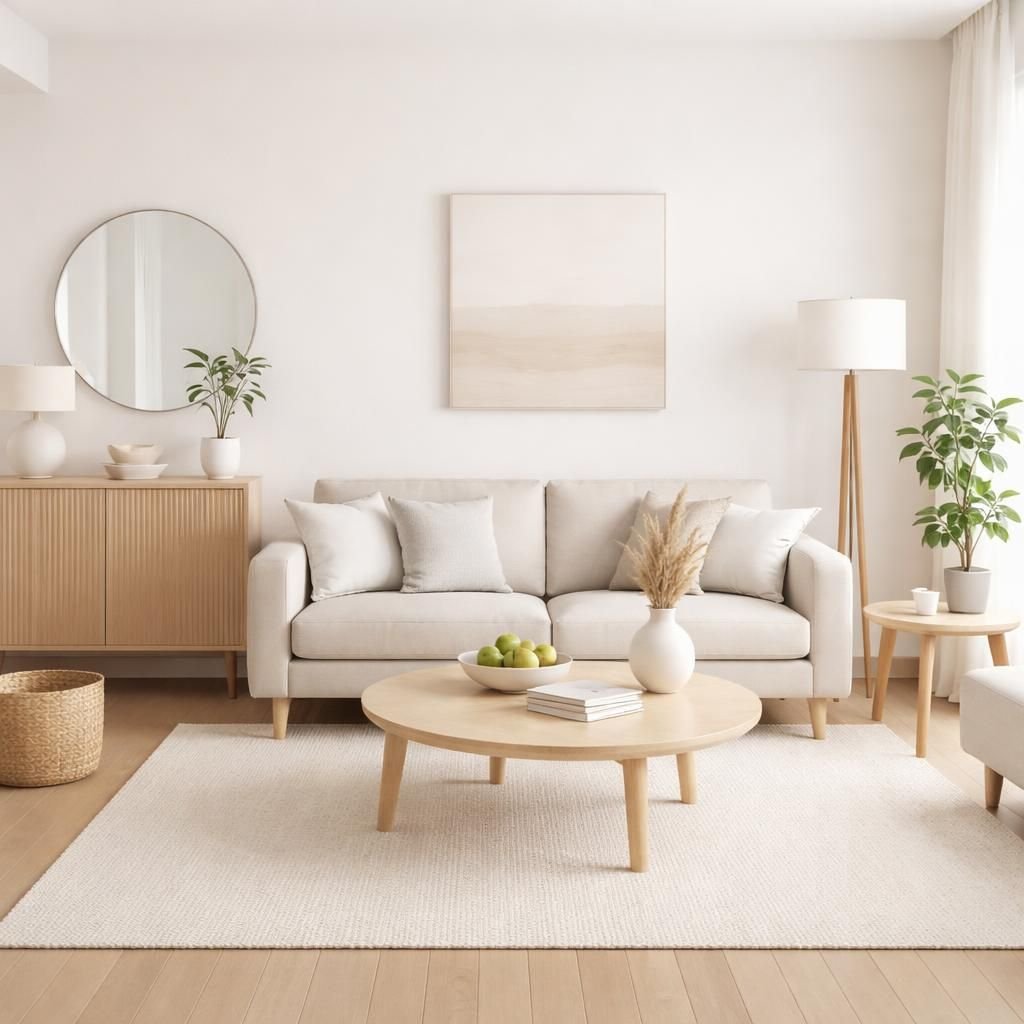
Furniture that sits directly on the floor creates a heavy, grounded appearance that visually anchors items to the ground and blocks sight lines. Choosing sofas, armchairs, and side tables with exposed legs is a surprisingly powerful small space trick. When you can see the floor beneath furniture, the room feels lighter and more open. The continuous flow of flooring visible under pieces makes the room appear longer and wider. Slim, tapered mid-century legs are especially popular for this reason. Even a few centimeters of clearance between furniture and floor creates a visual lift that makes the entire room breathe more freely and feel significantly more spacious.
7. Build Vertical Storage to Draw the Eye Up
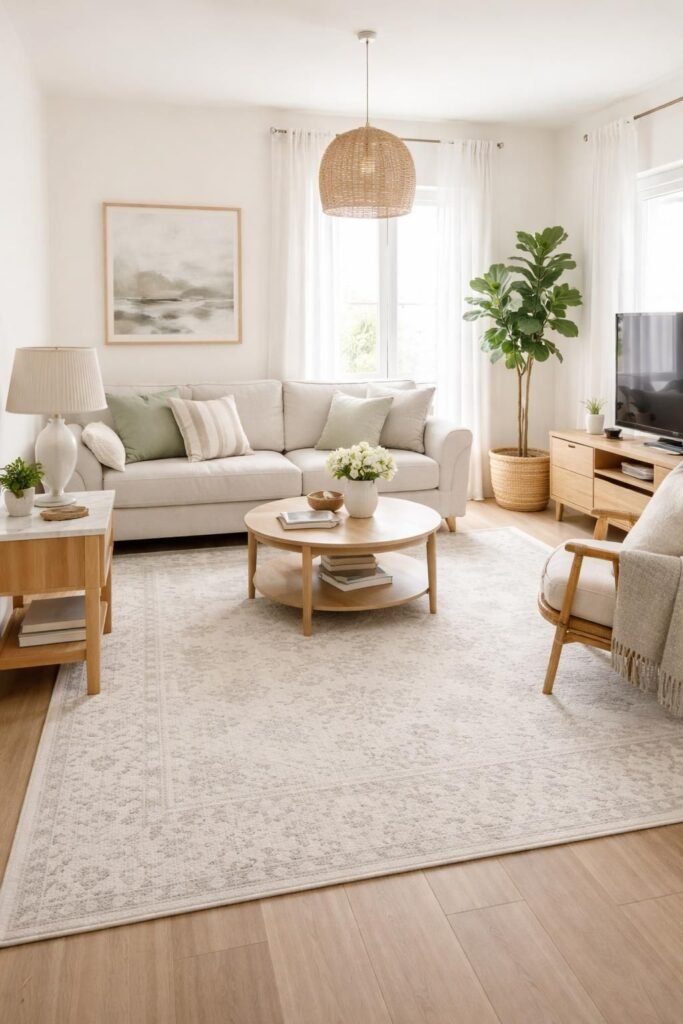
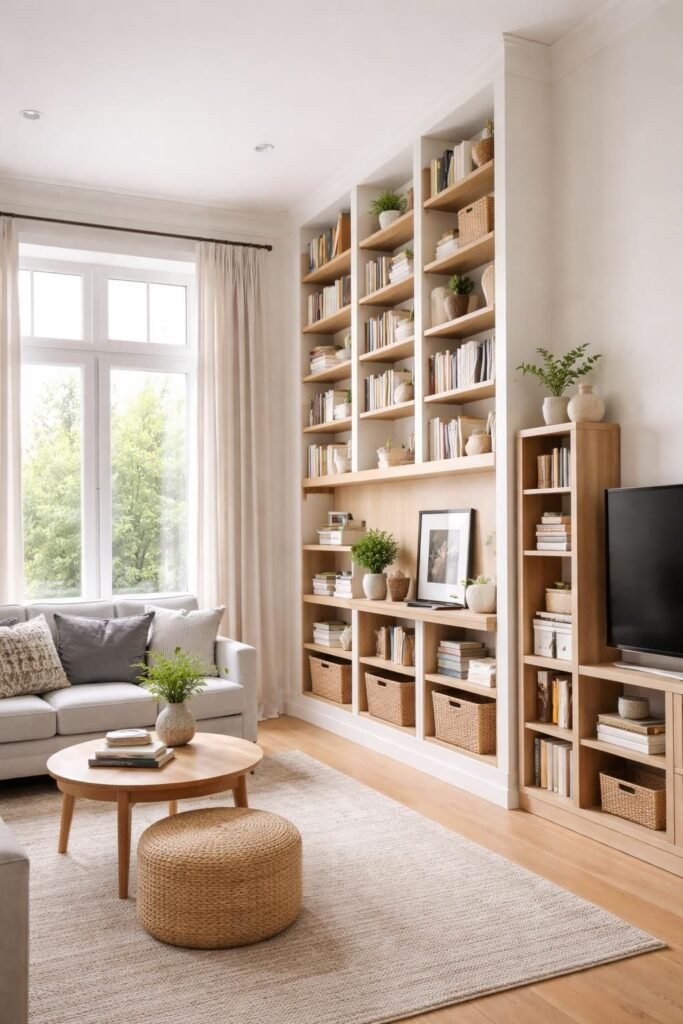
When floor space is limited, go vertical. Tall bookshelves, floor-to-ceiling built-ins, and wall-mounted storage units draw the eye upward, making ceilings feel higher and rooms feel more generous. Floating shelves installed high on walls keep the floor clear while providing valuable display and storage space. A tall, narrow media unit takes up less floor area than a wide, low one while still holding everything you need. Stacking storage vertically also signals to visitors that the room has height and volume. Style the upper shelves with lighter, decorative pieces and use lower shelves for practical storage to keep the visual weight balanced and the overall look intentional.


8. Use a Large Area Rug
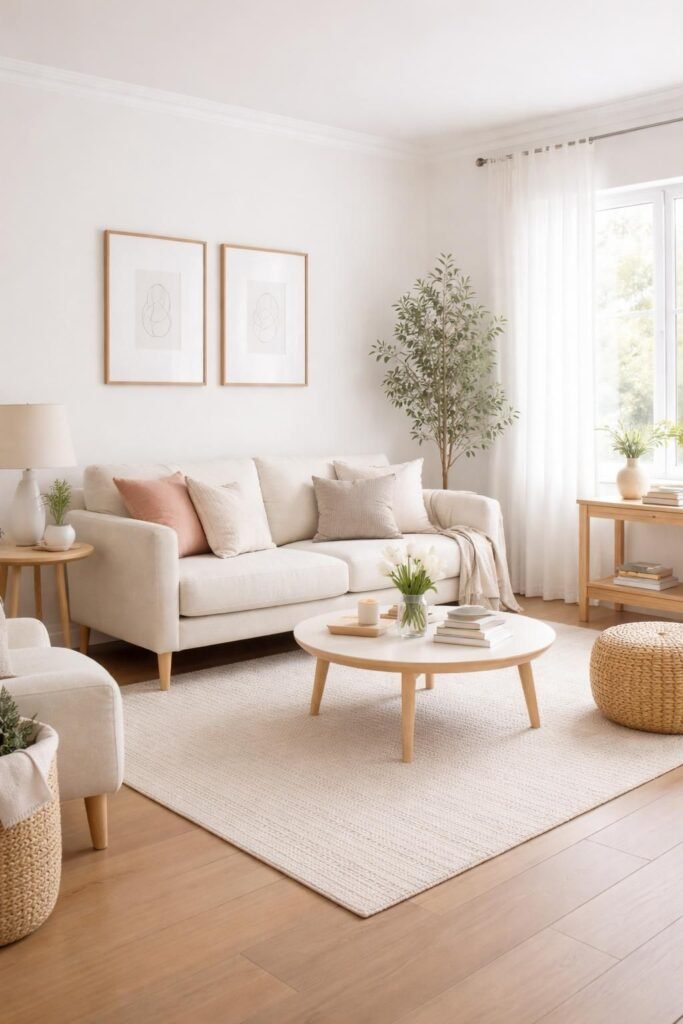
A common mistake in small living rooms is choosing a rug that is too small. A tiny rug floats awkwardly in the center of the room and actually makes the space feel more fragmented and smaller. The correct approach is to go bigger than feels intuitive. A large area rug that anchors all the main furniture with at least the front legs of every piece on it visually unifies the seating area and defines the space clearly. Light-colored rugs with simple patterns or textures are ideal. They ground the room without dominating it. A well-chosen rug creates the feeling of a purposeful, well-designed room rather than a makeshift arrangement of furniture.
9. Opt for a Sofa in a Light Color or Streamlined Profile
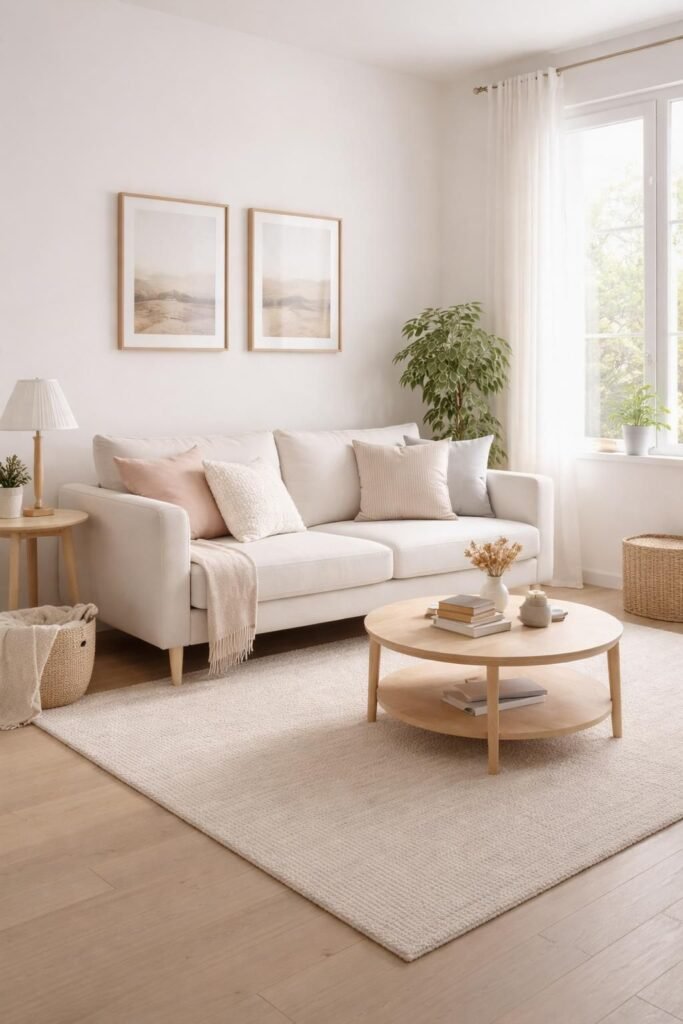
The sofa is usually the largest piece of furniture in a living room, which means it has the biggest visual impact. In a small space, an oversized, overstuffed sofa in a dark color can dominate and overwhelm the entire room. Choose a sofa with a streamlined, low-profile silhouette that does not visually block the room. Light upholstery in cream, warm white, soft gray, or pale blush keeps the sofa from feeling heavy. A two-seater or apartment-sized sofa may actually provide all the seating you need while leaving far more breathing room. When the sofa blends with the wall color, the eye travels across the room rather than stopping abruptly at the furniture.
10. Create Zones With Thoughtful Furniture Arrangement
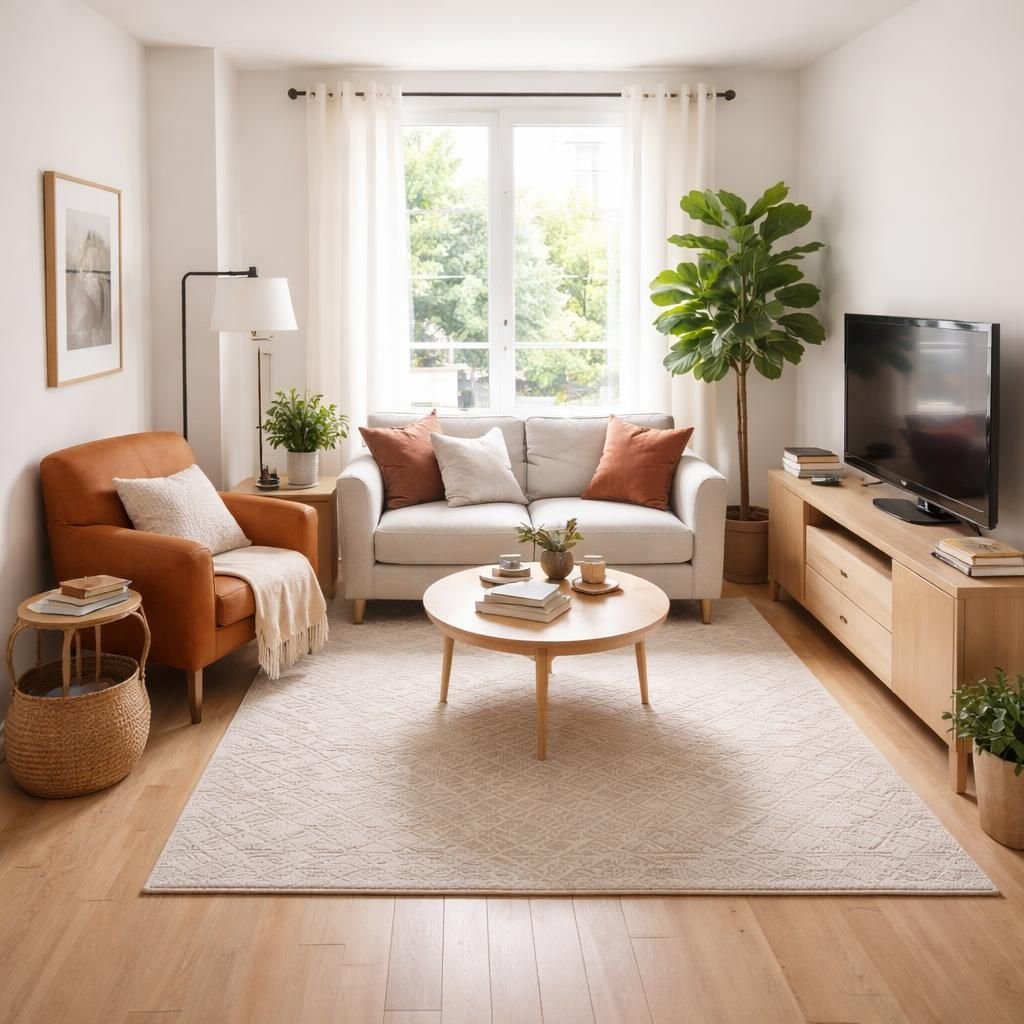
Even in a very small living room, creating distinct zones makes the space feel purposeful and larger in function. Arrange your furniture to define areas clearly, for example a reading nook with a single armchair and floor lamp in one corner, and the main seating area centered on the television or a focal point. Floating furniture slightly away from walls, even just a few inches, gives a more sophisticated look and prevents the cramped feel of furniture pushed against every wall. A thoughtful arrangement shows that the room has been designed with intention. Zoning a small space well makes it feel layered, interesting, and more generous than its actual square footage suggests.
11. Maximize Natural Light in Every Way Possible
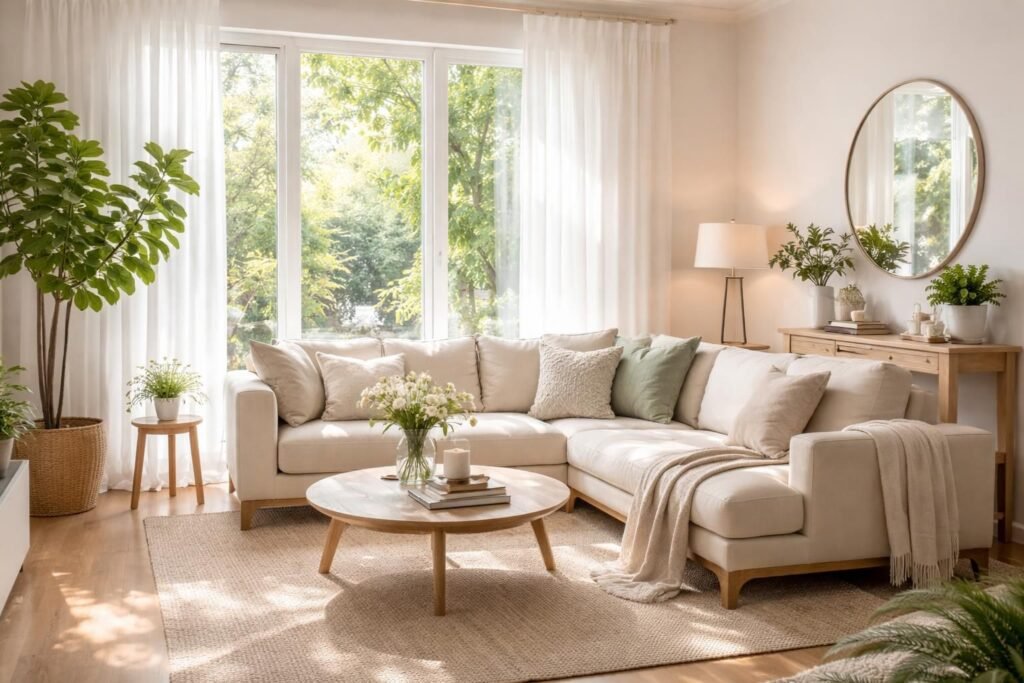
Natural light is the most powerful tool you have for making a small room feel larger. Keep windows completely unobstructed during the day. Trim any outdoor shrubs blocking window light. Use sheer curtains rather than heavy blinds. Place reflective surfaces near windows, including mirrors, glass vases, and metallic accents, to bounce light deeper into the room. Keep windowsills clear of clutter so light floods in freely. If your living room lacks windows, layered artificial lighting using ceiling lights, floor lamps, and table lamps at different heights mimics the warm, dimensional quality of natural light and prevents the flat, dim feeling that makes small rooms feel cave-like and oppressive.
12. Choose Glass or Lucite Furniture Pieces
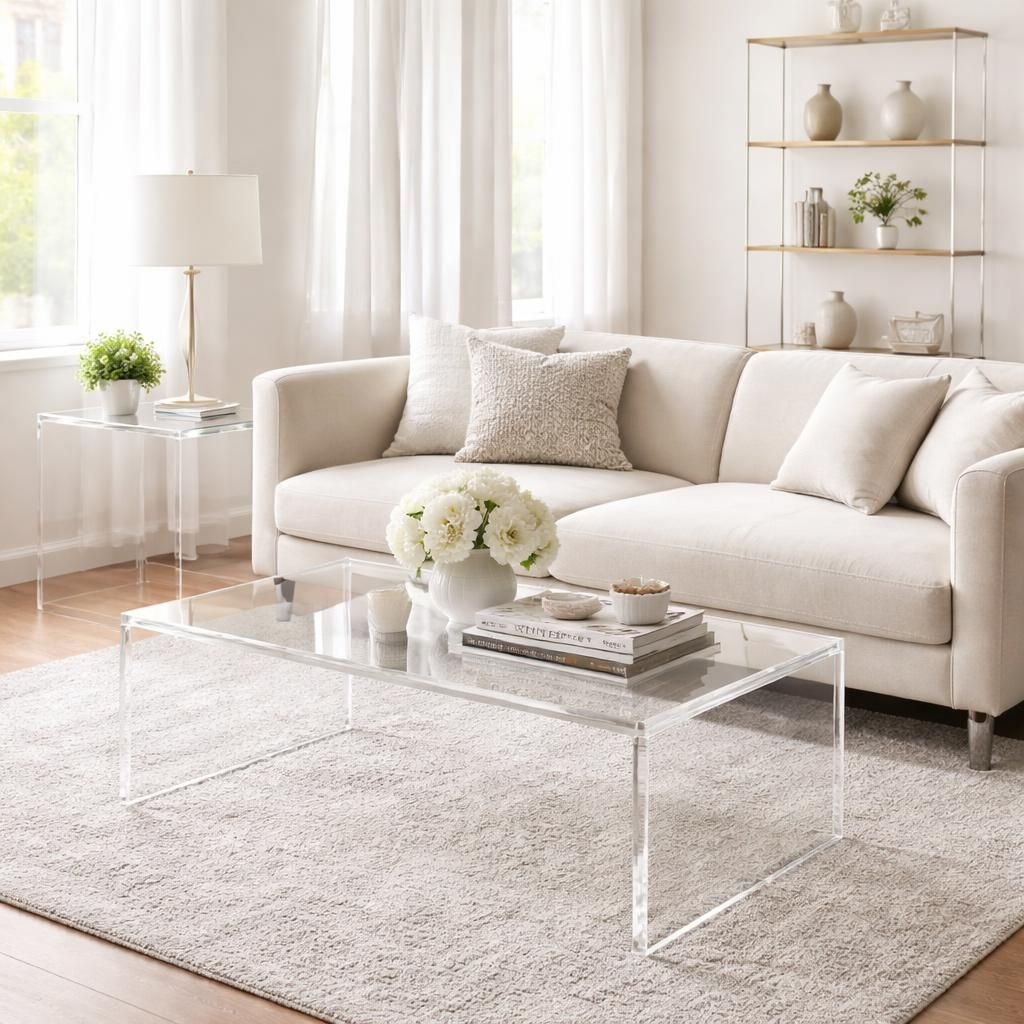
Transparent furniture is one of the most brilliant small living room ideas available because it takes up visual space without actually occupying it. A glass or acrylic coffee table, for example, provides full functionality while allowing the eye to travel straight through it to the floor and beyond. The room reads as open and unobstructed. Lucite side tables, glass shelving, and even transparent chairs work on the same principle. These pieces are especially valuable in very small rooms where every square foot of visible floor space contributes to the perception of roominess. Mix one or two transparent pieces into your arrangement for an immediately lighter, more open, and sophisticated feel.
13. Add Vertical Lines Through Décor and Architecture
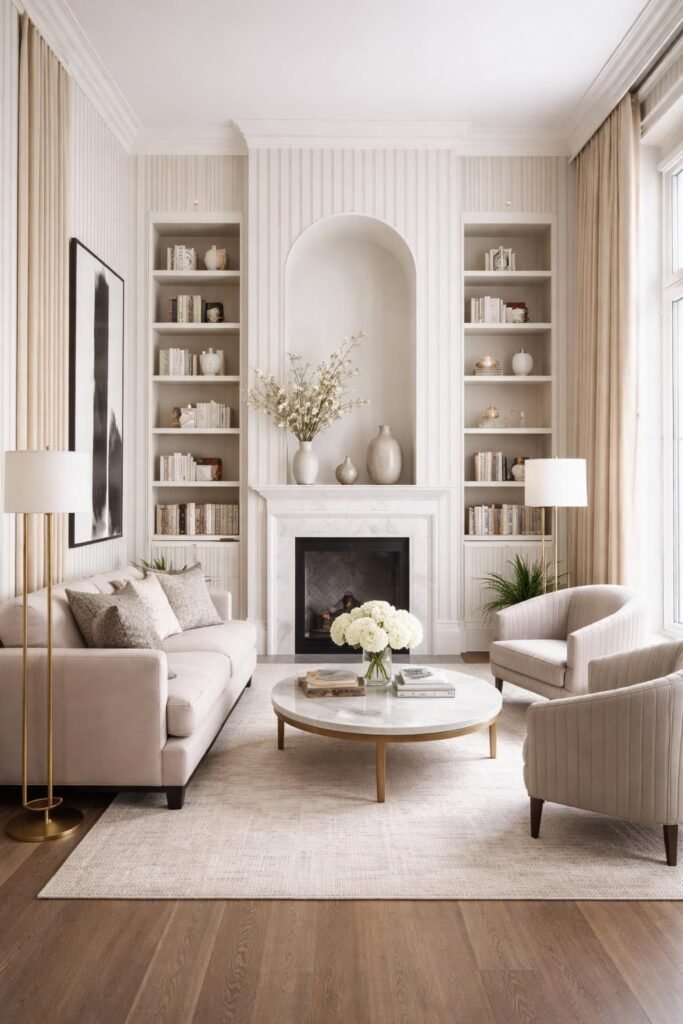
Vertical lines in a room, whether from striped wallpaper, tall bookshelves, floor-length drapes, or vertical shiplap paneling, draw the eye upward and make ceilings feel higher than they are. This psychological trick is used by interior designers constantly in small spaces. Even vertical stripes on a single accent wall can dramatically change how tall and spacious a room feels. Tall, narrow artwork hung high on walls reinforces the same vertical movement. Avoid too many wide, horizontal elements that flatten and widen a space visually. The balance of vertical emphasis creates a sense of architectural volume that a small room benefits from enormously, making it feel refined and generously proportioned.
14. Use Built-In Storage to Eliminate Bulky Freestanding Pieces
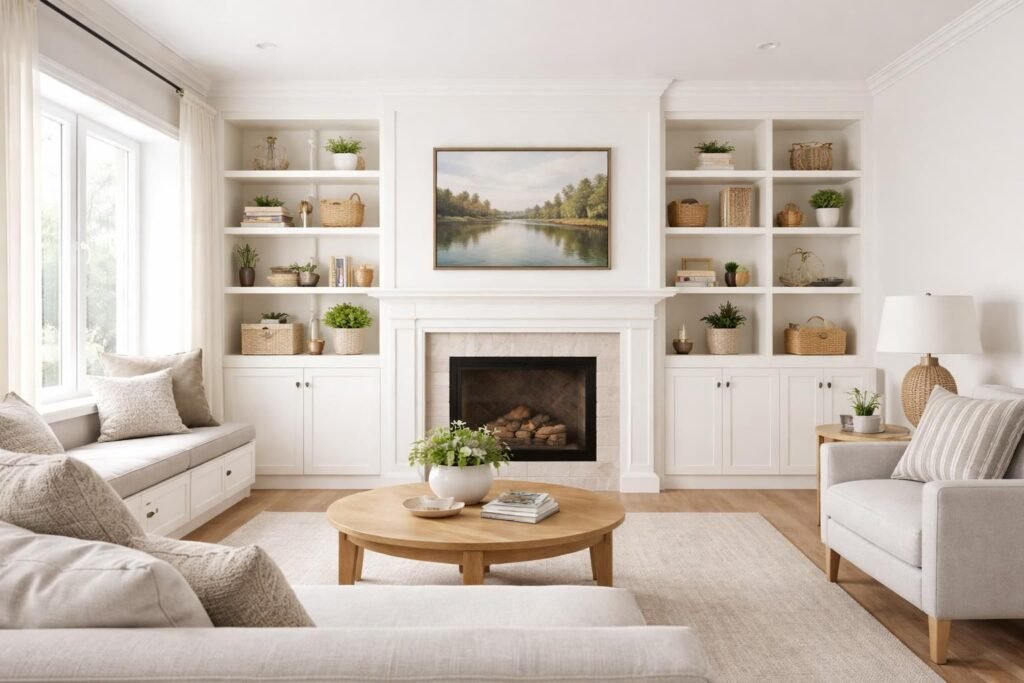
Built-in cabinetry and shelving are transformative in small living rooms. When storage is integrated into the architecture of the room, walls, flanking a fireplace, or under a window seat, it frees up the floor from bulky freestanding furniture and creates a clean, custom look. Built-ins maximize every inch of available wall space efficiently. They also add significant visual weight and structure to a room, making it feel like a well-designed, permanent space rather than a temporary arrangement. Commission simple DIY-style built-ins painted the same color as the walls to create a seamless, expanded feel. The result is a living room that feels both spacious and incredibly organized.
15. Add Statement Lighting to Create Height and Drama
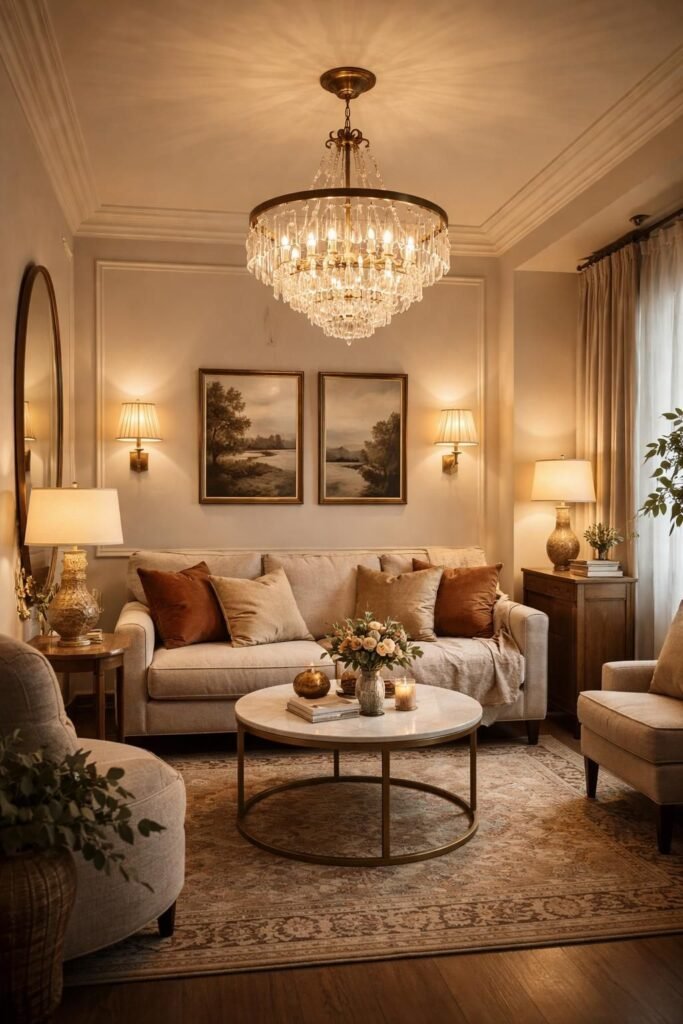
Lighting is often an afterthought in small living room design, but it is one of the highest-impact changes you can make. A statement pendant light or chandelier hung from the ceiling draws the eye upward and anchors the room with a focal point. This creates the illusion of height and a sense of grandeur even in a very modest space. Avoid relying on a single overhead light source, which creates flat, unflattering illumination. Layer your lighting with floor lamps, wall sconces, and table lamps to add warmth and depth. Well-layered lighting makes a small room feel intimate and beautifully designed rather than cramped, turning a functional space into a genuinely inviting retreat.