20 Gardening Tools Every Beginner Needs to Start Growing with Confidence
Everyone starts somewhere in the garden. And almost everyone starts without the right tools.
You don’t need everything at once — but having the right tools from the beginning makes the difference between a frustrating first season and one that actually makes you want to come back outside. The wrong tool for the job turns a ten-minute task into a forty-minute one. The right tool makes it feel almost effortless.
Here are the 20 tools that earn their place in every beginner’s shed.
1. Hand Trowel
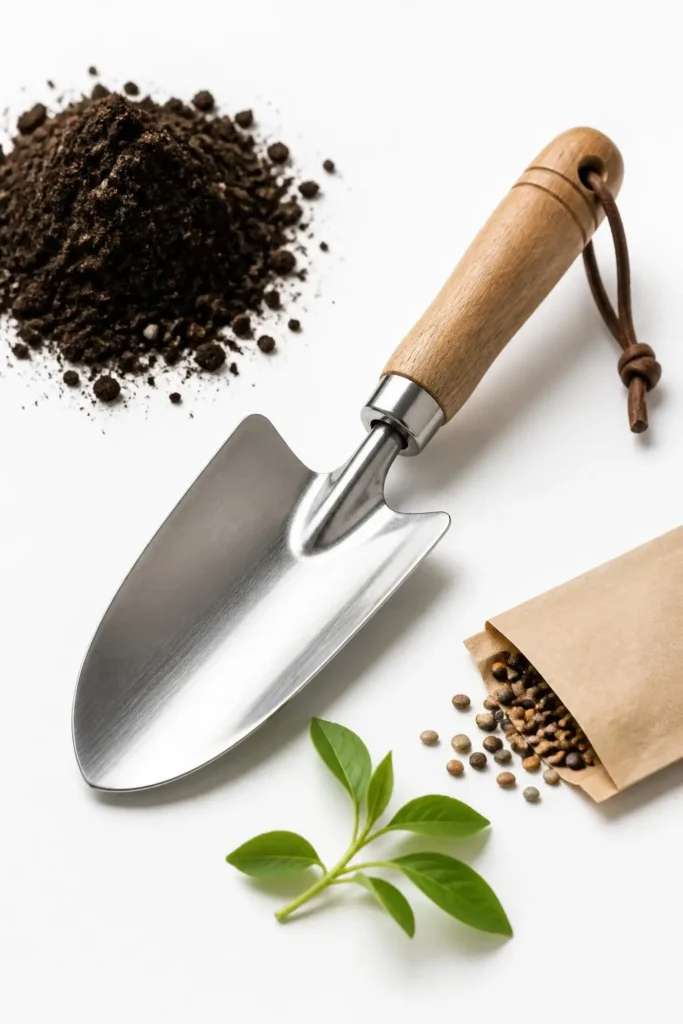
A hand trowel is the single most-used tool in any garden. It digs small planting holes, transplants seedlings, scoops soil from bags into containers, and works in tight spaces where a full-sized spade would be completely impractical.
Choose one with a stainless steel blade rather than painted carbon steel — stainless resists rust, stays sharper longer, and wipes clean with almost no effort. The handle matters as much as the blade. A handle that fits your grip comfortably will feel effortless after an hour of planting. One that doesn’t will leave blisters before you’ve finished a single bed.
Look for a trowel with depth markings etched into the blade. These allow bulbs and seedlings to be planted at the correct depth without needing to measure separately — a small detail that makes a real difference when planting dozens of the same thing in a row.
Buying tip: A trowel with a solid stainless steel construction — blade and handle forged as one piece — will outlast several cheaper versions with separate handles that eventually loosen and wobble at the joint.
2. Garden Fork
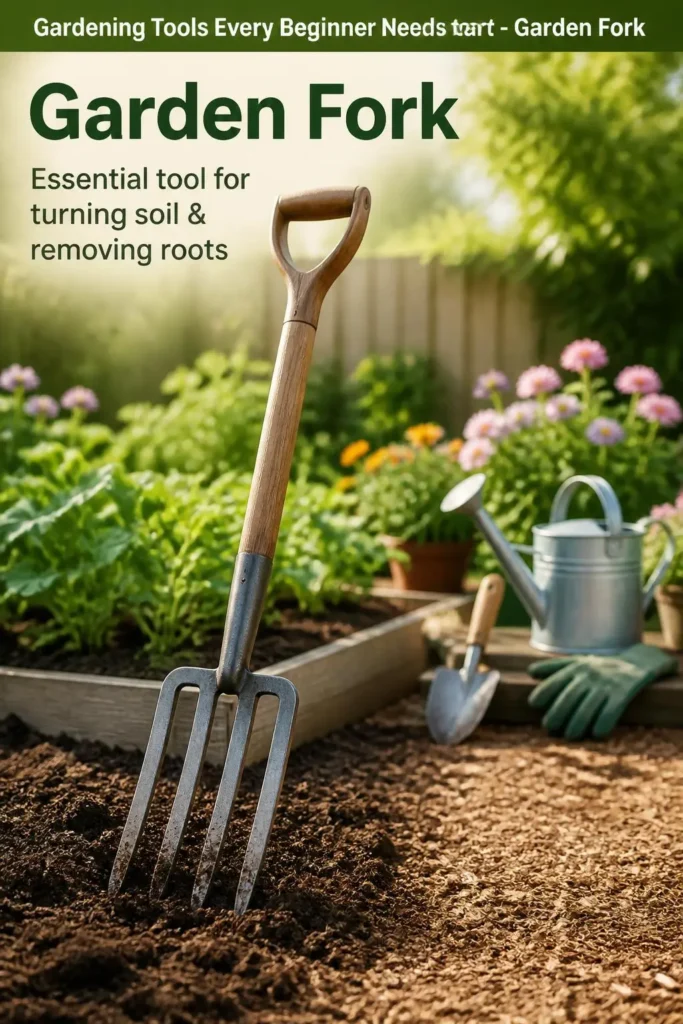
A garden fork does the work that a spade cannot. Its four tines pierce compacted soil and break up clumps in a way that a flat blade cannot manage, which makes it the right tool for aerating beds, turning compost, loosening root vegetables before harvest, and working organic matter into existing soil.
The long-handled version handles large beds without requiring you to crouch. A border fork — a scaled-down version with shorter tines — is better suited for working between established plants where a full-sized fork would cause too much disturbance.
Stainless steel or carbon steel with a lacquered head both perform well. Carbon steel is typically stronger and preferred by experienced gardeners, but it requires cleaning and occasional oiling to prevent rust. Stainless steel is lower maintenance and performs well for most beginner tasks.
Buying tip: Test the weight of a fork before buying. A tool that feels slightly heavy in the shop becomes very heavy after twenty minutes of turning soil. Lighter stainless forks reduce fatigue without sacrificing enough durability to matter for a beginner’s workload.
3. Spade
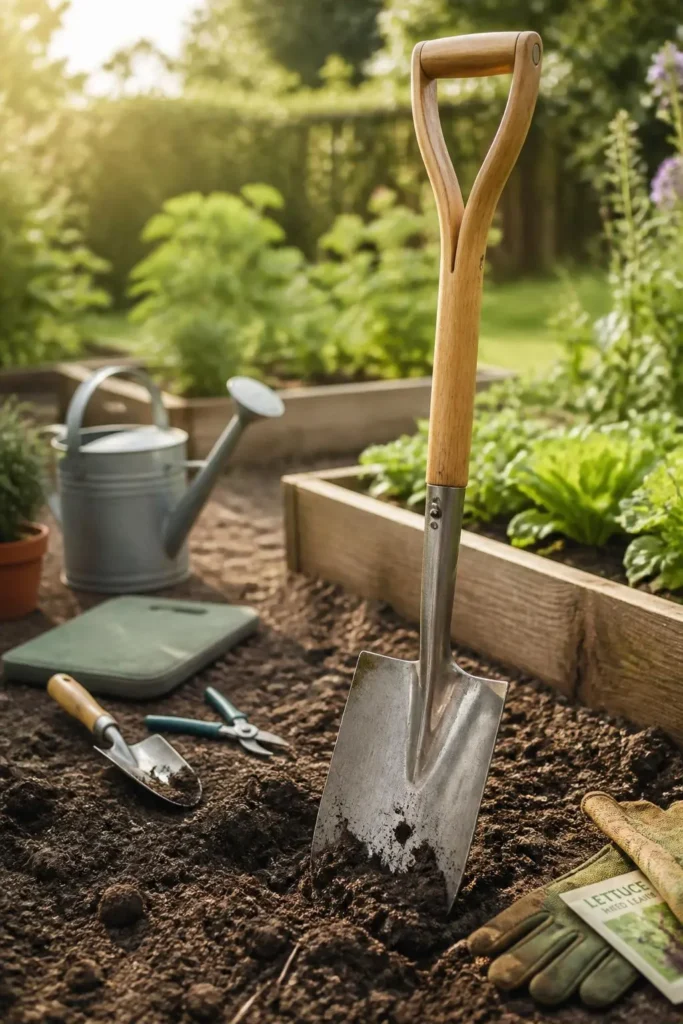
A spade has a flat, squared blade designed for digging planting holes, edging beds, slicing through turf, and moving soil from one place to another. It is not the same as a shovel — a shovel has a rounded, scooped blade for moving loose material like gravel or mulch, while a spade cuts into the earth cleanly.
The blade angle on a good spade allows the foot to press it into the ground with minimal effort. A D-grip handle at the top gives control during precise digging work. A long straight handle provides more leverage for general digging and is better suited for working over a large area.
Carbon steel blades hold a sharper edge than stainless for cutting through roots and compacted soil. Run a metal file along the lower edge of a new spade before first use — a sharp blade requires noticeably less effort than a blunt one and cuts cleanly through sod and root systems that a dull edge would tear.
Buying tip: A full-length spade with a carbon steel blade and an ash wood handle is the combination that experienced gardeners reach for first. The wood handle absorbs vibration from stony ground in a way that metal handles do not.
4. Rake
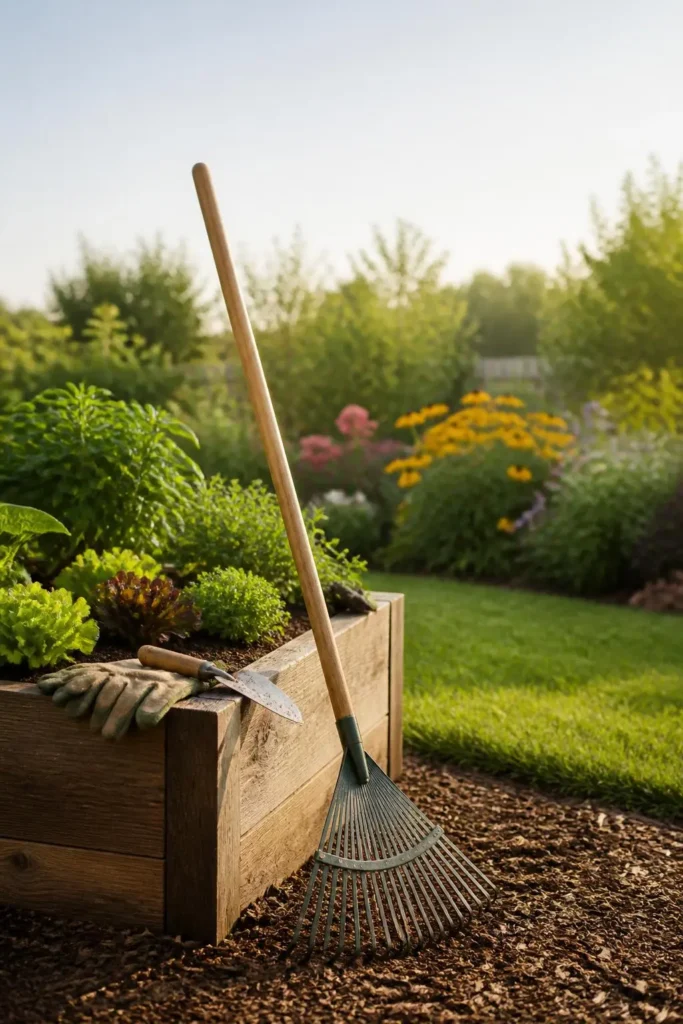
Two different rakes serve two completely different purposes and it is worth understanding the difference before buying. A soil rake — with short, rigid metal tines — levels beds, breaks up soil clumps, removes stones, and creates the fine tilth needed for sowing seeds. A leaf rake — with long, flexible fan-shaped tines — gathers leaves, grass clippings, and surface debris from lawns and beds.
For a beginner starting with a vegetable bed or a planting border, the soil rake is the more immediately useful tool. It is the last step before sowing — the tool that takes a dug and forked bed and turns it into a surface fine enough for small seeds to make contact with the soil properly.
Choose a rake with adjustable tine width if storage space is limited. Several models allow the head to fold or the tines to adjust, making them genuinely multipurpose without requiring two separate tools.
Buying tip: The handle length should allow upright use without stooping. Raking with a handle that is too short causes lower back fatigue long before the task is complete.
5. Hoe
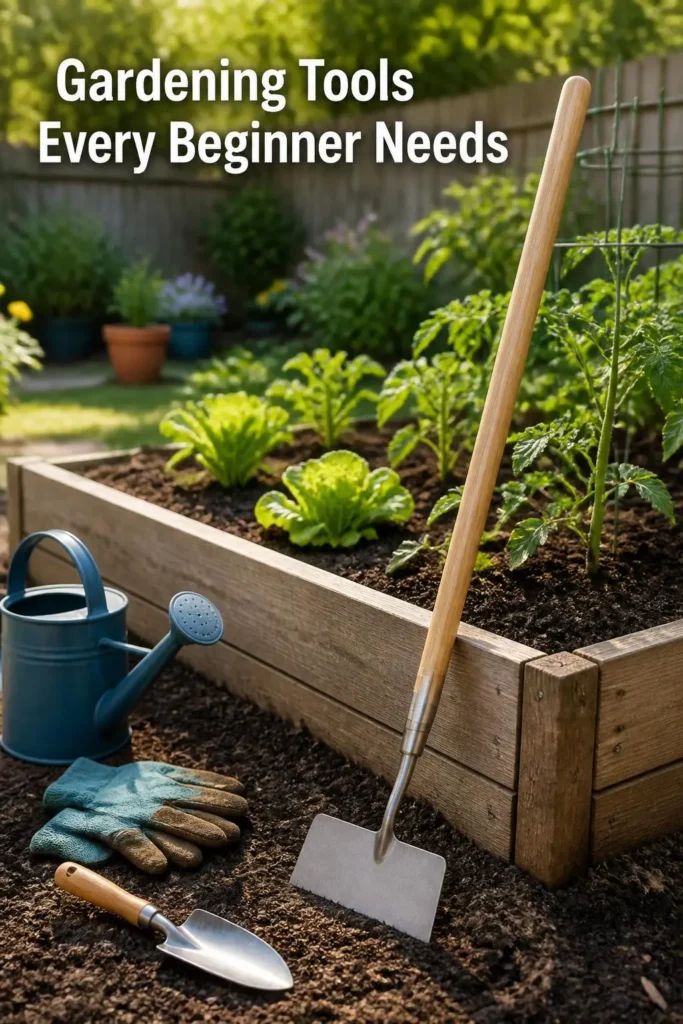
A hoe is a weeding and soil cultivation tool that works by pushing or pulling a flat or angled blade just below the soil surface to sever weed roots without disturbing the surrounding bed. Used regularly — before weeds become established — it keeps beds clean with minimal effort.
The Dutch hoe, with its flat push-pull blade, is the most versatile style for beginners. It works on the forward stroke and the backward stroke, which doubles the efficiency of each pass. A draw hoe, with its perpendicular blade, is better for drawing seed drills and earthing up potatoes but less useful as a general weeding tool.
Hoe on a dry day when possible. Weed seedlings severed from their roots and left on the surface in dry conditions will shrivel and die within hours. Hoe on a wet day and the same severed weeds may re-root before they have time to dry out.
Buying tip: A sharp hoe is a different tool from a blunt one. Sharpen the blade with a metal file at the start of each season and again mid-season. The difference in effort required between a sharp and dull hoe blade is dramatic.
6. Watering Can
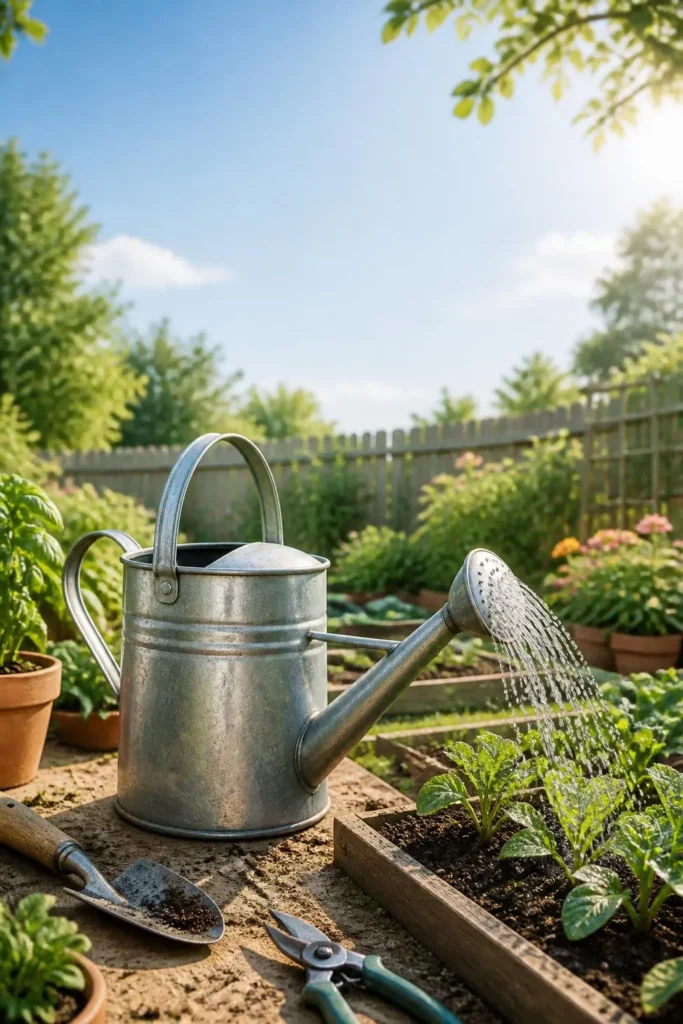
A watering can with a detachable rose head — the perforated cap that breaks water into a fine spray — is essential for seedlings, young transplants, and any plant that would be damaged or dislodged by a direct stream of water. The rose gives gentle, even coverage that mimics rainfall without disturbing the soil surface.
Choose a capacity that makes sense for your physical strength when full. A nine-litre can holds nine kilograms of water — comfortable for some, too heavy for others after several trips. A smaller six-litre can requires more refills but causes less strain over the course of a watering session.
A long spout allows water to reach plants at the back of a deep border without the need to lean across other plants. For container gardening specifically, a long-spouted can gives much better control than a short one.
Buying tip: Galvanised metal cans last significantly longer than plastic versions and develop a patina over time that looks beautiful in a garden setting. The additional weight when empty is the only real trade-off.
7. Garden Hose with Adjustable Nozzle
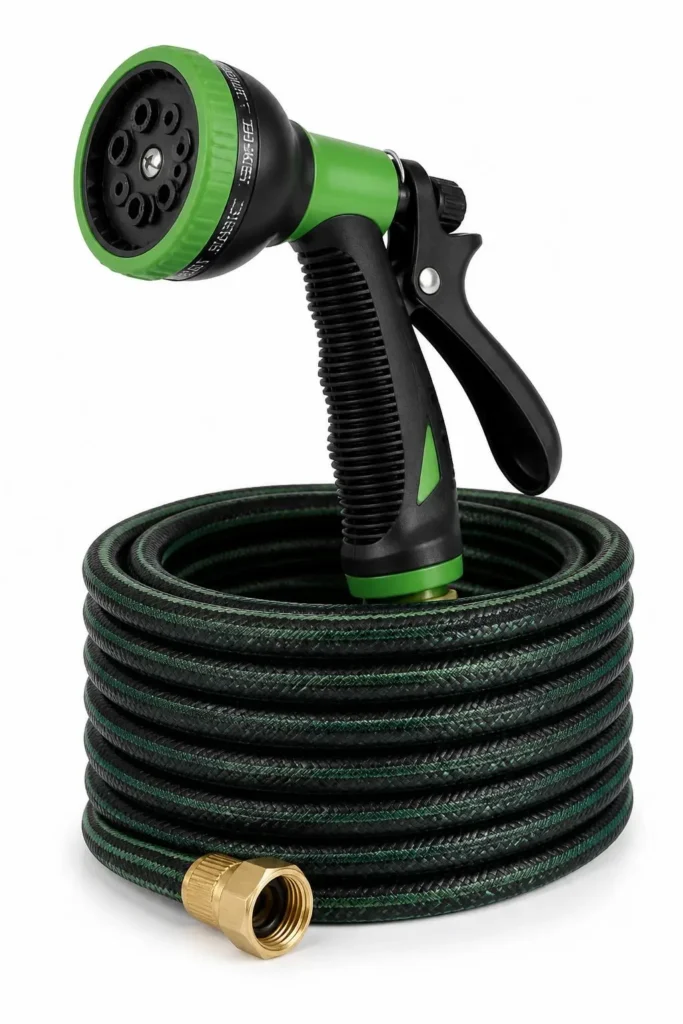
A garden hose with an adjustable spray nozzle handles the watering tasks too large or too far from the tap for a watering can. An adjustable nozzle cycles between a fine mist for seedlings, a jet for washing paths and pots, and a gentle shower setting for established plants — a single tool that replaces several.
Look for a hose with at least a five-layer construction to prevent kinking — kinking is the most frustrating characteristic of cheap hoses and makes them significantly slower to use than a properly constructed model. A hose reel, either wall-mounted or portable, keeps the hose organized and prevents the tripping hazard of a hose left coiled on the ground.
Match the hose length to the garden rather than buying the longest available. Excess length adds weight and takes more effort to reel back in at the end of each session.
Buying tip: Expandable hoses are genuinely convenient for small gardens — they are light when empty, expand under water pressure, and contract back to a manageable size for storage. Their durability over multiple seasons is lower than a traditional hose, but for a beginner they offer an excellent balance of convenience and performance.
8. Pruning Shears
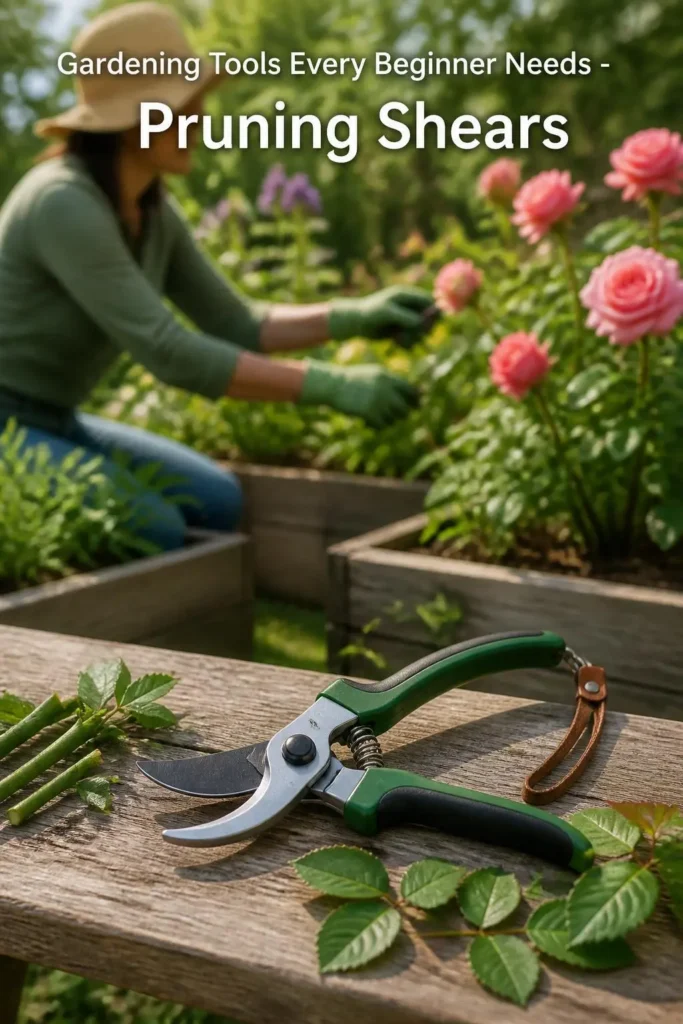
Pruning shears — also called secateurs — cut stems, deadhead flowers, harvest herbs, and shape shrubs with precision that no other cutting tool can match at this scale. They are used more frequently than almost any other tool in the garden and the quality of a pair makes a significant difference to both the result and the hand fatigue involved.
Bypass shears — where two curved blades pass each other like scissors — make the cleanest cut and are preferred for living growth. Anvil shears — where a single blade closes onto a flat anvil — are better suited for dead wood but crush living stems slightly rather than cutting cleanly, which can introduce disease.
Keep the blades clean and sharp. Wipe them with a cloth dampened with rubbing alcohol between plants to prevent transmitting disease. Sharpen the cutting blade with a sharpening stone at the start of each season. A well-maintained pair of bypass shears will last a decade or more.
Buying tip: Spring-loaded shears that open automatically after each cut reduce hand fatigue during extended pruning sessions. This feature is worth paying for if the garden includes roses, fruit trees, or anything requiring frequent pruning.
9. Loppers
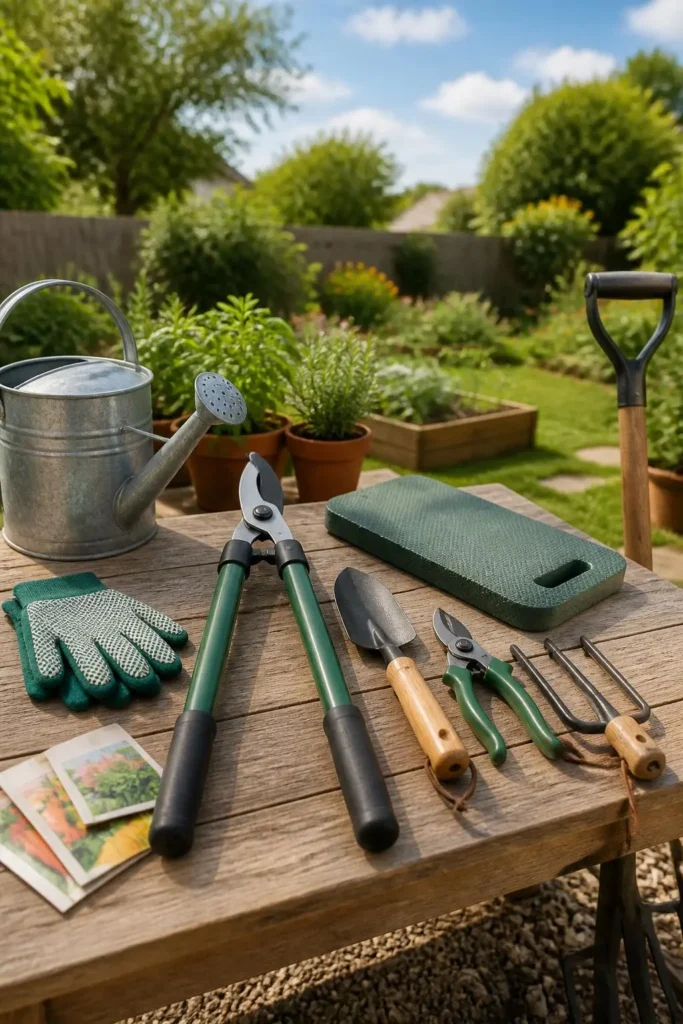
Loppers are essentially long-handled pruning shears that provide the leverage and reach to cut branches between two and five centimetres in diameter — too thick for secateurs and too small for a pruning saw. They handle the lower branches of fruit trees, overgrown shrubs, and any woody stems that resist the smaller cutting tool.
The long handles — typically sixty to ninety centimetres — allow branches above head height to be cut without a ladder in many situations and provide the mechanical advantage needed for thick wood without requiring excessive hand strength.
Bypass loppers make cleaner cuts than anvil models on living wood for the same reasons as secateurs. Extendable handles that telescope longer add reach when needed and store more compactly when not. Gear-assisted loppers multiply cutting power significantly and are worth considering for anyone pruning mature shrubs or small trees regularly.
Buying tip: Check the maximum cutting diameter on any pair of loppers before purchase. Attempting to cut beyond the stated capacity damages the blades and the joint mechanism, and the tool will never cut cleanly again.
10. Garden Gloves
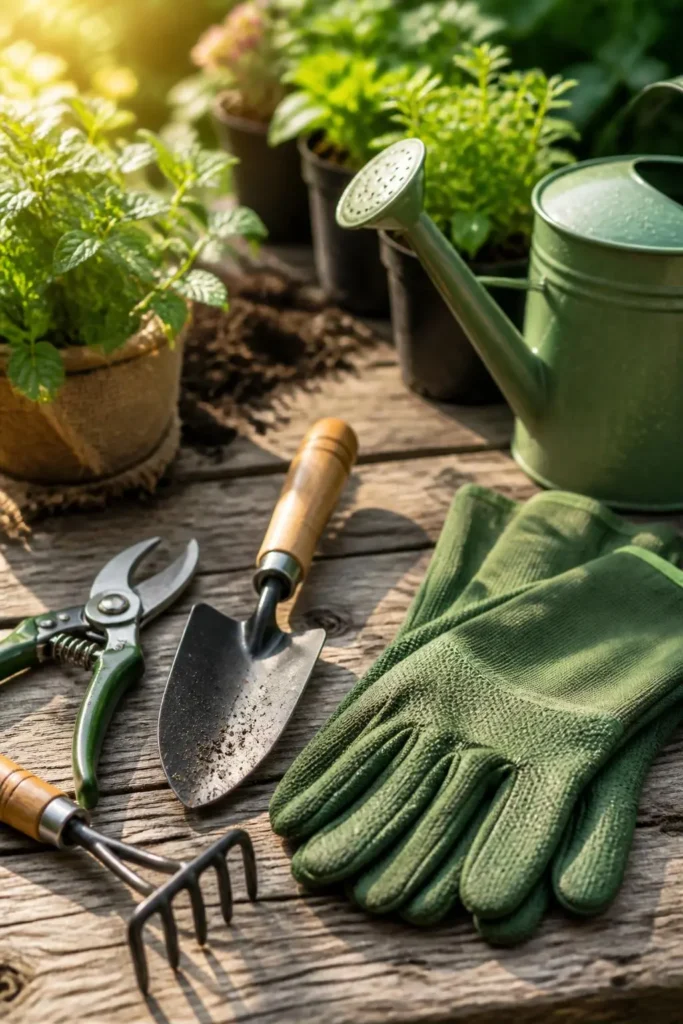
Garden gloves protect hands from blisters, thorns, soil-borne bacteria, and the persistent staining that comes from working with compost and potting mixes. Beyond protection, a well-fitted pair improves grip and reduces the hand fatigue that comes from gripping tools directly.
Leather gloves with a suede or grain leather palm and a breathable fabric back offer the best combination of protection and dexterity for most garden tasks. Nitrile-coated gloves — fabric gloves with a rubber coating on the palm and fingers — provide excellent grip in wet conditions and suit lighter tasks like planting and weeding.
Fit matters more than most beginners expect. A glove that is too large bunches at the fingers and makes precision work clumsy. A glove that is too tight restricts movement and becomes uncomfortable quickly. Try both hands — most people have one hand slightly larger than the other.



Buying tip: Keep two pairs — a heavy leather pair for pruning roses and thorny shrubs, and a lighter nitrile pair for everyday planting and weeding. Rotating between them extends the life of both.
11. Kneeling Pad
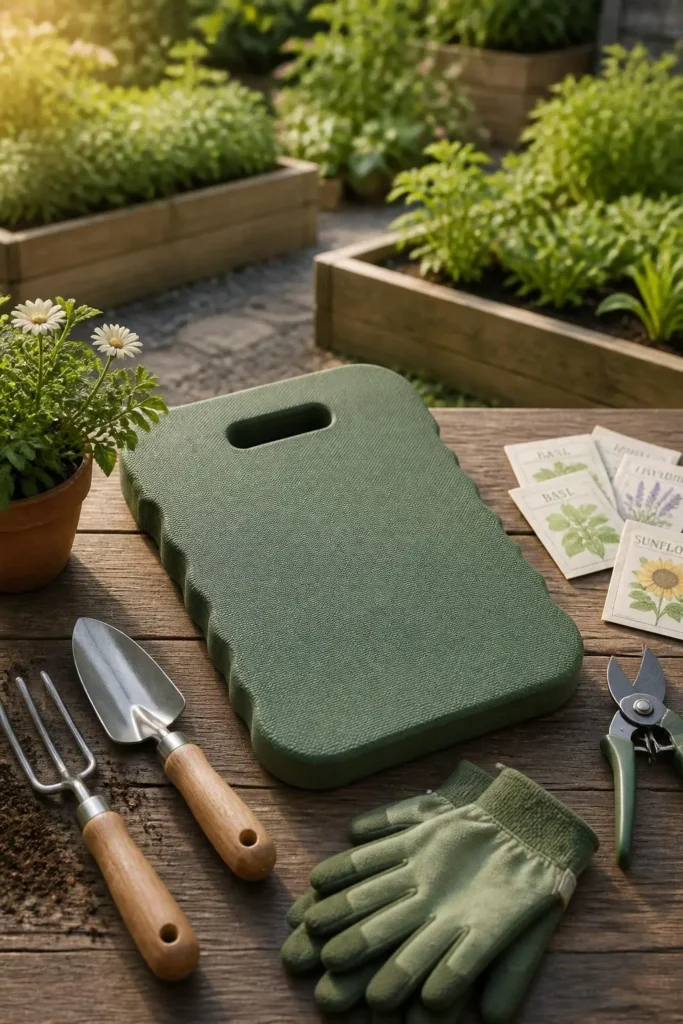
Kneeling on bare soil or a hard path for twenty minutes is the kind of discomfort that ends gardening sessions earlier than they should. A kneeling pad removes that limitation entirely and makes extended close work — weeding, planting, edging — genuinely comfortable.
A thick closed-cell foam pad provides cushioning and insulation from cold, damp ground. Waterproof foam is preferable to open-cell foam that absorbs moisture and stays wet. A kneeling bench — with two side handles that assist in standing back up — offers additional support for gardeners with knee or joint issues and doubles as a low seat when turned upside down.
Buying tip: A kneeling pad attached to a tool belt or worn as a knee pad keeps it available without needing to carry or remember it separately. For those who spend significant time close to the ground, worn knee pads are more practical than a standalone pad.
12. Wheelbarrow
Difficulty: Easy / Beginner Essential Est. Cost: $60–$180
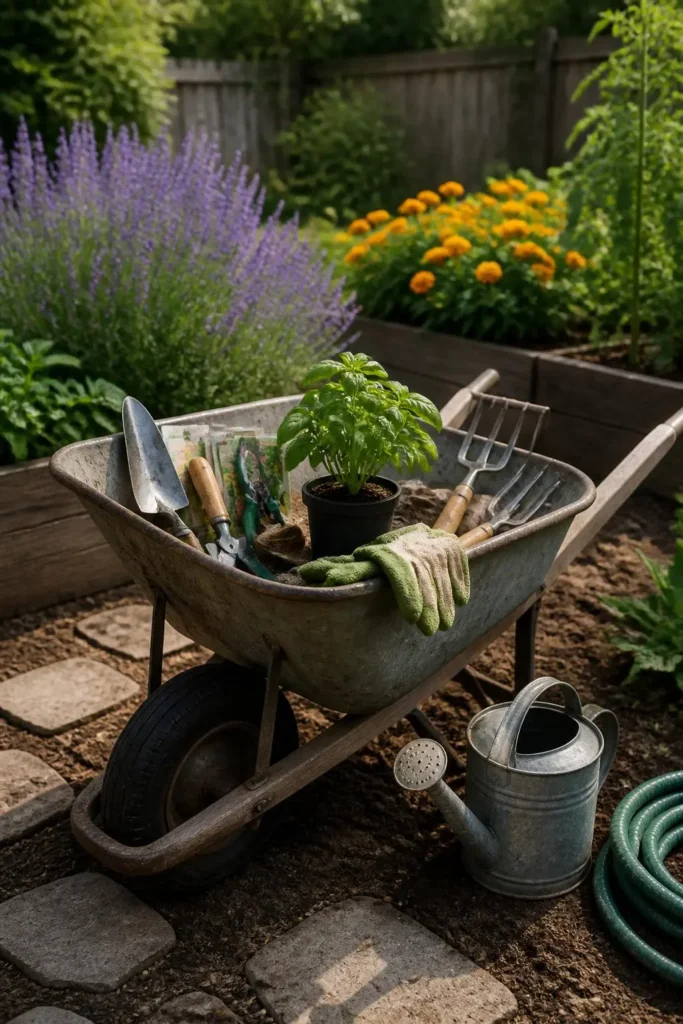
A wheelbarrow is the garden’s primary transport tool — the piece of equipment that makes the difference between carrying heavy loads by hand in multiple small trips and moving the same volume efficiently in one. Compost, soil, mulch, harvested vegetables, pruned branches, and garden debris all move more easily with a wheelbarrow than without.
A single-wheel design is more maneuverable on narrow paths and around tight corners than a two-wheeled version. A two-wheeled design is more stable when loaded with heavy or uneven loads and better suited to soft or uneven ground where a single front wheel sinks.
Steel trays last longer than polypropylene under heavy use but add to the overall weight. A pneumatic tyre handles rough ground and gravel paths more smoothly than a solid rubber tyre, though it requires occasional inflation and is vulnerable to puncture.
Buying tip: Test the balance of a wheelbarrow before purchasing. When loaded, the weight should sit above or just forward of the wheel rather than behind it. Poor balance makes a loaded barrow much harder to control and maneuver than a well-designed one.
13. Garden Knife
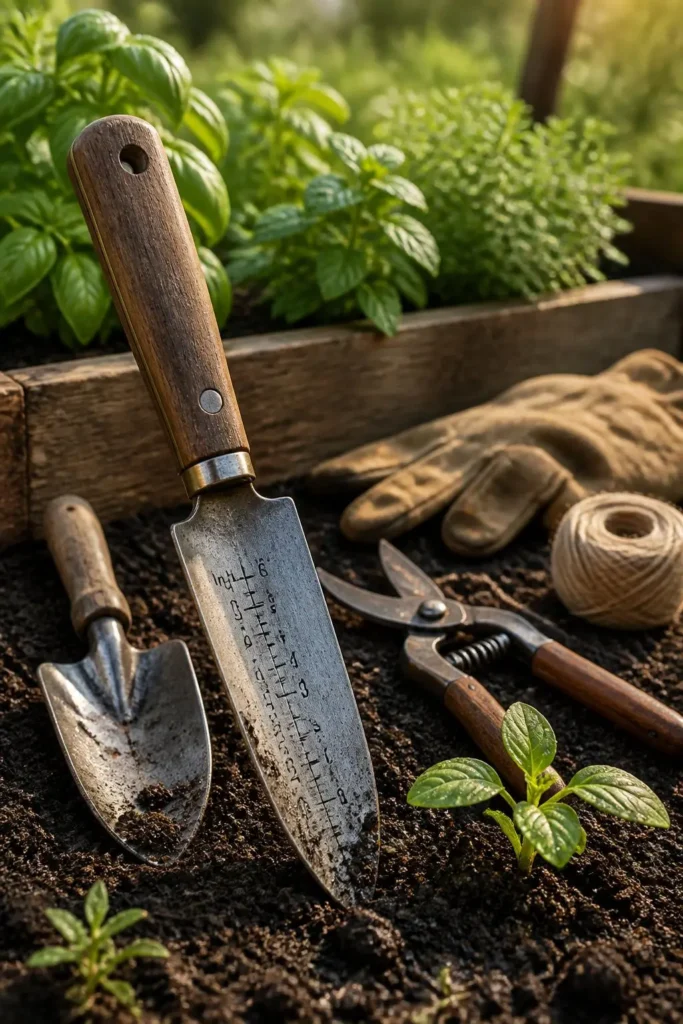
A garden knife — sometimes called a hori hori or soil knife — is one of those tools that beginners overlook until they have one, at which point it becomes one of the most frequently reached-for tools in the shed. The slightly serrated stainless steel blade digs, cuts, divides perennials, transplants, opens bags, and scores the roots of pot-bound plants.
The hori hori style has a concave blade with one serrated edge and one smooth edge — the serrated side saws through roots and weeds, the smooth side slices cleanly through soil. Depth markings along the blade serve the same function as those on a hand trowel, making it a precise planting tool as well as a cutting one.
A leather sheath keeps the blade protected when not in use and allows the knife to be worn on a belt for immediate access during planting sessions without returning to the tool storage.
Buying tip: A full tang construction — where the steel blade extends the full length of the handle — is significantly stronger than a partial tang version. Choose full tang for a tool that handles heavy daily use without the handle separating from the blade.
14. Dibber
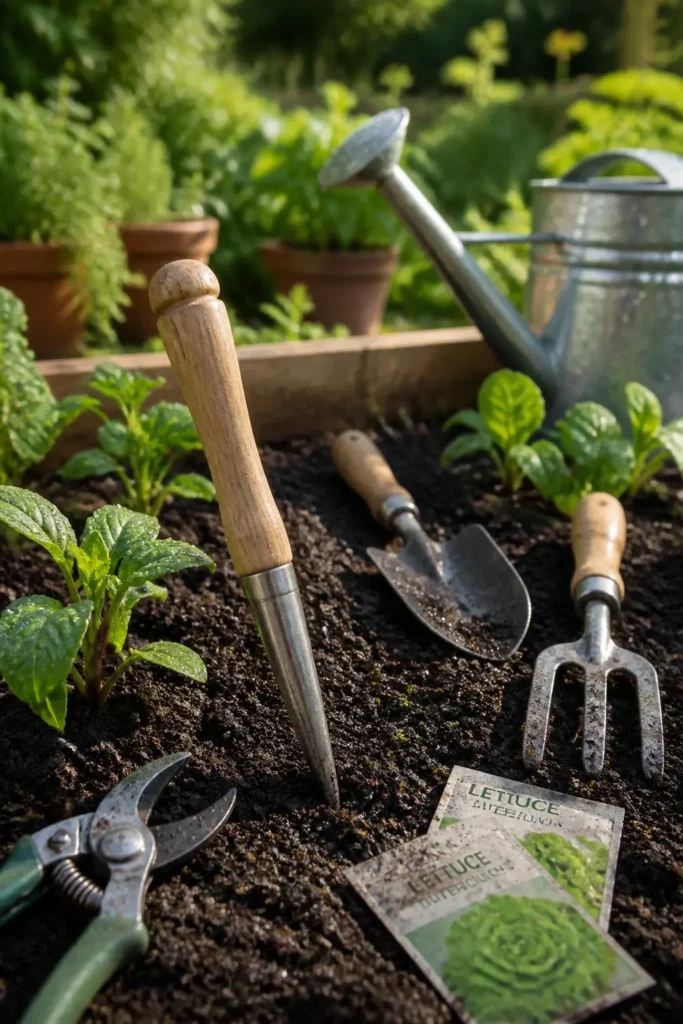
A dibber is one of the simplest tools in the garden and one of the most useful for specific tasks. It is a pointed or blunt-tipped rod — wood or metal — used to make holes in soil for planting bulbs, seedlings, or large seeds like beans and peas without disturbing the surrounding soil structure.
A dibber makes a clean, precise hole at exactly the right diameter and depth rather than the ragged cavity that a trowel creates. For planting out a tray of seedlings, it speeds up the process considerably — one press, one seedling in, one firm, move to the next. The difference in speed becomes very noticeable when planting fifty or more seedlings of the same type.
Marked depth graduations on the shaft allow consistent planting depths without measuring. A T-bar handle at the top makes pressing into firm soil significantly easier on the wrist than a handle-less version.
Buying tip: A wooden dibber with a pointed metal tip combines the comfort of wood with the durability of metal at the working end — the point stays sharp and doesn’t wear down the way an all-wood tip does after a season of use in stony soil.
15. Garden Twine
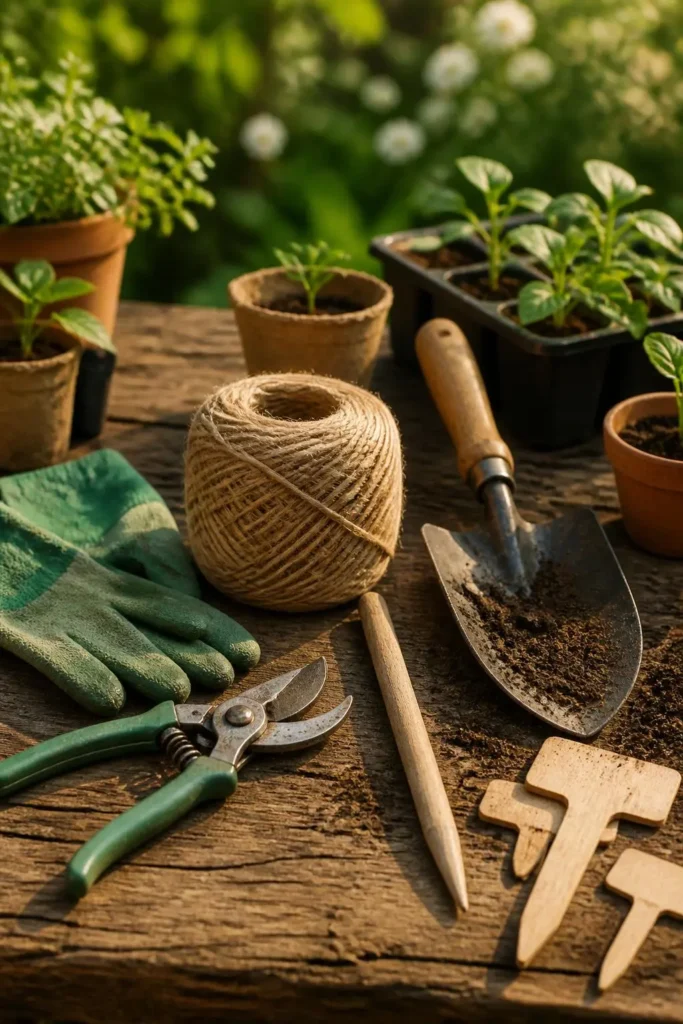
Garden twine ties climbing plants to supports, bundles harvested herbs and flowers, marks out straight planting lines, and labels rows between stakes. It is one of those supplies that disappears faster than expected and is always needed at precisely the moment when there is none left.
Natural jute twine is biodegradable, gentle on plant stems, and strong enough for most supporting tasks. It degrades over a single season in wet outdoor conditions, which means tied plants can often be composted at the end of the year without needing to remove the twine separately. Synthetic twine lasts longer but can cut into growing stems if tied too tightly and does not decompose.
Keep a ball dispenser — a small container with a hole in the top — in the garden so twine can be pulled out cleanly without the ball rolling away or the twine tangling.
Buying tip: Buy twine in a larger quantity than initially seems necessary. Running out mid-season is inconvenient, and a larger ball costs proportionally less per metre than a small one.
16. Plant Labels and Waterproof Marker
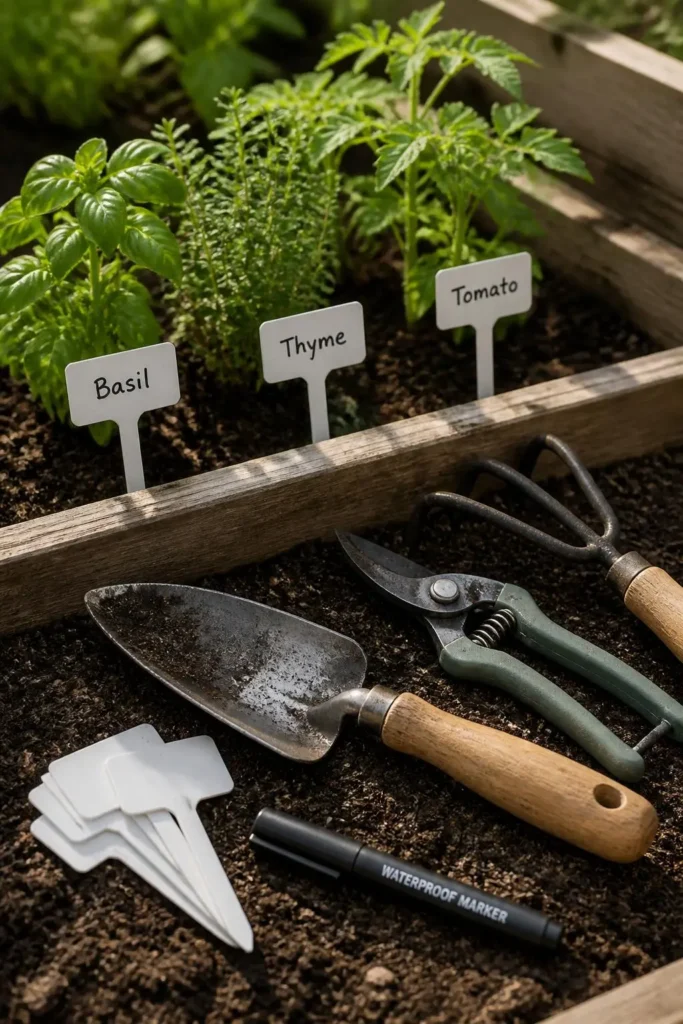
Plant labels are one of those beginner essentials that seem unnecessary until the first time an unmarked bed produces an unidentifiable seedling three weeks after sowing. Labelling every row, pot, and tray at the time of planting removes all the guesswork that follows.
Plastic T-labels in white are the most practical — they are reusable, take pencil and most permanent marker inks, and can be wiped clean with a damp cloth at the end of the season. Wooden labels look more attractive and decompose in a compost bin, but they have a shorter outdoor lifespan before the wood swells, splits, and becomes illegible.
A dedicated waterproof garden marker holds up against rain and sun exposure where a standard permanent marker fades within weeks. Pencil on plastic labels is the most fade-resistant option of all — graphite holds its legibility through an entire season even in consistently wet conditions.
Buying tip: Write the plant name and the sowing date on every label. The date becomes valuable context when growth is slower or faster than expected and makes season-to-season comparisons genuinely useful.
17. Soil Thermometer
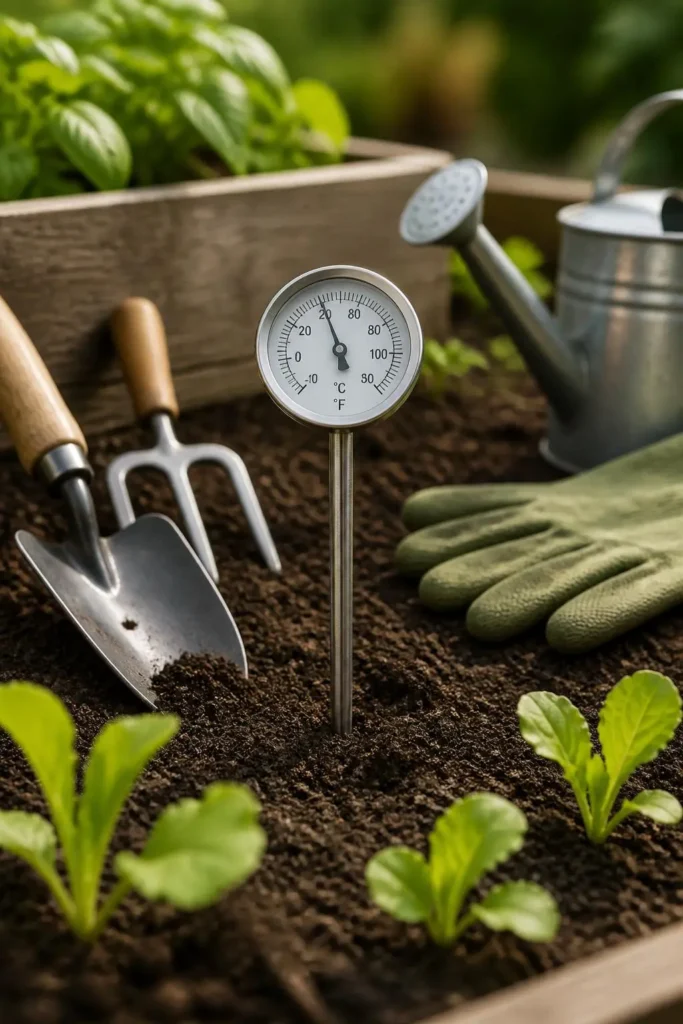
Soil temperature determines whether seeds will germinate or simply sit dormant in cold earth and eventually rot. Knowing the actual temperature rather than guessing based on calendar date transforms seed-sowing timing from approximate to precise.
Most cool-season vegetables germinate reliably above seven degrees Celsius. Warm-season crops like tomatoes, courgettes, and beans need soil temperatures consistently above fifteen degrees. Sowing before these thresholds means poor germination rates and wasted seed regardless of how carefully the soil was prepared.
A simple probe thermometer pushed into the soil at ten centimetres depth gives an accurate reading in less than a minute. Take the reading in the morning when soil temperatures are most stable and most representative of growing conditions.
Buying tip: Test soil temperature in the bed that will be sown rather than in a different area of the garden. Temperature varies significantly between an open sunny bed and a shaded border even on the same property.
18. Compost Bin
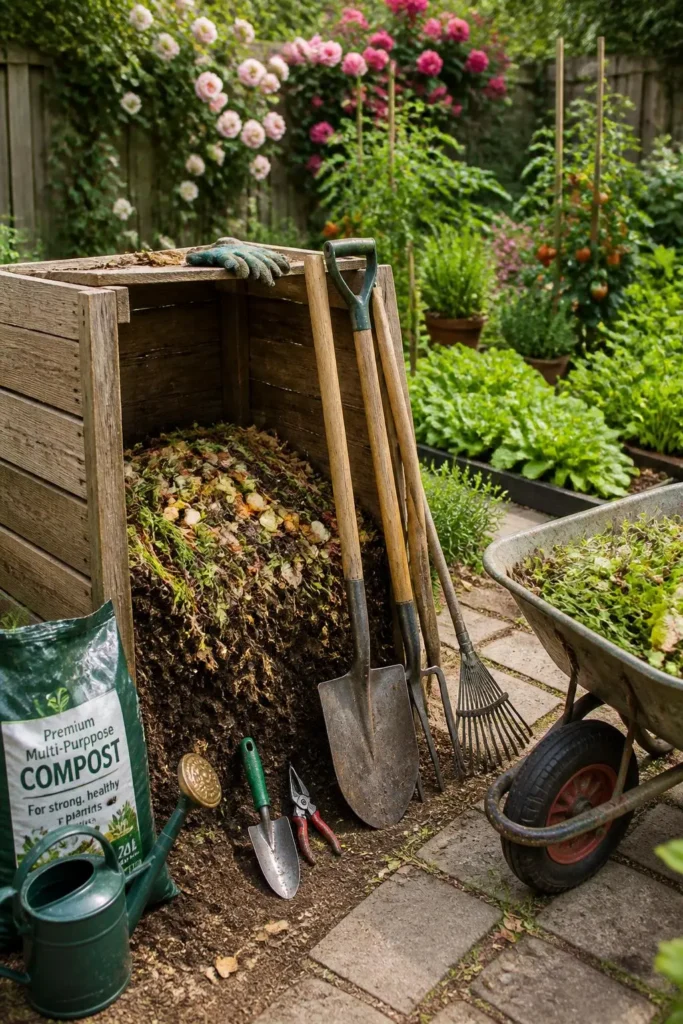
A compost bin turns garden waste and kitchen scraps into the most useful material a beginner can add to their soil — for free. Finished compost improves soil structure, feeds soil life, retains moisture in sandy soils, and improves drainage in clay soils. It is the foundation of productive, healthy growing.
A simple plastic compost bin with a lid is sufficient for most beginner gardens. Position it directly on bare soil rather than on concrete or paving so soil organisms — worms, bacteria, fungi — can access the composting material from below and accelerate the process.
Add a balanced mix of brown material — cardboard, straw, dried leaves — and green material — fresh grass clippings, vegetable peelings, spent plants. An imbalanced bin that is all green material becomes wet and anaerobic. An all-brown bin decomposes too slowly to be useful within a season.
Composting tip: Chop or tear materials into smaller pieces before adding them to the bin. Smaller pieces have more surface area for decomposition to work on and break down significantly faster than large intact items.
19. Bulb Planter
A bulb planter removes a precise cylinder of soil at the correct depth for the bulb being planted — deeper for large bulbs like tulips and alliums, shallower for small bulbs like crocuses and grape hyacinths. It is faster and more consistent than using a trowel for planting large quantities of the same bulb.
The handheld version works like a large dibber and suits planting a moderate number of bulbs in borders and beds. A long-handled version allows bulb planting while standing, which makes planting hundreds of bulbs across a lawn or a large bed far less physically demanding.
Most bulb planters have depth markings on the side of the tube so the hole can be made to exactly the right depth by aligning the marking with the soil surface before pressing.
Buying tip: Look for a bulb planter with a release mechanism that ejects the soil core cleanly from the tool after making each hole. Models without a release require shaking or scraping the soil core out manually, which slows the process considerably when planting in quantity.
20. Gardening Apron with Pockets
A gardening apron with multiple pockets keeps the tools most frequently reached for during a session immediately accessible without trips back to the shed for a trowel, a pair of secateurs, or a plant label that was set down somewhere and now cannot be found.
Deep front pockets hold a hand trowel, pruning shears, and a ball of twine. Smaller pockets keep a soil thermometer, plant labels, and a marker within reach. A loop or clip holds loppers or a garden knife at hip height. Everything needed for a working session goes into the apron before heading to the garden.
Canvas or waxed cotton construction holds up to daily outdoor use and wipes clean easily. Adjustable straps allow the apron to be worn over different clothing layers as the season changes from a light shirt in summer to a heavy coat in autumn.
Buying tip: Choose a model with at least one deep central pocket large enough to hold harvested herbs, cut flowers, or a handful of peas picked fresh from the vine. The harvest pocket gets used more than any other feature on a gardening apron.