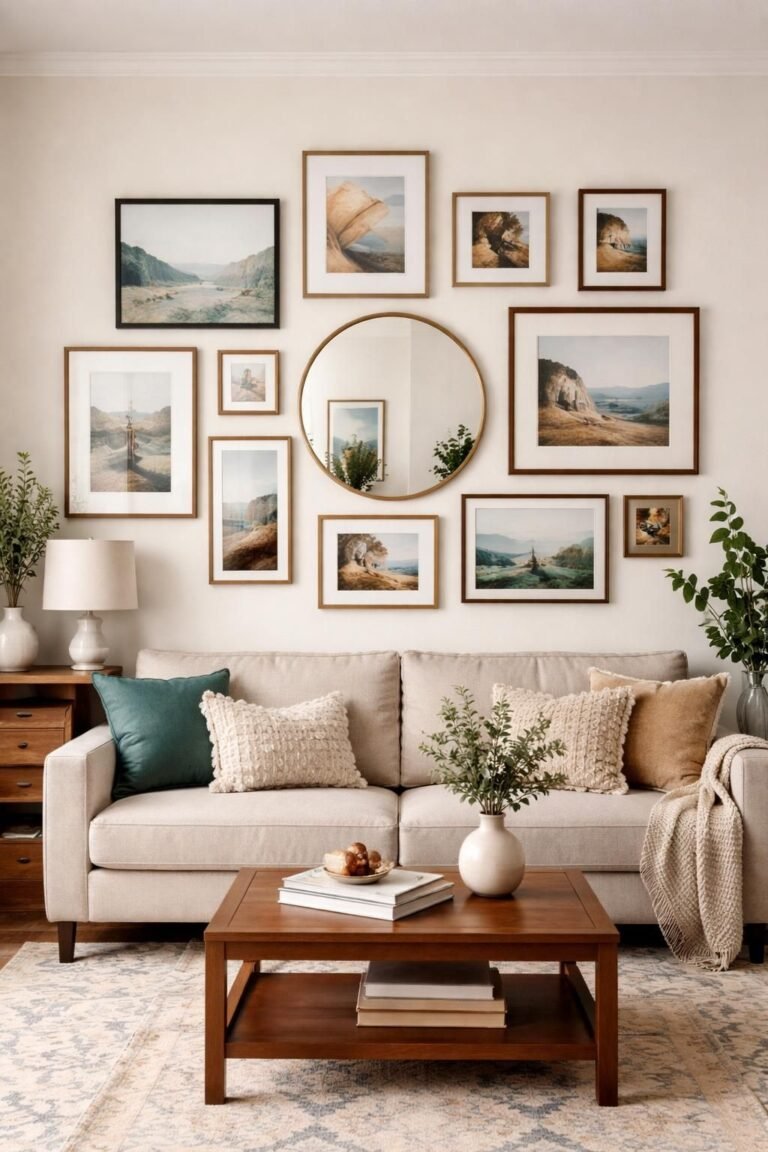
10 Modern LED Wall Decor Ideas for a Minimalist Living Room
Minimalism and LED lighting are a natural pairing — and most people never fully realize it.
The minimalist room is defined by what is taken away. Clean surfaces, open space, and nothing on the wall that doesn’t earn its place. LED lighting works within that philosophy perfectly because it adds warmth, depth, and visual interest without adding objects, clutter, or visual noise. A single strip of warm light behind a floating shelf does more for a minimalist living room than a shelf full of decorative objects ever could.
Here are 10 ideas that bring modern LED lighting into a minimalist living room without compromising the calm that makes the style worth pursuing.
1. Floating Shelf with Recessed LED Strip Lighting
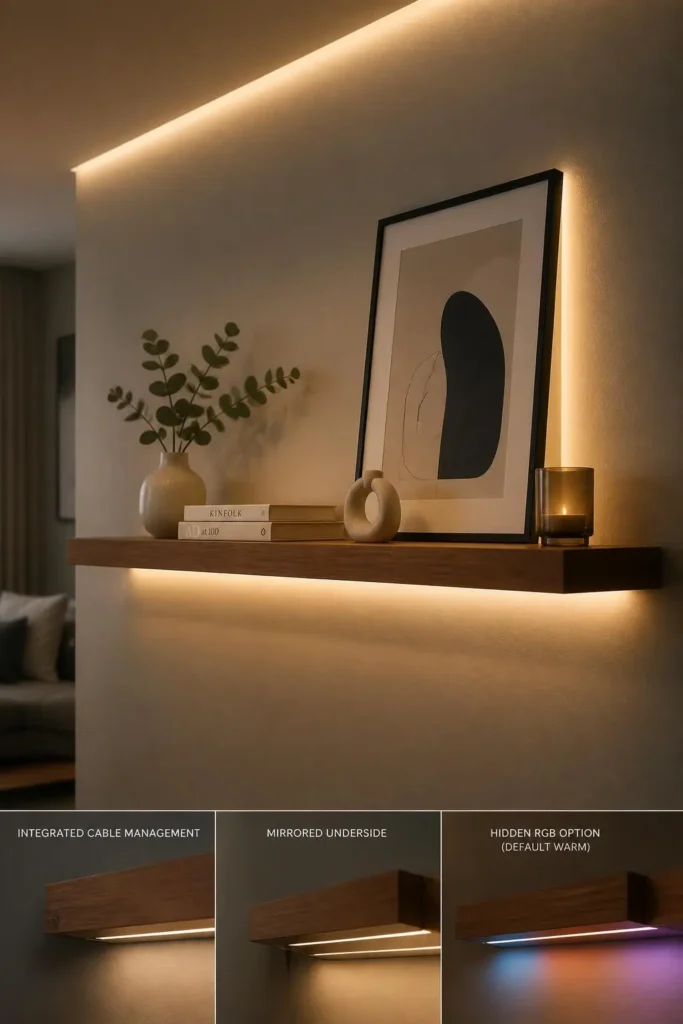
Difficulty: Medium / 3–5 Hours Est. Cost: $100–$280
A single long floating shelf mounted at eye height on the main living room wall, with a warm white LED strip tucked into a recessed channel along its underside, creates the most fundamental LED wall decor effect in a minimalist room. The light falls downward onto the wall surface and creates a soft glow that makes the wall appear to recede — a visual effect that adds depth to a flat surface with no structural work required.
Choose a shelf with enough depth to cast shadow beneath the LED strip rather than allowing the strip itself to be directly visible from a seated position. A shelf depth of twenty-five to thirty centimetres typically conceals the strip from normal viewing angles. The diffused glow is the effect — the source itself should never be seen.
Style the shelf surface with complete restraint. One ceramic object, one small plant, and one framed print are the maximum for a minimalist shelf. The empty shelf space around the objects is as important as the objects themselves — the negative space allows the warm LED glow beneath to read clearly rather than being competed with by a cluttered surface.
Buying tip: Addressable RGB strips allow the color temperature to be adjusted via a phone app — warm amber for evenings, neutral white for daytime — without replacing any hardware. A single strip installation covers every lighting mood the shelf will need.
2. Backlit Mirror as a Functional Wall Feature
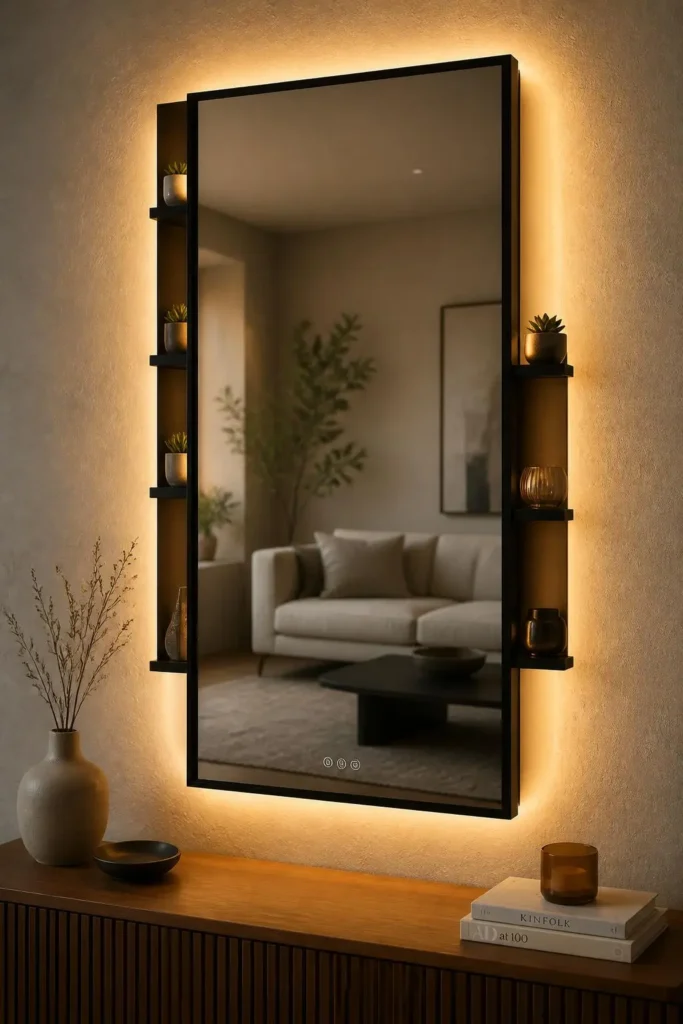
Difficulty: Easy / 1–2 Hours Est. Cost: $150–$400
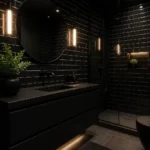
A large rectangular or circular mirror with integrated LED backlighting mounted flush against the living room wall serves as both a functional object and the primary light source for the wall it occupies. The ring of warm or cool light around the mirror’s perimeter creates a floating effect — the mirror appears to hover away from the wall rather than sit against it.
The backlit mirror works in a minimalist room precisely because it justifies its own presence. It is not purely decorative — it reflects the room, bounces light, makes the space feel larger, and provides functional illumination for anyone checking their appearance before leaving. Every element of its design has a purpose, which is exactly the standard minimalism holds all objects to.
Choose a mirror large enough to make a genuine visual impact — at least eighty centimetres in diameter for a round version or a hundred by seventy centimetres for a rectangular one. A small backlit mirror reads as an accessory. A large one reads as architecture.
Styling tip: Position the mirror on the wall directly opposite a window so the LED backlight and the natural light from the window balance each other across the room. The mirror doubles the apparent depth of the room during the day and takes over as the focal point at night.

3. LED Neon Word or Shape Wall Art
Difficulty: Easy / 30 Minutes Est. Cost: $80–$250
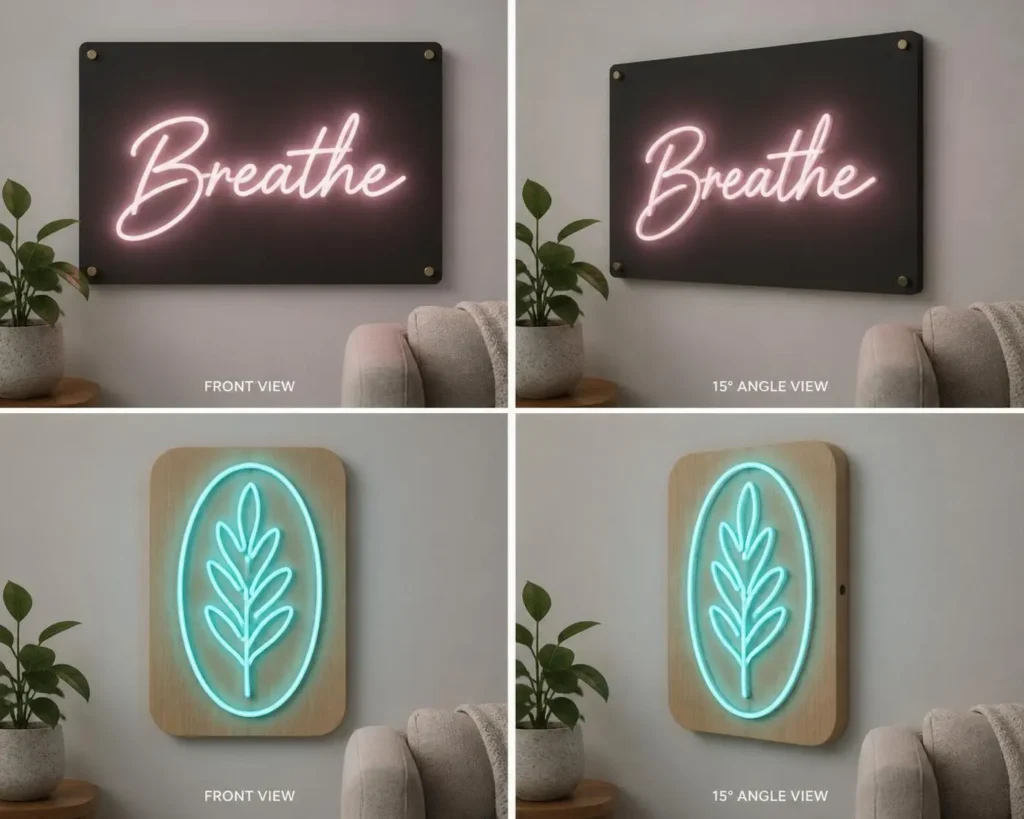
A single LED neon flex sign — one word, one phrase, or one simple geometric shape — mounted directly onto a white or off-white wall is the LED wall decor choice that adds personality to a minimalist room without adding visual complexity. The sign itself is minimal: a single line of light forming a shape or text against a plain background.
The shape or word matters for a minimalist room. A single abstract wave, a clean arch, a crescent moon, or a very short phrase in a simple font all read as intentional and refined. Avoid overly detailed shapes or long phrases — the more complex the sign, the less it suits a space defined by simplicity.
Mount the sign on a painted or unpainted plywood backing panel for a clean, deliberate presentation rather than feeding the wire directly into the wall. The backing panel frames the sign and gives it a defined boundary on the wall. A natural plywood finish complements the warm glow of the neon without competing with it.
Variation: Choose warm white or amber neon rather than color for a minimalist room. A colored neon sign draws the eye strongly and can overpower a room designed around restraint. Warm white reads as light rather than signage.
4. Cove Lighting Above a Feature Wall Panel
Difficulty: Hard / 1–2 Days with Carpentry Est. Cost: $400–$1,200
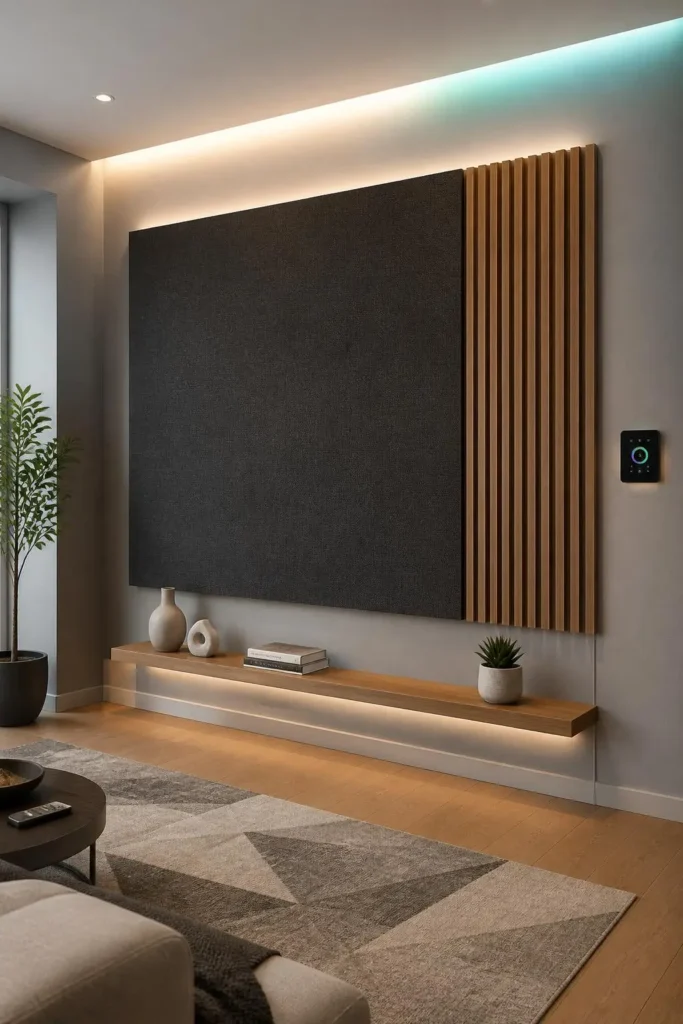
A plaster or MDF cove — a shallow recessed ledge built along the top of a feature wall — holds LED strip lighting that washes the wall below in an even downward glow. The cove itself is invisible from below; only the light it produces is seen. The result is a wall that appears to be lit from within rather than from a visible source.
This technique works particularly well on a textured feature wall — a wall clad in vertical timber slats, a limewash paint finish, or a fluted panel — where the directional light from the cove catches the texture and creates shadow and depth across the surface. A flat painted wall benefits less from cove lighting because there is no texture for the light to reveal.
The LED strips inside the cove should be on a dimmer circuit so the wall wash can be reduced to a very low level in the evening without switching off entirely. A wall of softly glowing timber slats at low brightness is one of the most atmospheric effects achievable in a minimalist living room.
Design tip: Extend the cove around two walls of the room rather than one for a continuous wash of light that makes the entire room feel like a single cohesive space rather than individual walls.
5. Vertical LED Floor-to-Ceiling Light Lines
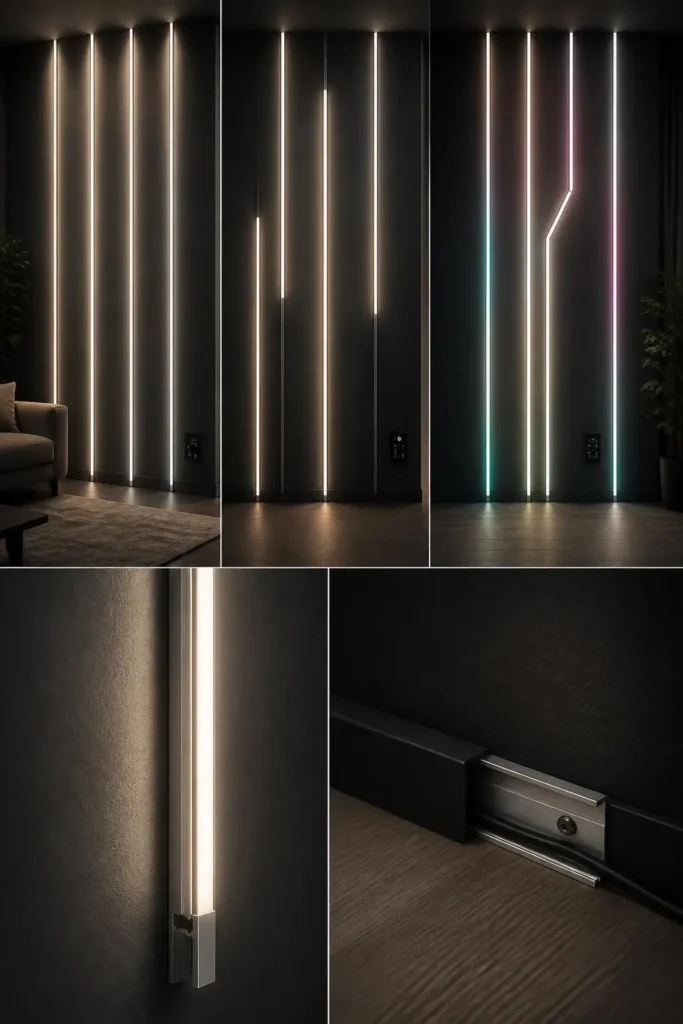
Difficulty: Medium / 3–4 Hours Est. Cost: $120–$300
Thin vertical LED channels — aluminium extrusion profiles with diffuser covers — mounted floor to ceiling at regular intervals on the wall create a graphic, architectural light feature that reads as both art and infrastructure. The lines are precise, minimal, and completely intentional in a way that feels more architectural than decorative.
Space the channels evenly — every forty to sixty centimetres works well in most living room contexts. An odd number of lines reads more naturally than an even number: three lines on a narrow wall, five on a wider one. The channels should all be the same size and finish — brushed aluminium or matte black — so the feature reads as a system rather than a collection of individual elements.
Use warm white LED strips inside the channels and connect all of them to a single dimmer switch so the entire feature responds as one. At full brightness the lines are bold and graphic. At ten percent they become a subtle ambient glow that defines the wall at night without dominating the room.
Installation tip: Run the channels in a continuous length from floor to ceiling rather than stopping at skirting board height. Floor-to-ceiling lines create a sense of height that interrupted lines cannot — the eye follows them upward and the ceiling appears higher as a result.
6. LED Backlit Floating TV Panel
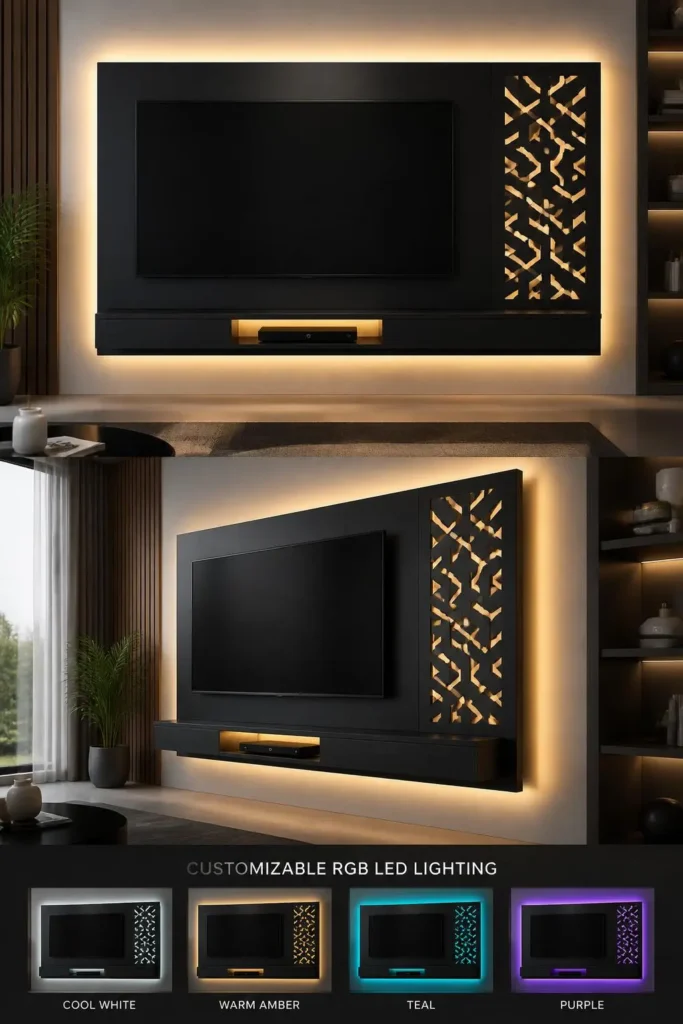
Difficulty: Medium / 4–6 Hours Est. Cost: $200–$600
The television wall is typically the most visually complex surface in a living room — a large black rectangle surrounded by wires and components that resists every effort to make it look considered. LED backlighting transforms it from the room’s most awkward element into its most deliberately designed feature.
Mount the television on a floating timber or MDF panel that extends significantly beyond the television’s own dimensions — wide enough to give the screen breathing room on either side. Install LED strip lighting along all four edges of the back of this panel so the light glows outward onto the wall behind in an even halo. The panel floats visually away from the wall, the television floats within the panel, and the result is a layered composition rather than a box on a wall.
The bias lighting behind the screen — the light that glows onto the wall behind the television — reduces eye strain during viewing by reducing the contrast between the bright screen and the dark wall around it. This is a functional benefit as well as an aesthetic one.
Cable tip: Run all television cables through the panel and into the wall at the bottom before mounting. A panel with visible cable management channels built in handles the remaining cables cleanly without requiring in-wall wiring.
7. Illuminated Geometric Wall Sculpture
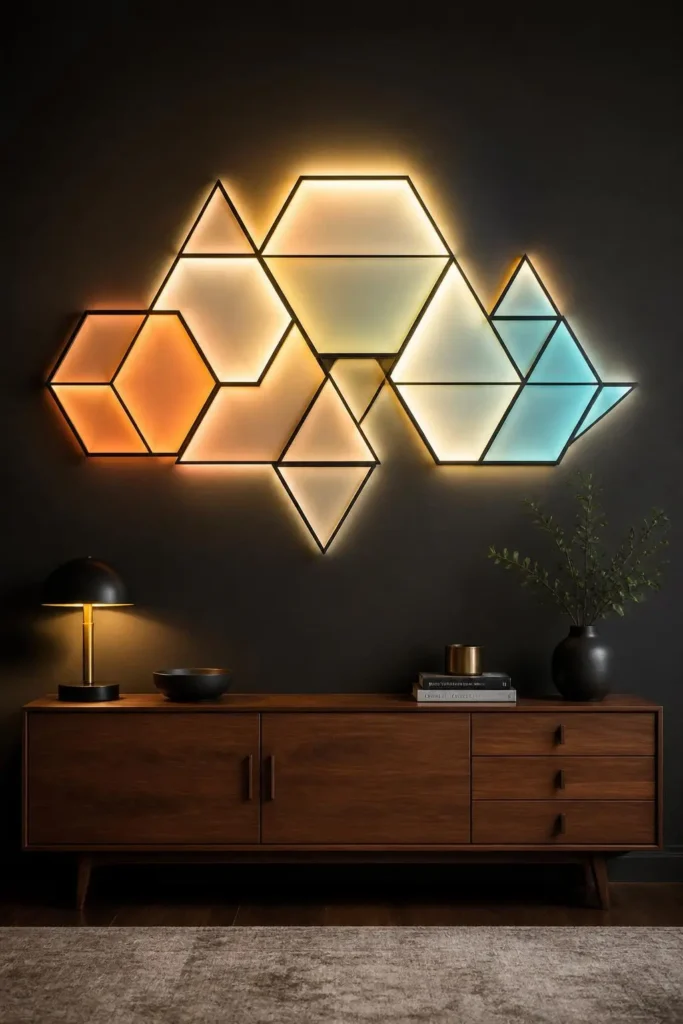
Difficulty: Medium / 2–4 Hours Est. Cost: $150–$450
A geometric wall sculpture made from painted MDF or laser-cut metal with LED strips hidden inside its recessed channels creates wall art that functions as a light source simultaneously. The sculpture is visible as a form during the day and transforms into an illuminated composition at night when the embedded lighting activates.
Simple geometric forms work best — hexagonal grids, concentric rectangles, overlapping triangles. The geometry should be clean enough that the form reads clearly when unlit and striking enough that the lit version justifies the wall space it occupies. Overly complex arrangements read as busy in a minimalist room regardless of how well they are illuminated.
Finish the sculpture panels in matte white or matte black so the surface absorbs rather than reflects the LED light. A reflective finish creates hotspots where the light source is brightest and undermines the diffused, even glow that makes these pieces effective.
DIY option: Cut hexagonal shelf panels from MDF, paint them matte white, and mount them in a honeycomb arrangement on the wall with LED strips tucked behind each panel. The panels cast light onto the wall behind them at low cost with a result that looks completely custom.
8. Recessed Alcove with LED Interior Lighting
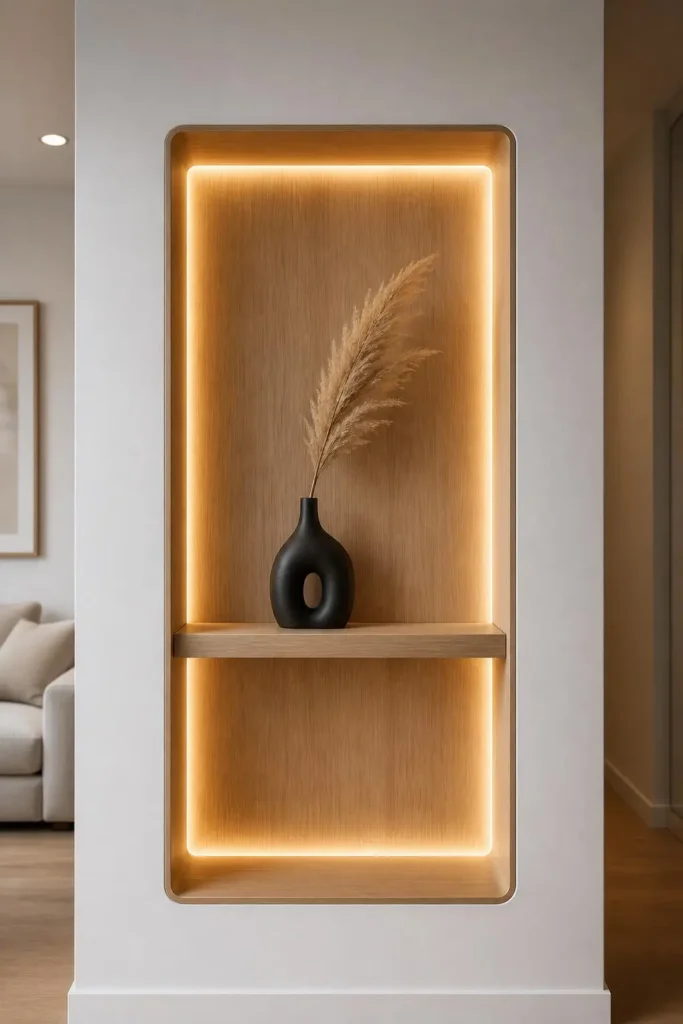
Difficulty: Hard / 3–5 Days with Construction Est. Cost: $600–$2,000
A recessed alcove — a rectangular niche cut or framed into the wall — with LED strip lighting installed along all four interior edges creates a glowing pocket of light that draws the eye and provides a defined display area simultaneously. The alcove reads as a frame around whatever is placed inside it, and the surrounding light gives even a single simple object the presence of a museum installation.
The interior of the alcove should be painted a color that complements the LED temperature. Warm white LEDs against a terracotta or deep sage interior create a richer, more saturated glow than warm white against white. The color of the interior wall amplifies the light rather than simply reflecting it neutrally.
Keep the display inside the alcove minimal — one sculptural object, one small plant, or a single framed print. The purpose of the alcove is to create a focused moment of light and form. Too many objects inside it distribute the attention and weaken the effect that a single well-chosen piece delivers.
Design tip: Build two alcoves side by side with different interior depths rather than one large single one. The variation in depth creates shadow and dimension across the wall that a single uniform alcove cannot achieve.
9. LED Strip Along Skirting Board and Ceiling Cornice
Difficulty: Medium / 3–5 Hours Est. Cost: $100–$280
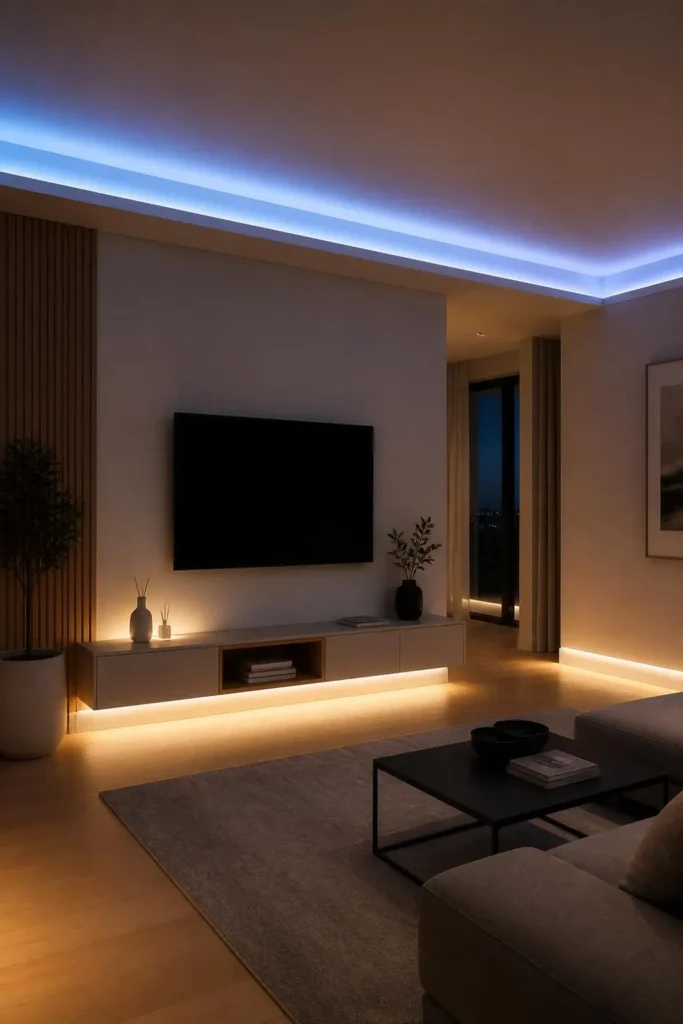
LED strips running along the top of the skirting board at floor level and along the ceiling cornice line at ceiling level create two parallel bands of indirect light that define the boundaries of the room in a way that standard overhead lighting never achieves. The floor-level light washes upward along the wall. The ceiling-level light washes downward. Between them, the wall surface glows evenly from both directions.
This technique works especially well in minimalist rooms with high ceilings because it emphasizes the vertical dimension of the space — the eye travels from the glowing floor line upward to the glowing ceiling line and the room appears taller than it is. In lower-ceiling rooms the effect is subtler but still contributes warmth and definition to the perimeter of the space.
Use the same LED strip and color temperature at both levels so the two bands read as a system. A difference in warmth between floor and ceiling lighting — one warm, one cool — introduces visual tension that undermines the calm of a minimalist room.
Dimming tip: Connect both strips to the same smart dimmer so they always change together. A floor strip at fifty percent and a ceiling strip at full brightness creates an imbalance that draws attention to the lighting itself rather than to the room.
10. Backlit Fluted or Slatted Wall Panel
Difficulty: Hard / 2–4 Days Est. Cost: $350–$1,000
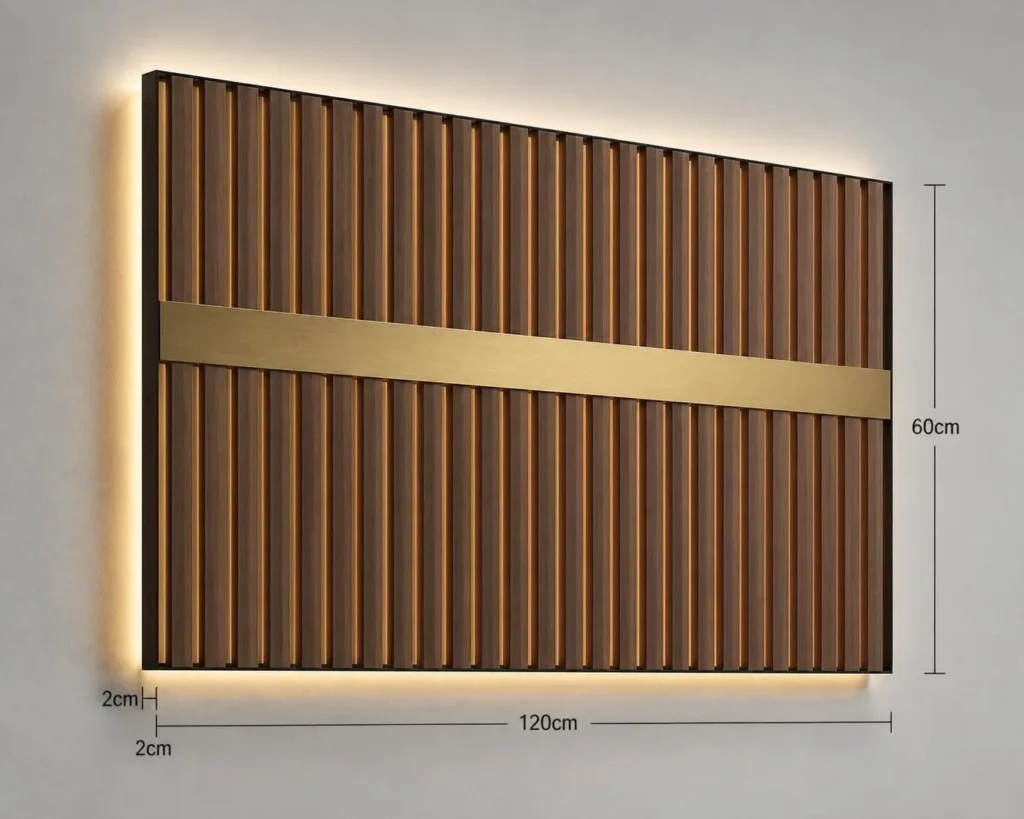
A wall panel made from vertical timber slats or fluted MDF with LED strip lighting running behind it — between the panel and the wall — creates a living room feature wall that combines material texture with ambient illumination. The light glows through the gaps between the slats, casting vertical lines of shadow and glow across the wall behind and across the room floor.
The slat spacing determines the character of the light effect. Narrow gaps of five to eight millimetres create a subtle, diffused glow where the light blends between slats before reaching the eye. Wider gaps of fifteen to twenty millimetres allow more direct light through and create a more graphic alternating pattern of light and shadow. Both approaches work — the choice depends on whether the room needs more warmth or more drama.
Natural oak or walnut slats give the panel warmth that painted MDF cannot replicate, and the timber grain catches the backlighting in a way that adds depth even during daylight hours when the LEDs are off. Paint the wall behind the slats in a deep color — navy, charcoal, or forest green — so the light that reaches it glows against a saturated background rather than a plain white one.
Color tip: Warm white LEDs behind natural timber slats against a deep navy wall is one of the most consistently beautiful LED wall combinations possible in a minimalist living room. The three elements — warm light, organic wood, deep color — balance each other without any single element overpowering the others.