
9 Backyard Golf Ideas to Practice Your Short Game Daily
If your short game is costing you strokes, the fix might be just steps from your back door. These nine backyard golf setups turn a slice of lawn, a patio corner, or even a garage wall into a daily practice zone you’ll actually use.
Most golfers lose more shots inside 50 yards than off the tee, yet few of us practice there. The reason is simple: driving ranges charge by the bucket, and putting greens are often crowded. A home setup removes every excuse.
This guide walks through nine practical builds for real yards — small, sloped, shaded, or shared with kids and dogs. You’ll find space requirements, gear lists, drills, and safety notes so you can start today with what you already own.
Backyard Short Game Essentials
- Artificial turf mat (3×5 feet minimum)
- Chipping net or impact net
- Alignment rods (two)
- Bucket of 20–30 practice balls
- Shag bag or tube for retrieval
- Foam or limited-flight balls
1. The 10-Minute Chipping Corner for Tight Yards
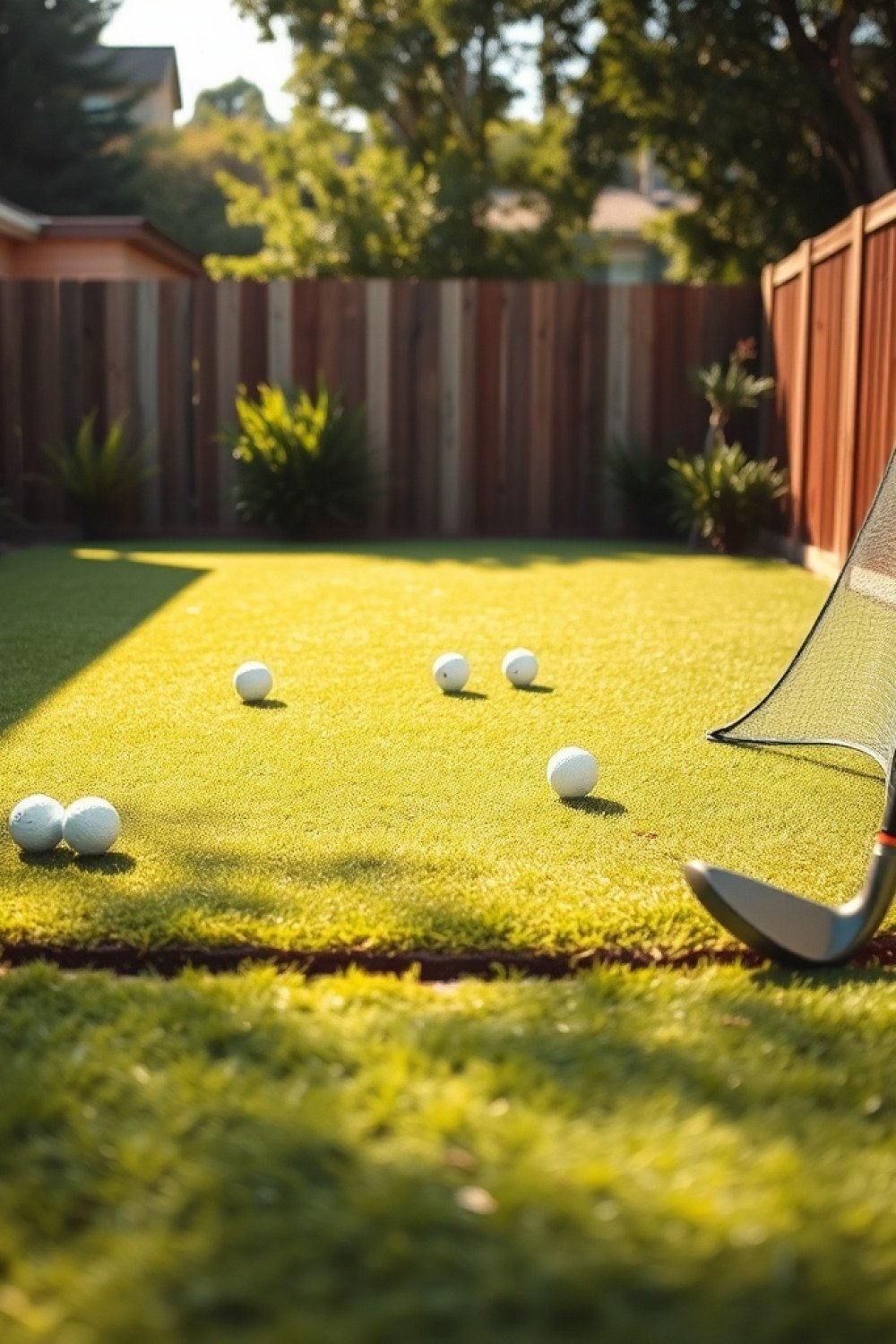
This is the setup for anyone with a narrow side strip or a postage-stamp patio. Roll out a 3×5-foot artificial turf mat as your stance area, then place a portable chipping net 10–15 feet away. That distance forces a real chip rather than a pitch, which is exactly the shot most amateurs never rehearse.
The value here is variety without moving your feet. Cycle between a wedge, 9-iron, and 7-iron to feel how each club changes trajectory and roll-out. A wedge pops and stops; a 7-iron runs out like a putt. Learning that difference on your own lawn builds instinct you can’t get from a mat at the range.
Keep a bucket of 20 balls beside you. Hit all 20, collect them, repeat. Ten focused minutes beats an hour of distracted swinging. Slide a small outdoor rug under the mat so your feet stay dry and the turf doesn’t slide on concrete.
Tip: Pick one target and one club per session — do not rotate clubs mid-bucket until you’ve hit all 20.
2. DIY Putting Green with Real Breaks

A flat putting mat teaches you nothing about reading greens. Build a 6×12-foot green instead using high-density artificial turf laid over a leveled sand base. The sand lets you shape subtle undulation, and turf with a 3/8 to 1/2-inch pile rolls close to a real green’s speed.
To add breaks, slip thin plywood shims under the turf — a 1/4-inch shim over three feet creates a gentle left-to-right slider. Cut three holes at 6, 10, and 15 feet, and snap a chalk line down the center for alignment reference. Rolling the surface with a lawn roller after installation smooths seams and settles the nap.
This suits the golfer who three-putts from 20 feet. Daily reps on lag putting and straight 3-footers sharpen both touch and confidence. You’ll start seeing break where you used to see flat.
Tip: Putt ten balls to the 15-foot cup before you touch the short ones — lag first, then finish with confidence builders.
3. Wall-Mounted Net for Full Swings and Wedge Work

If you have a garage wall, a sturdy fence, or a carport post, you have room for full-swing practice. Hang a 7×7-foot impact net from heavy-duty hooks rated for at least 50 pounds each. Leave a foot of slack at the bottom so balls drop straight down instead of rebounding.
Mark a target with a chalk circle on the net or a hanging towel. Hit 50 wedge shots and focus only on contact and trajectory — not distance. Use foam or limited-flight balls to keep noise down and protect drywall, siding, and windows. This is the setup for evening sessions when you don’t want to chase balls across the yard.
It suits the player working through a swing change who needs volume without range fees. Fifty quality reps a night adds up fast.
Tip: Film your last ten swings on your phone — contact quality shows up on camera before you feel it.
4. The Bucket-and-Blanket Pitch Shot Station

Set a 5-gallon bucket on its side 20 feet away, then drape an old blanket directly behind it to catch balls. Your job is to pitch over the bucket and land the ball softly on the far side. It’s a cheap, brilliant way to train trajectory and landing-spot awareness at the same time.
Move the bucket closer or farther to change the required carry. Because the blanket stops the ball, you’re not chasing shots into a neighbor’s yard. Real balls give honest feedback on strike and spin, so use them here rather than foam.
This suits anyone who consistently comes up short or blades pitches across the green. Learning to clear an obstacle forces you to commit to the shot.
Tip: Retrieve with a shag bag rather than bending for each ball — your back will thank you after 40 pitches.
5. Alignment Stick Gate for Consistent Chipping
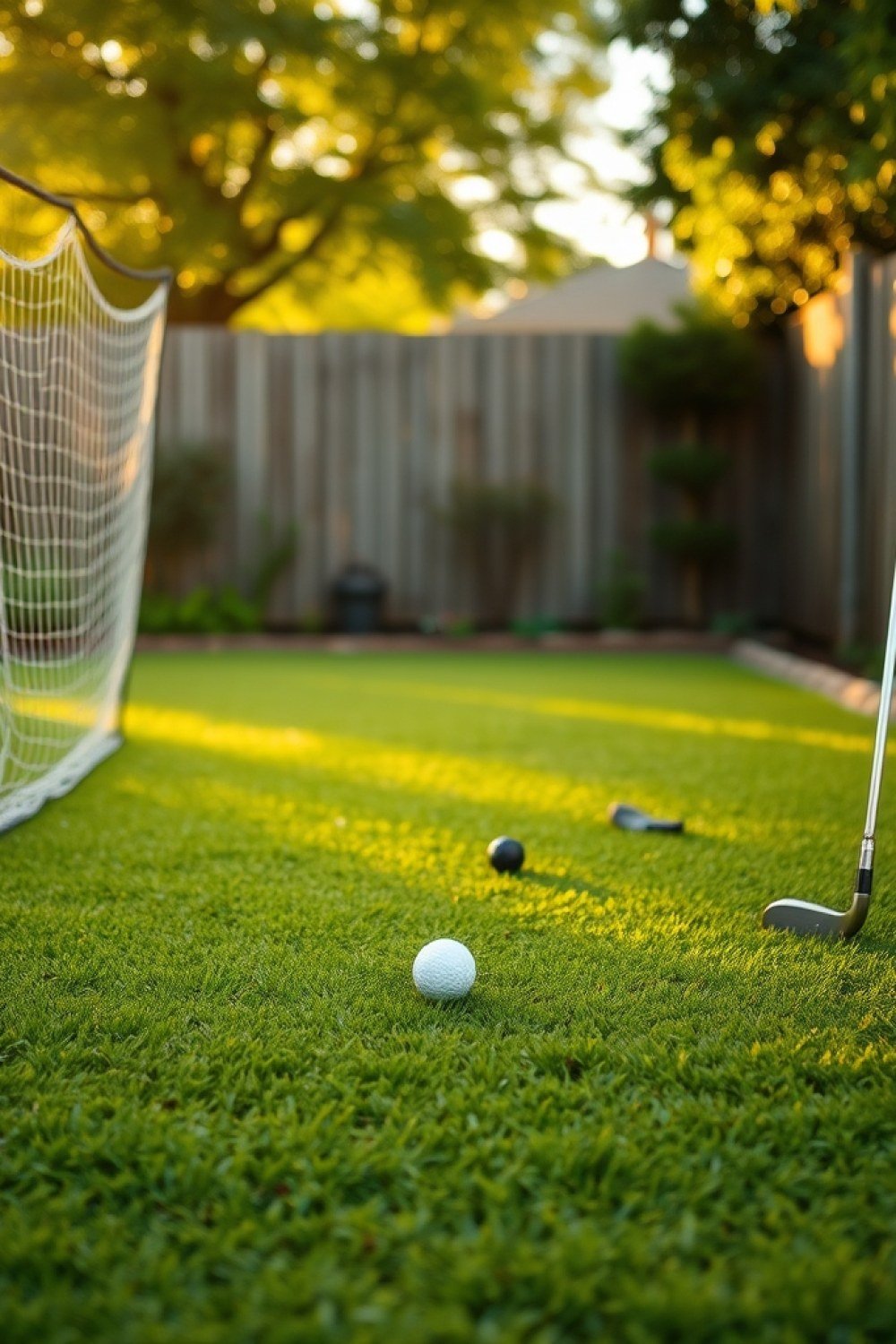
Push two alignment rods into the ground six inches apart, forming a gate just ahead of your ball. Chip through the gate to groove a straight club path. Any outside-in or inside-out move clips a rod and gives you instant feedback — louder and more honest than any video.
Place a folded towel three feet beyond the gate as your landing zone. The gate fixes path; the towel fixes distance control. Together they turn random chipping into a repeatable motion.
This suits the golfer who chunks or thins chips under pressure. Do 30 reps daily, then widen the gate or remove it entirely once your path holds. The goal is trusting the stroke without training wheels.
Tip: Start with the gate at eight inches wide, then narrow it to six once you stop hitting the rods.
6. Bunker Practice with a Kiddie Pool and Sand
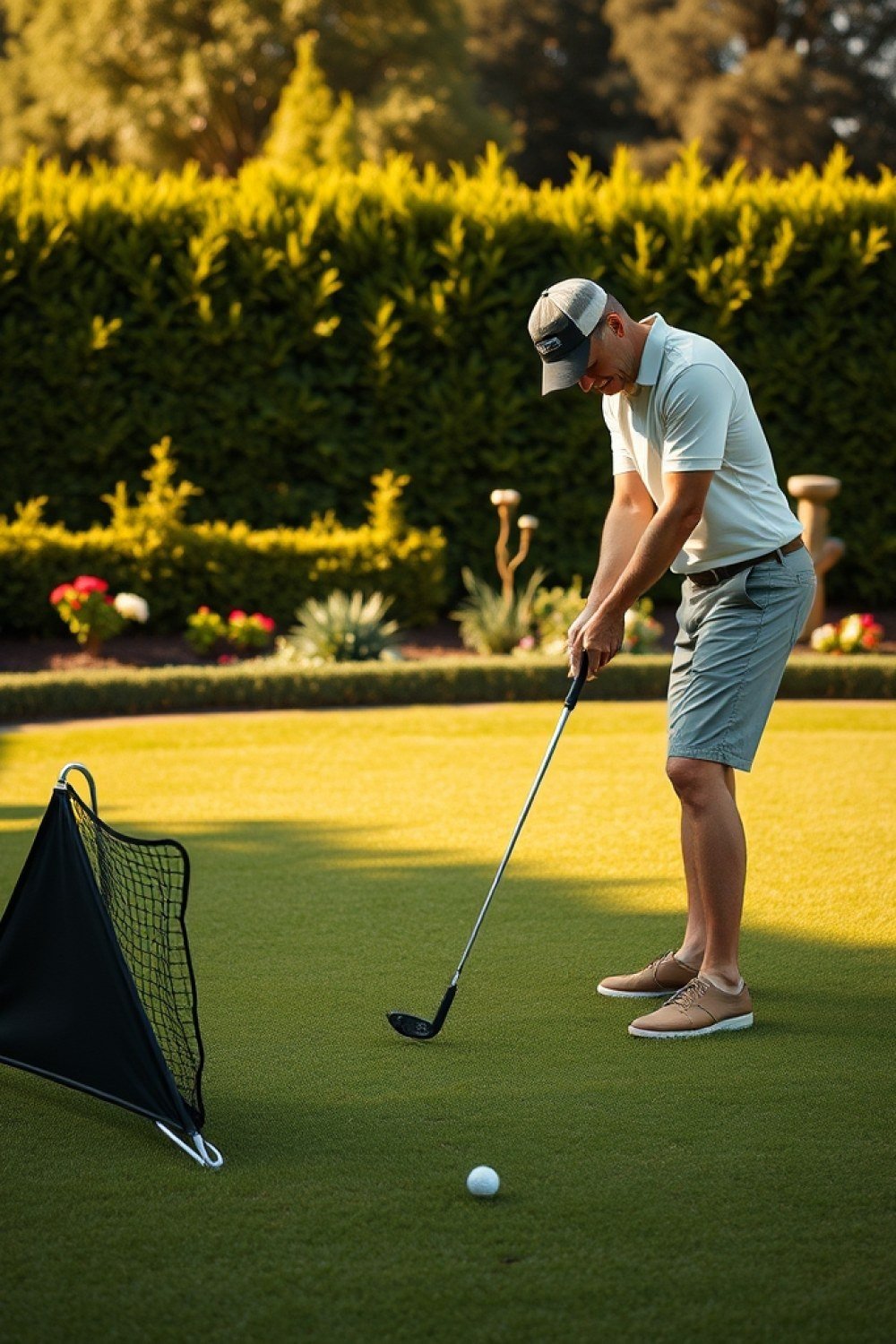
Greenside bunkers terrify most mid-handicappers because we see them twice a round. Fix that with a rigid plastic kiddie pool filled with 4–6 inches of play sand. It’s the cheapest bunker simulator you’ll ever own, and it takes ten minutes to set up.
Set up as you would in a real bunker: open the clubface, aim slightly left of target, and splash the sand an inch behind the ball with an accelerating follow-through. Rake smooth after every session so your lies stay consistent. Positioning it in a shaded corner keeps the sand cool and stops it drying into concrete.
This suits anyone who leaves bunker shots in the bunker. Twenty splashes a day builds real confidence.
Tip: Draw a line in the sand behind the ball and practice striking it — then trust the bounce to do the rest.
7. The Chipping Green with Multiple Lies

Courses never give you a perfect lie, so don’t practice from one. Set aside a 10×10-foot patch with varying surfaces: bare dirt, thin grass, and thick fringe. Hit five balls from each lie to a single target and note how the ball reacts — checked up, released, or shot forward.
Rotate the lies daily so no spot wears bare. This drills adaptability, which is what separates a good short game from a lucky one. You’ll learn to club up from the fringe and use a putting stroke from bare dirt.
It suits the player whose chipping works on the practice green but falls apart on the course. Real lies teach real reactions.
Tip: Log which lie gave you the worst result each week — that’s the one to practice next.
8. Night Practice with Glow Balls and LED Targets

Short game practice doesn’t need daylight. Glow-in-the-dark golf balls and LED-illuminated targets or rings let you chip and putt after dark, which is often the only free hour a working golfer gets. Tape the rim of your chipping net with glow tape so the target reads clearly from ten feet.
Focus on tempo and feel rather than mechanics — the dark actually helps here, since you can track flight but not obsess over positions. It’s also a hit with kids, turning practice into a game. Keep a headlamp handy for setup and ball retrieval.
This suits busy golfers, parents, and anyone in a hot climate who avoids midday practice.
Tip: Charge glow balls under a lamp for 30 minutes before you head out — they’ll stay lit for a full session.
9. The Fence-Front Flop Shot Zone

If you have a tall fence or wall, you have the safest place to practice flop shots. Take a 60-degree wedge, open your stance, and hit high, soft shots that land on a towel or turf mat at the base of the fence. The wall acts as a backstop, so mishits stay in your yard.
Focus on sliding the clubhead under the ball while keeping the face open through impact. This is a feel shot, not a power shot. Limit yourself to 20 reps per session — the extreme wrist action fatigues your hands and forearms quickly, and tired reps build bad habits.
This suits the golfer facing a tucked pin over a bunker who currently has no answer for it.
Tip: Only practice flops when the ball sits up on grass — off a tight lie, reach for the 56-degree instead.
Quick Questions
What type of artificial turf is best for a backyard putting green?
Look for high-density nylon or polypropylene turf with a pile height of 3/8 to 1/2 inch. It should have low infill or be infill-free for putting. Check for a listed stimp rating — many products quote a speed close to real greens. Ensure it’s UV-resistant with a backing that drains.
How can I practice golf at home without damaging my yard?
Use limited-flight or foam balls for full swings and always hit into a net or impact screen. For chipping and putting, stand on artificial turf mats to protect grass. Avoid hitting off bare dirt unless you’re standing on a mat, and rotate practice spots to prevent wear.
What’s the minimum space needed for a backyard chipping area?
A 10×15-foot area is enough for chipping up to 20 yards. You need room for a stance mat and a target net, plus at least 10 feet of clearance behind the net for safety. A yard corner or side strip works fine.
Can I install a putting green myself or should I hire a pro?
DIY is feasible with artificial turf and a level base — many kits include instructions. But for realistic breaks and speed, a pro can grade the sub-base and seam the turf properly. If you’re handy, start with a small 6×12-foot DIY green and expand later.
How do I keep my backyard practice area from getting boring?
Change targets, distances, and lies weekly. Add challenges like chipping through a gate or landing in a bucket. Use glow balls for night sessions. Track progress in a notebook or app to stay motivated.
What are the best drills to improve my short game at home?
Try the 3-3-3 drill: three chips, three pitches, and three putts from varying distances. Focus on one skill per session. The gate drill for chipping and lag putting to a tee are both excellent. Consistency beats intensity — 15 minutes daily beats an hour once a week.
Building Your Daily Short-Game Routine
Start with the one setup that genuinely fits your space — a chipping corner on a side strip, a kiddie-pool bunker in the shade, or a net on the garage wall. Get that working before you add a second element. A single 10-minute session you actually complete every day will do more for your touch than a weekend project you build once and forget.
Rotate your drills through the week so no single movement pattern goes stale: gate chips on Monday, lag putting on Tuesday, pitch shots over the bucket on Wednesday. Keep a small notebook by the back door and jot down one line after each session — clubs used, what felt good, what didn’t. That log becomes your practice plan, and it’s the fastest way to see the strokes come off your scorecard.