
11 Grass and Gravel Backyard Layouts That Look Polished
If your yard has both grass and gravel, you can make them read as one deliberate, finished space instead of a patchy compromise. The trick is treating the two surfaces as design partners: deciding where each one starts and stops, how the edge is built, and which materials tie them together. The 11 layouts below give you the exact proportions, edging methods, and pairings to copy.
You’ll see gravel used as a path through lawn, as a border apron around beds, as a full seating court with grass as the surrounding carpet, and as a low-care alternative in the awkward strips mowers hate. Every idea names the gravel type, the grass choice, and the edge detail that keeps the seam crisp—because that seam is what separates “designed” from “unfinished.”
Most of these work in a single weekend for a small yard, and all of them are forgiving of imperfect grading and existing plantings. Pick two or three details you like and layer them rather than overhauling everything at once. Start with the edges; they do more for polish than any plant you’ll add later.
How to Pick the Right Gravel-and-Grass Layout for Your Yard
Match the layout to how you actually use the space and how much upkeep you want, not to the prettiest photo. The three things that decide it are foot traffic, drainage, and how much lawn you’re willing to mow and irrigate.
- Heavy traffic zones: Choose layouts with a gravel path or court where people walk and sit, and keep grass for open view and play. Bare grass in a walked-through route turns to mud; gravel there stays clean.
- Low-maintenance goals: Shrink the lawn to shapes a mower handles in a few passes, and use gravel for narrow side strips, under trees, and along fences where grass struggles.
- Drainage and slope: On a slope or a wet spot, put gravel where water collects and grass on the higher, drier ground. A gravel band at the low edge stops puddling at the lawn’s border.
- Kids, pets, or bare feet: Favor rounded pea gravel or resin-bound gravel next to lawn, and skip sharp crushed stone in areas where people walk barefoot or play.
1. The Crisp Zoning Line for Open Lawns
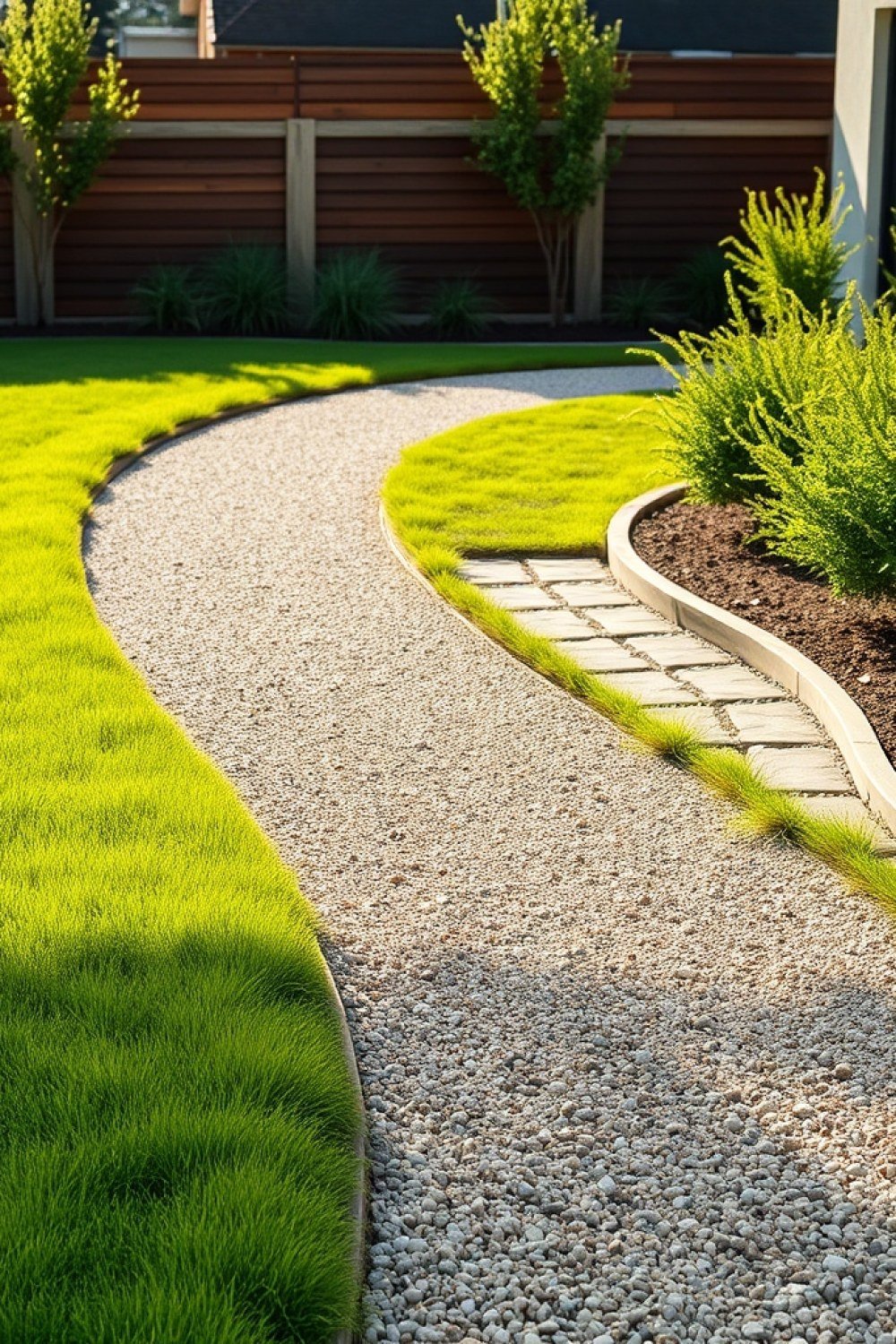
A single, continuous line of metal edging is the fastest way to make grass and gravel read as two deliberate zones rather than an accident. It suits a yard where the lawn is the main event and gravel plays a supporting role as a path or border.
- Key piece: 4-inch steel or aluminum edging, sold in 8-foot lengths that interlock.
- Depth: Bury it so just 1 inch sits proud of the soil—enough to hold the line, low enough to mow over.
- Level trick: Keep gravel 1 inch below the lawn height so clippings and stones don’t spill onto turf.
- Time: A weekend for a 20-foot run, including trenching.
Tamp the soil firmly behind the edging before you backfill with gravel; loose soil is what lets the line wander within a season.
2. Gravel-First Courtyard with Grass Insets
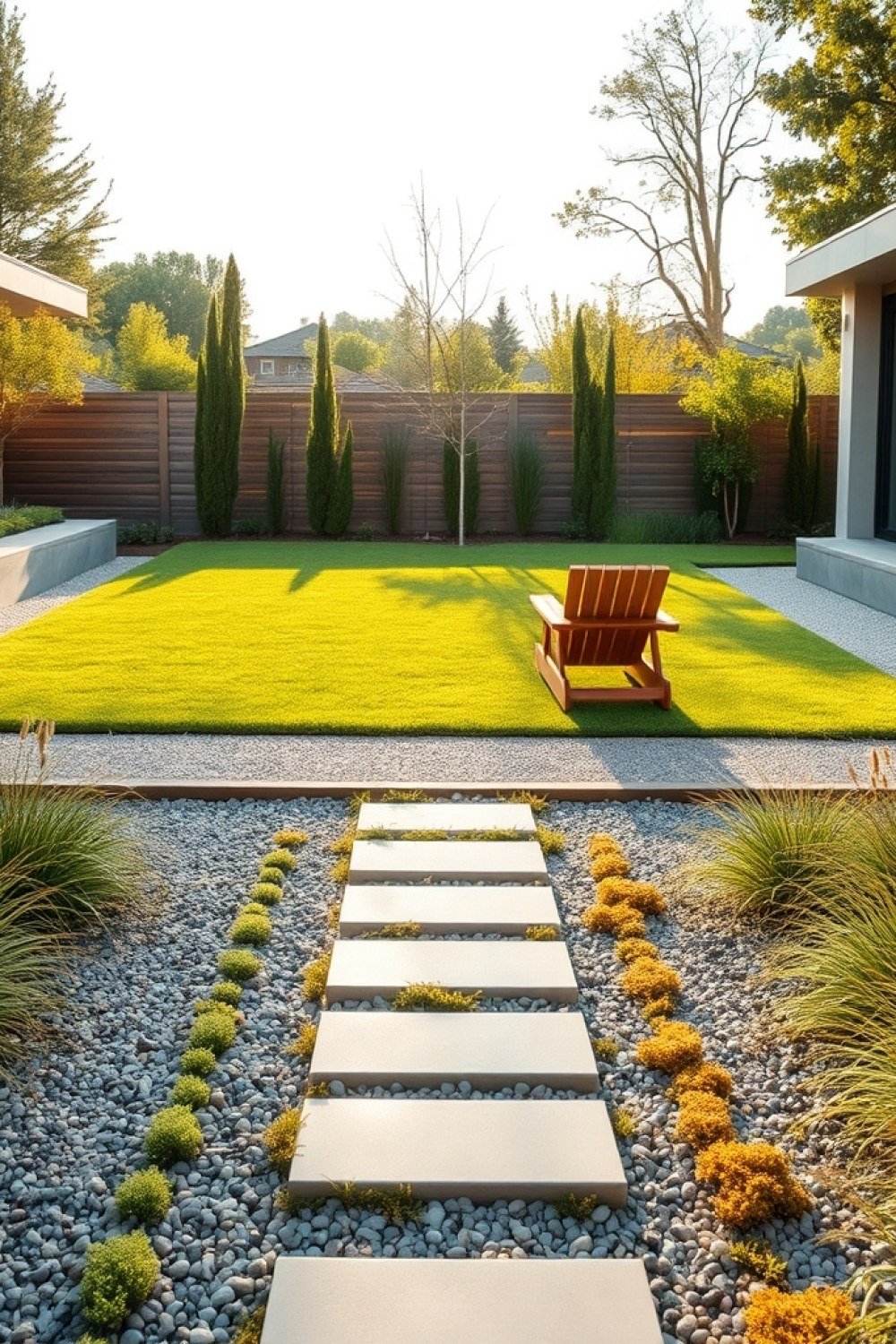
Flip the ratio: let gravel cover most of the ground and cut in square or rectangular grass panels that read like outdoor area rugs. It’s an elegant choice for a courtyard that gets heavy foot traffic and only light lounging.
- Grass choice: A slow-growing fine fescue, so the insets need mowing every 3–4 weeks, not weekly.
- Spacing: Set panels about 3 feet apart to create a rhythm that still looks intentional in winter.
- Edging: Frame every inset with flush steel edging to stop gravel migrating into the soil.
- Gravel: 3/8-inch pea gravel or resin-bound stone at 2 inches deep over weed fabric.
Keep the panel sizes consistent—varying dimensions are what tip this layout from graphic to messy.
3. The Curved Gravel Path Through Lawn

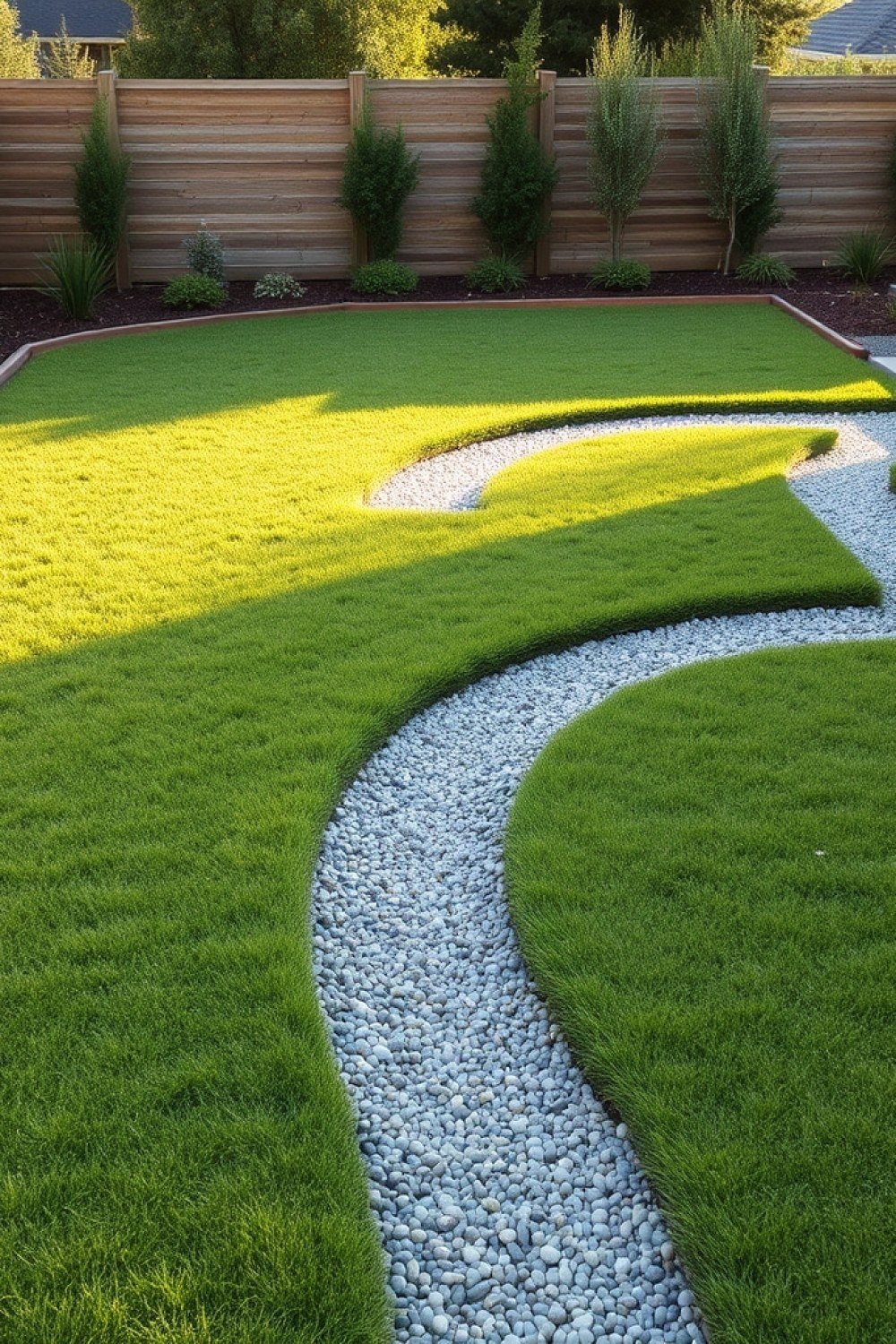
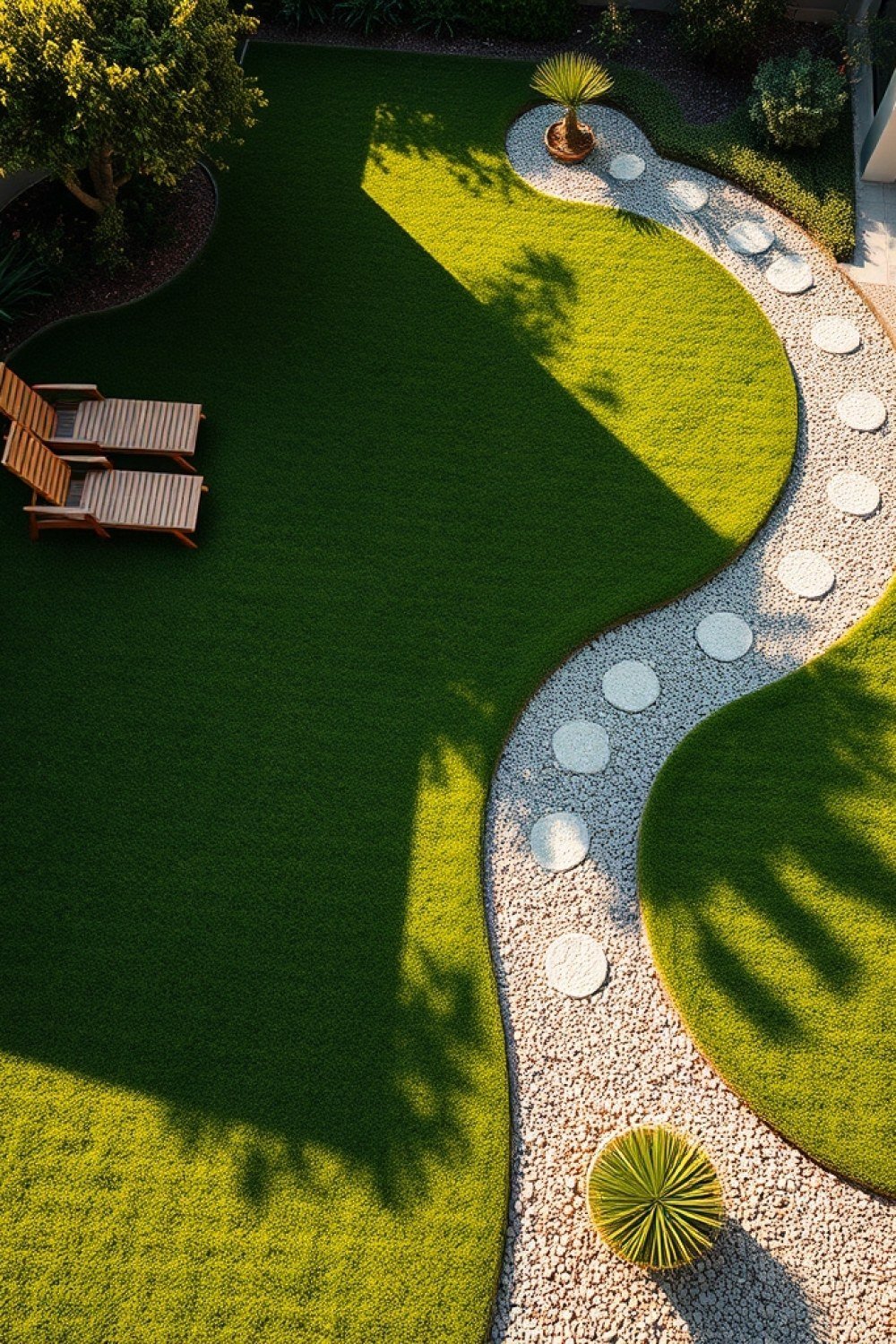
A sweeping path mown into the lawn softens a rectangular yard and gives you a reason to cross it slowly. Aim for 3 feet of width—wide enough for a wheelbarrow, narrow enough to feel like a path.
- Layout: Lay a garden hose on the grass and adjust the curve until it looks right before you cut anything.
- Edging: Line both sides with the same metal edging so the path reads as one piece.
- Softening: Plant creeping thyme in the joints at the edges for fragrance and a lived-in finish.
- Gravel: 2 inches of 3/8-inch angular stone compacts better on a curve than rounded pea gravel.
Cut the turf with a half-moon edger, lift the sods whole, and reuse them to patch thin spots elsewhere in the lawn.
4. Checkerboard Grass and Gravel Patio
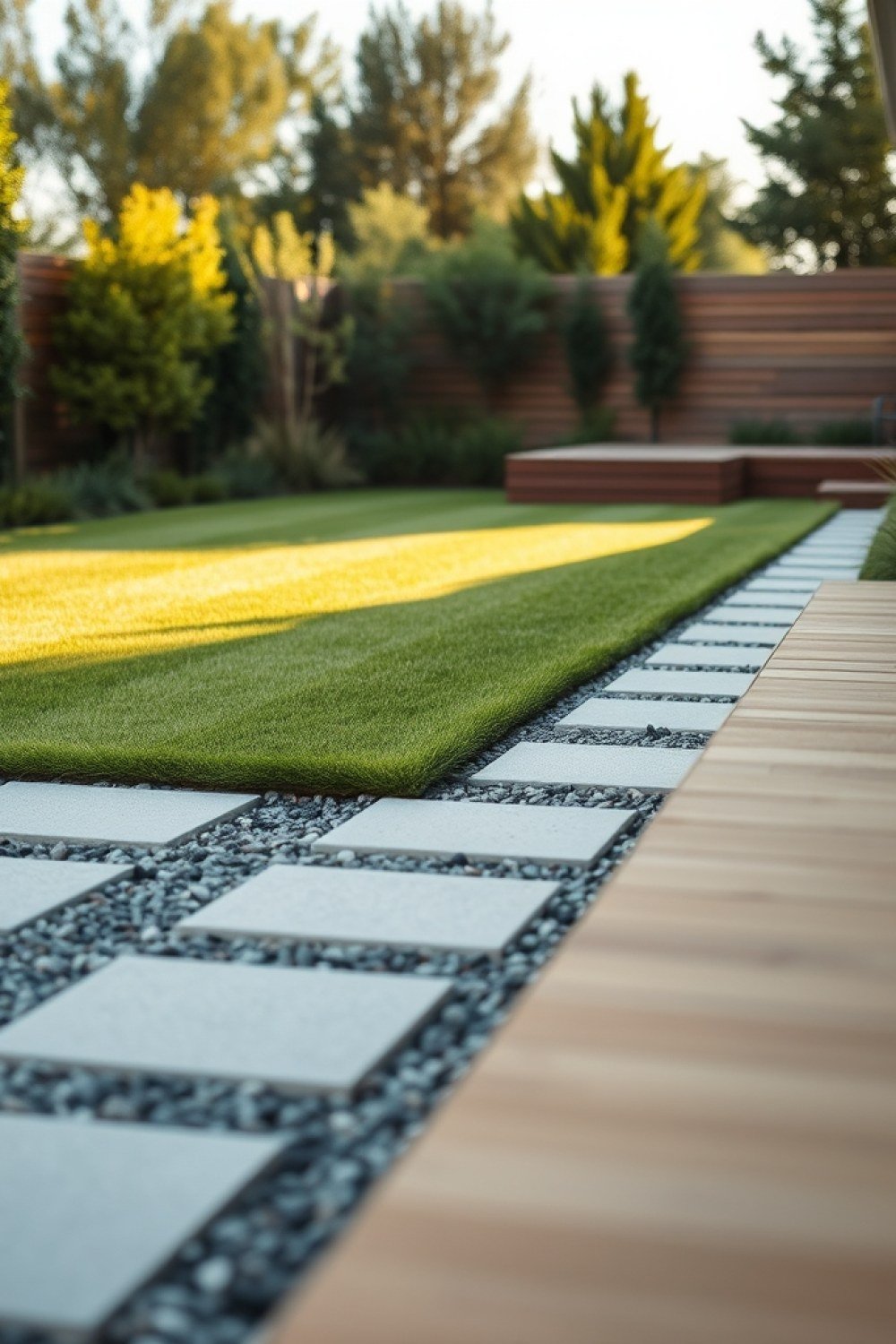
Alternating 2×2-foot squares of grass and gravel give a small, level space a graphic, modern edge. It works best on a flat patio area where you can control the base and keep lines truly straight.
- Base: 4 inches of compacted crushed stone under the gravel squares so they don’t sink unevenly.
- Layout: Snap a string line and use a half-moon edger to keep every line razor sharp.
- Grass: Use a tough, low-growing variety that tolerates close mowing—the squares need frequent trims.
- Time: Plan a full weekend; setting out the grid honestly takes longer than the digging.
Set the gravel 1 inch below the turf so mower wheels glide across the checkers instead of catching an edge.
5. Gravel Border with a Grass Walkway
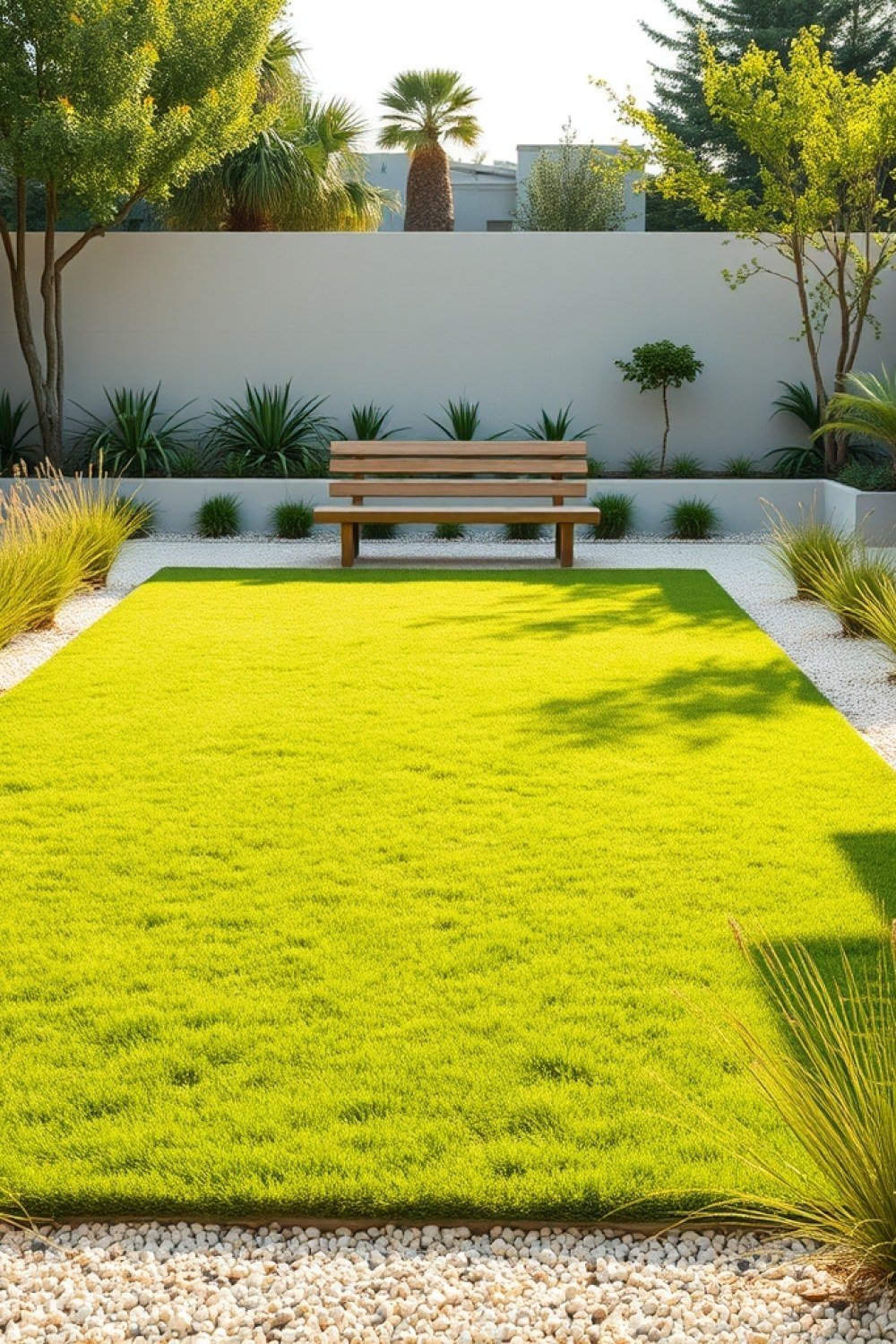
Reverse the usual arrangement: run a wide gravel border around the perimeter of the lawn and keep one simple grass path down the middle. It makes a small yard feel larger and gives you a mud-free route to the shed or gate.
- Border width: 18–24 inches reads as deliberate; anything narrower looks like leftover ground.
- Cohesion: Edge both sides with the same steel or aluminum strip so grass and gravel feel related.
- Drainage: The gravel border doubles as a soakaway, keeping the central path drier underfoot.
- Planting: Dot the border with lavender or ornamental grasses for height without clutter.
Mow the central path last, running the mower lengthwise so clippings land on the gravel and blow away cleanly.
6. The Sunken Gravel Lounge with Turf Steps
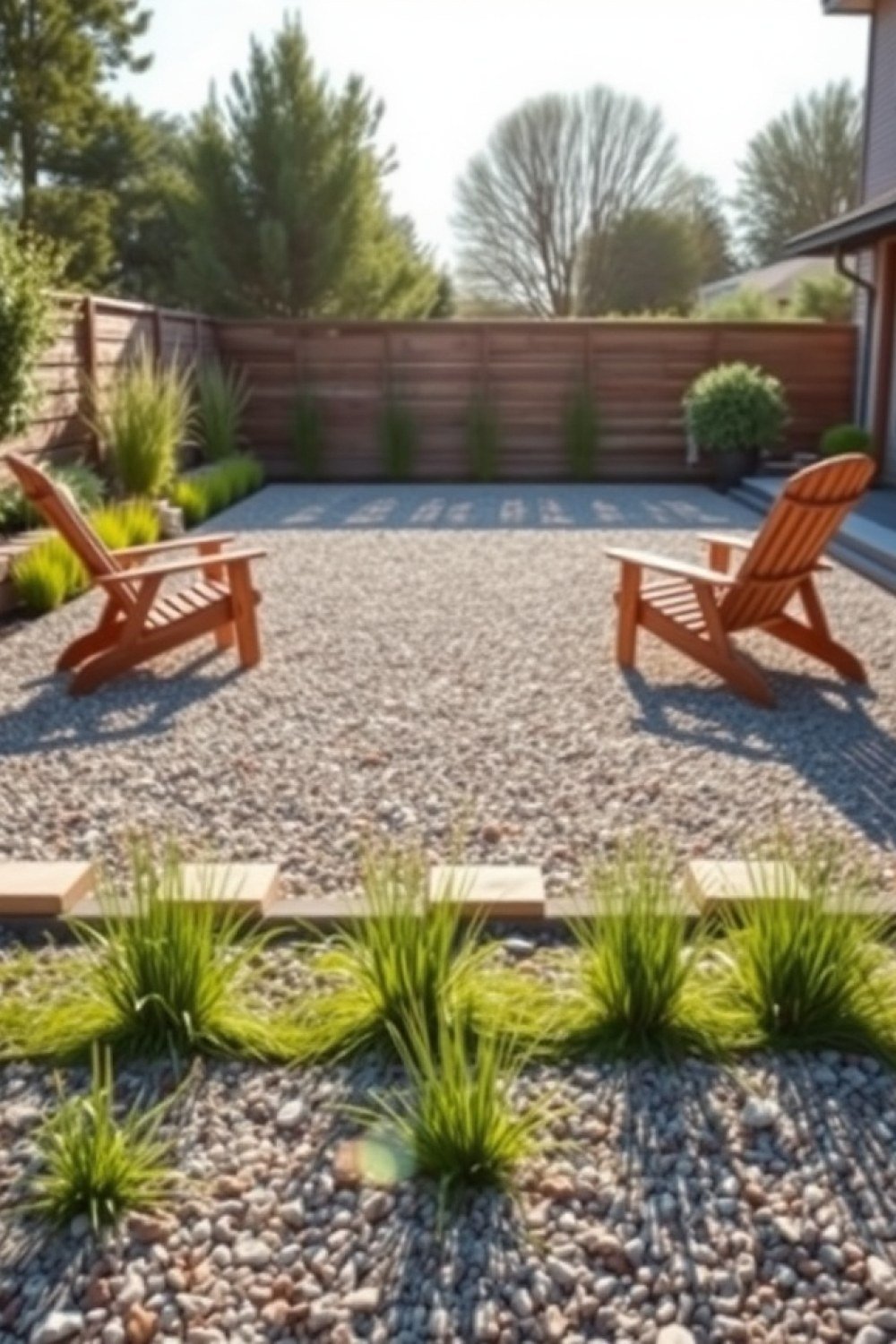
Drop a shallow gravel seating area a step below the lawn and use wide, low turf steps to move between the two. The change in level adds interest without the cost or fuss of a retaining wall.
- Depth: Sink the lounge just 12–18 inches—enough to feel tucked in, shallow enough to step out of easily.
- Steps: Make treads at least 18 inches deep in a no-mow grass for a soft, green transition.
- Lighting: Install step lights on the risers for evening polish and safe footing.
- Gravel: Use 3/4-inch washed stone over compacted base for a stable, weed-resistant floor.
Edge the top of each step with the same metal strip used elsewhere, so the levels read as one designed gesture rather than a dig-out.
7. Gravel Grid with Grass for Parking
A gravel grid turns a parking spot into something that reads as lawn, so the car doesn’t sit on a bald patch of mud. The plastic cells sit flush with the soil and let roots knit through the open voids, giving you a surface that carries weight without looking industrial.
- Grid spec: Choose at least 90% open area — 100% grids drain fastest and stay greenest.
- Base: 3–4 inches of compacted 3/4-inch crushed stone, then the grid, then a gravel-and-grass seed blend brushed into the cells.
- Seed mix: A hard-wearing blend like tall fescue and perennial ryegrass; water daily for the first three weeks.
- Best spot: A secondary pad or trailer bay, not the everyday driveway — the grass does wear thin with constant use.
Drive on it only once the grass has rooted and you’ve mown twice — that’s roughly eight weeks — and edge the pad with a soldier course of pavers so the grid never frays into the lawn.
8. The Formal Parterre with Gravel Walks
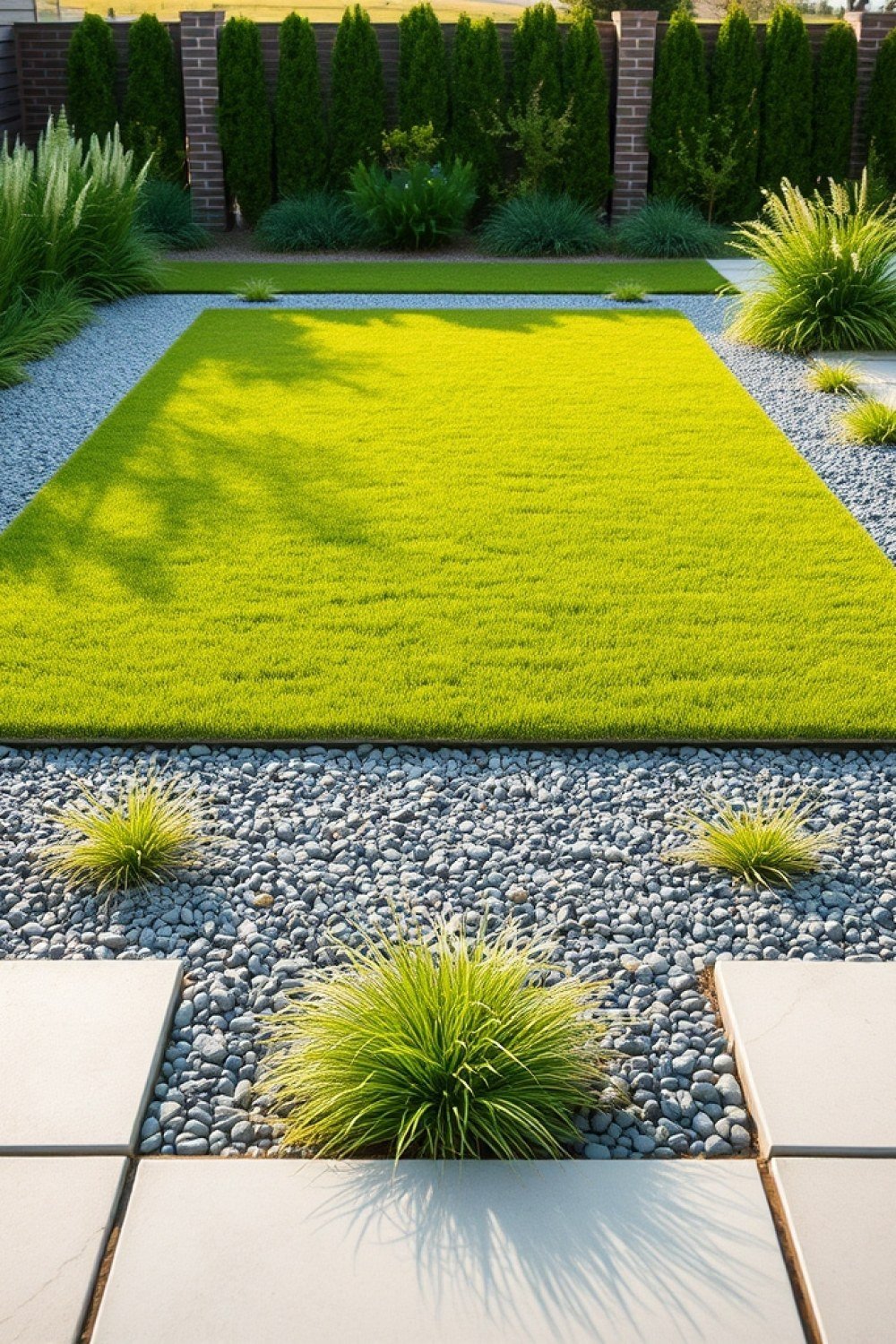
A parterre is the most deliberate way to mix the two materials: grass panels framed by crisp gravel paths, meant to be seen head-on from a window or patio. Because the pattern is geometric, any ragged edge is instantly obvious, so this layout rewards clean lines over fussy detail.
- Pattern: Four quadrants or a single diamond keeps upkeep manageable; skip elaborate scrollwork.
- Walk width: 18–24 inches reads as a true path and still lets a mower pass.
- Gravel: 3/8-inch pea gravel over a stabilised base holds a sharper line than loose 3/4-inch stone.
- Corner accents: Clipped boxwood balls or lavender in the four intersecting corners.
Cut the grass edges with a half-moon spade twice a season and stringline the gravel every spring — that single hour of tidying is what keeps the symmetry looking intentional rather than tired.
9. Gravel Moat Around a Raised Lawn
Lifting the lawn a few inches and ringing it with gravel gives the grass a floating quality and solves the soggy-corner problem at the same time. The moat doubles as drainage, catching runoff before it pools, and it frames the lawn as its own distinct room.
- Moat width: 2 feet all the way round — wide enough to read as a channel, narrow enough to step across.
- Retaining edge: Pressure-treated timber sleepers or a low stone wall, set level and proud of the soil by 4–6 inches.
- Gravel: 3/4-inch clean gravel, no fines, so water drains straight through.
- Bonus: Run lighting cable under the gravel for a low-voltage glow at the lawn edge.
Line the moat with a permeable membrane first to stop weeds and soil silting it up; top up the gravel every couple of years and it stays crisp for a decade.
10. The Transitional Gravel-to-Grass Slope
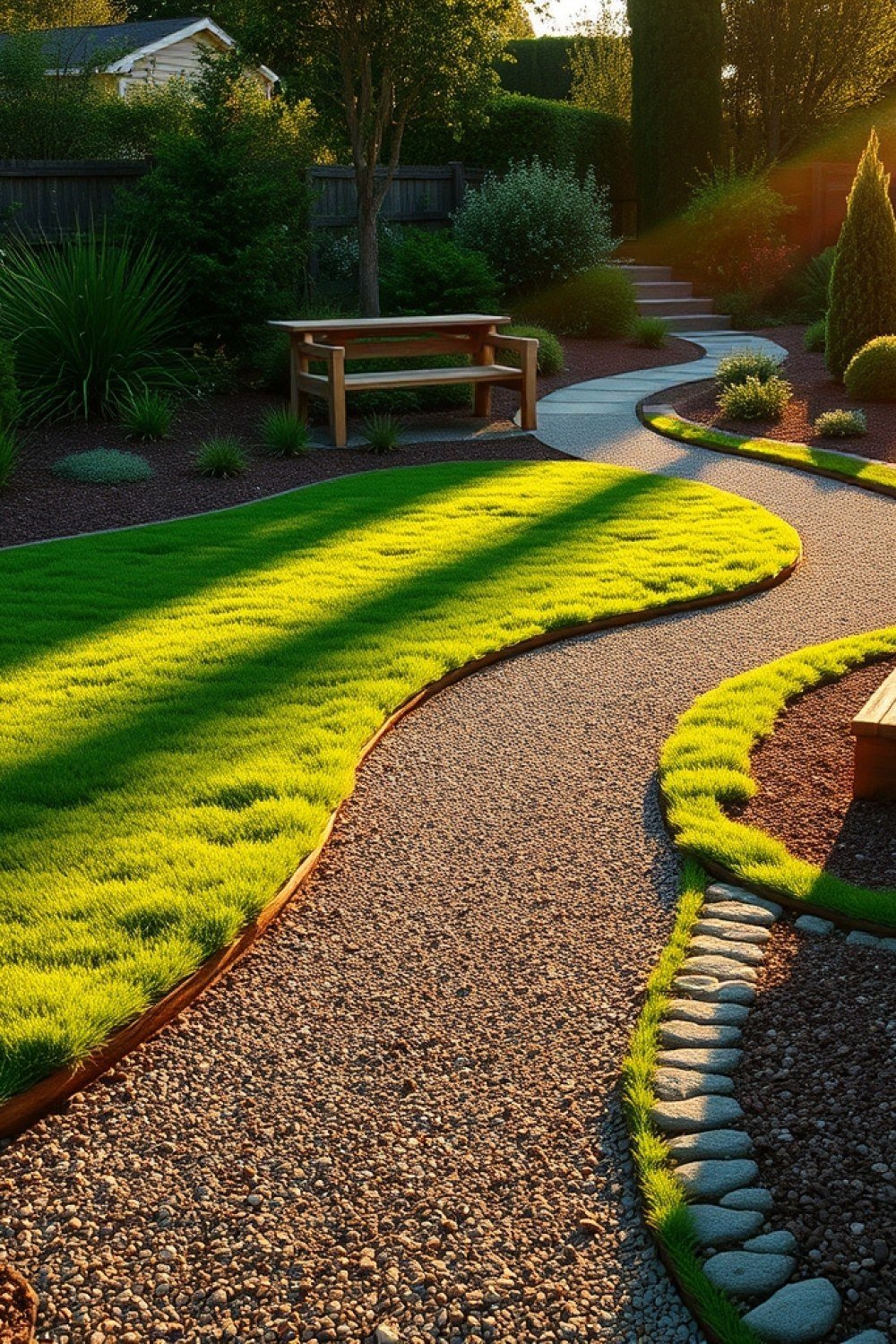
On a slope, splitting the yard into an upper gravel terrace and a lower grass lawn solves two problems at once — erosion uphill and awkward mowing downhill. The planted edge between them is the detail that makes the change of material look like a decision rather than an accident.
- Terrace: Gravel on the upper, faster-draining ground, held by a retaining edge.
- Edge planting: Creeping juniper, thyme, or deadnettle to soften the stone-and-grass junction.
- Drainage: A perforated pipe behind the retaining edge directs water into the lawn below, not under it.
- Materials: Match gravel tone to the retaining stone so the slope reads as one composition.
Mow the lower lawn on the contour rather than up and down the fall line — it’s safer, and the stripes will run across the slope instead of drawing the eye downhill.
11. Gravel and Grass with a Central Fire Feature
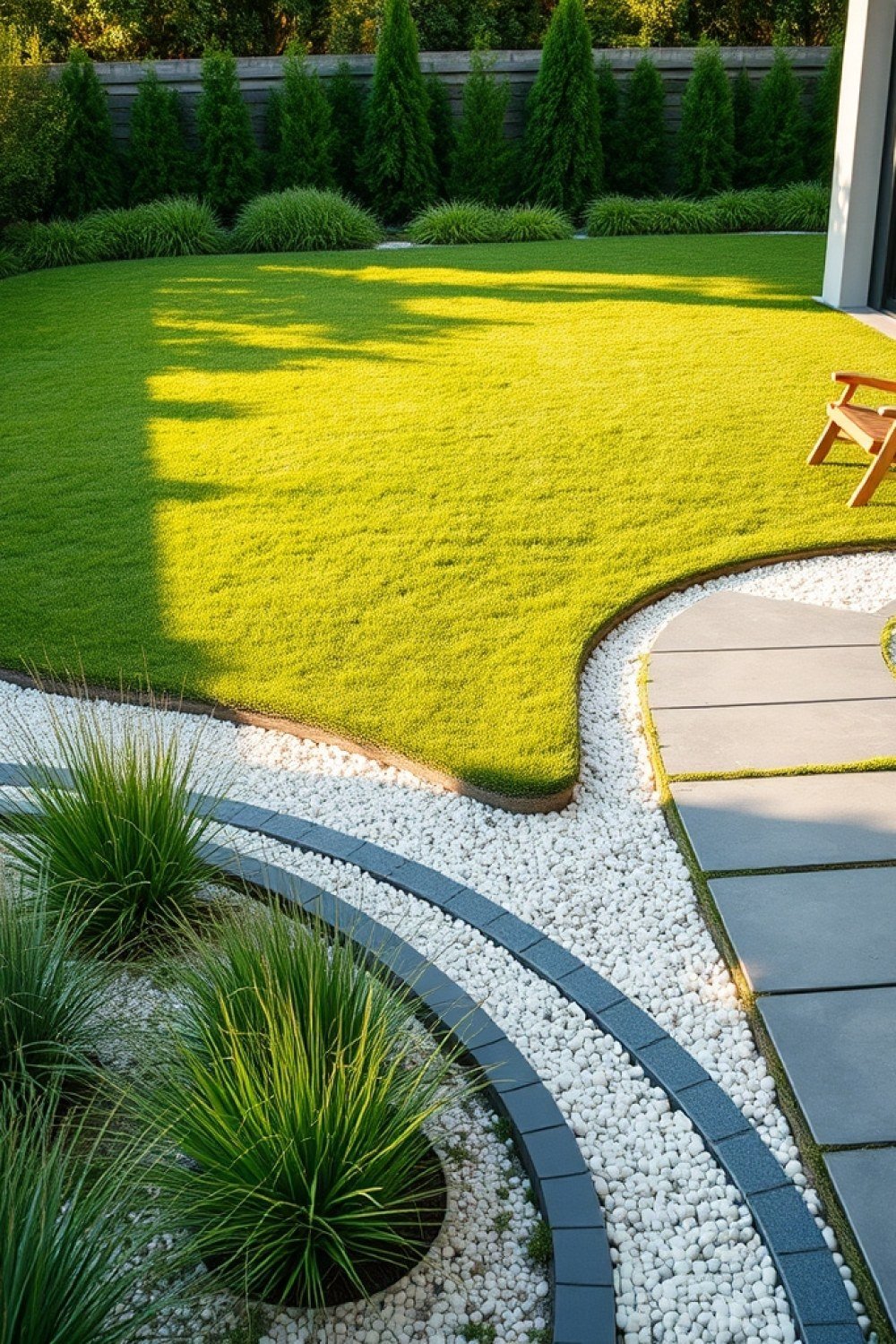
A fire pit set in a gravel circle with a ring of lawn around it gives the backyard a natural centre and a place people gravitate to at dusk. The gravel handles sparks and foot traffic; the grass gives the gravel a soft, deliberate boundary instead of a hard ending.
- Fire pit: A steel ring or a paver kit, 36–44 inches across for a real gathering circle.
- Gravel apron: Keep it at least 3 feet clear of the lawn edge so embers and mower clippings stay separate.
- Seating: A ring of Adirondack chairs or a low bench, set 24–30 inches back from the pit rim.
- Transition: A steel or stone edge between gravel and grass to hold the circle perfectly round.
Set the pit on a base of compacted gravel with a slim sand layer, and keep a gravel-free metre around the seating so chairs don’t sink — that’s the difference between a feature and a nuisance.
Questions About Grass and Gravel Backyard Layouts
How do I stop grass from growing into my gravel?
Install a physical edging—steel, aluminum, or heavy-duty plastic—at least 4 inches deep between the two surfaces. Keep the gravel level about 1 inch below the lawn so soil and clippings don’t wash in. For extra defense, lay woven landscape fabric under the gravel, but leave the grass side open so roots can breathe.
What type of gravel looks best next to a lawn?
Angular gravel like crushed granite or trap rock in a 3/8-inch to 3/4-inch size locks together and stays put better than rounded pea gravel. For a softer, more organic look, use 3/4-inch river rock, but expect more rolling and annual top-ups. Dark gray or warm tan tones contrast nicely with green grass, while pale limestone can look too bright without a border to ground it.
Can I put gravel over my existing lawn?
Yes, but you must first remove the grass and 2 to 4 inches of topsoil, then compact a base of crushed stone before adding your decorative layer. If you skip this step, the grass will resprout and the gravel will sink into soft ground. For a low-effort alternative, smother the grass with cardboard and 4 inches of gravel, though expect some settling over the first year.
How do I edge a gravel path so it stays crisp?
Use rigid steel edging or pressure-treated timber set flush with the lawn for the cleanest line. For a natural look, trench the edge 4 inches deep and backfill with packed soil. Re-cut the edge once a year with a half-moon edger or string trimmer to maintain that sharp definition between materials.
What is the best grass for a gravel-and-grass yard?
Choose a drought-tolerant, slow-growing variety like tall fescue or fine fescue for less mowing and better wear tolerance. In warm climates, use Bermuda or zoysia for durability through heat and foot traffic. If you want a no-mow option, consider low-growing clover or creeping thyme in the grass panels.
How do I keep gravel and grass looking polished year-round?
Rake gravel monthly to remove debris and redistribute stones, and top up with fresh gravel each spring. Keep grass edges sharp with regular trimming, and consider a pre-emergent in gravel areas to suppress weeds. In winter, avoid walking on frozen grass to prevent damage, and skip salting gravel areas since it can stain stone and harm nearby roots.
Choosing the Right Layout for Your Yard's Shape and Use
Match the layout to how you actually live: a checkerboard patio suits a compact entertaining zone, while a curved path or raised moat works better for a rambling lawn. A narrow side yard with a straight run calls for a tight gravel border flanking a single grass ribbon, whereas a wide, open space can handle a gravel courtyard set inside a grass frame. Before you commit, measure your space and note sun and drainage patterns—afternoon shade will change which materials look best and how often you’ll need to weed.
Pick one idea and commit to it fully. The polish comes from a consistent edge and material palette: the same 3/8-inch crushed granite throughout, the same steel edging line, the same gravel depth. Mixing three gravel sizes or two edging styles is what makes a yard read as patchy rather than designed. Choose your gravel, set your edge, and repeat those two decisions everywhere—that repetition is what turns a mix of grass and gravel into something that looks intentional.