
14 Grassless Backyard Ideas for a Green Look Without the Mowing
It’s Saturday morning. You’ve got coffee in hand, the sun’s out, and then you hear it — your neighbor’s mower firing up. Meanwhile, your own lawn is half mud, half dandelions, and the dog just tracked dirt across the kitchen floor again. Or maybe you’re standing at the window doing the math on another summer of watering, mowing, and reseeding a patch of grass that never quite cooperates.
The good news: you don’t need a traditional lawn to have a green, inviting backyard. There are grassless alternatives that stay lush and tidy year-round, cut your water bill, and skip the weekly mow entirely. Some are soft enough to walk on barefoot. Others turn dead corners into patios, play areas, or gardens you’ll actually use.
Below are 14 grassless backyard ideas, from artificial turf that fools the neighbors to clover, gravel, and hardscaping. Each one includes who it suits, what it costs in effort upfront, and the mistakes to avoid — so you can pick what fits your yard, your budget, and how you actually want to spend your weekends.
Quick Picks: Which Grassless Idea Fits Your Yard
- Lush artificial turf (Idea 1): Best for families and pet owners who want a real-grass look with zero watering or mowing.
- Cozy clover lawn (Idea 2): Best for low-traffic yards and anyone who wants living green groundcover that stays short on its own.
- Gravel patio with creeping thyme joints (Idea 4): Best for small yards or rental-friendly spaces that need a fast, cheap patio.
- Xeriscape with succulents and boulders (Idea 8): Best for hot, dry climates and homeowners who want sculptural, near-zero-care planting.
1. Lush artificial turf that fools everyone
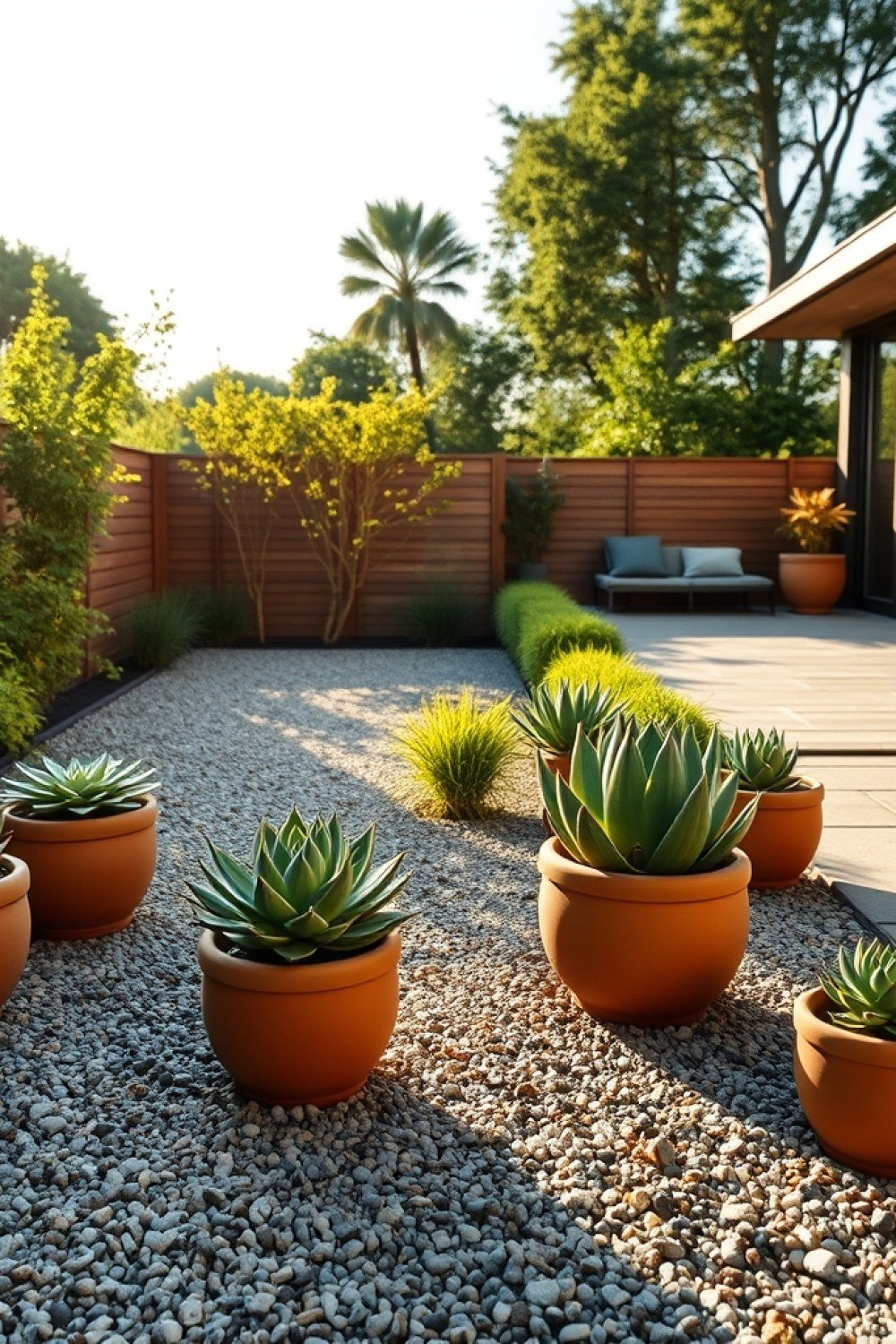
Modern artificial turf looks remarkably real, stays green year-round, and needs zero water or mowing. Choose a product with a 40–50 oz face weight and a thatch layer for a natural look; install over a compacted base of crushed stone and weed barrier for proper drainage. Budget $5–$15 per square foot installed, and rinse occasionally to keep it fresh.
Why it works: A higher face weight means denser blades that stand up instead of matting flat, and the thatch layer hides the backing so it reads as real grass from standing height.
Pro tip: Brush the turf against the grain with a stiff lawn broom every few months to lift flattened blades and erase footprints.
2. Cozy clover lawn that stays short

Microclover or white Dutch clover grows only 4–6 inches tall, stays green with little water, and naturally adds nitrogen to the soil. It attracts bees (great for pollinators) but is soft underfoot; overseed in spring or fall at 1–2 lbs per 1,000 sq ft. Mow just 2–3 times a season if you want a tidier look.
Why it works: Clover fixes its own nitrogen, so it feeds itself and the soil around it—meaning no fertilizer schedule and no brown patches in a dry July.
Pro tip: Overseed onto bare or thin spots rather than over thick existing grass; clover needs seed-to-soil contact to take hold.
3. No-mow fescue for a soft, wavy meadow
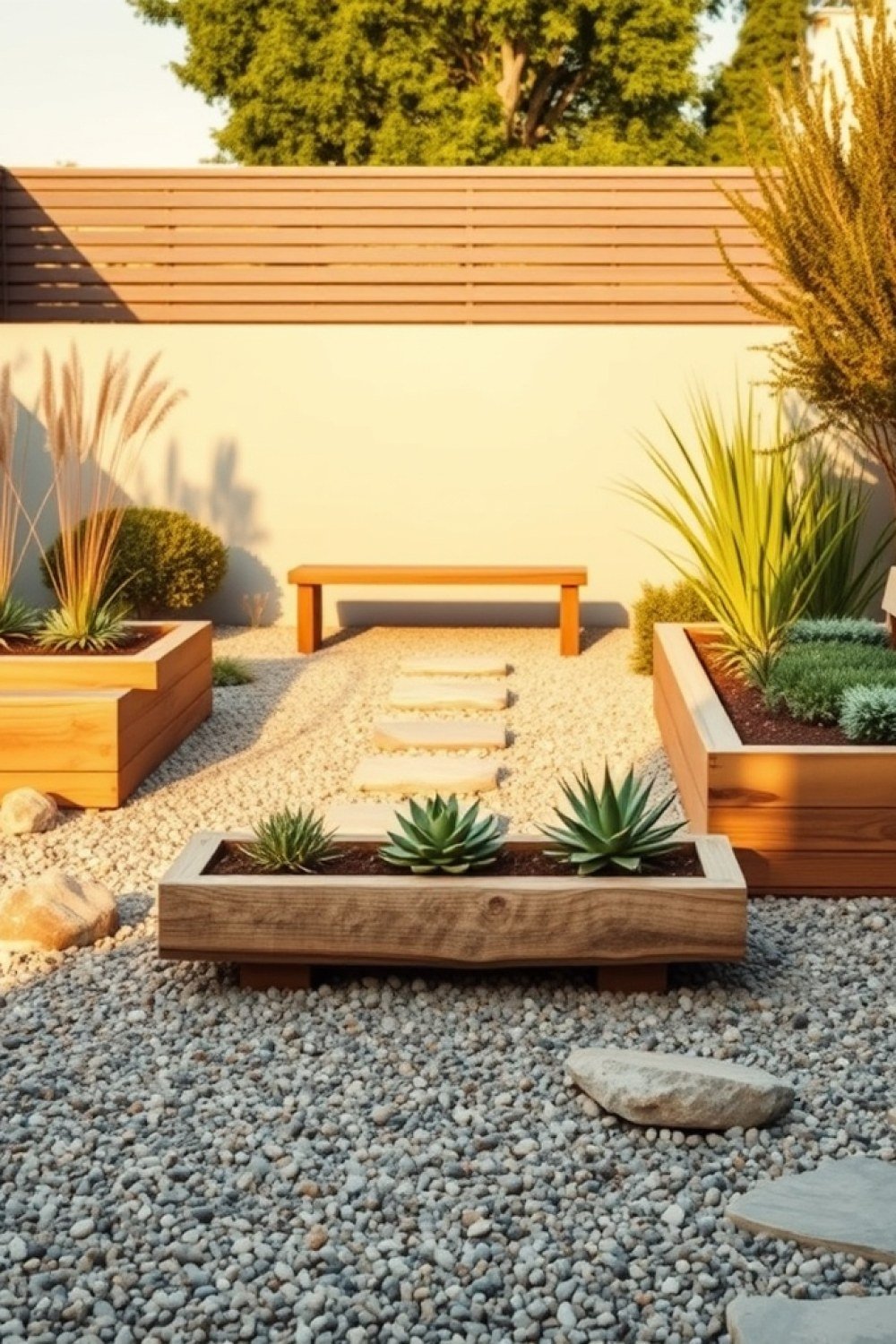
No-mow fescue blends (like ‘Eco-Lawn’) grow slowly and only need mowing once or twice a year. It creates a soft, meadow-like texture that’s perfect for a naturalistic look; seed in early fall, keep moist until established, and let it grow 6–10 inches for a breezy feel. It’s drought-tolerant once mature.
Why it works: The fine blades flop over instead of standing upright, so it keeps that soft, rolling meadow look even at full height without looking scruffy.
Pro tip: Water lightly and often for the first three weeks after seeding—once roots set, you can practically forget it.
4. Gravel patio with creeping thyme joints
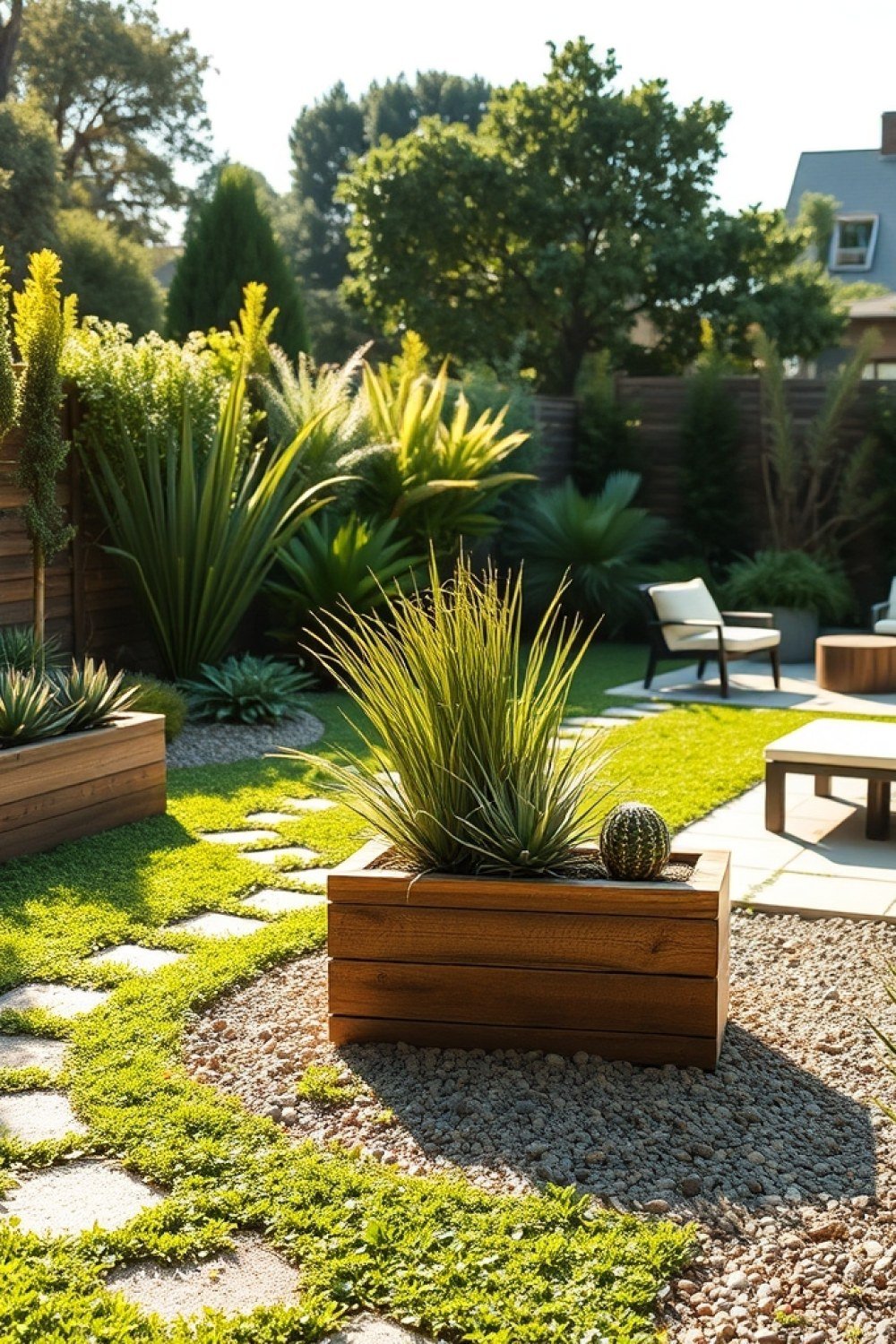
A gravel patio is affordable and permeable; use 3/4-inch crushed stone or pea gravel over a weed barrier. Plant creeping thyme or mazus between patio pavers or along the edges—it releases a lovely scent when stepped on and fills gaps with green. Keep gravel depth at 2–3 inches for stability.
Why it works: Gravel drains instantly, so no puddles or mud, while the thyme softens the hard edges and brings color and fragrance into a stone-only space.
Pro tip: Plant thyme plugs into pockets of soil set directly into the gravel—straight gravel won’t hold roots.
5. Flagstone path with moss or thyme in the gaps
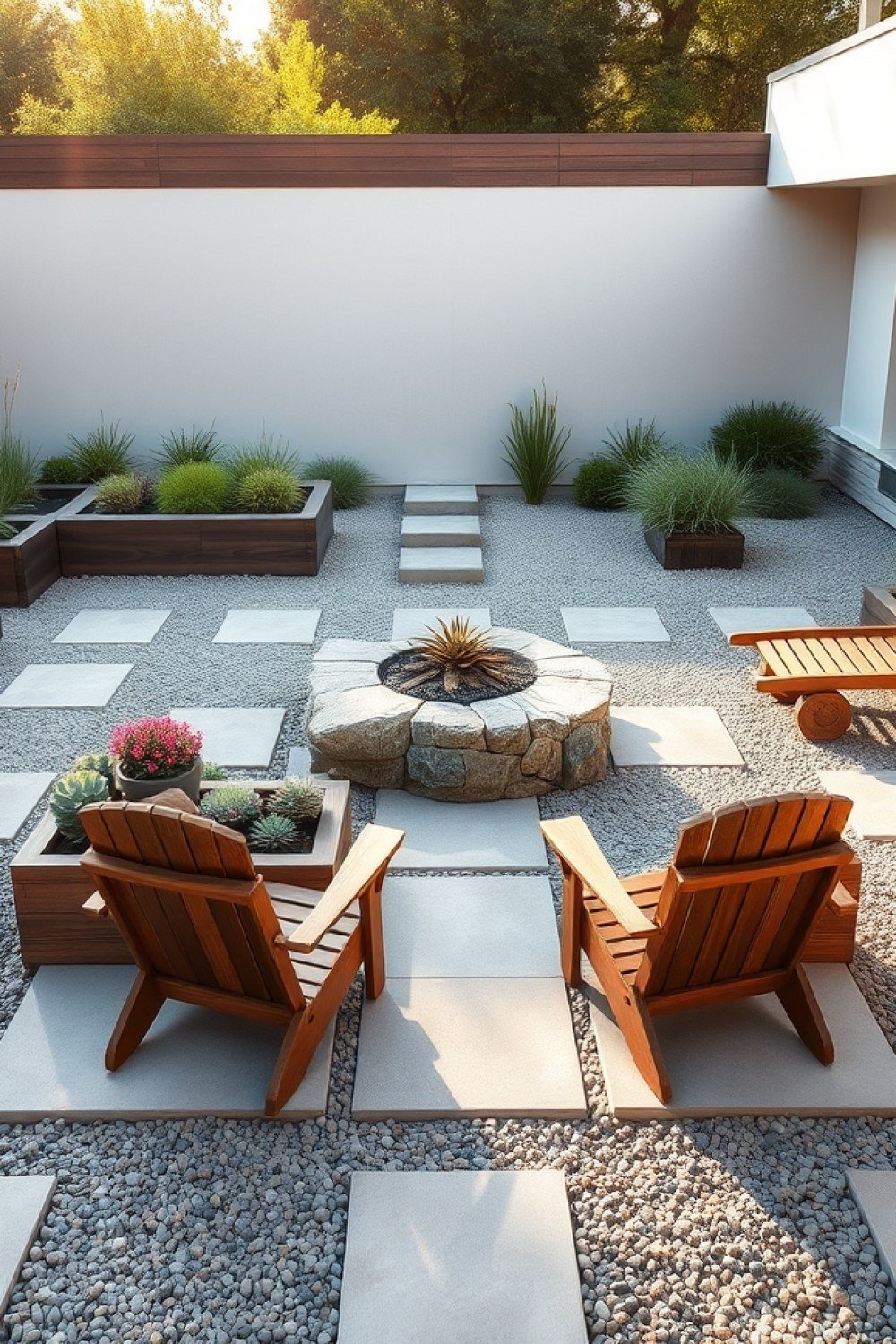
Irregular flagstone set in sand or gravel creates a natural, organic path. Fill the joints with shade-loving moss (in damp areas) or sun-loving creeping thyme for a lived-in, green look. This eliminates lawn edges and adds a storybook feel; just top up the moss with buttermilk blend in shady spots.
Why it works: The irregular shapes and green joints break up the hardscape, so the path looks grown-in rather than installed—no mowing along the edges ever.
Pro tip: Blend moss spores with buttermilk and brush it into the damp joints; keep it shaded and misted until it knits together.
6. Wood deck with built-in planters
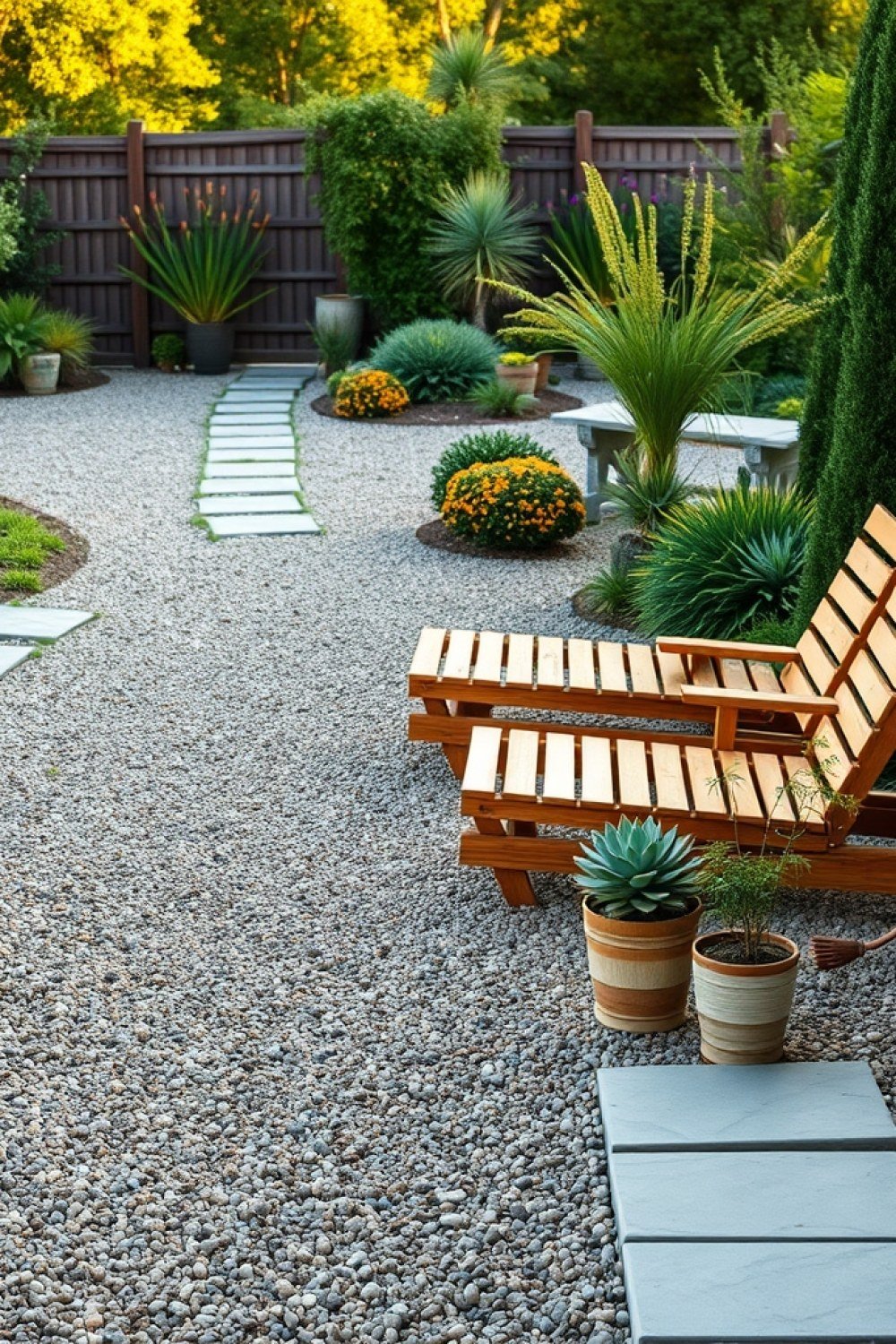
A deck instantly extends your living space and requires no lawn care. Add built-in benches or planters along the edges and fill them with ornamental grasses, ferns, or succulents for a green frame. Use composite decking for a splinter-free, low-maintenance surface that won’t need staining.
Why it works: Built-in planters put the greenery at eye level and eliminate the strip of struggling grass that usually dies along a deck’s shady edge.
Pro tip: Line planters with drainage gravel and drill weep holes so winter rain doesn’t rot the framing behind them.
7. Mulched play area with rubber padding
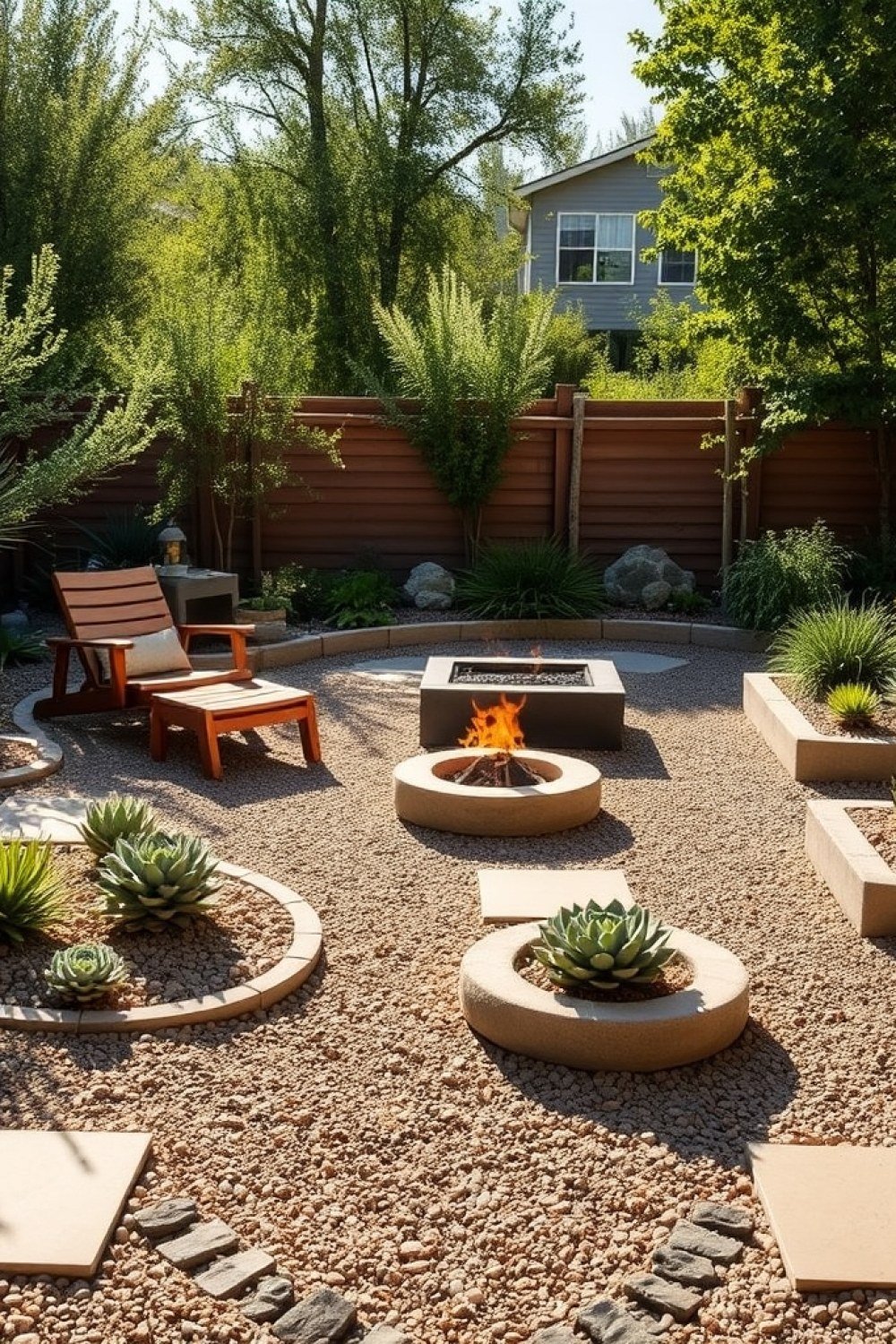
Rubber mulch or interlocking rubber tiles over a compacted, weed-barrier-covered base give kids a soft landing without grass. Add a sandbox or climbing structure, then edge the whole zone with timber or stone. Rubber mulch comes in green and brown and holds its color for years.
Why it works: The rubber stays springy on impact and never grows weeds, so the play area stays tidy through heavy use.
Pro tip: Build up 4-6 inches of rubber mulch depth for fall safety, and re-rake it once a season to keep coverage even.
8. Xeriscape with sculptural succulents and boulders
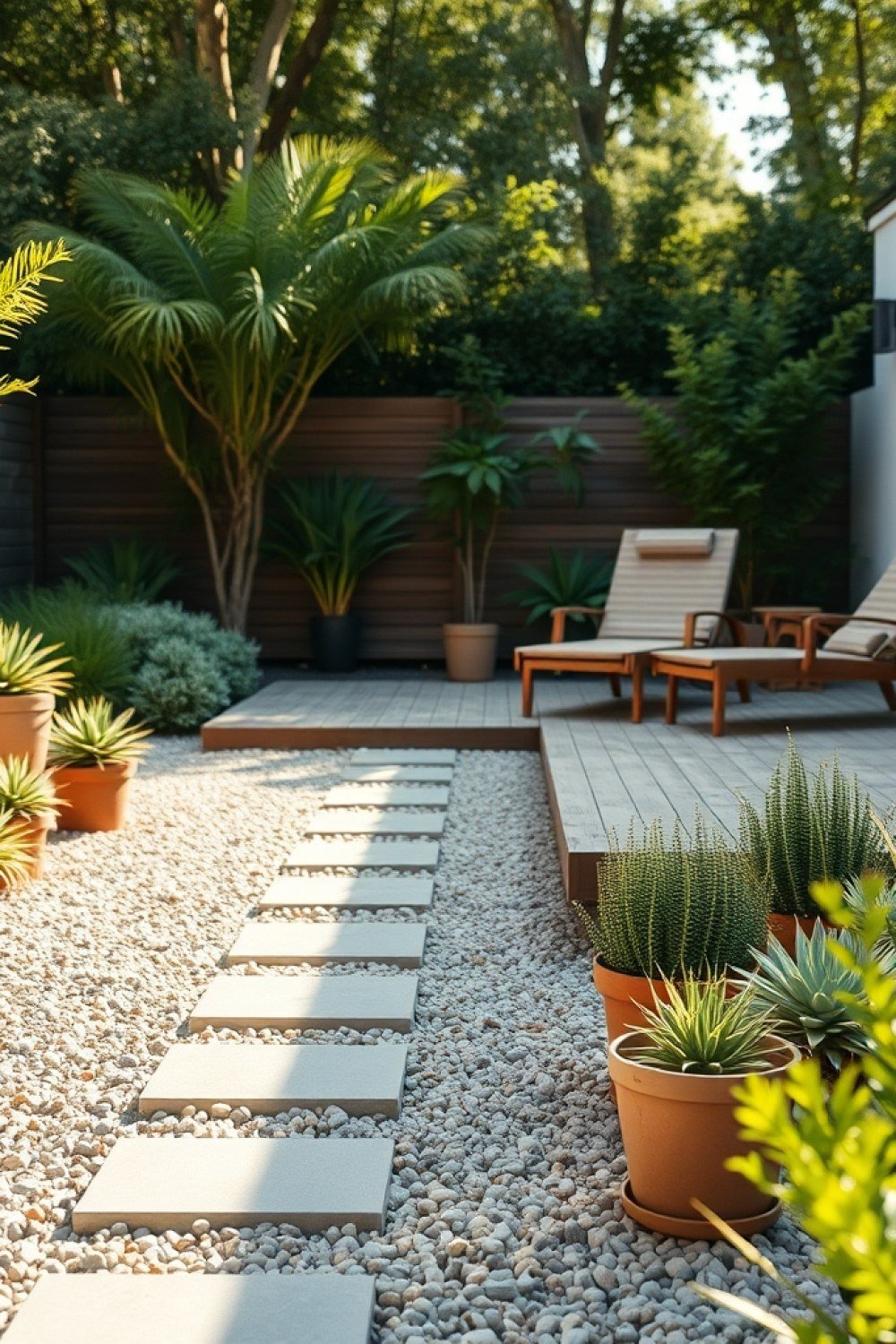
In dry climates, swap lawn for drought-tolerant succulents like agave, aloe, and sedum arranged around large boulders. Run drip irrigation to get them established, then dial it back hard once roots take. A dry creek bed of river rocks adds interest and moves runoff.
Why it works: The plants and rocks need little water or upkeep, so the bed looks architectural year-round with almost no effort.
Pro tip: Plant succulents on a slight mound or gravel top-dressing so water drains fast—standing moisture rots their crowns.
9. Zen gravel garden with raked patterns

A Japanese-inspired gravel garden uses fine gravel raked into waves or circles, with a few placed rocks and a single specimen plant. Raking is the only real chore, and it’s meditative. Contain the gravel with a frame or border, and pick a light-colored stone for contrast.
Why it works: The raked lines create calm, orderly patterns that read as intentional design rather than an empty patch.
Pro tip: Use gravel around 3/8 inch—finer grains hold rake lines best and won’t scatter as easily as large stone.
10. Edible groundcovers like strawberries and herbs

Replace lawn with a low edible carpet: alpine strawberries, creeping thyme, oregano, and mint—kept in pots to stop it spreading. They’re fragrant, feed pollinators, and you can harvest as you walk across them. Plant in full sun and water regularly the first season.
Why it works: You get a green, living surface plus fresh herbs and berries instead of a lawn you never use.
Pro tip: Mix in creeping thyme between stepping stones—it releases scent when crushed underfoot and shrugs off light traffic.
11. Paver patio with artificial grass rugs
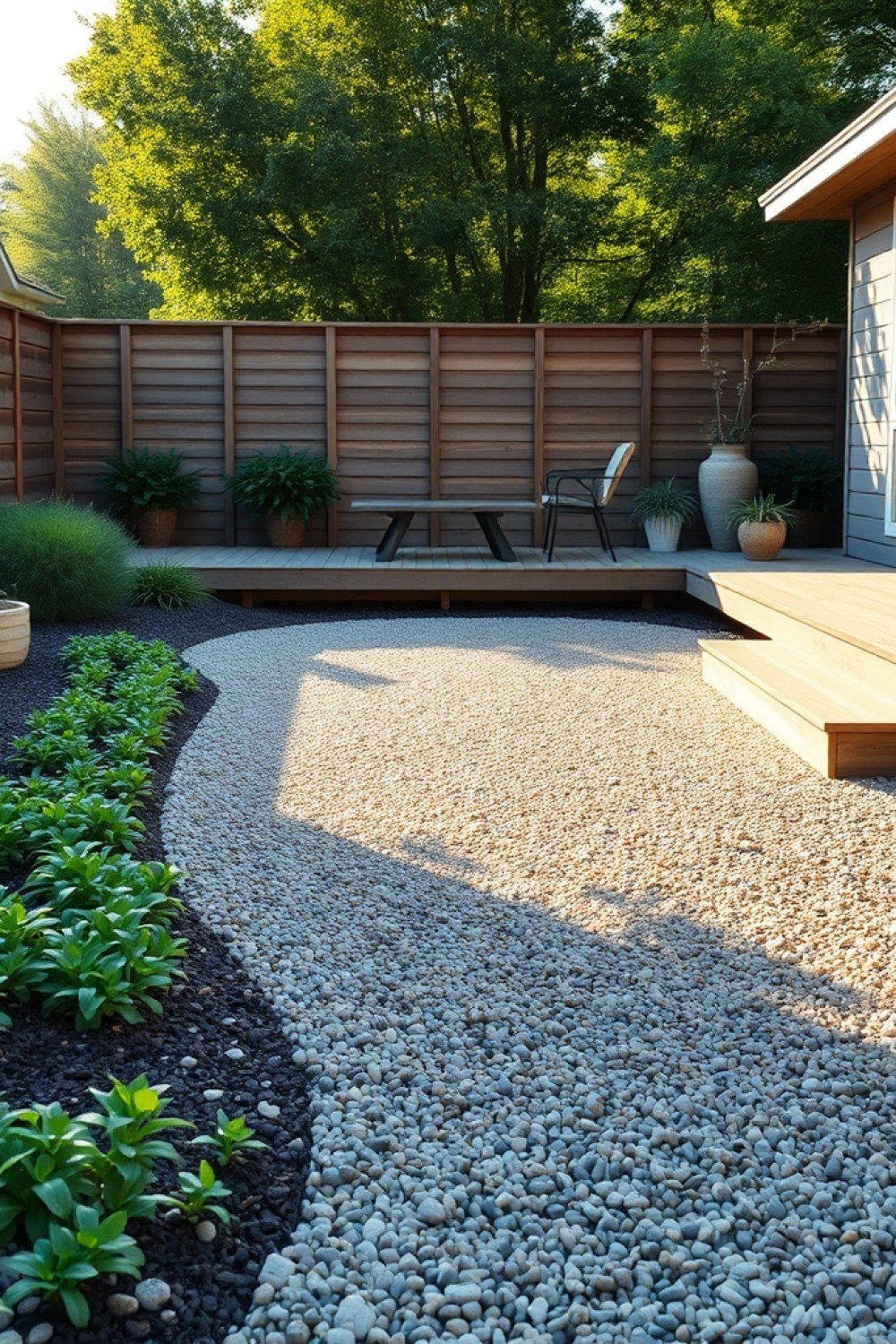
Lay a large artificial turf rug over an existing concrete or paver patio to get the green look without any installation. It’s removable, soft underfoot, and budget-friendly at roughly $100-$300. Choose a rug with a rubber backing.
Why it works: You get instant grass texture on hardscape with zero digging, drainage work, or permanent commitment.
Pro tip: Pick a rubber-backed rug to prevent slipping on smooth pavers, and roll it up before heavy rain to protect the backing.
12. Bocce or cornhole court with artificial turf
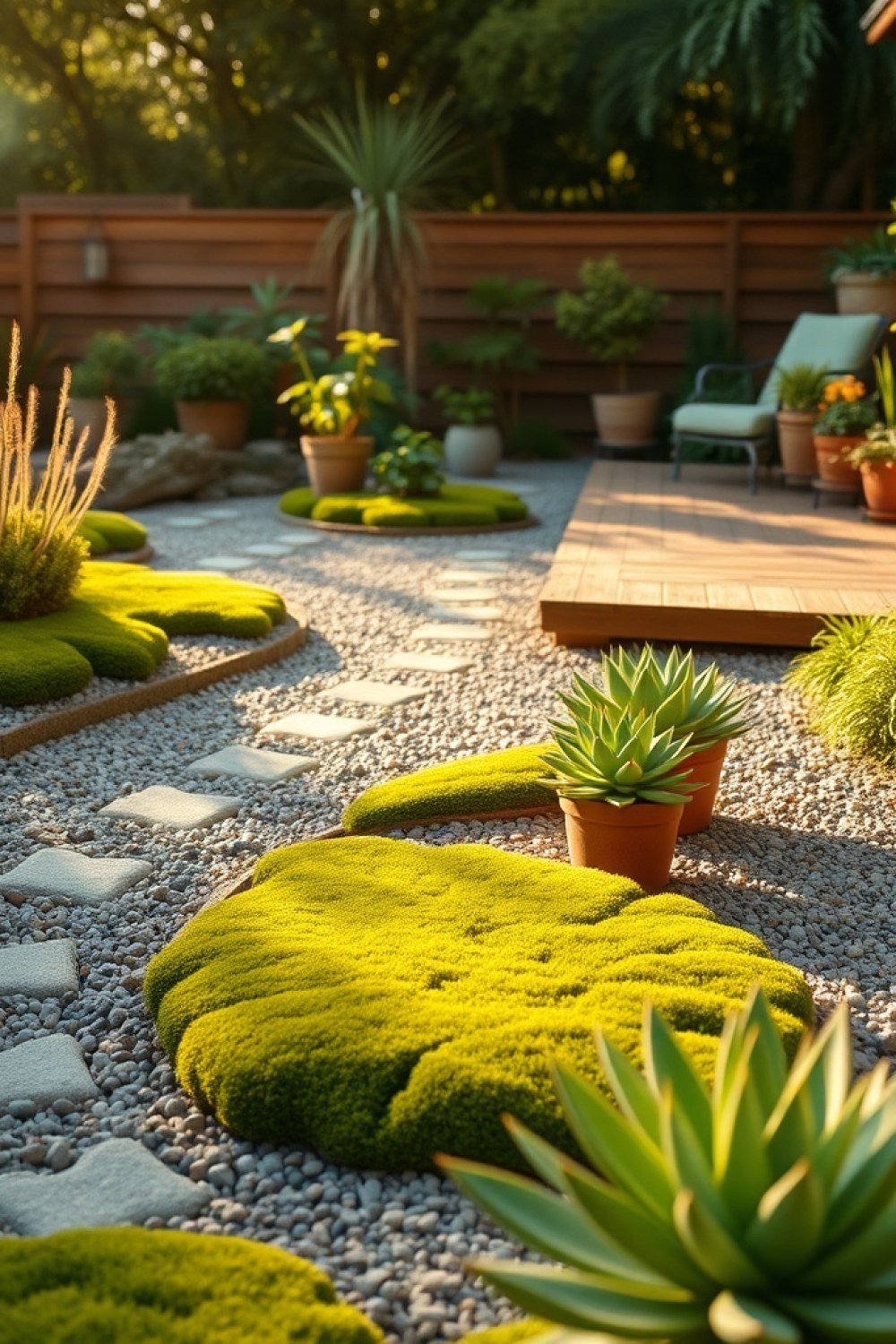
Build a dedicated game area with a strip of artificial turf over a leveled base of decomposed granite. Add bocce or cornhole boards for instant entertainment. The turf keeps ball rolls consistent and eliminates muddy patches—just sweep it clean.
Why it works: A flat, uniform surface makes games fair and repeatable, while the turf stays playable right after rain.
Pro tip: Compact and level the decomposed granite before laying turf; any dip or slope throws off bocce rolls and gathers puddles.
13. Rain garden with native plants for a wild look

Dig a shallow depression 4–8 inches deep where water already pools after rain, ideally 10 feet from your foundation. Plant the center with moisture-lovers like Joe Pye weed, swamp milkweed, and blue flag iris, then ring the edges with switchgrass and black-eyed Susan for drier zones.
Why it works: The basin catches roof and driveway runoff, so plants drink free rainwater instead of your hose. Deep native roots filter pollutants and feed butterflies and birds, and the whole bed never needs mowing.
Pro tip: Do a 24-hour perc test first — dig a hole, fill it, and check that water drains within a day. If it sits longer, amend with compost or pick thirstier species.
14. Artificial grass putting green for golf lovers
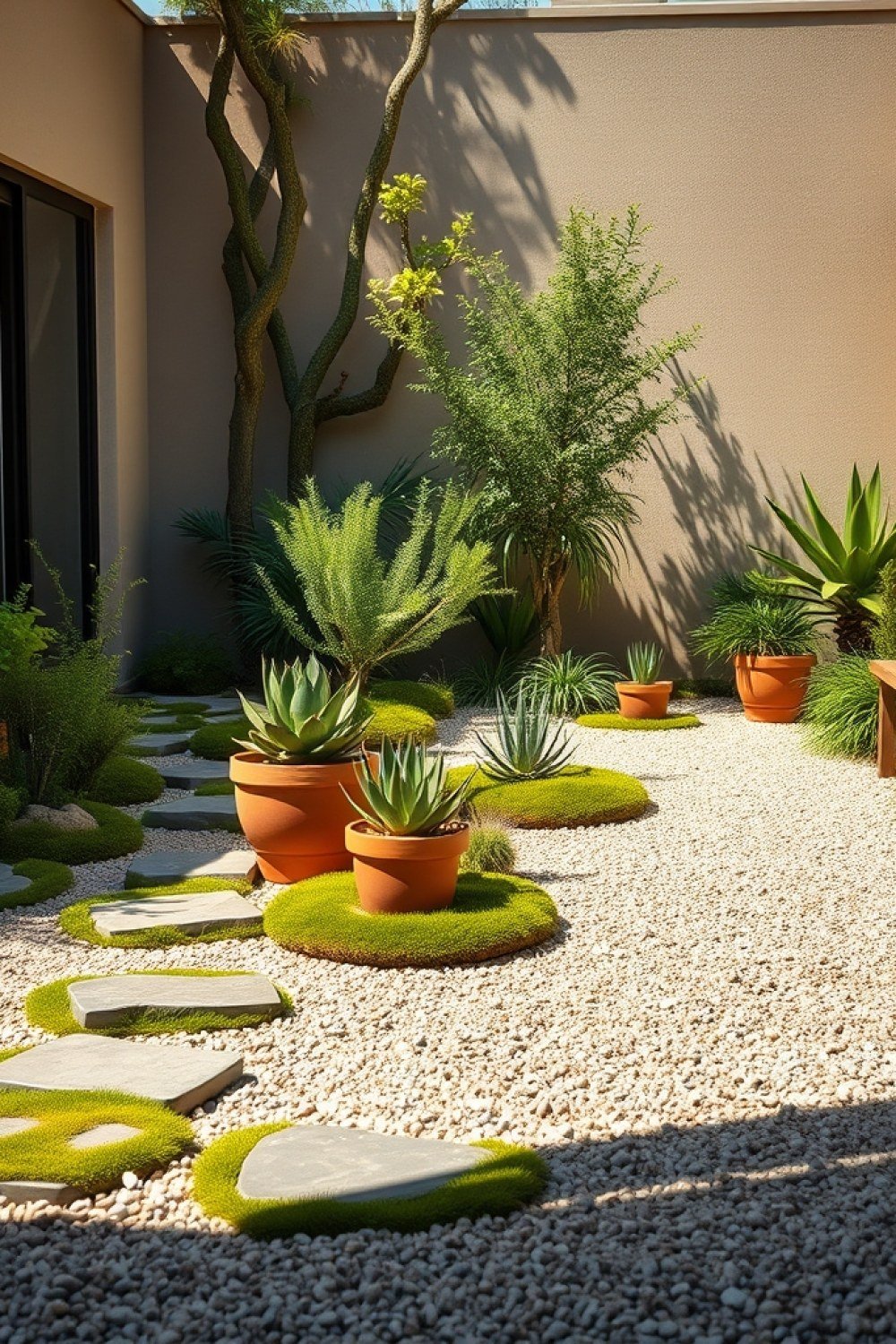
Build a putting green with artificial turf rated around 8–10 on the stimp scale for a realistic, medium-fast roll. A 10×15-foot patch fits two or three cups with 8–10 feet of putting length; add a fringe of slightly longer turf for chipping. A base of compacted crushed stone keeps it firm and level.
Why it works: You get true-speed practice year-round without mowing, watering, or muddy divots. The green never browns, and a proper stone base stops dips that ruin your roll.
Pro tip: Blow off leaves weekly and brush the turf against the grain monthly to keep fibers upright and speed consistent.
Quick Questions
What is the cheapest way to cover a backyard without grass?
Gravel and mulch are the most budget-friendly options, often costing $1-$3 per square foot. For a green look, microclover seed is inexpensive—about $20 covers 1,000 square feet—and spreads on its own. If you want instant green, artificial turf is pricier but eliminates ongoing costs.
Does artificial grass get too hot in summer?
Yes, artificial turf can get 40-70 degrees hotter than natural grass in direct sun. Choose a product with a lighter color and added infill like silica sand or Zeofill, which can reduce surface temperature by up to 30 degrees. You can also hose it down before use to cool it off.
How do I keep weeds from growing through gravel or mulch?
Always lay a commercial-grade weed barrier fabric under gravel or mulch, overlapping seams by 6 inches. For extra protection, put a 2-3 inch layer of gravel or 3-4 inches of mulch on top. Hand-pull any stragglers before they go to seed, and avoid using landscape fabric under mulch if you want to plant later.
Can I install artificial turf myself or should I hire a pro?
DIY installation is possible for small areas if you’re comfortable with excavation and base prep, but it’s labor-intensive. You’ll need to remove existing grass, compact a crushed stone base, and seam the turf carefully. For large yards or uneven terrain, hiring a professional ensures proper drainage and a seamless look.
What are the best grass alternatives for a dog-friendly yard?
Artificial turf is popular for dogs because it’s durable and easy to clean, but choose a product with antimicrobial infill to control odors. Alternatively, clover or mulch areas are soft and low-maintenance. Avoid gravel, which can hurt paws, and provide a designated potty spot with drainage.
Mixing These Grassless Ideas for a Greener Yard
Most backyards work best as a mix, not a single material. A gravel path leading to a clover seating area, bordered by artificial turf for the kids, gives you defined zones without mowing a single blade. Decide what each part of the yard needs to do—foot traffic, play, drainage, sitting—and match the surface to the job.
Start with the area you use most and build outward over a season or two. You’ll spend less upfront, learn what holds up in your climate, and end up with a yard that looks intentional rather than uniform. Your weekends will thank you.