14 Trellis Privacy Ideas to Turn Your Yard Into a Hidden Retreat
A good privacy trellis does more than block a nosy neighbor’s view. It gives your outdoor space a sense of enclosure, somewhere that feels like your own little room outside. The right combination of wood, metal, and climbing plants can transform an exposed patio into a quiet retreat. Some of these builds take a weekend, others just an afternoon. Below are 14 trellis privacy ideas for 2026 that mix structure, greenery, and style to help you reclaim your outdoor space.
1. Ornate Bronze Leaf Trellis with a Curved Stone Planter
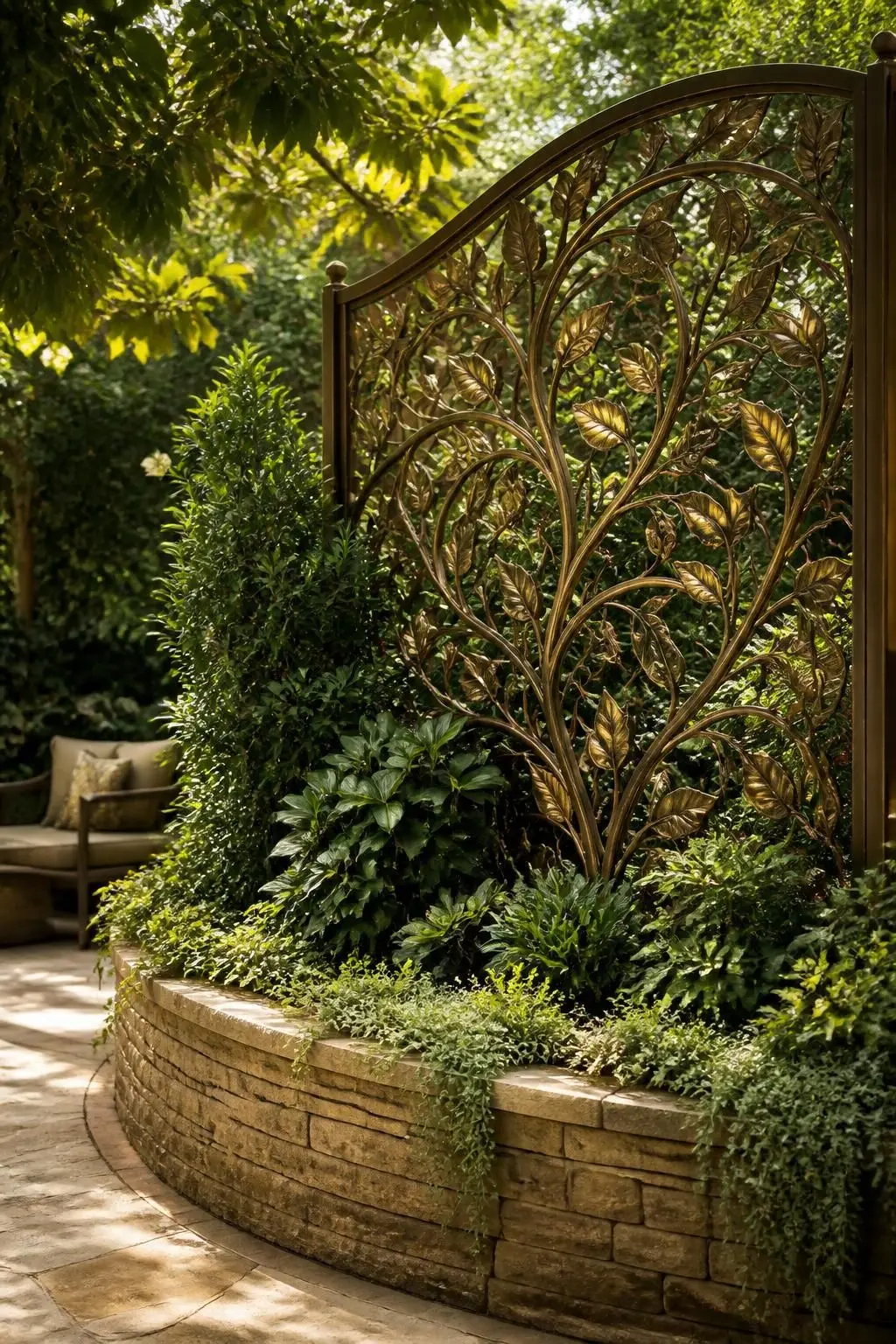
A forged bronze trellis covered in leaf-shaped cutouts brings old-world charm to a backyard corner, especially when it’s anchored into a curved stone planter bed. The metalwork alone adds texture even before anything starts climbing.
Fill the bed with lavender and hydrangeas for a dense base, then let white climbing roses and purple wisteria weave through the leaf pattern over time. As the vines fill in, the bronze becomes a living wall rather than a bare structure.
Tip: Keep the soil consistently moist through the growing season to help vines fill in the metalwork faster.
2. Vertical Cedar Slat Screen with a Cozy Seating Nook
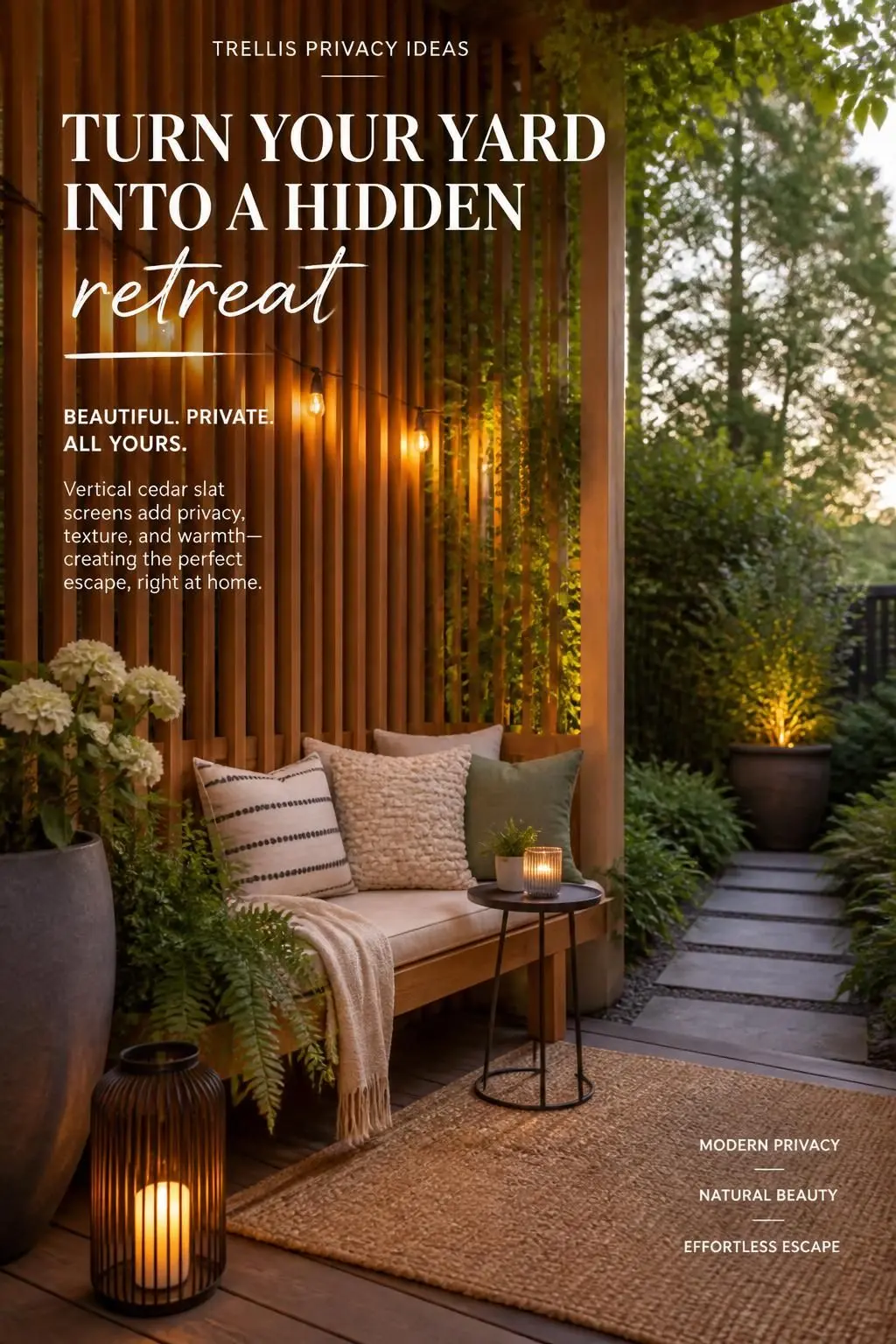
A tall, vertical cedar slat wall creates one of the cleanest, most modern privacy screens you can build yourself with pressure-treated posts and thin wood strips. Staining it a deep walnut color instantly makes the structure look more expensive than it costs.
Add black metal planters tucked into the slats for ferns, then finish the space below with a small fire pit and a couple of outdoor armchairs. String warm bulbs across the top and the whole nook becomes an evening hangout spot.
Tip: Stagger the planter heights along the slats so the greenery reads as layered instead of flat.
3. Horizontal Cedar Screen with a Built-In Bench
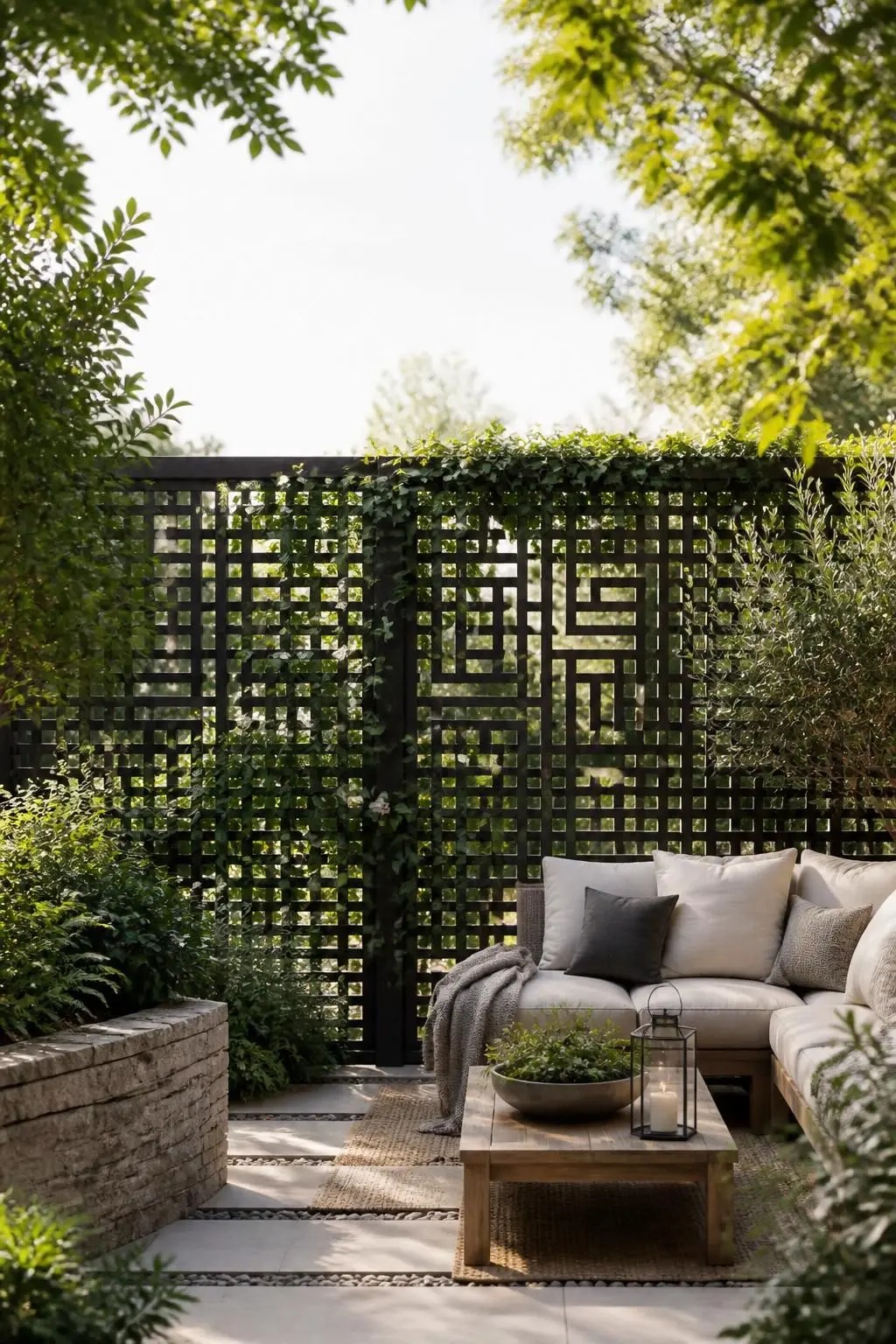
Horizontal cedar slats spaced with small gaps create a softer, more contemporary look than a solid fence while still blocking sightlines effectively. Pairing the screen with an L-shaped built-in bench turns the corner into an actual seating area.
Train jasmine or wisteria up the slats for fragrance, and tuck potted olive trees at each end of the bench to frame the whole setup. A fire pit table in the center gives the space a clear focal point.
Tip: Leave a half-inch gap between horizontal slats so air and light can still filter through slightly.
4. Charcoal-Stained Geometric Lattice Panel
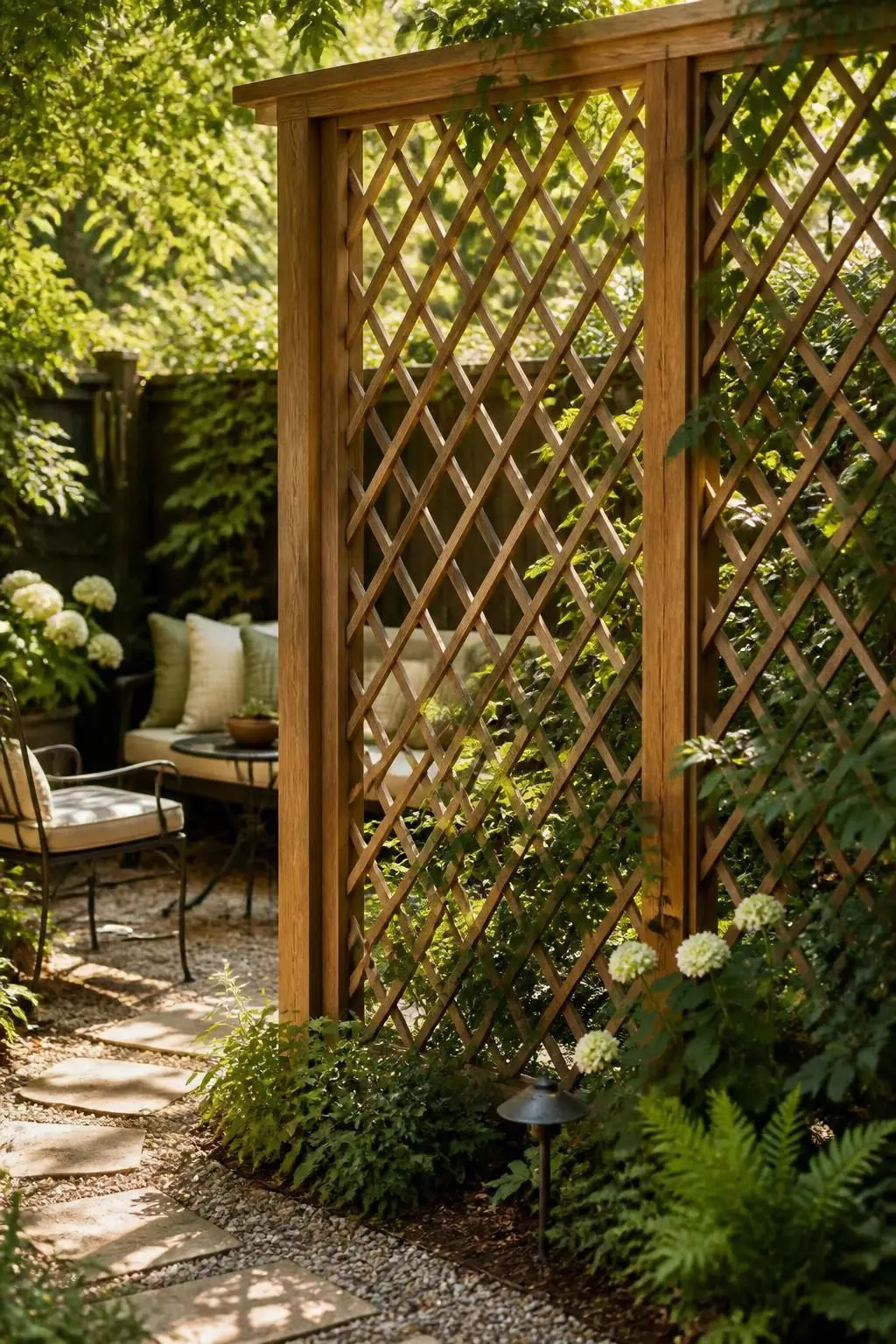
A geometric lattice panel stained in charcoal disappears into shadow in the best way, letting climbing flowers take center stage instead of the wood itself. Two sturdy posts are all you need to anchor the panel securely.
Plant climbing roses and clematis at the base, then add terracotta pots with fountain grass and hostas nearby for extra layering. The dark stain makes any bright bloom pop even more against the background.
Tip: Apply a second coat of stain to any cut edges to help the wood resist moisture damage over time.
5. Oak-Framed Diamond Lattice Divider
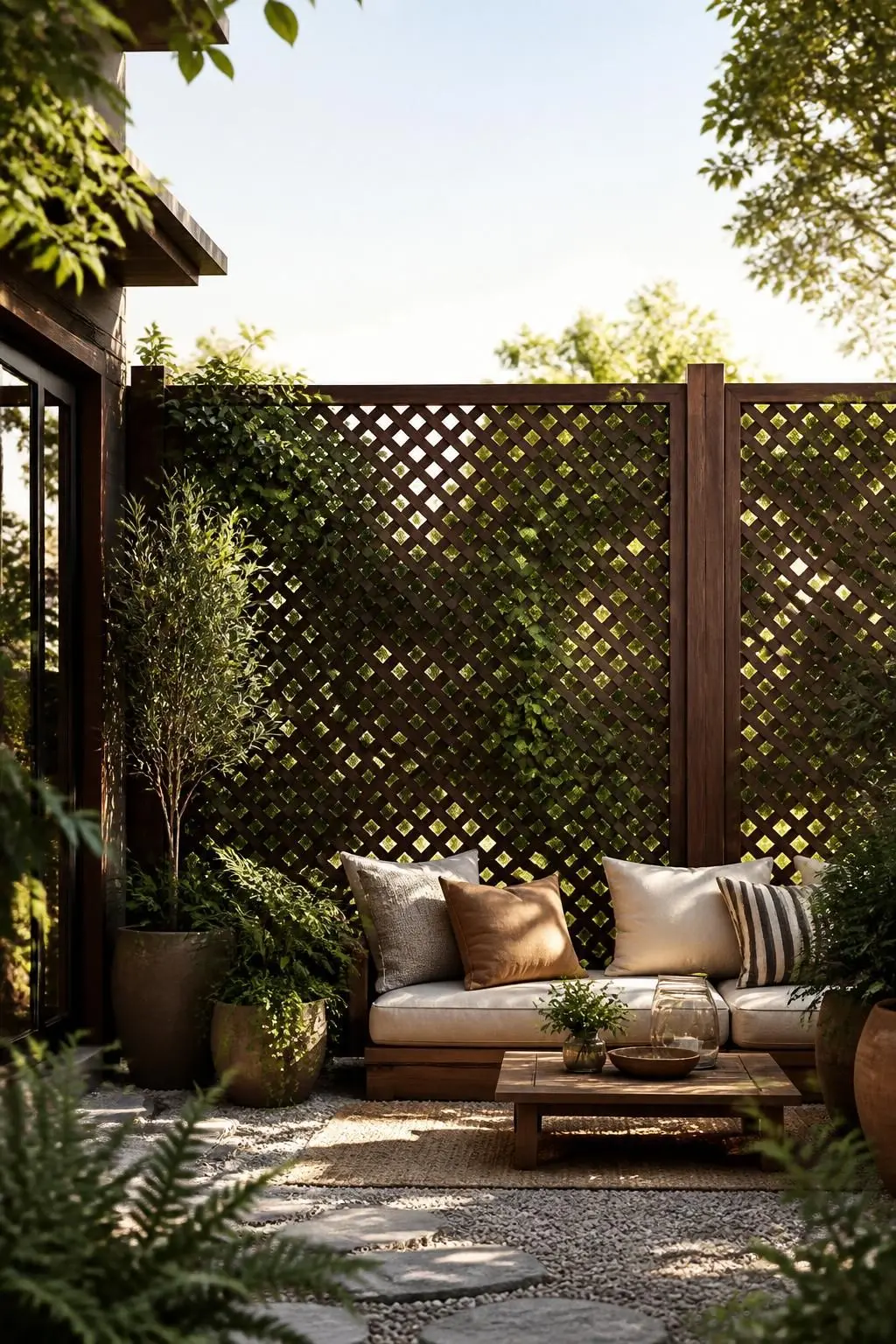
A traditional diamond lattice set into a heavy oak frame gives off a classic cottage-garden feel, especially when stained a warm chestnut tone. Bolting the panels between thick posts creates a sturdy, long-lasting wall.
White clematis and pink roses climbing the base pair beautifully with a lavender border along a gravel path. Tuck a wicker sofa behind the finished screen for a hideaway that feels worlds away from the rest of the yard.
Tip: Use pea gravel underfoot near the seating area to keep the space low-maintenance and mud-free.
6. Mahogany Crosshatch Privacy Wall
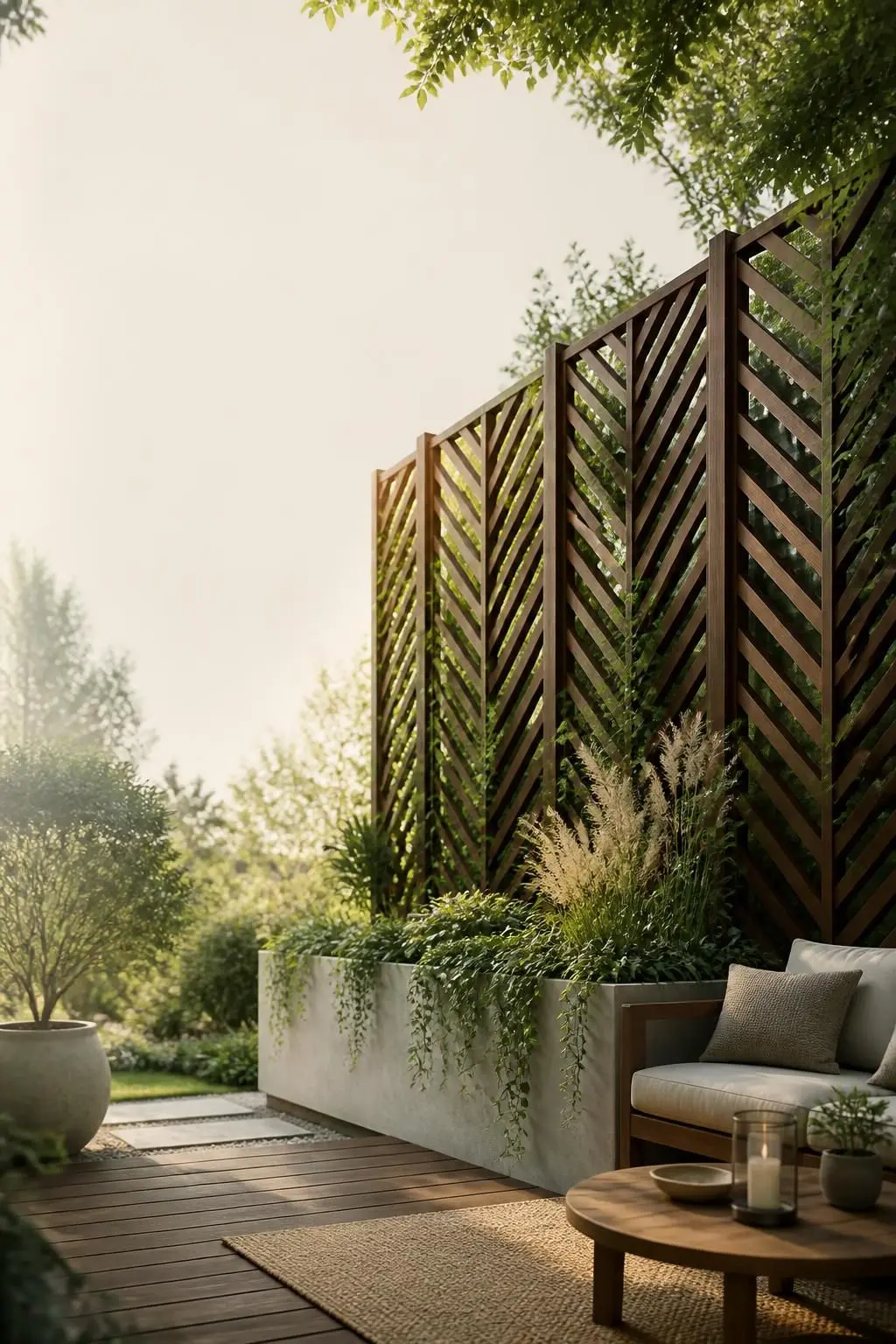
A layered crosshatch pattern built from cedar boards and thin slats creates one of the most budget-friendly yet high-impact privacy walls on this list. A rich mahogany stain gives the finished structure a polished, custom look.
Clematis and climbing roses planted at the base will eventually weave naturally through the crosshatch pattern for extra coverage. A decorative crown cap along the top edge adds a finished, architectural touch.
Tip: Use wood glue at the slat joints in addition to nails for a sturdier, longer-lasting crosshatch pattern.
7. Walnut Chevron Trellis with a Concrete Planter Base
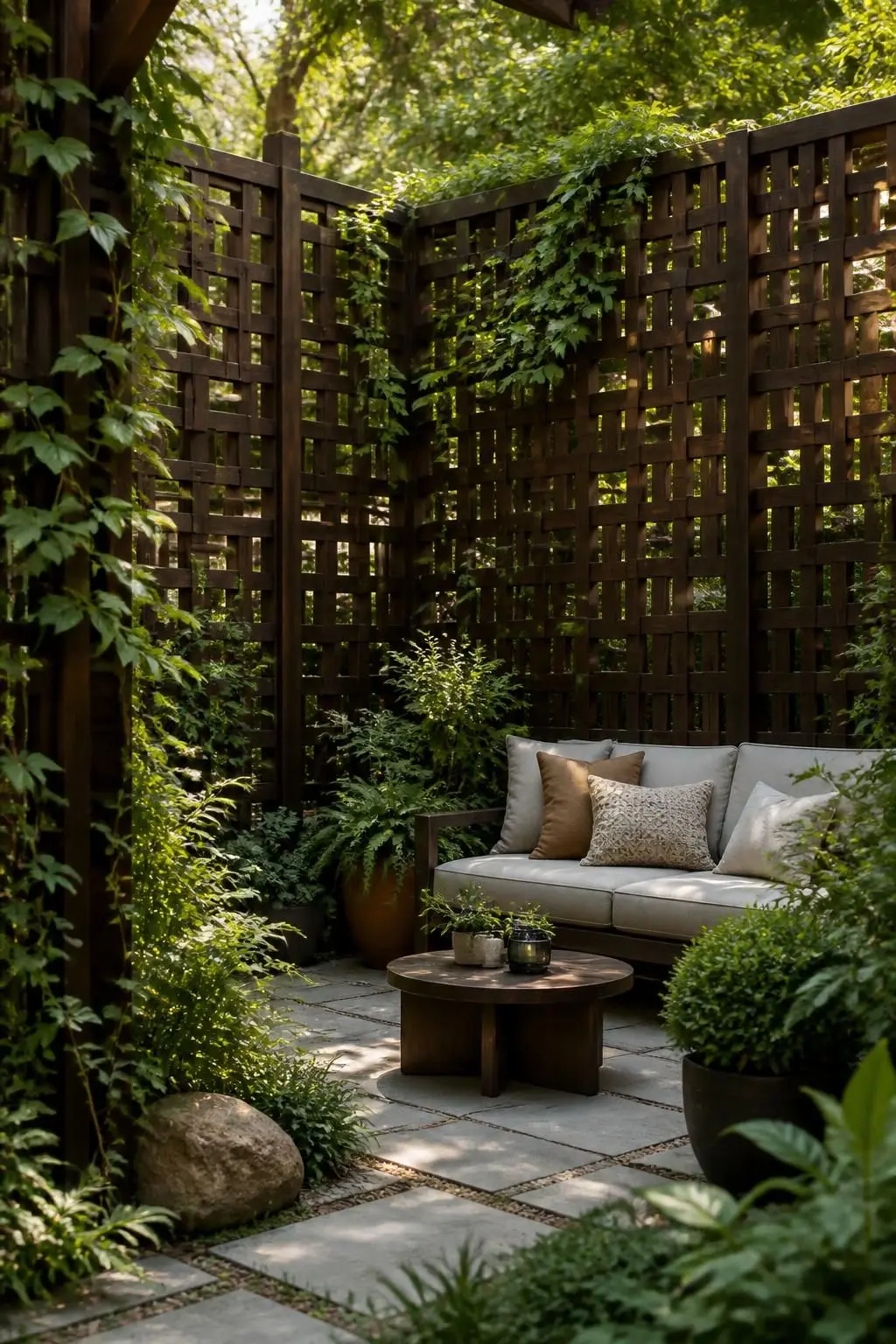
A chevron-patterned trellis built from walnut slats and set into a long concrete planter combines strong structure with striking visual pattern. The angled slats read as more custom than a standard flat panel.
White clematis climbing up each panel pairs nicely with hostas and hydrangeas planted low in front. A fire pit and outdoor sofa nearby complete the space into a full backyard living area.
Tip: Seal the walnut slats with a weather-resistant finish before installing them in the planter to prevent early warping.
8. Espresso-Stained Interlocking Lattice Panels
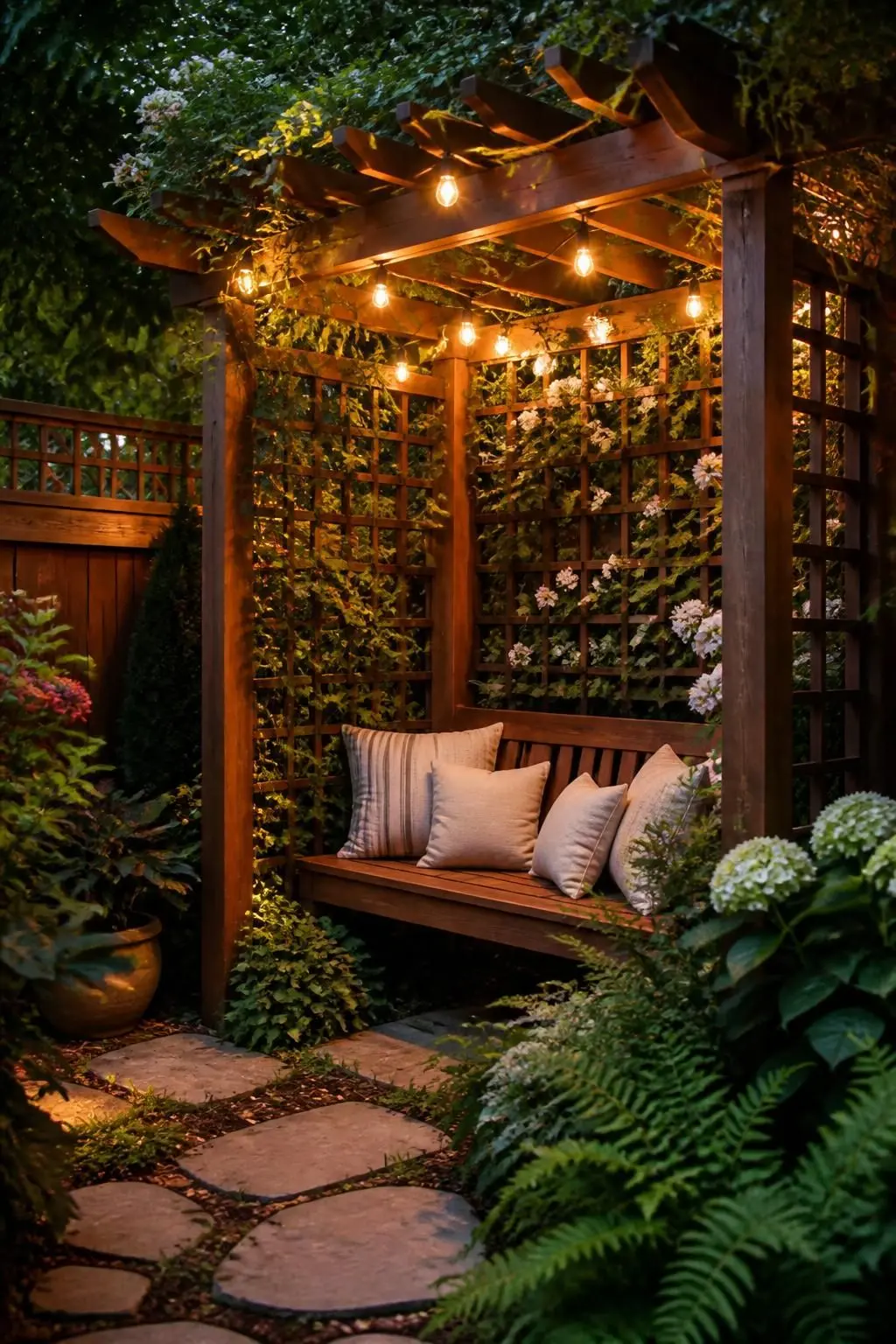
Interlocking geometric lattice panels stained in a deep espresso tone create a rich, Mediterranean-inspired privacy wall along a patio edge. Heavy-duty posts keep the whole structure stable even in windier yards.
Pink climbing roses and star jasmine work well here, along with potted lavender and a small olive tree nearby for extra texture. The dark stain helps the panels blend into evening shadows while still standing out in daylight.
Tip: Condition raw wood before staining espresso tones to avoid blotchy, uneven color absorption.
9. Redwood Arbor Bench with String Lights
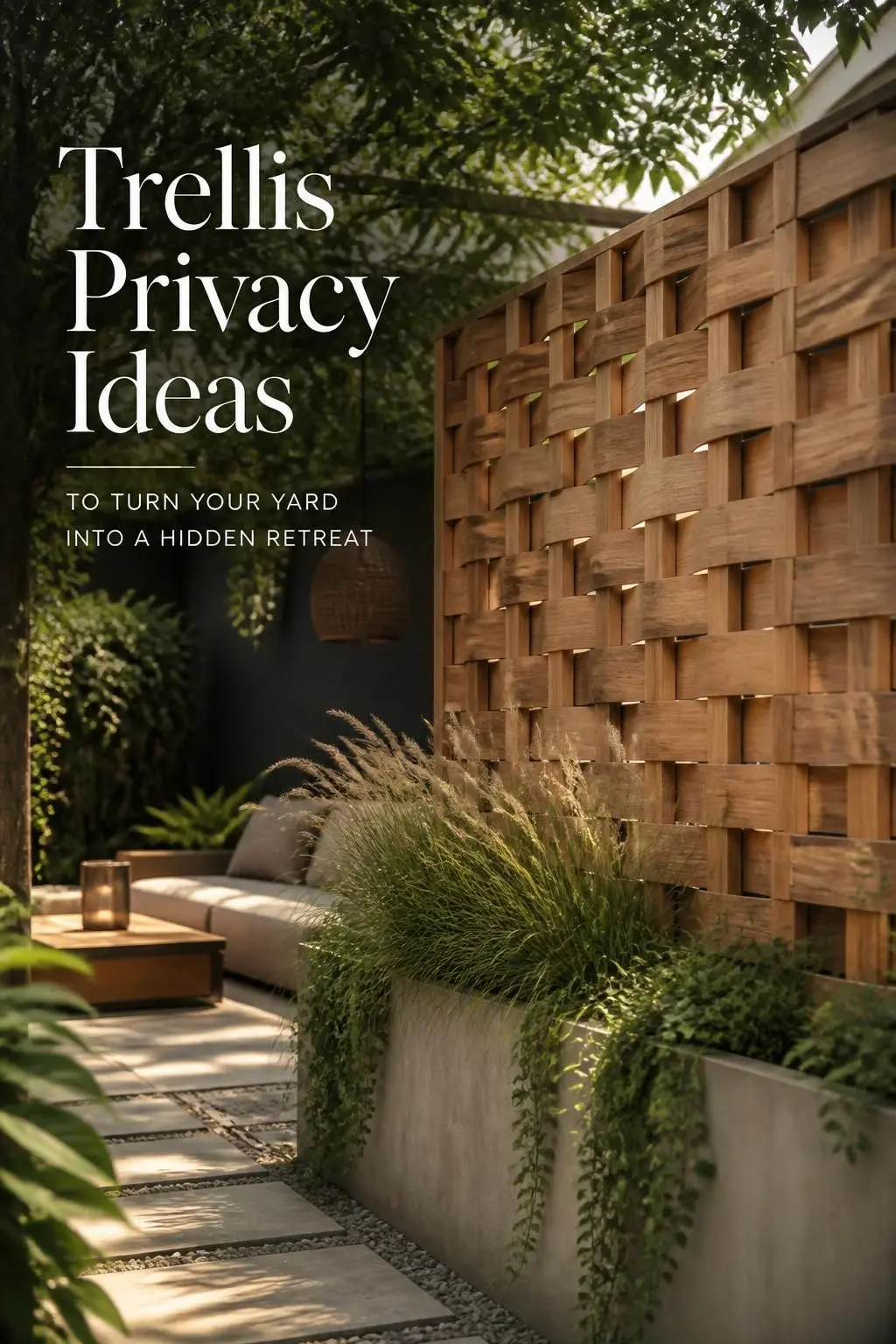
A ready-made redwood arbor with a lattice back doubles as both a privacy screen and a built-in seating nook once you slide a slatted bench inside the frame. It’s one of the faster builds on this list since much of the structure comes pre-assembled.
Stain the wood a deep mahogany, then drape pink climbing roses and wisteria over the top rafters for natural cover. Warm string lights tucked behind the lattice make the little nook glow after sunset.
Tip: Set the arbor on flagstone pavers or gravel rather than bare soil to keep the base from rotting.
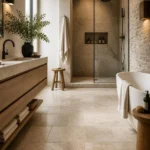

10. Woven Checkered Slat Screen in Concrete Troughs
A woven checkered pattern made from thin wood slats set into heavy concrete trough planters creates a privacy wall that doesn’t require digging any post holes. The concrete base alone provides enough stability.
Clumping bamboo tucked behind the lattice adds instant height and density, while purple clematis climbs the woven front. Ornamental grass planted along the front edge softens the concrete’s hard lines.
Tip: Choose trough planters with drainage holes so root rot doesn’t become an issue for the bamboo.
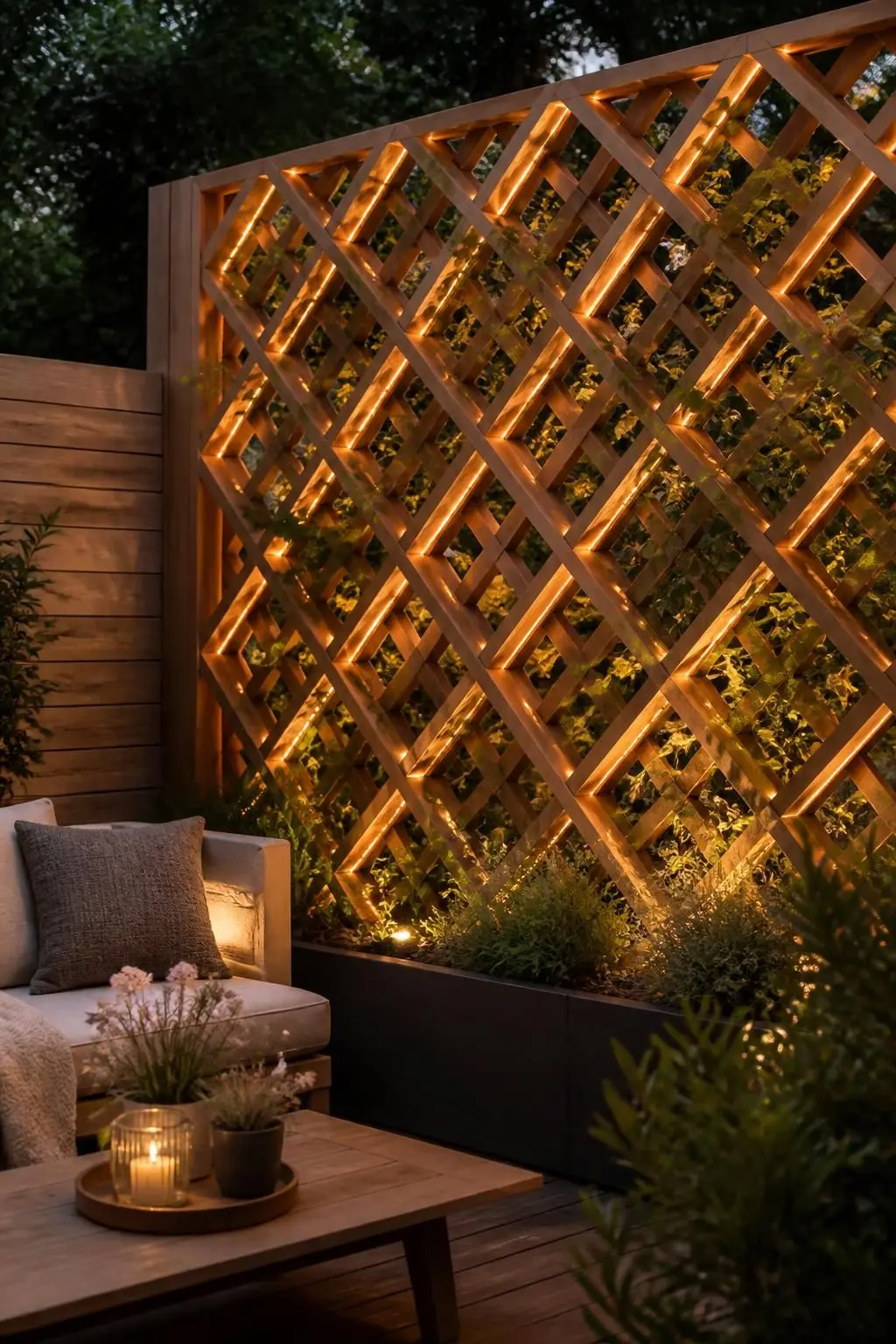
11. Diagonal Lattice Grid with Hidden LED Lighting
A diagonal grid lattice set into tall spruce fence panels adds pattern and texture while a hidden LED strip along the top frame keeps the light source out of sight. Deep walnut stain gives the whole structure a moody, refined look.
Long timber planter boxes built at the base give climbing roses or jasmine somewhere to root, and the vines eventually weave through the grid for extra coverage. The combination of structure and glow makes this a strong option for evening entertaining.
Tip: Run LED wiring through a small routed channel in the wood to keep cords fully hidden from view.
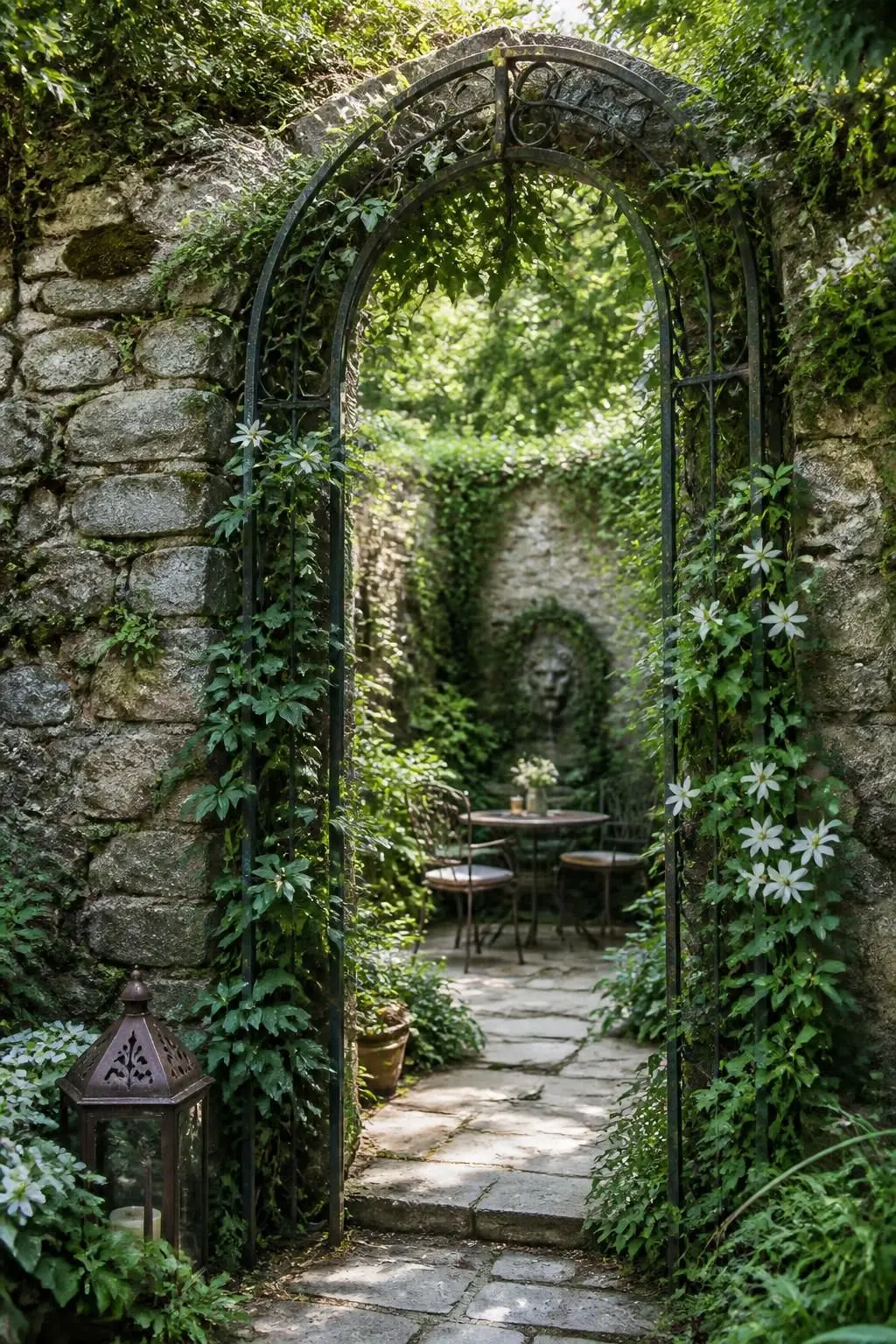
12. Weathered Iron Arch Trellis Against a Stone Wall
Cathedral-style iron arch panels bring an elegant, almost secret-garden feel when anchored against an existing stone wall. Their open metalwork lets climbing plants show through beautifully as they grow.
Pale pink roses and purple clematis climbing the arches pair well with hydrangeas, lavender, and boxwood planted along the base. Letting the vines drape loosely, rather than fully covering the metal, keeps the decorative pattern visible.
Tip: Seal new iron panels with a clear matte coat to prevent rust streaks from staining a nearby stone wall.
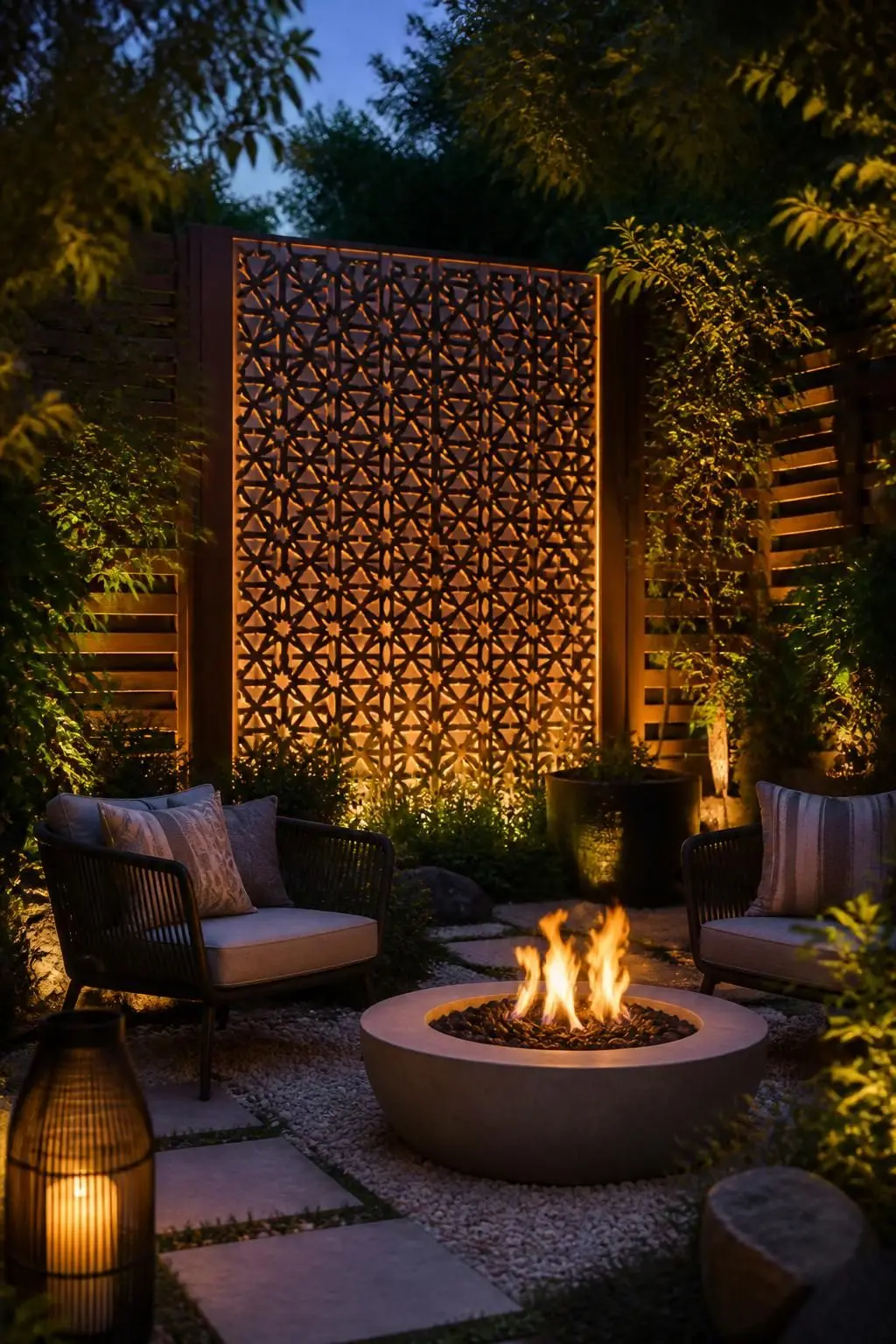
13. Backlit Arabesque Screen with a Fire Pit
Intricately cut arabesque screen panels set into a dark teak frame create a dramatic, almost boutique-hotel feel for a patio corner. Hidden LED lighting behind the top crossbeam gives the pattern a soft glow once the sun goes down.
Large hostas planted along the base add lushness at ground level, while a modern fire pit placed in front turns the whole area into a destination spot in the yard. Routing the wiring through the frame keeps the setup looking clean.
Tip: Test the LED placement before final assembly to make sure the pattern casts the shadow effect you want.
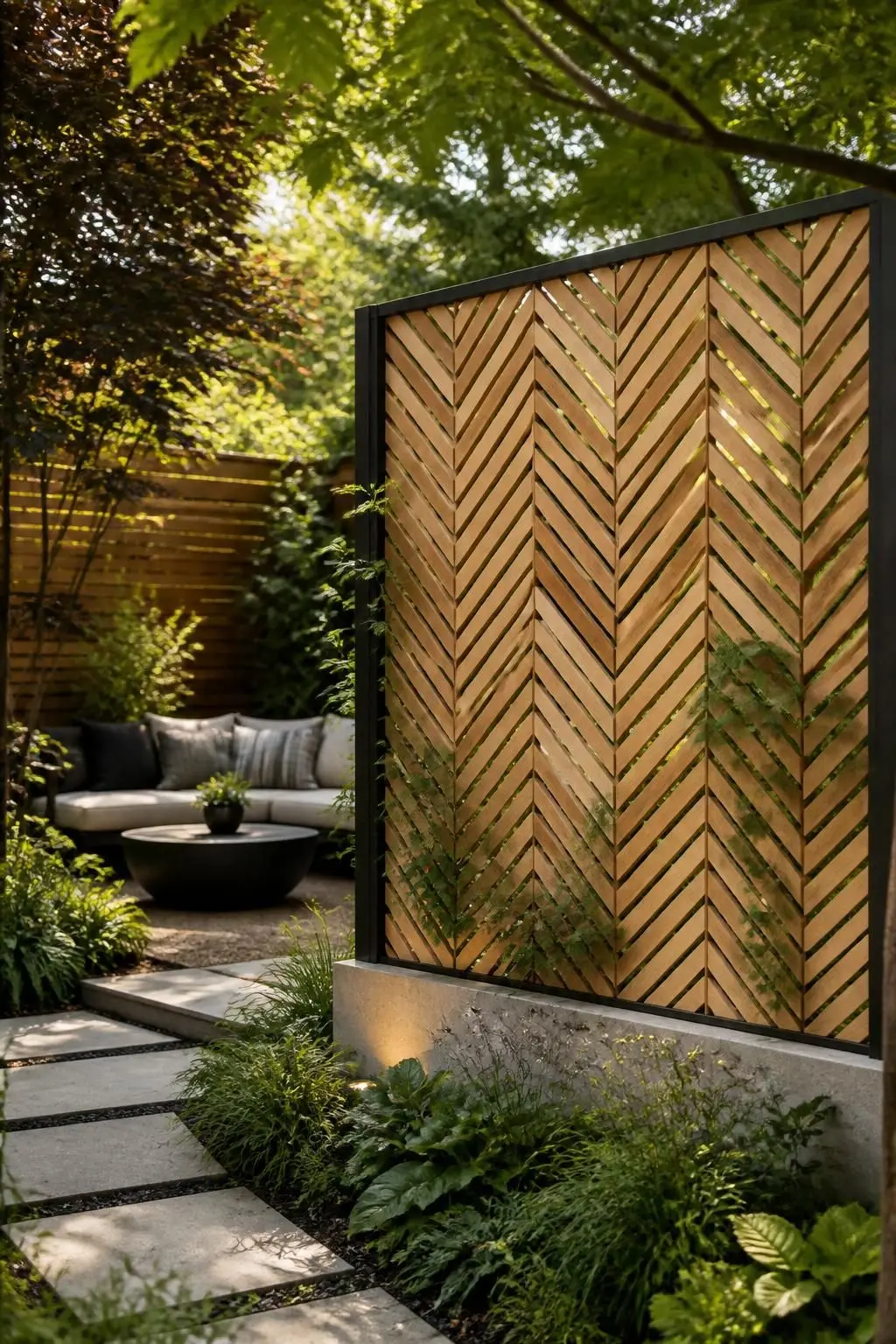
14. Honey Birch Herringbone Panel with a Concrete Base
A herringbone pattern built from honey-toned birch slats brings warmth and texture that feels more custom than a standard flat panel. Setting the finished piece into a poured concrete planter base gives it serious stability.
Star jasmine planted along the base will eventually frame the herringbone pattern as it climbs, and regular trimming keeps the wood grain visible rather than fully hidden. It’s a striking option if you want your privacy screen to double as a design feature.
Tip: Let the concrete base cure fully for at least 24 to 48 hours before mounting the wood panel on top.
Frequently Asked Questions
How tall should a privacy trellis be to actually block sightlines?
Most effective privacy trellises run between 6 and 8 feet tall, though this depends on your specific yard layout and where the sightlines you’re blocking are coming from. Taller structures work best paired with dense climbing plants.
What are the fastest-growing plants for covering a trellis?
Clematis, wisteria, and climbing roses are popular choices because they fill in relatively quickly once established. Jasmine is another strong option if you also want fragrance along with coverage.
Do I need a permit to build a tall privacy trellis?
It depends on your local regulations and how tall the structure is. Many areas have height limits for backyard structures, so it’s worth checking with your city or HOA before building anything permanent.
How do I keep a wood trellis from rotting over time?
Choose rot-resistant wood like cedar, redwood, or teak, and seal cut edges with stain or sealant before installation. Setting the base on gravel or pavers instead of bare soil also helps prevent moisture damage.
Can I build a privacy trellis without digging post holes?
Yes, several of these ideas use concrete planters or troughs as the anchor instead of buried posts, which works well for renters or anyone who wants a more temporary setup.
How much does a DIY privacy trellis typically cost?
Costs vary widely based on materials and size, ranging from around fifty dollars for a small budget build to several hundred dollars for larger structures with stone, concrete, or premium wood.
Also Worth Knowing: Choosing the Right Plants for Coverage
Not every climbing plant grows at the same pace, so it helps to match your choice to how quickly you want coverage. Fast growers like clematis and wisteria can fill in within a season or two, while boxwood and other shrubs work better as a slower, more permanent border.
Fragrant options like jasmine and lavender add another layer of enjoyment beyond just visual privacy. Positioning these plants near seating areas means you get the benefit of their scent every time you’re outside relaxing.
Final Thoughts: Building a Backyard That Feels Like Yours
A privacy trellis is really about reclaiming a little piece of your outdoor space for yourself. Once the sightlines are blocked, a patio or backyard corner starts to feel like an actual room rather than an exposed patch of yard.
The best build for you depends on your timeline, budget, and how much maintenance you’re willing to take on. A simple lattice panel can be finished in an afternoon, while a full arbor with lighting and seating might take a couple of weekends.
Whichever style you choose, the plants you pair with it will do a lot of the long-term work. Give your climbers a season or two to fill in, and the structure will start to feel like it’s always been part of your garden.