
How to Make a Small Yard Feel Bigger: 18 Backyard Ideas
Most small-yard advice tells you to downsize everything, and that’s exactly what makes a tiny yard feel tiny. Shrinking your furniture, your plants, and your plans just shrinks the space further. The real trick is controlling what your eye lands on — the sightlines, heights, and light — so a 20-foot yard reads like a garden twice its size.
That’s what the 18 ideas below are built to do. You’ll find layout moves, illusion techniques, and plant and furniture choices that work in a 200-600 square foot space, plus a few quick projects you can knock out in a weekend. No full remodel required, and nothing here asks you to spend more than the yard is worth.
Whether you’re working with a fenced strip behind a rental or a proper courtyard you own, the principle is the same: give the eye somewhere to travel. Do that and people stop noticing how small the yard is — they just notice how good it feels to sit in it.
How to Pick the Right Ideas for Your Yard
Not every idea on this list will suit a 200-square-foot courtyard or a 600-square-foot suburban strip. Before you commit to any project, run your space through these four filters so you spend your effort where it actually shows.
- Map your longest sightline: Stand at your back door and note where your eye lands first. Almost every illusion technique here works by extending or interrupting that one line.
- Note your light: Track sun and shade for a day. Bright yards suit dark anchors and mirrors; deep shade needs pale surfaces and layered foliage to avoid reading as a cave.
- Check your limits: Renters should stick to movable pieces and containers. Owners can commit to levels, fence changes, and permanent paving.
- Set a budget line: Pick two or three high-impact projects (levels, diagonal flooring, one big plant) and treat the rest as tweaks you can add later.
1. Lay the Floor on a Diagonal
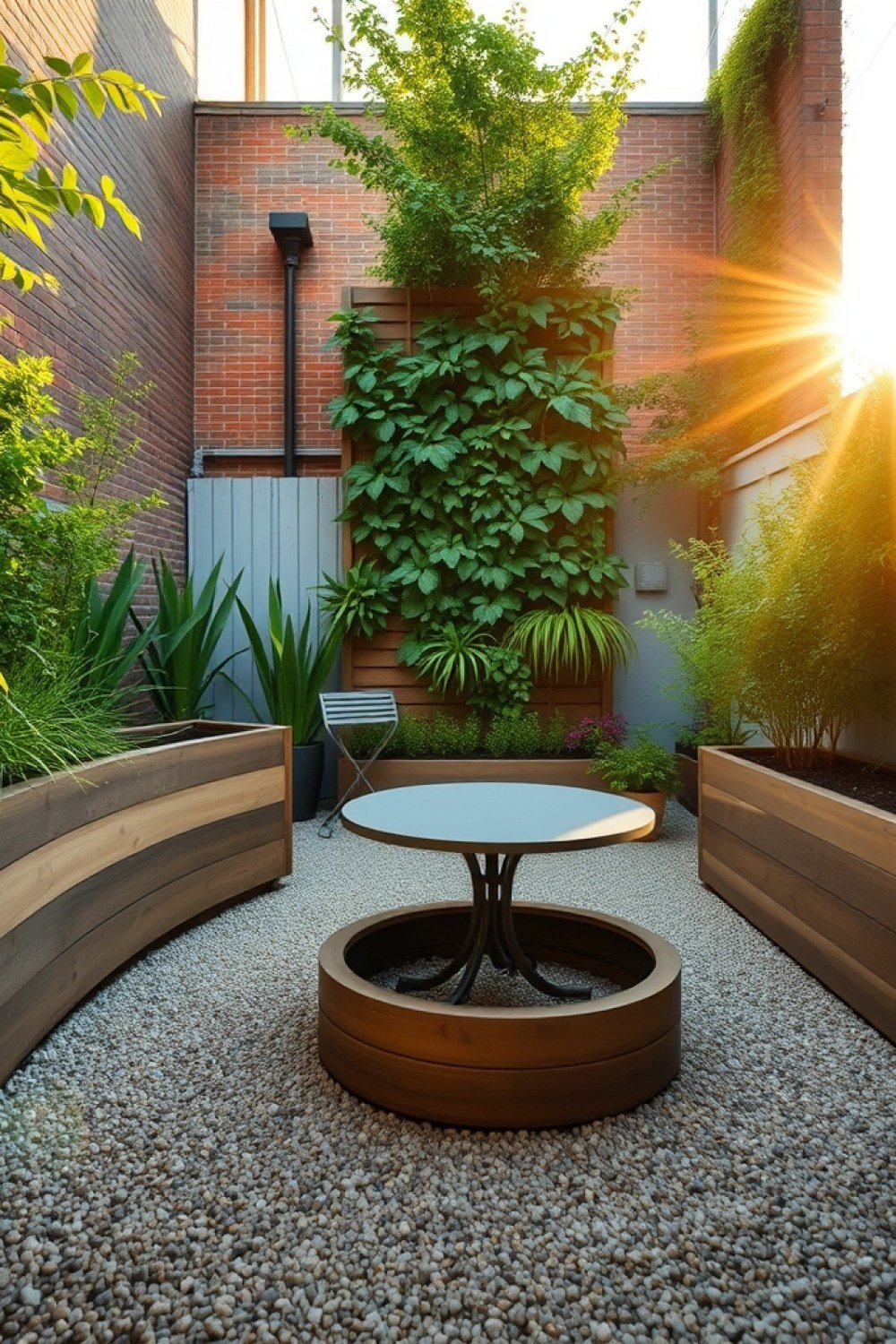
Pavers or deck boards set at a 45-degree angle to the house pull your eye across the longest possible line of the yard. That diagonal is longer than any straight run parallel to the fence, and the brain reads the extra distance as depth. It’s a pure geometry trick, and it works every time.
It also quietly solves two common problems. A diagonal pattern hides slight irregularities in paver spacing, so a DIY job looks neater. And because the lines aren’t parallel to the boundaries, the paving stops emphasizing the yard’s width and starts suggesting it continues outward.
This suits anyone laying new paving or redecking — it costs nothing extra, since you’re just changing direction before you start. If you’re using square pavers, set them point-up rather than edge-up. Action tip: snap a chalk line at 45 degrees from your back door before laying anything, and dry-fit one row to confirm the angle feels right before you commit.
2. Two Levels Beat One
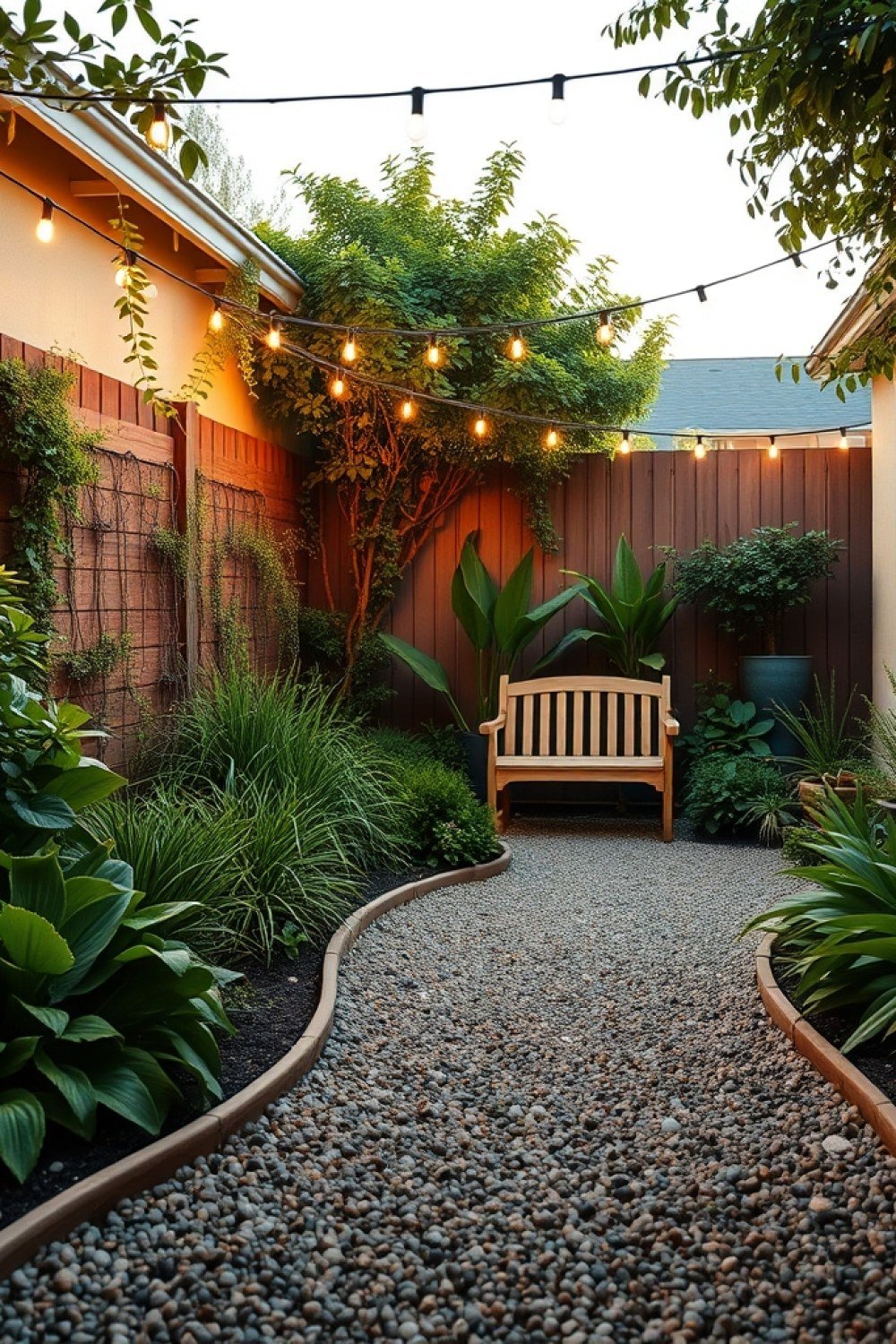
A single low platform — 6 to 8 inches is plenty — plus a step down to a gravel or planted area instantly doubles the number of “rooms” you can see from the house. Two visible levels read as two separate spaces, and separate spaces read as more yard.
There’s a second benefit that’s easy to miss. Even a small raised deck edge gives the eye a horizon line partway back, which makes the yard feel like it keeps going past where it actually stops. Flat ground, by contrast, shows you the whole boundary at once.
It suits yards with any depth over about 15 feet, and works especially well when the upper level holds your seating and the lower one holds planting or a fire bowl. Action tip: keep the step at 6-8 inches and make the lower level a different material — gravel, mulch, or groundcover — so the change registers instantly.
3. Float the Furniture
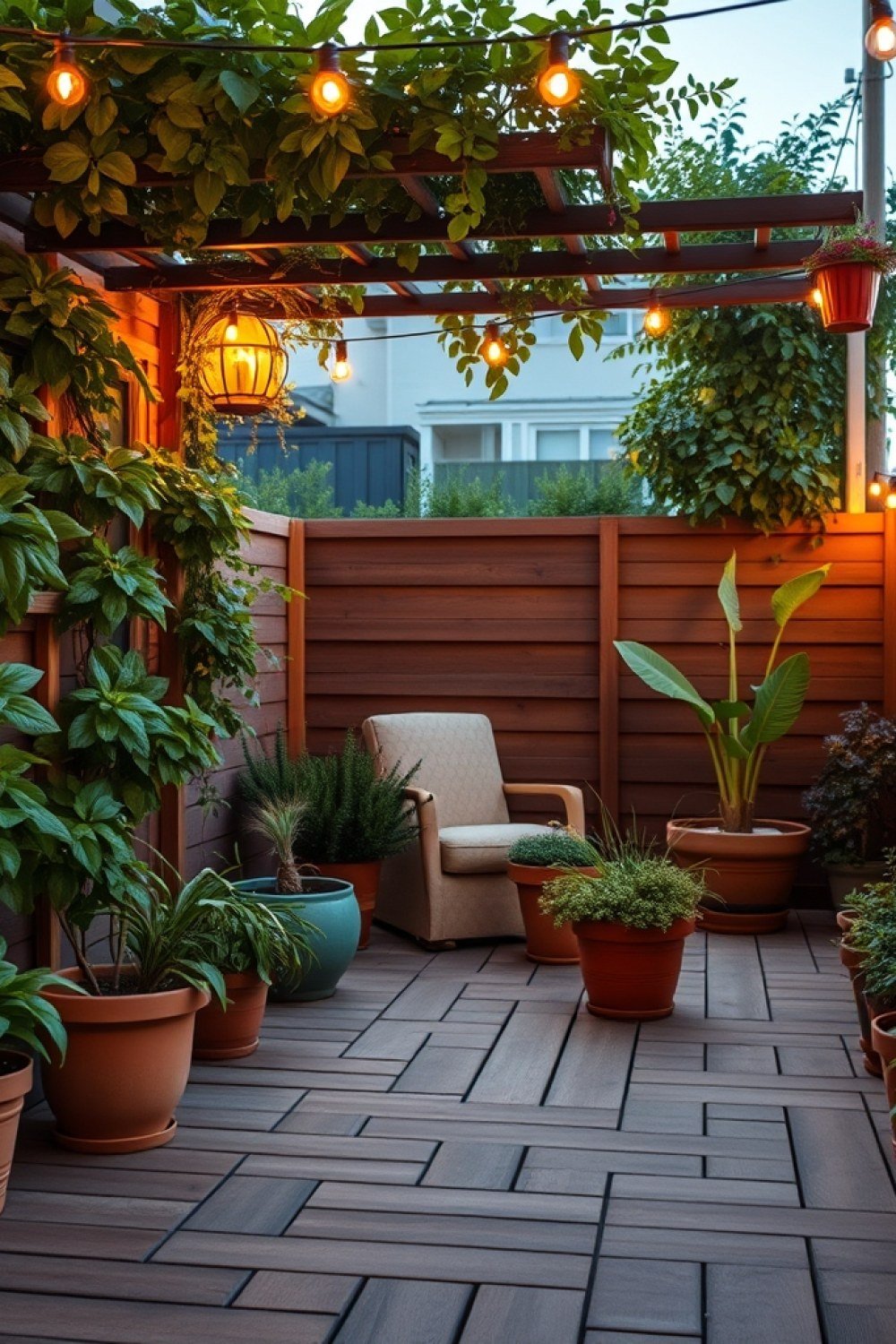
Push your seating away from the walls and fence by 18 to 24 inches. Furniture jammed tight against boundaries shrinks a yard, because your eye stops at the fence. Pulled slightly inward, the seating creates a walkway behind it and turns the middle of the yard into an intentional destination.
The walkway matters more than it sounds. A path you can actually walk behind the sofa tells your brain the space extends further than the furniture line, and movement through a small yard makes it feel used rather than squeezed.
This is the cheapest change on the list and works in any yard, rented or owned, since nothing is fixed. Action tip: pull everything 20 inches off the boundary, then walk the full loop with a drink in hand — if you can’t pass comfortably, take out one chair rather than pushing the seating back.
4. Steal the View Beyond

Frame a deliberate gap in your fence or hedge that lines up with something worth seeing — a neighbor’s mature tree, a steeple, a distant roofline. Borrowed scenery makes your yard feel like it opens onto a larger landscape, and the eye happily follows it outward.
Framing is the key word. A messy gap just looks like a hole; a clean rectangular or arch-shaped opening with planting on either side reads as a designed window. The screening around it does the work, so what’s visible looks chosen rather than accidental.
It suits yards backing onto greenery or rooftops, and it’s ideal if a full-height fence would feel oppressive. Action tip: confirm with your neighbor or local rules what you’re allowed to keep visible, then screen the parts you don’t want — bins, parked cars, a bare wall — with a mid-height shrub row.
5. Go Up, Not Out
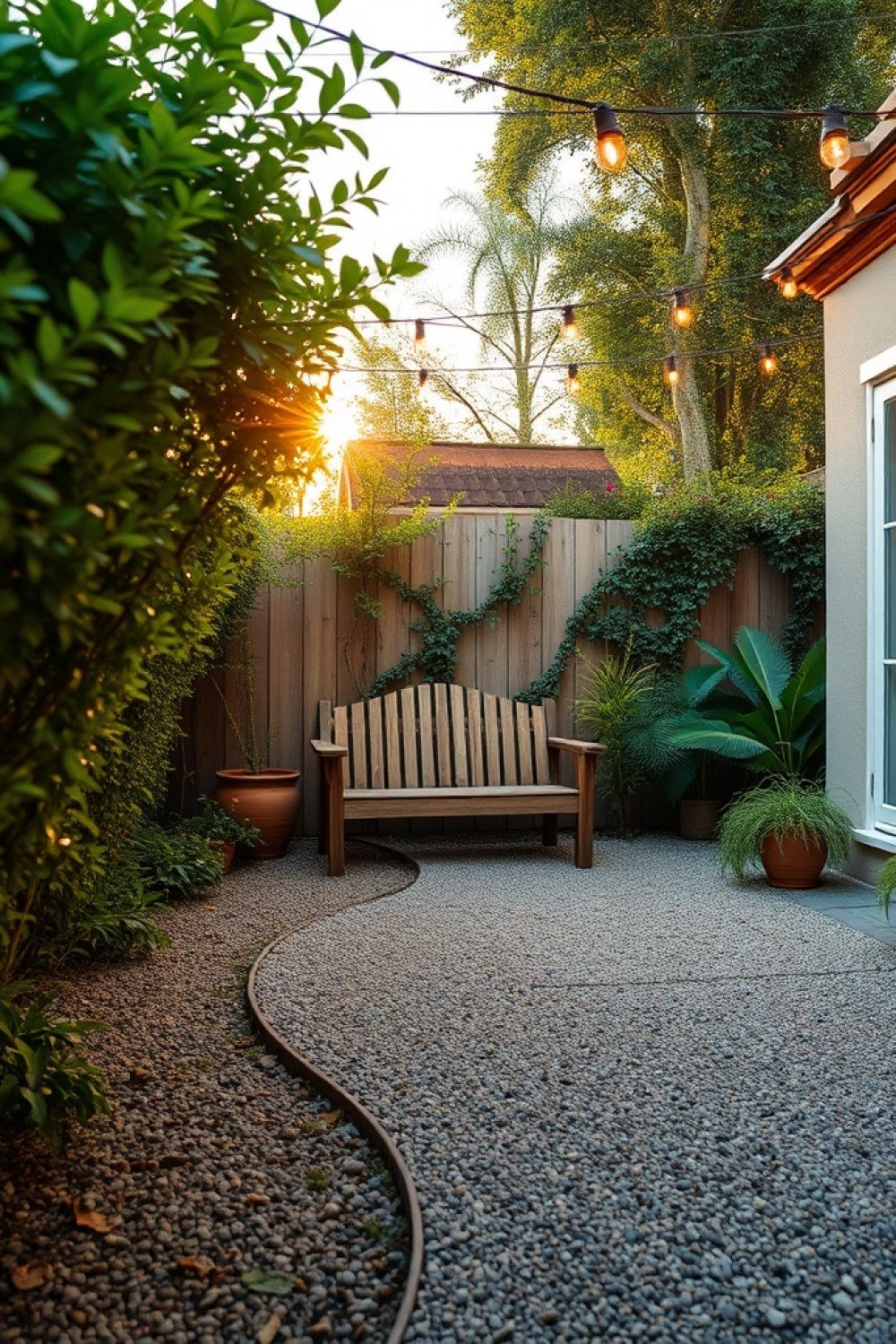
Vertical planters, wall-mounted trellises, and hanging pots along the fence can double your growing space without eating one inch of floor. In a small yard, the fence is your biggest untapped surface, and it’s usually several times the area of the ground beneath it.
Height also changes how the yard reads. A tall, narrow trellis with climbing jasmine or clematis adds fragrance and a strong vertical line in a footprint the size of a dinner plate, and vertical lines make low walls and fences feel less like a lid on the space.
It suits anyone who wants more planting than their floor allows, and it’s fully renter-friendly when you use freestanding or over-the-fence brackets. Action tip: match your climber to the light — jasmine and most clematis want sun, while ivy and climbing hydrangea handle shade — and keep the trellis narrow, no wider than 18 inches.
6. Curve the Path
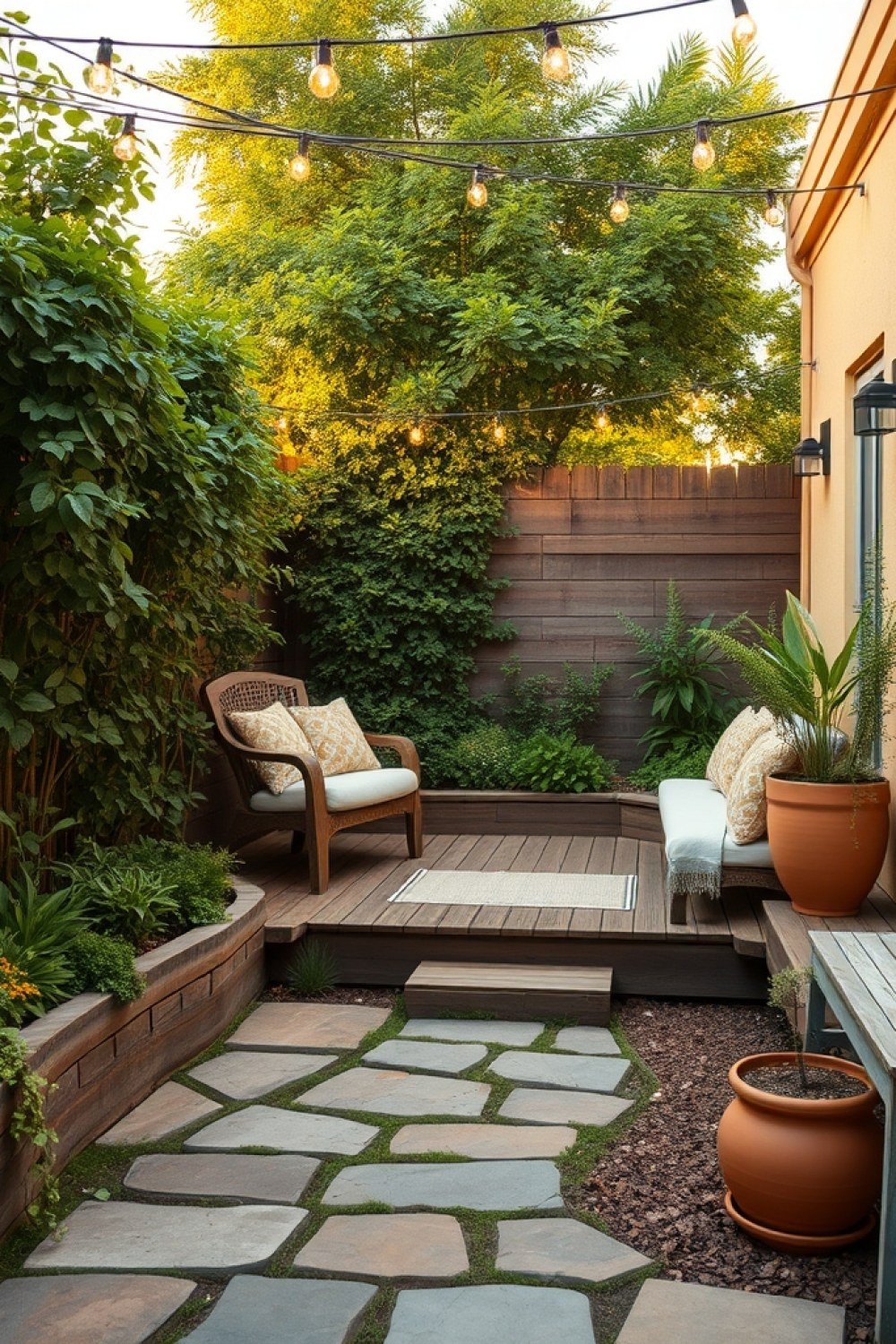
A straight path to the fence shows the whole yard in one glance, which is the fastest way to reveal how short it is. A gentle S-curve means you can’t see the end from the start, so the space reads as longer than it measures. That’s the entire trick.
Keep the curve shallow — one broad bend rather than a snake — or the path starts to feel like an obstacle course in a small space. A single soft arc, wide enough for two people to pass, is enough to hide the far gate or planting bed from the doorway.
It suits yards with 15 feet or more from house to boundary, and works with gravel, pavers, or stepping stones. Action tip: lay a garden hose on the ground and test the curve from your back door before you dig or order gravel — adjust until the far end disappears from view.
7. One Big Statement Plant
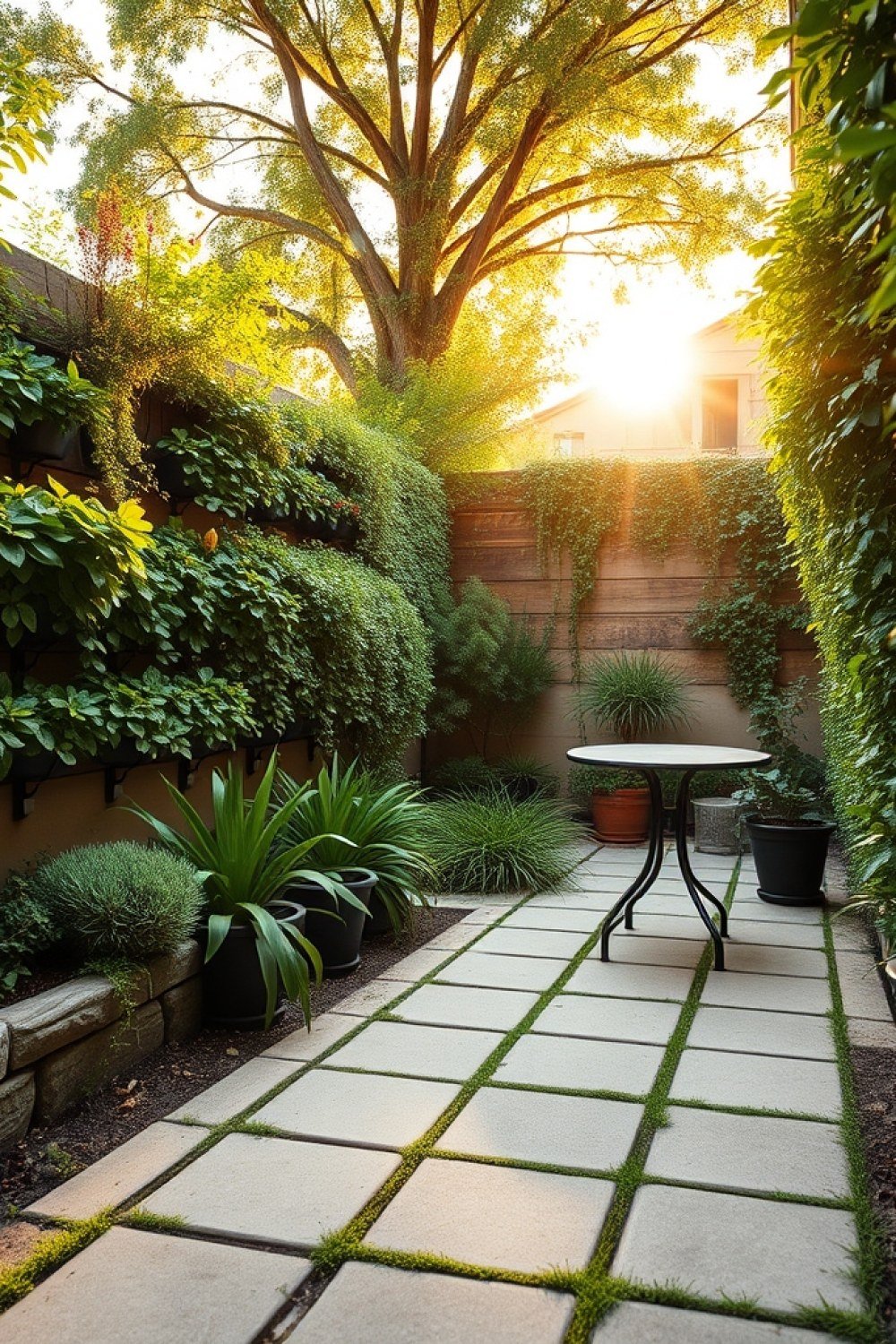
A single large specimen — an olive tree in a pot, a Japanese maple, a tall ornamental grass — anchors the eye and does more visual work than ten small plants scattered around. One strong focal point gives the yard a center, and a centered yard feels composed rather than cramped.
The size is the point. A plant at roughly a third of the yard’s height creates a vertical anchor the eye can rest on, while a collection of small pots reads as clutter and makes the space feel busier and smaller than it is.
It suits every yard size, and container growing means renters can take the specimen with them. Action tip: if you want more than one plant, cluster small pots in threes at different heights so the group reads as one mass — a tall pot, a mid one, and a low bowl, tight together.
8. Pick a Fence That Disappears
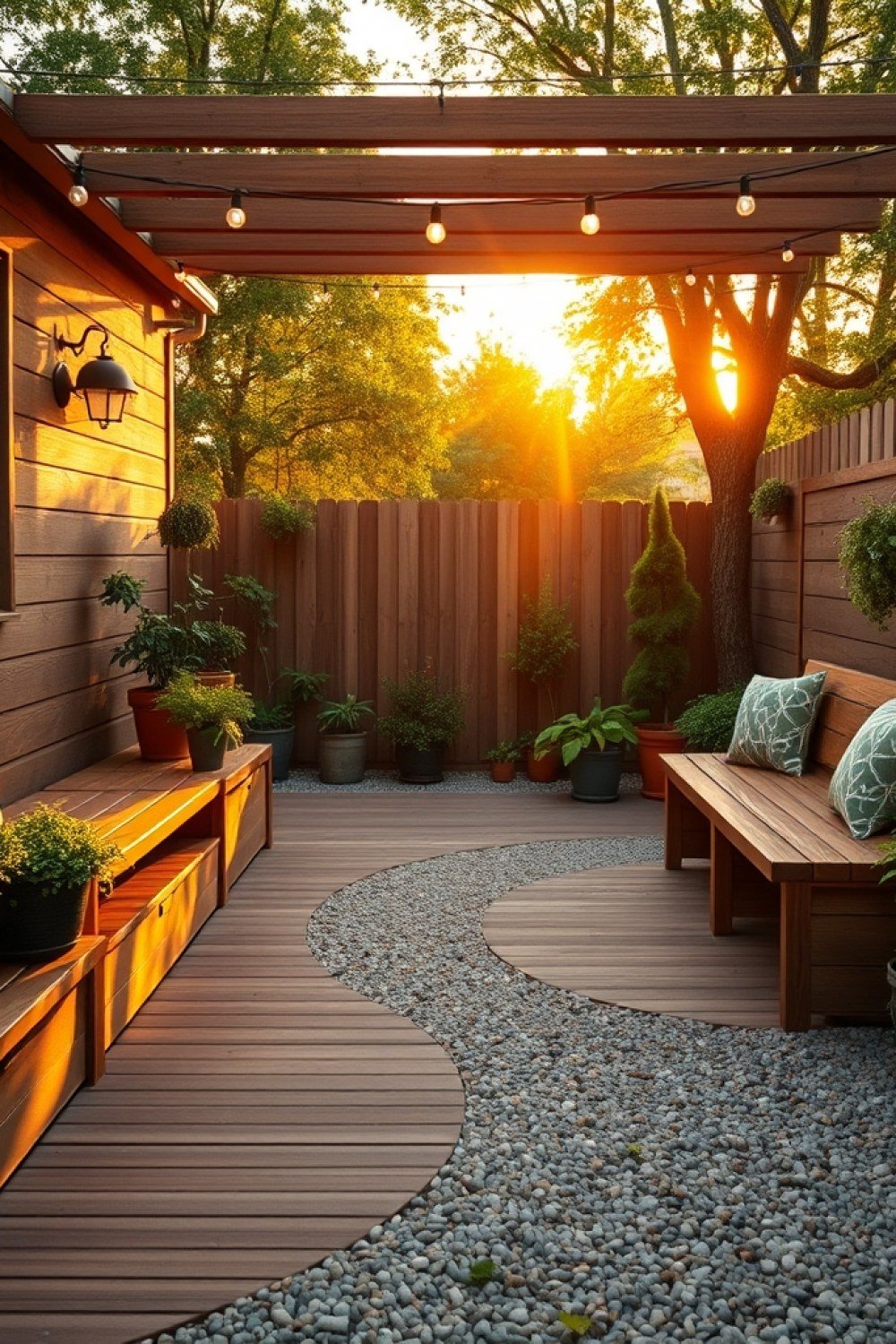
Horizontal slats, open lattice backed with dark mesh, or a green-stained fence recede instead of looming. When the boundary stops announcing itself, the eye drifts past it and the yard feels bigger. A heavy, high-contrast fence does the opposite — it draws a hard box around everything.
Whatever style you choose, keep it one color top to bottom. A contrasting cap rail creates a strong horizontal line at exactly the height where the yard ends, which is the last thing a small space needs. Tone-on-tone lets the fence blend into planting.
It suits anyone replacing or staining a fence, and it’s the single biggest visual change you can make in a courtyard. Action tip: stain the fence the same green or charcoal as your foliage’s darkest tone, then let climbers and shrubs blur its base so no hard edge meets the ground.
9. Repeat Three Colors Only
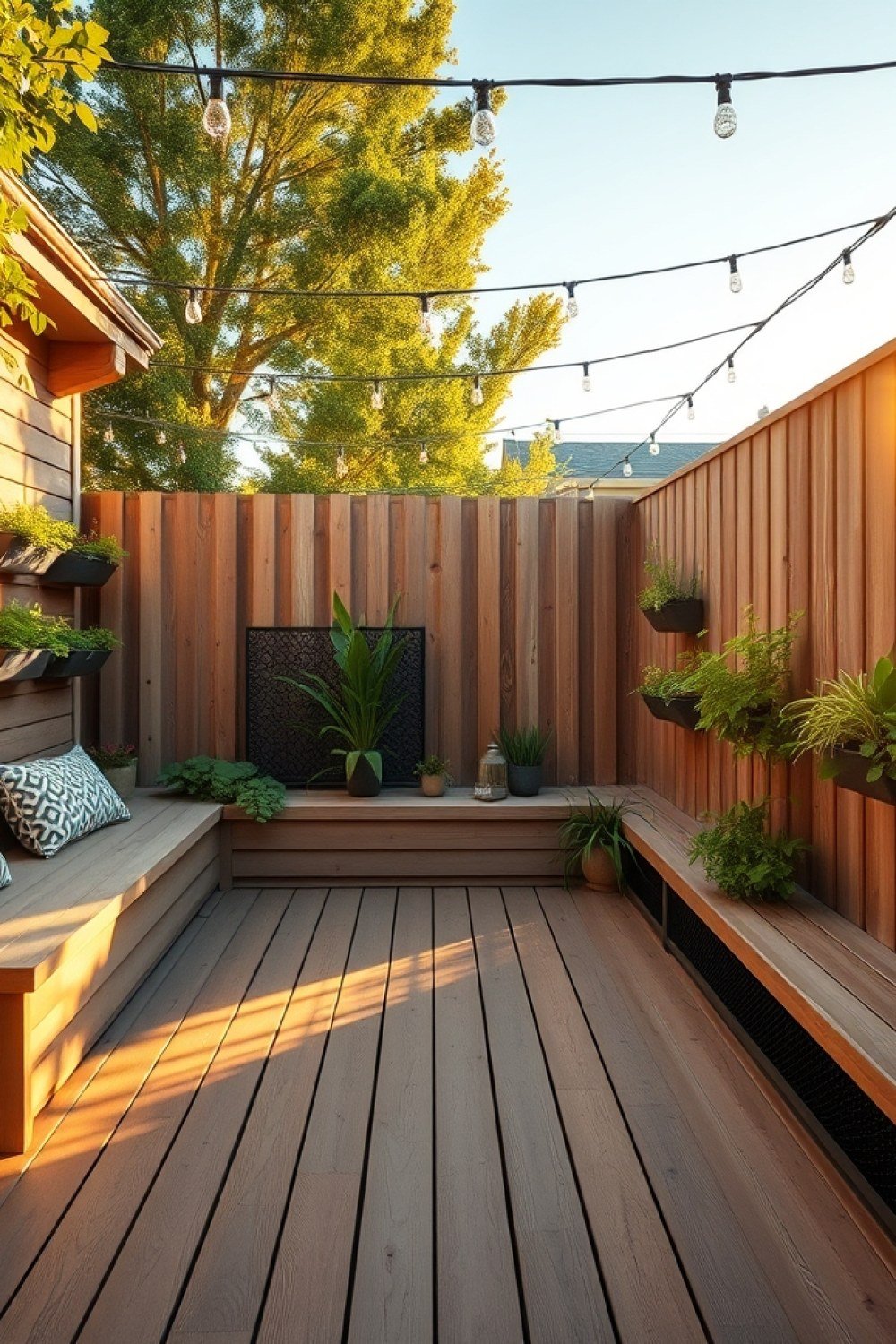
Choose three colors — say charcoal furniture, warm wood, and one plant green — and repeat them everywhere. A tight palette reads as designed and expansive, while a rainbow of cushions, pots, and accessories chops the space into visual noise that makes a small yard feel crowded.
Repetition is what does the work. When the same charcoal appears in the sofa, the planter, and the path edging, your eye links them into one continuous scheme, and continuous schemes feel larger than patchwork ones.
It suits everyone, but it’s especially useful if your yard already has mismatched surfaces you can’t change. Action tip: pick your three colors, then remove or repaint anything that isn’t one of them — a single bright cushion is fine, but four competing ones will undo the effect.
10. Mirror the Dark Corner
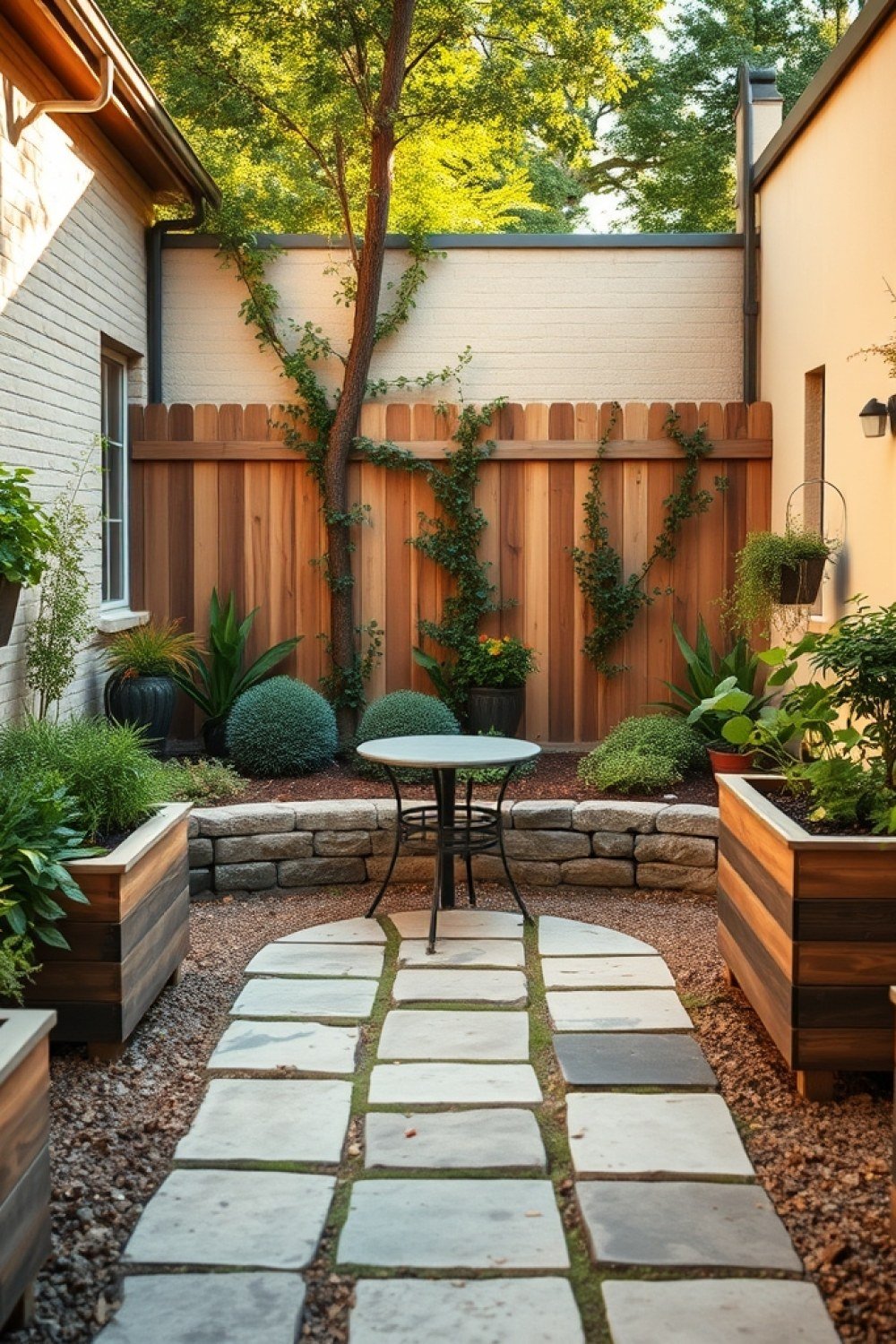
A weatherproof mirror or mirrored panel on a shaded fence corner reads as a doorway to another garden and bounces light into the gloomiest spot. In a small yard, the darkest corner is usually the one that feels tightest, because shadow closes space in.
Position is everything. Place the mirror so it reflects planting or sky rather than a bare wall, and only face it where you’re not reflecting a neighbor’s window. A low light fixture or candle lantern nearby keeps the reflection believable after dusk.
It suits shady courtyards and narrow side returns, and it’s a renter-friendly fix since most panels hang on hooks. Action tip: mount the mirror at eye level on the fence, angle it slightly toward the brightest part of the yard, and plant a fern or grass at its base so the “opening” looks grounded.
Questions About Small Yard Design

What’s the biggest mistake people make in a small yard?
Buying a full matching furniture set sized for a big patio. Four oversized chairs plus a table and umbrella can swallow a small yard whole. Instead, choose one sofa and two lightweight movable chairs you can shift for parties, and keep the rest of the footprint for planting and walking.
Do light colors really make a small yard feel bigger?
They help, but contrast matters just as much. Pale furniture and fencing blur into the background, while one darker element — a black planter, dark mulch, or a deep green hedge — gives the eye something to anchor on. Pure white everything tends to look flat and washed out in bright sun.
How do I make a small yard feel private without a tall fence?
Layer your screening: a 6-foot fence where allowed, then a mid-height shrub row, then a tall grass or vine on a trellis. Three layers of different heights block sightlines from multiple angles, which a single tall fence often doesn’t, and it keeps the yard from feeling like a fortress.