
17 Low Maintenance Backyard Designs for Busy Homeowners
The single most useful thing to know about a low-maintenance backyard? You design the work out before you decorate. Pick the right hardscape, plants, and furniture — sized, spaced, and specified to need almost nothing from you — and the yard stays easy even in your busiest weeks. Do it backwards and you’ll spend every weekend babysitting it.
Below are 17 designs that nail this, from gravel-and-grass layouts that cut mowing to a strip, to self-sufficient plantings that shrug off dry spells and furniture you can honestly leave out all season. Each one comes with practical notes on materials, spacing, and plant picks. Read the essentials list, then find the idea that fits your space, your climate, and your actual calendar.
What You’ll Need to Plan a Low-Maintenance Backyard
- Your real weekly time budget (be honest: 30 minutes or 2 hours?)
- A rough site map — sun direction, slope, downspouts, and hose bibs
- Climate zone and average rainfall for your area
- Hardscape pick: gravel, pavers, or decking (and a budget per square foot)
- Low-water plant shortlist suited to your zone
- A simple irrigation plan — drip lines or soaker hoses on a timer
1. Gravel + Grid: The No-Mud, No-Mow Base
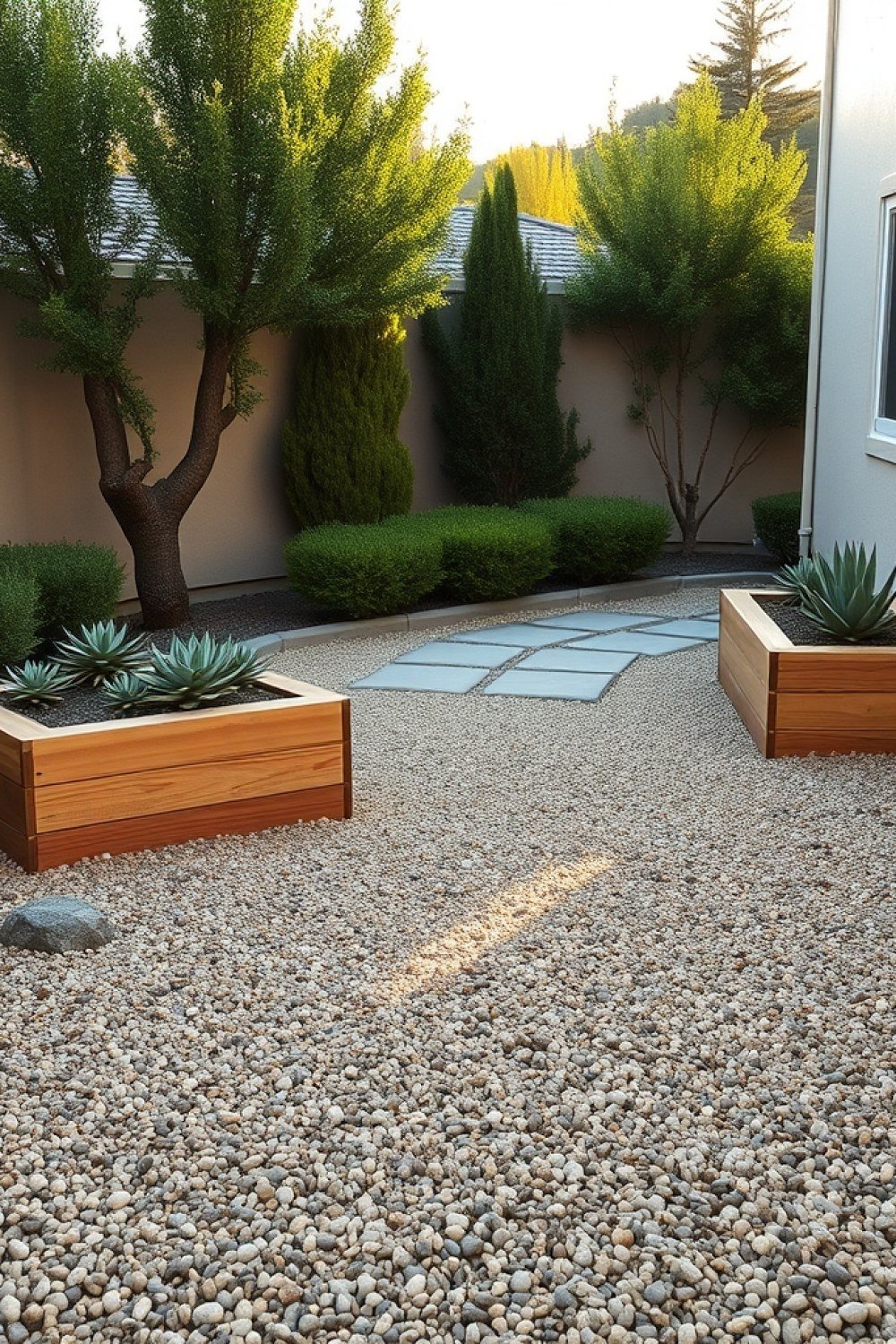
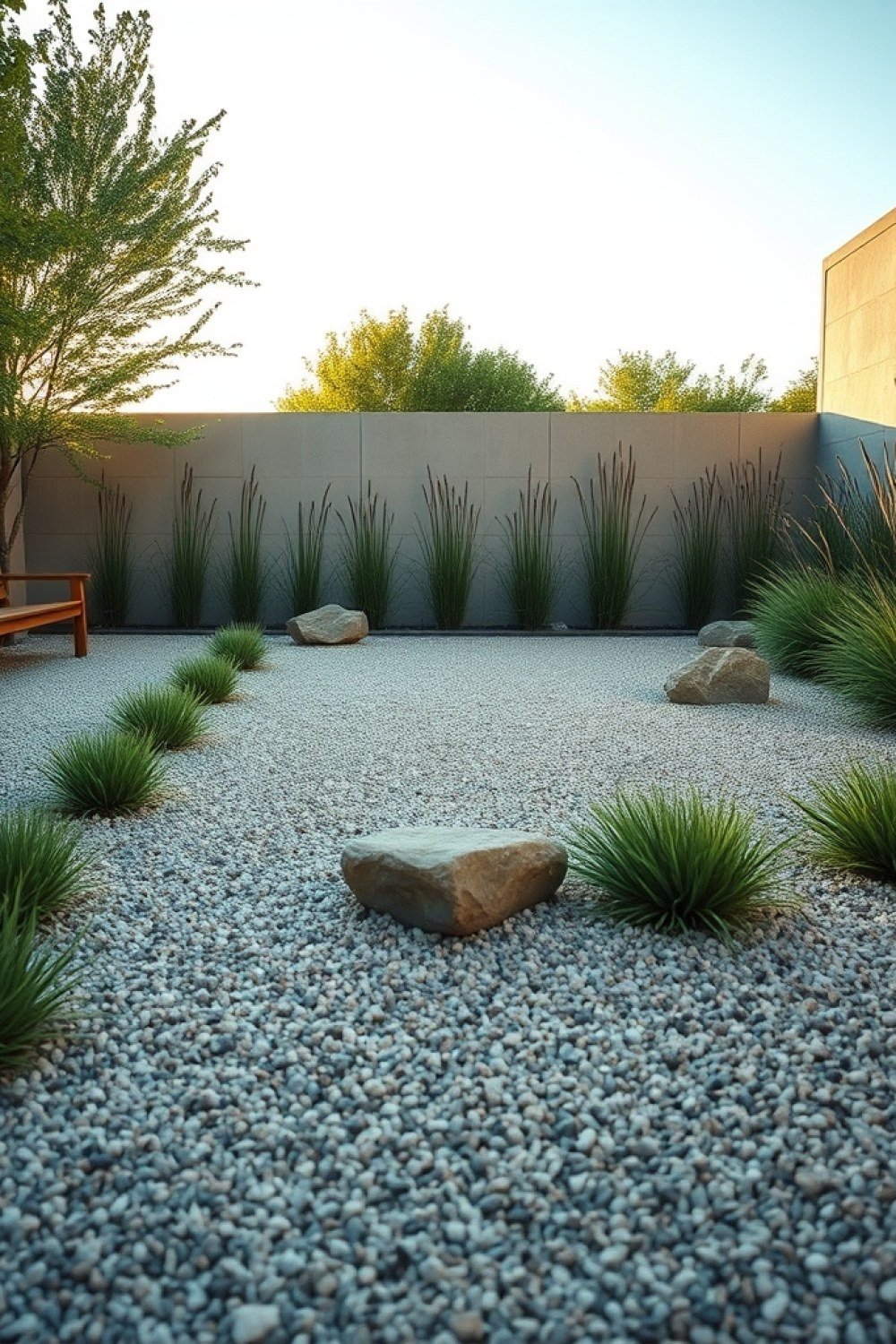
Swap thirsty grass for a stabilized gravel grid — it looks sharp, drains instantly, and you’ll never push a mower across it again.
- System: A permeable paver grid filled with 3/8-inch pea gravel over a compacted crushed-stone base.
- Edge it: Steel or composite edging keeps gravel out of beds and holds the grid tight.
- Best spots: Side yards, fire-pit zones, and parking pads that see foot and tire traffic.
- Effort: One weekend to install, then basically zero maintenance after.
Rake it once each spring to level the gravel — that’s the whole to-do list.
2. Clover Lawn That Stays Green on Its Own
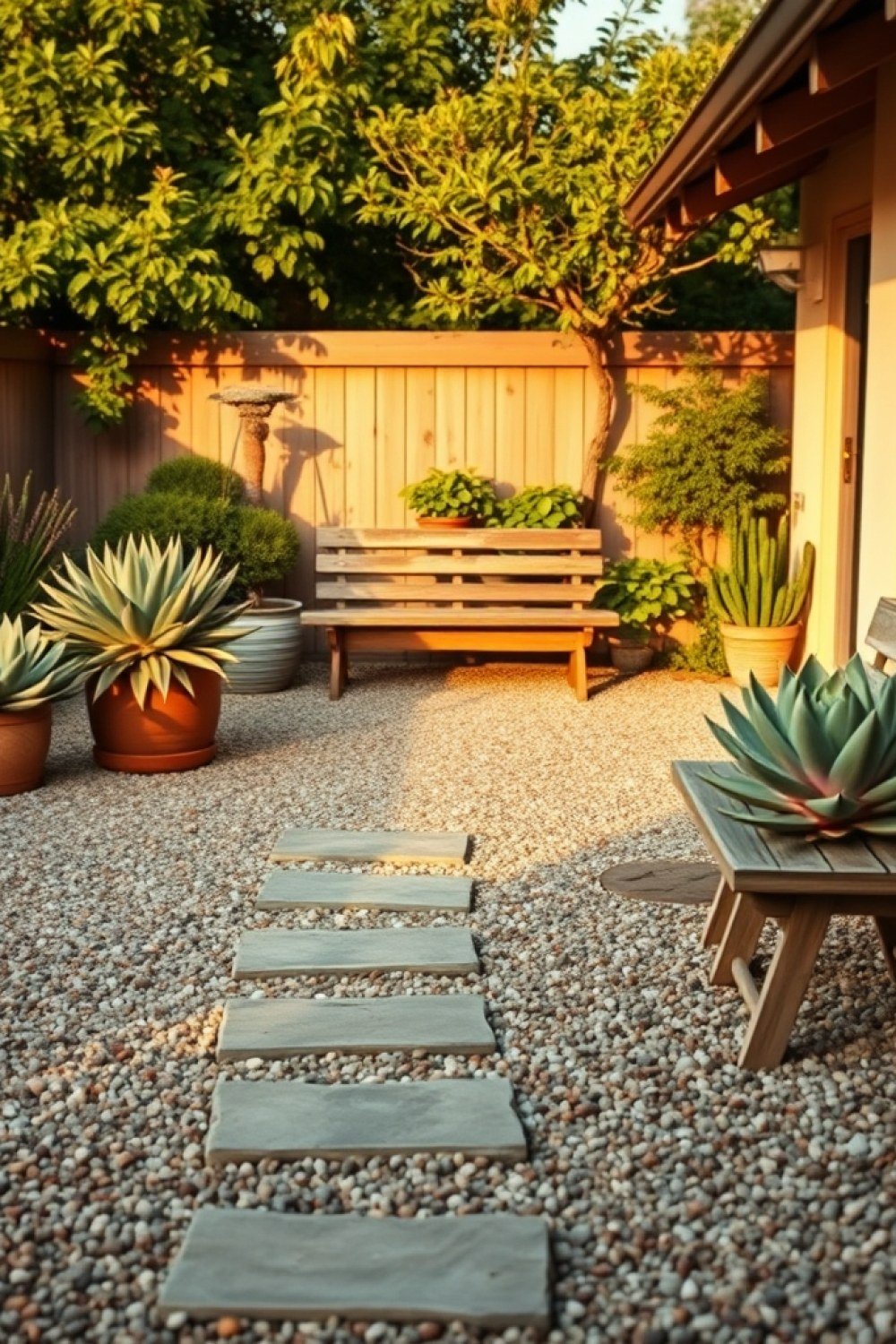
Microclover or white dwarf clover mixed with fine fescue sips water, feeds itself, and stays soft underfoot without the lawn-care grind.
- Mix: Keep clover at 20–30% so it stays low and tidy alongside fine fescue.
- Mowing: Just 4–6 times a season — or skip it entirely if you love the cushiony look.
- Bonus: Clover fixes its own nitrogen, so you can ditch the fertilizer.
- Timing: Overseed in early fall for the best germination.
It greets you with tiny flowers and bees instead of brown patches every July.
3. One Big Border Instead of Ten Little Beds
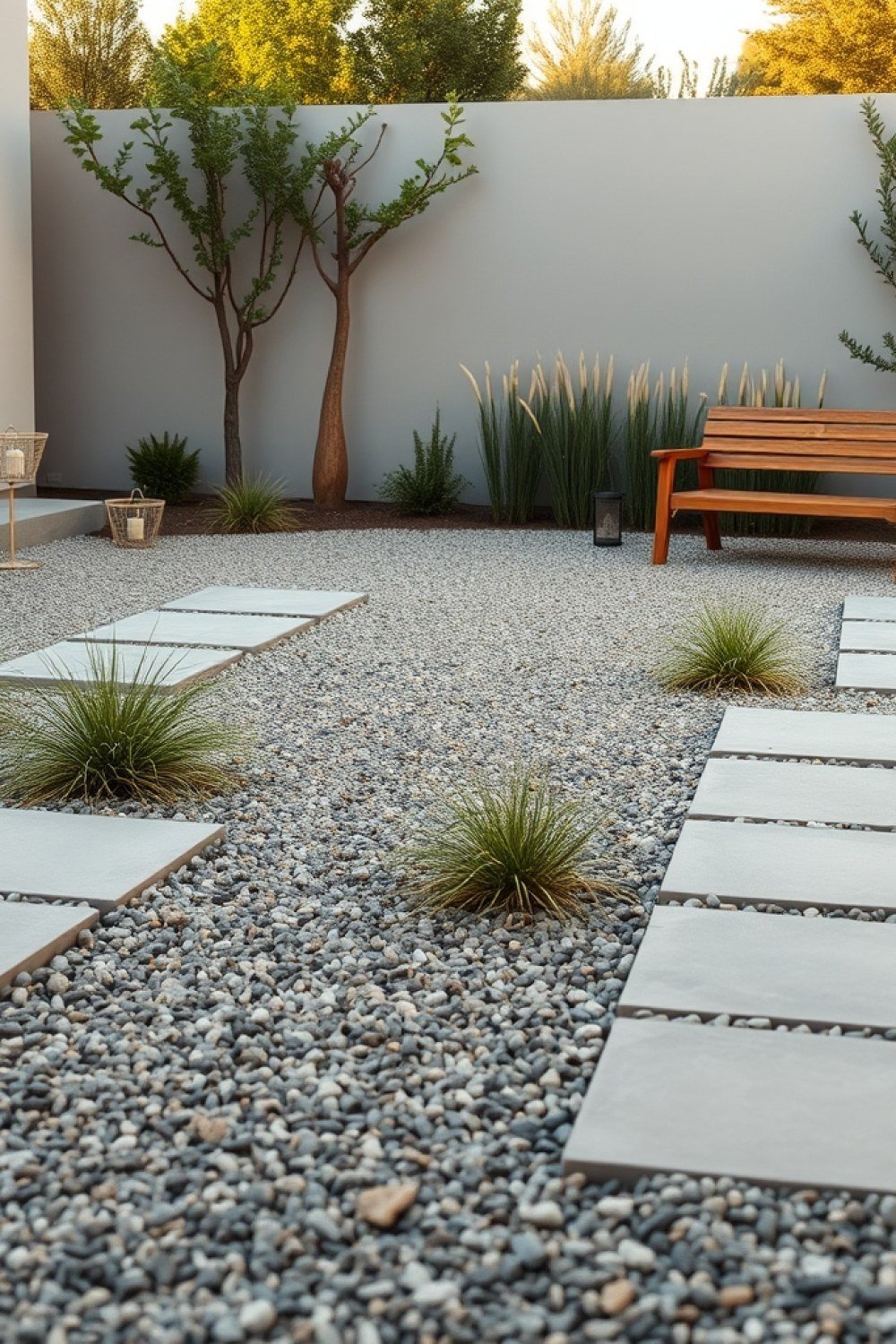
Fewer, bigger beds mean less weeding, edging, and hose-dragging — consolidate everything into one deep border and reclaim your weekends.
- Size: Go 4–6 feet wide along the fence or house so plants can layer naturally.
- Layout: Tall shrubs at back, mid perennials in the center, low groundcover up front.
- Payoff: One continuous stretch is far easier to mulch and water than scattered islands.
- Edging: A single clean line beats ten fiddly curves to maintain.
A deep border also reads as intentional design — not a random collection of leftover beds.
4. Drought-Tough Plants That Look Lush
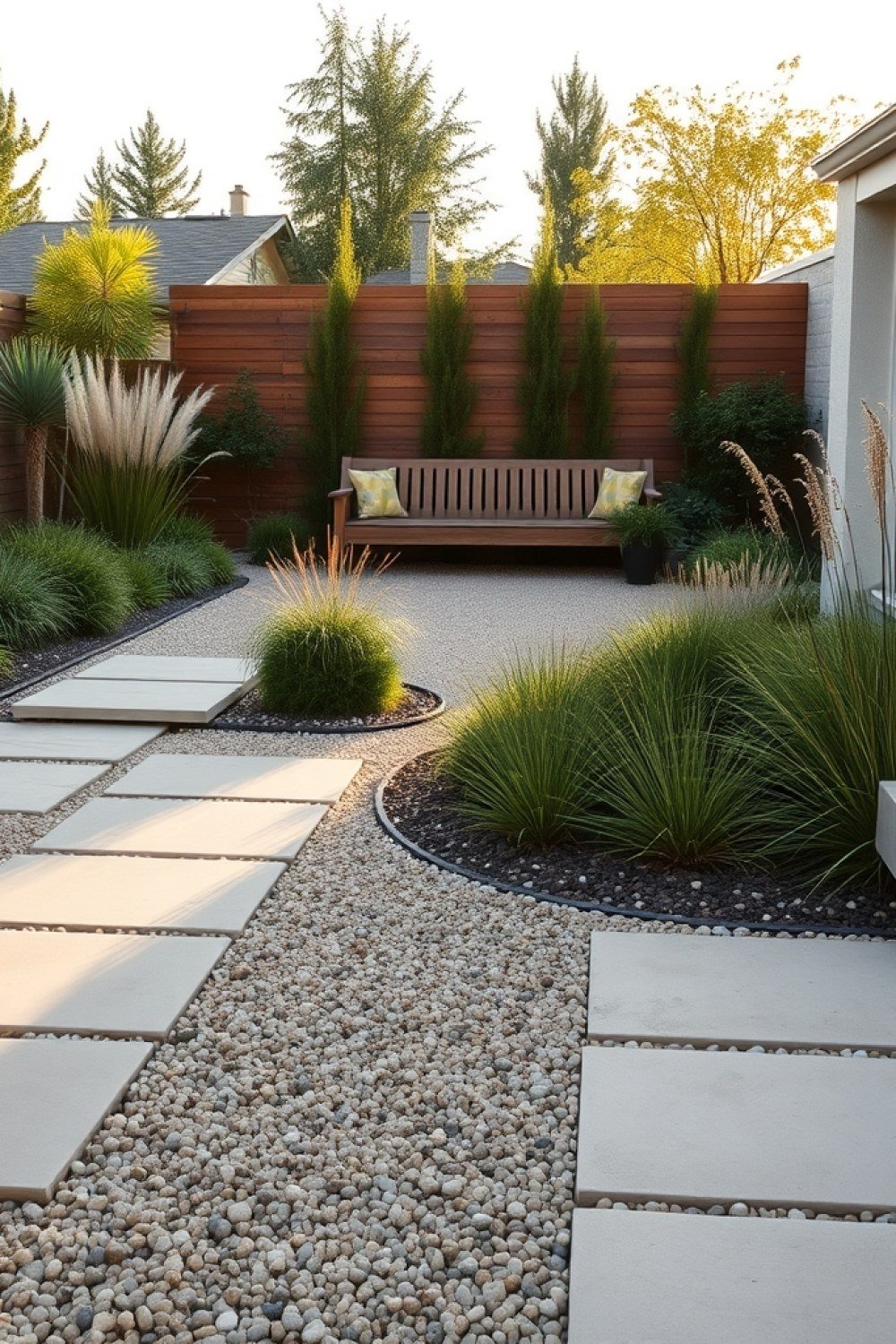
Mediterranean and prairie plants deliver that full, romantic look while shrugging off dry spells and neglect.
- Stars: Lavender, rosemary, sedum, agastache, coneflower, and yarrow.
- Grasses: Karl Foerster and blue fescue add movement with almost no care.
- Water: One full season of watering, then most survive on rainfall alone.
- Mulch: Top with 2–3 inches of gravel or bark to slash evaporation.
Group plants by water need so you’re not dragging the hose to one thirsty outlier.
5. Self-Watering Raised Beds for Gardeners on the Go
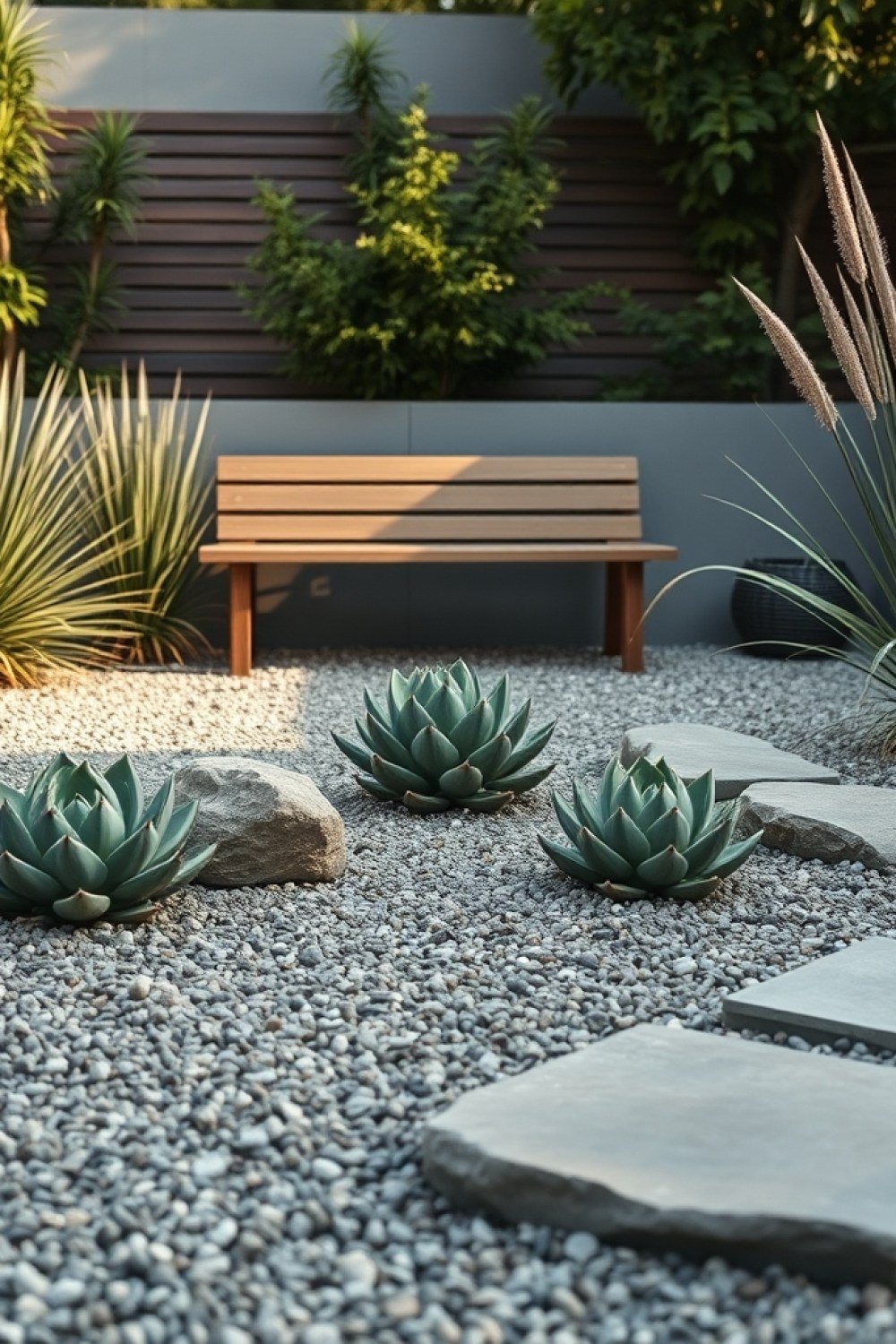
Built-in reservoirs and buried clay ollas keep your veggies happy while you’re away — no daily watering guilt.
- System: Raised beds with water reservoirs, or add ollas that seep slowly into the soil.
- Fill: A quality soil mix, then plant herbs, cherry tomatoes, and peppers.
- Interval: In mild weather you can go 5–7 days between waterings.
- Weed control: Line beds with landscape fabric to keep the chore list short.
Check the reservoir weekly and top it off — that’s the entire routine.
6. Drip on a Timer: Set It and Forget It
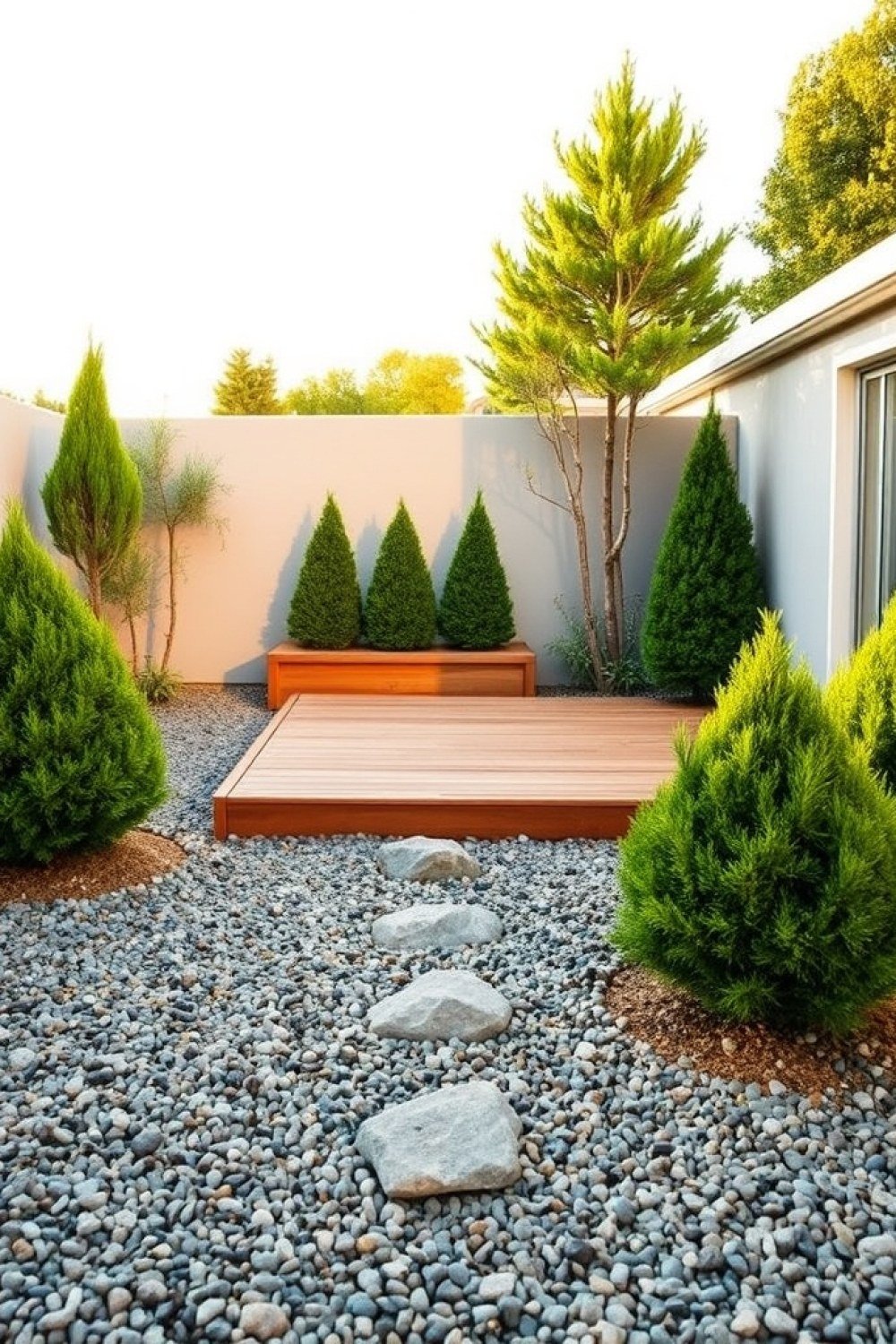
Drip irrigation on a timer is the single upgrade that erases the daily watering chore and keeps plants steadier and healthier.
- Gear: Drip lines with a battery or Wi-Fi timer for beds and containers.
- Schedule: Run 20–30 minutes, 2–3 times a week in summer; less in spring and fall.
- Smart add-on: A rain sensor skips cycles after storms automatically.
- Coverage: Emitters at each plant’s root zone beat overhead spray every time.
Spend one afternoon dialing it in and you may never fill a watering can again.
7. Potted Evergreens for Zero-Commitment Greenery
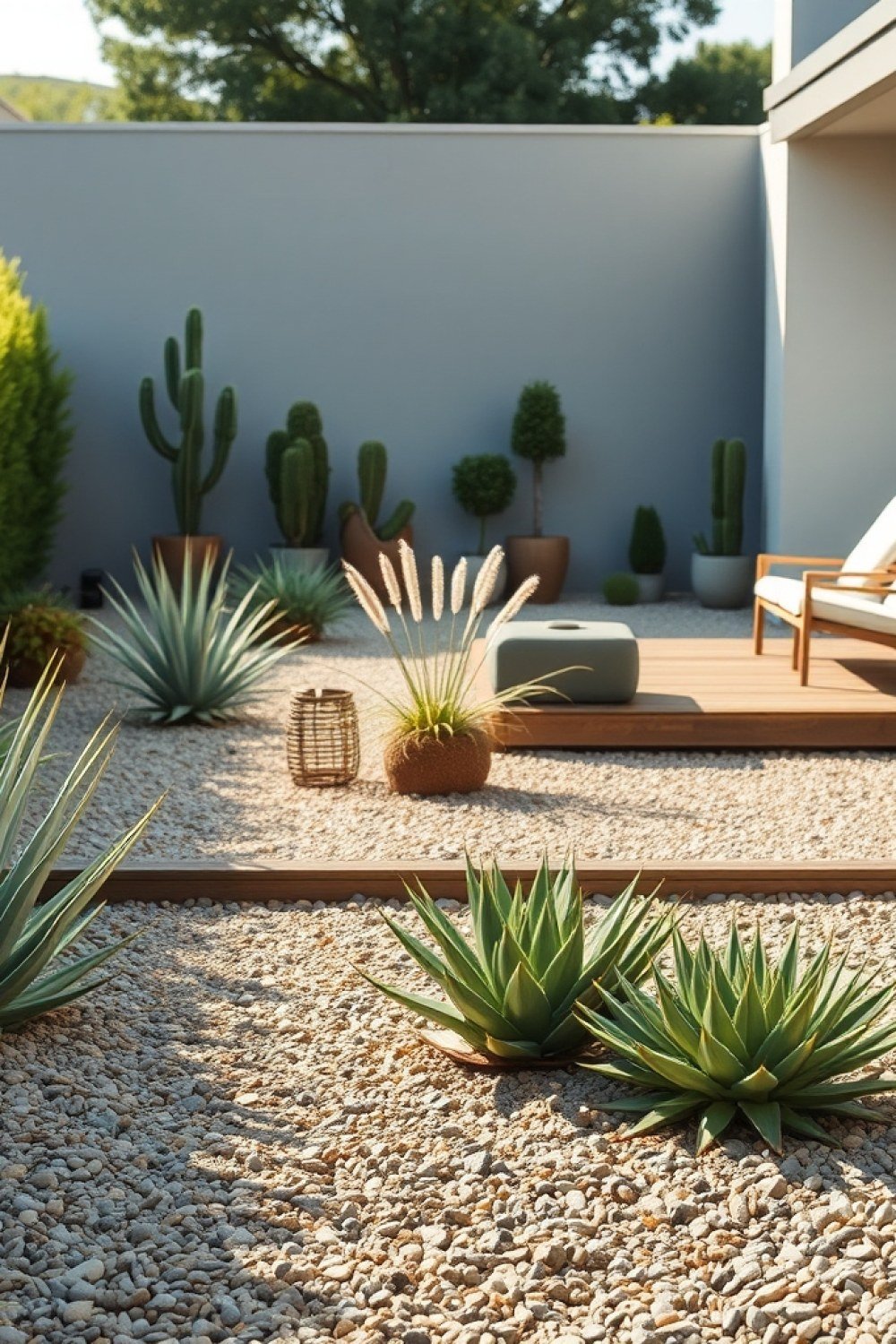
Large containers packed with evergreen shrubs give you year-round structure without digging a single hole. No bed prep, no weeding, no permanent commitment — just greenery that looks intentional.
- Best picks: Boxwood, dwarf Alberta spruce, or Japanese holly — all hold their shape with minimal pruning.
- Pot smart: Lightweight resin containers are easier to shift for a refresh or a move; add a self-watering insert to stretch time between drinks.
- Yearly upkeep: Scrape off the top 2 inches of soil each spring and top with fresh potting mix, then feed once with slow-release granules.
- Winter: They overwinter fine in most zones — wrap pots in burlap or bubble wrap if your area dips hard.
Cluster three pots at different heights near a door or patio corner and you’ve got a designed moment that takes one afternoon a year to maintain.
8. A Fire Pit Circle That Doubles as Seating
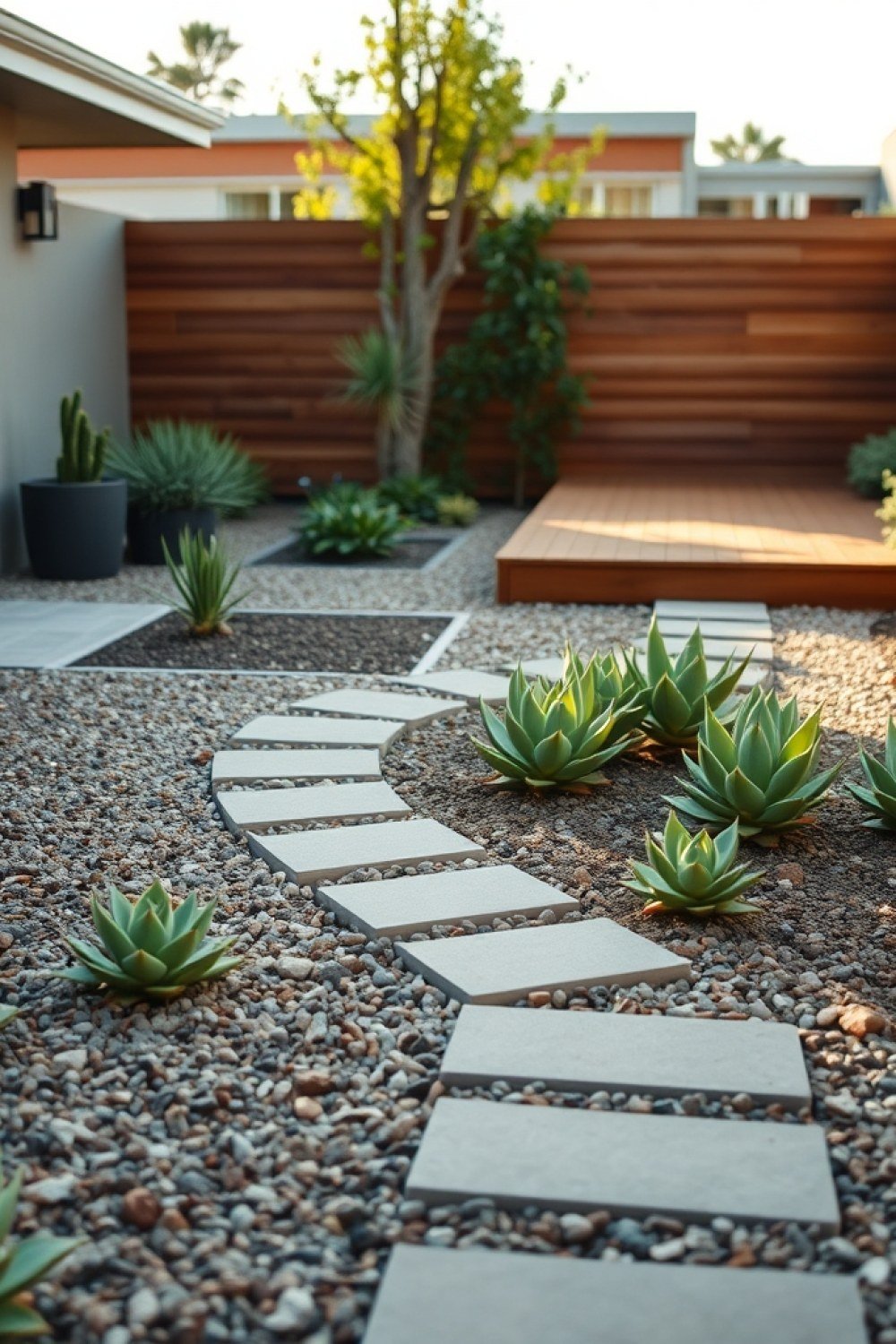
A crushed-stone circle with a fire bowl and four chairs turns dead lawn into the spot everyone gravitates to. No grass, no mowing, no edging — just a destination.
- Safety first: Keep a 10-foot clearance from structures, fences, and low tree branches.
- Build it: A steel or concrete fire bowl set in a compacted gravel base, ringed with 3–4 inches of crushed stone.
- Seating: Four Adirondack chairs in all-weather HDPE means you never haul anything inside.
- Storage: If you go with wood chairs, keep a fitted cover nearby for rainy stretches.
Lay a square of landscape fabric under the stone first — it stops weeds from poking through gravel, which is the one chore that sneaks up on fire pit owners.
9. Built-In Bench With Hidden Storage

A built-in bench along the fence line or under a window earns its keep twice: somewhere to sit and a place to stash cushions, tools, or toys. Nothing to trip over, nothing to drag out.
- Material: Rot-resistant cedar or composite decking; capped composite needs zero finishing.
- Lid: Hinged top with a stainless or galvanized prop arm so it stays open while you load it.
- Weatherproofing: Seal natural wood annually; skip it entirely with capped composite.
- Cushions: Choose outdoor-rated, quick-dry foam you can leave out through light rain.
Check the hinge clearance before you build — leave a ½-inch gap so water runs off and the lid doesn’t swell shut after a wet season.
10. Shade Sail for Instant, Low-Care Cool

A shade sail drops patio temps fast and blocks 90%+ of UV, with essentially no upkeep beyond an annual rinse. It’s the fastest way to make a sunny corner usable.
- Shape: Triangle for a corner nook, square for a full patio or sandbox.
- Mounting: Anchor to posts or house brackets with turnbuckles so you can tension it tight.
- Care: Rinse with a hose once a season; that’s the whole maintenance list.
- Weather: Take it down for high winds or snowy winters to protect the fabric and hardware.
Angle it slightly downhill on one corner so rain sheds instead of pooling — a sagging sail that holds water will stretch out and never sit taut again.
11. Artificial Turf for an Always-Ready Play Space
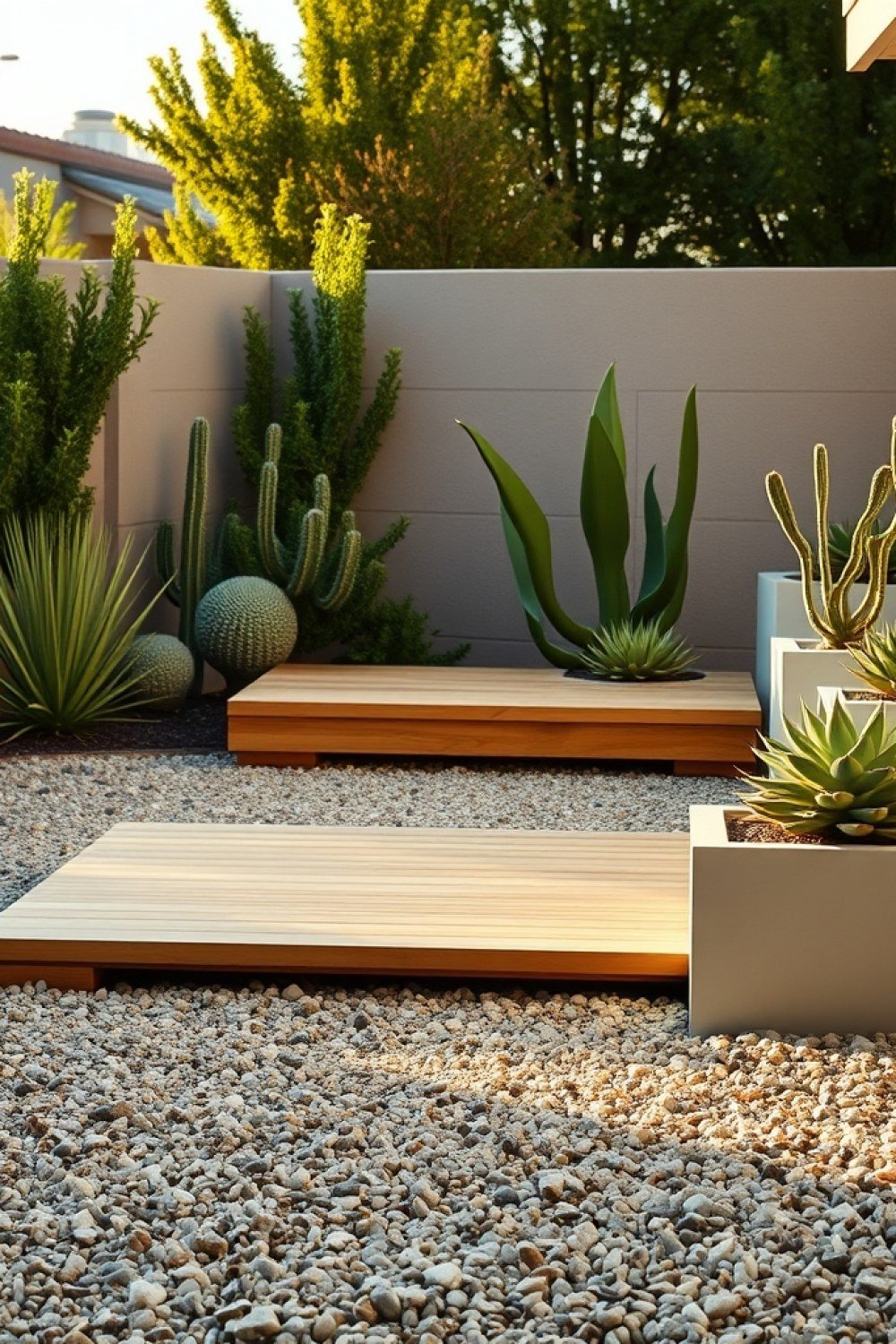
Modern artificial turf looks convincingly real, drains well, and stays play-ready in any weather. Use it in small high-traffic zones rather than the whole yard to keep the cost sane.
- Blade height: Around 1.5 inches reads natural and feels good underfoot.
- Infill: Pick a cooling infill so it doesn’t bake in full sun.
- Best spots: Play areas, pet runs, or the worn patch under a swing set.
- Upkeep: Occasional rinse and a stiff brush to lift flattened blades.
Install over a properly compacted and drained base — a rushed sub-base is the number-one reason turf develops ripples and puddles down the line.
12. Mulch With a Purpose: 3 Inches, Twice a Year

Done right, mulch is the lowest-effort weed control you can buy. A proper layer suppresses weeds by up to 90% and holds moisture so you water far less.
- Depth: 2–3 inches of shredded bark or arborist chips — deeper smothers roots, shallower lets weeds through.
- Timing: Refresh in spring and fall to keep the barrier intact.
- Spacing: Keep mulch a few inches back from trunks and stems to prevent rot.
- Skip fabric: Unless you’re fighting aggressive weeds, landscape fabric eventually clogs and causes more problems than it solves.
Rake last year’s mulch to break up matting before you top it off — fresh mulch over a crusted layer just sheds water instead of soaking in.
13. Native Plant Pocket That Thrives on Neglect
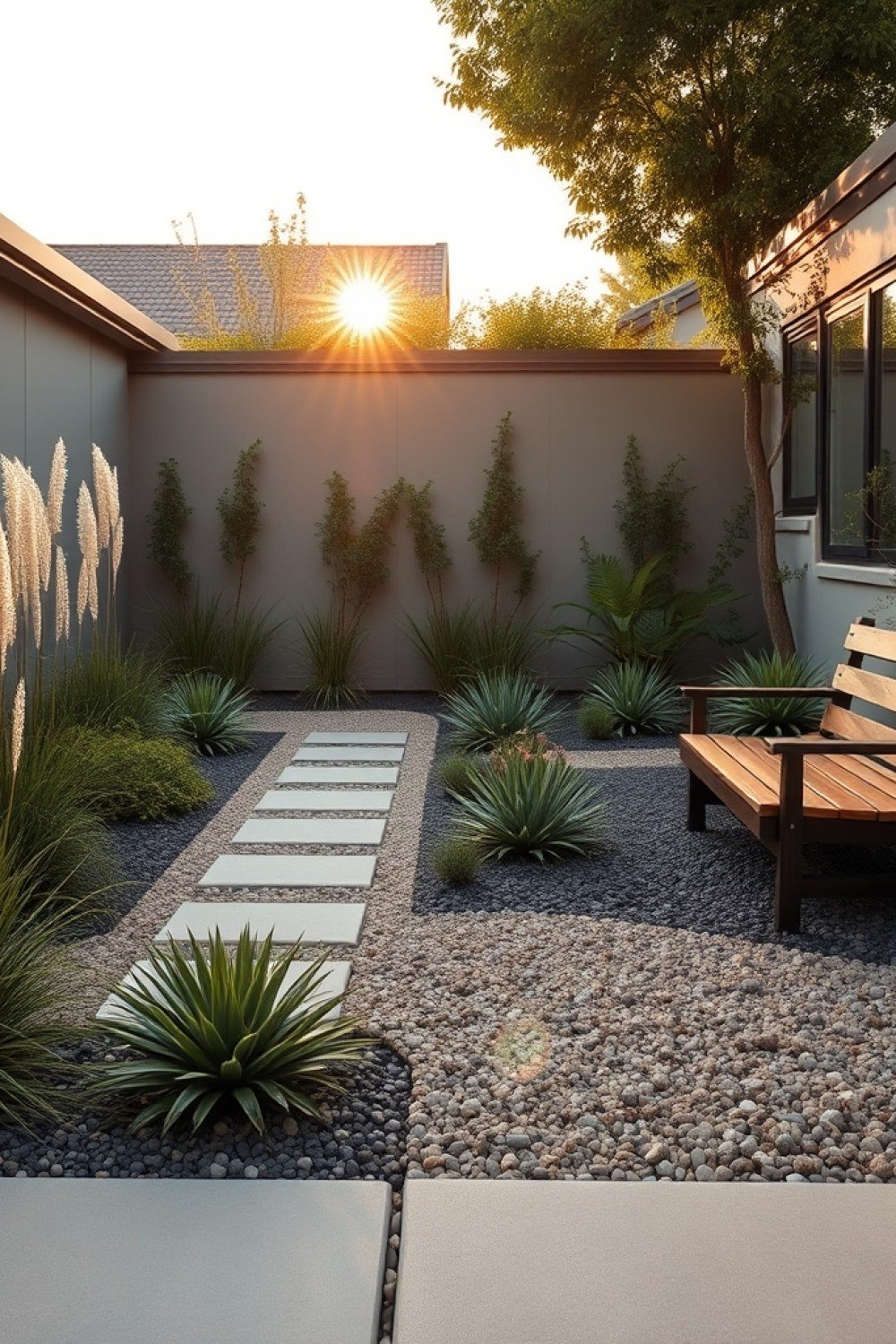
Plant a small pocket of regional natives and let them do the heavy lifting. Once established, they handle local rainfall on their own — no fertilizer, no fuss, and pollinators love them.
- Plant picks: Coneflower, black-eyed Susan, switchgrass, or salvia — match to your region.
- Watering: Deep soak once a week for the first season, then only in extreme drought.
- Size: A 4×6-foot bed is plenty to make an impact.
- Bonus: No fertilizer ever — natives resent the extra nutrients.
Group at least three of each species so they read as drifts, not lonely stragglers — it looks intentional and pollinators find them faster.
14. Weatherproof Furniture You Can Leave Out
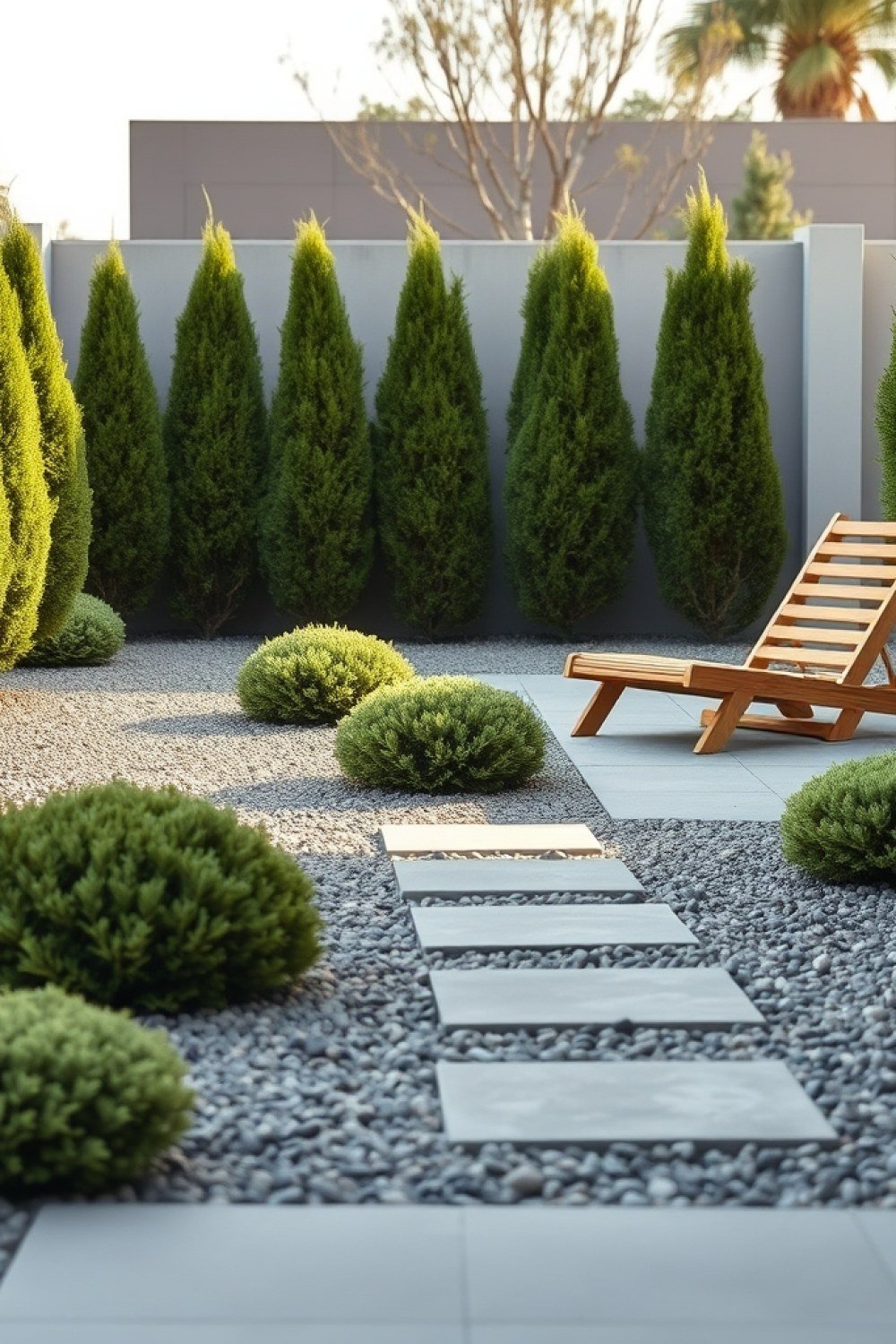
Stop hauling cushions in and out every time the sky threatens. Pick furniture built to live outside year-round and reclaim your weekends.
- Best materials: HDPE recycled plastic, powder-coated aluminum, or teak.
- Cushions: Quick-dry foam, or skip them entirely with mesh sling chairs.
- Storage: A small deck box keeps throw pillows dry and pest-free.
- Avoid: Unsealed softwoods and steel that rusts at the welds.
Give metal frames a quick rinse before winter and they’ll shrug off rain, snow, and sun for a decade or more.
15. Simple Lighting on a Timer
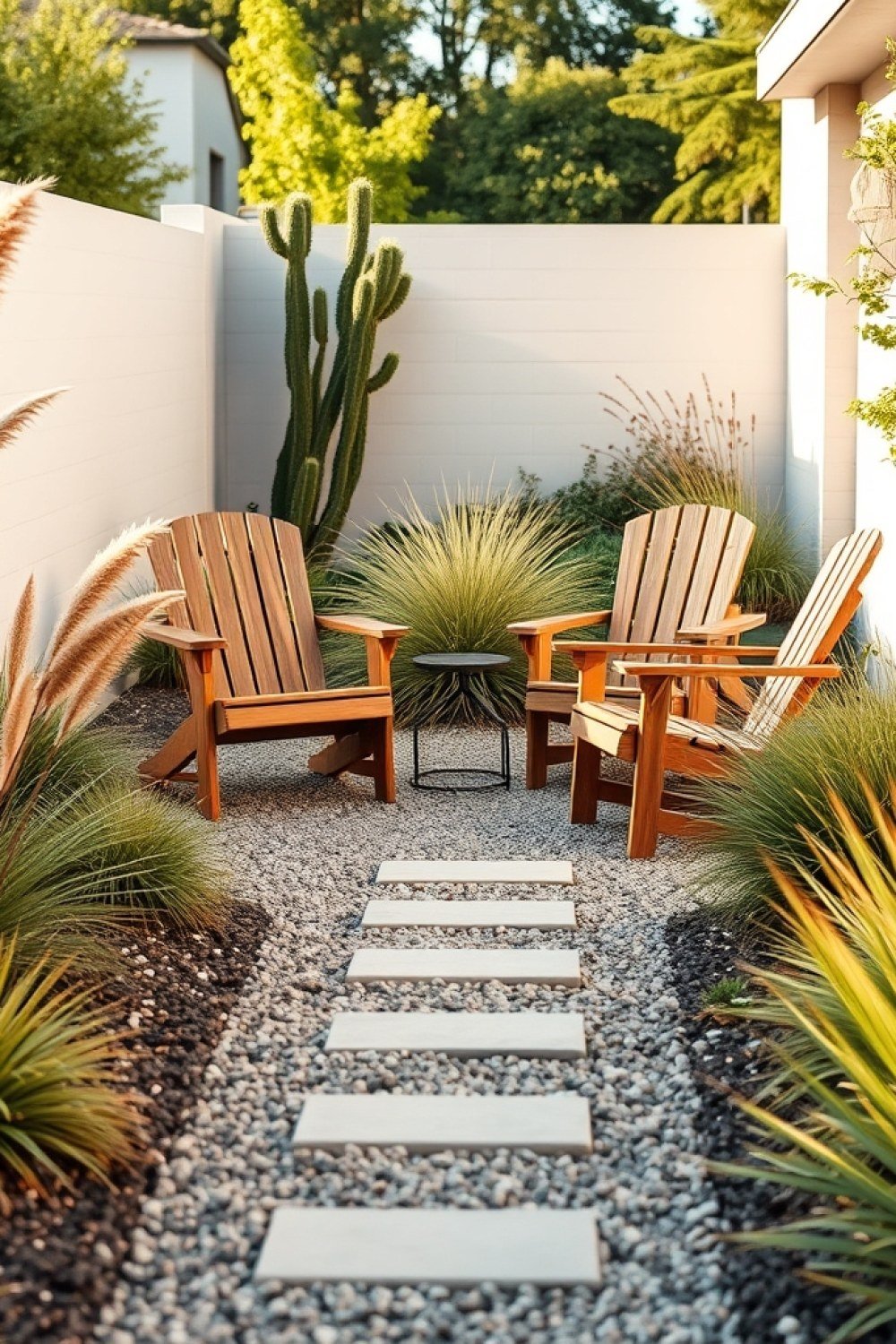
Evening ambiance without an electrician, wiring, or remembering a single switch. Solar stakes and timed string lights do all the work for you.
- Paths and steps: Solar stake lights, spaced every 6-8 feet.
- Overhead glow: Battery string lights on a timer, under an eave or between two posts.
- Maintenance: Wipe solar panels twice a season for full charging.
- Placement tip: Keep stakes out of sprinkler spray to protect the panels.
Set the timer for dusk-to-midnight and you get the pretty glow without burning batteries all night.
16. Pet-Friendly Turf and Dig Zone
Give the dogs their own spot and the rest of the yard stays clean. A dedicated potty and dig zone keeps muddy paws — and your lawn — under control.
- Surface: Artificial turf or a pea-gravel potty patch, about 3×5 feet.
- Routine: Rinse weekly with a hose; use an enzyme cleaner for odor.
- Training: Reward pups for using the zone and they’ll default to it fast.
- Payoff: Less muddy paw cleanup and a yard that smells fresh.
Scoop solids daily — it takes thirty seconds and keeps the enzyme rinse far more effective.
17. A Zero-Mow Meadow Edge

Let a strip along the back fence go wild — on purpose. A low meadow of fine fescue and wildflowers needs no watering and no fertilizing, and it becomes a habitat for birds and pollinators.
- Seed mix: Fine fescue blended with regional wildflowers.
- Mowing: Once in late fall to knock down seed heads and tidy the edge.
- Watering: None, once it’s established.
- Wildlife: Birds and pollinators move in within a season.
Define the meadow with a crisp mowed border so it reads as a designed feature rather than a neglected corner.
Your Questions, Answered
What is the easiest low-maintenance ground cover for a busy homeowner?
Microclover or a fine fescue-clover mix wins if you still want green underfoot — it needs little water, no fertilizer, and mowing just a few times a year instead of weekly. If you don’t need grass at all, gravel over a stabilized grid is even lower-effort: no mowing, no watering, no feeding. Both beat a traditional lawn on time and water use by a wide margin.
How can I keep my backyard looking good with almost no weeding?
Layer three things: 2–3 inches of mulch, dense planting so bare soil barely shows, and a drip irrigation line on a timer. Fewer open soil spots mean fewer weed seeds can sprout, and the mulch smothers most of what tries. Then spot-pull for five minutes every couple of weeks instead of saving up for marathon weeding sessions.
Do low-maintenance backyards cost more upfront?
Usually yes — hardscape, drip irrigation, and artificial turf cost more to install than a basic lawn. But they typically pay back within a few years through lower water bills, no mower or trimmer time, and fewer plant replacements. Start with one high-impact zone, like a gravel seating area or a drip-timed border, rather than redoing the whole yard at once.
Choosing Your One Big Move
You don’t need to do all 17 of these — the fastest win comes from picking the single change that deletes the chore you hate most. If mowing is the enemy, go gravel-and-grid or microclover and reclaim your weekends. If watering is the hassle, run drip on a timer and stop dragging the hose around.
Start with that one move, live with it for a full season, and see how much time and water it actually saves you. When you’re ready, layer in the next low-effort upgrade — a mulch-topped border, a shade tree, or a stone path — one at a time. Small, tested changes beat a big overhaul you regret.