
How to Block Neighbors: 14 Backyard Privacy Ideas for a Secluded Retreat
You step outside with your morning coffee, ready to unwind, and there’s your neighbor waving from their second-story window. Or maybe it’s the constant stream of cars on the road behind your fence. Whatever the source, you just want your backyard to feel like your own private escape.
These 14 backyard privacy ideas go beyond the basics to help you block neighbors, reduce noise, and create a secluded retreat you’ll actually want to spend time in. Some work in a weekend, others build year after year.
Every option here is practical and proven to actually block sightlines, not just dress them up. You’ll find costs, spacing, and the mistakes to avoid so you can match a solution to your yard, budget, and how much maintenance you want.
Quick Picks: Match the Fix to Your Problem
- Need privacy this weekend? Go with reed fencing (#6) or outdoor curtains (#4).
- Overlooked from a second story? Try strategic evergreen trees (#8) or a trellis of vines (#7).
- Small patio or urban lot? Decorative metal panels (#5) or frosted glass (#10) give big impact in tight space.
- Want a set-and-forget screen? Layered planting (#3) or raised planters (#9) do the work quietly.
1. Instant Privacy with Fast-Growing Clumping Bamboo
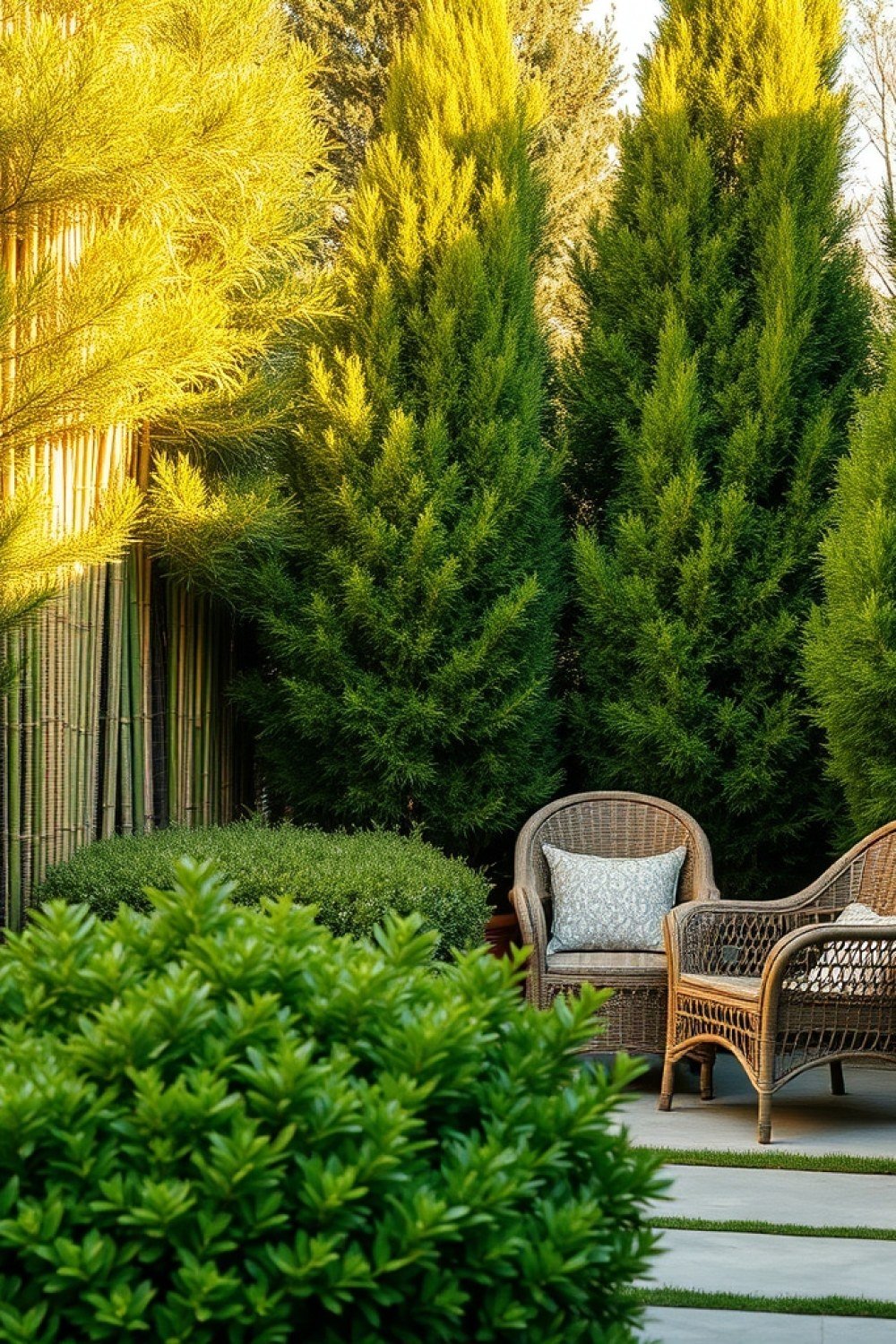
For a screen that fills in fast without eating your whole yard, clumping bamboo is hard to beat. It stays in tidy clumps instead of sprinting underground.
- Choose: Clumping types like Fargesia or Bambusa—never running bamboo.
- Spacing: Plant 3-5 feet apart in a trench amended with compost.
- Timeline: A dense screen in 2-3 seasons.
Install a root barrier if you’re worried about spread, and water deeply once a week for the first year. After that, it mostly looks after itself and gives you that dense green wall you want.
2. Elevated Look with a Horizontal Slat Wood Fence
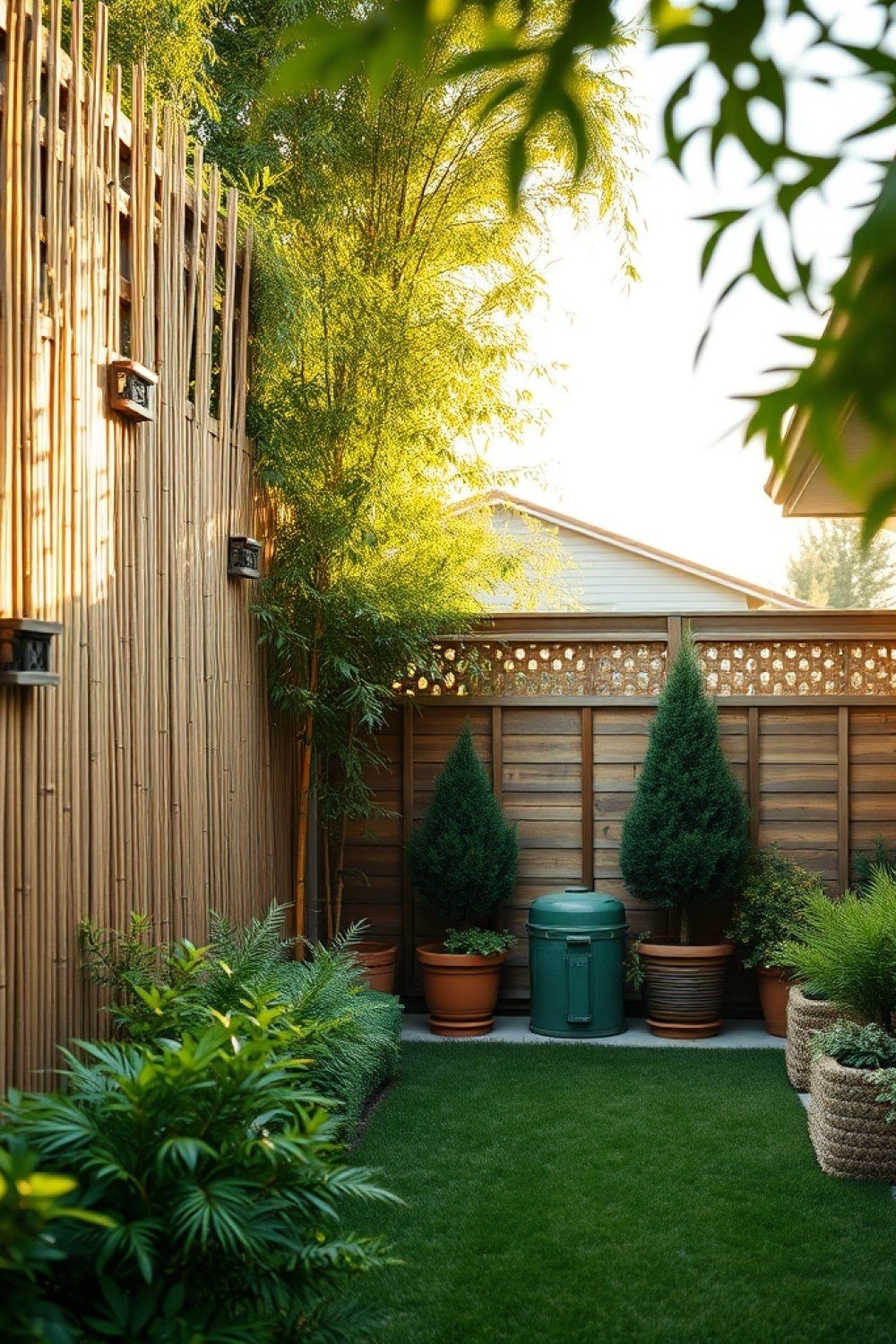
Horizontal slats read as modern and intentional while still blocking the view straight into your yard. The gaps let light and air move through, so it never feels like a wall.
- Material: Cedar or redwood 1×6 boards.
- Gaps: Keep 1/2-inch spacing between slats.
- Upgrade: Add a second layer offset behind for near-total privacy.
Seal the wood annually to stop it graying, and this fence suits contemporary homes perfectly. It’s a favorite because it looks good from the street side too.
3. Lush Layered Planting for Year-Round Screening
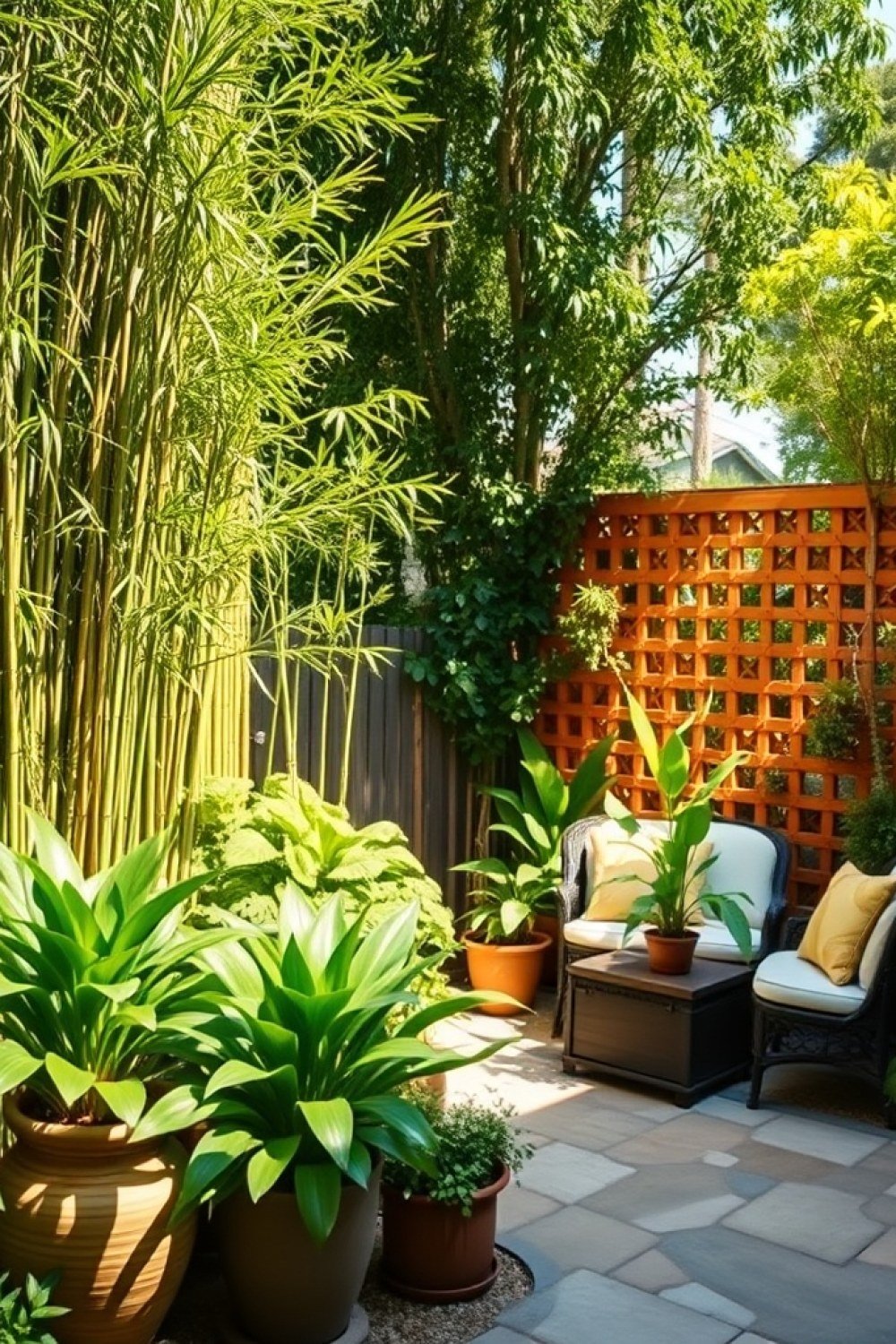
A single row of shrubs leaves gaps at eye level and above. Layering plants at different heights fills those gaps and gives the border real depth.
- Back row: Evergreens like arborvitae and holly.
- Middle row: Mid-size shrubs like hydrangea and viburnum.
- Front row: Low perennials for color and texture.
Plant in staggered rows—tall at the back, medium in the middle, low up front—so views are blocked at every height. Choose natives for the least fuss and the least watering.
4. Stylish Privacy Screen with Outdoor Curtains
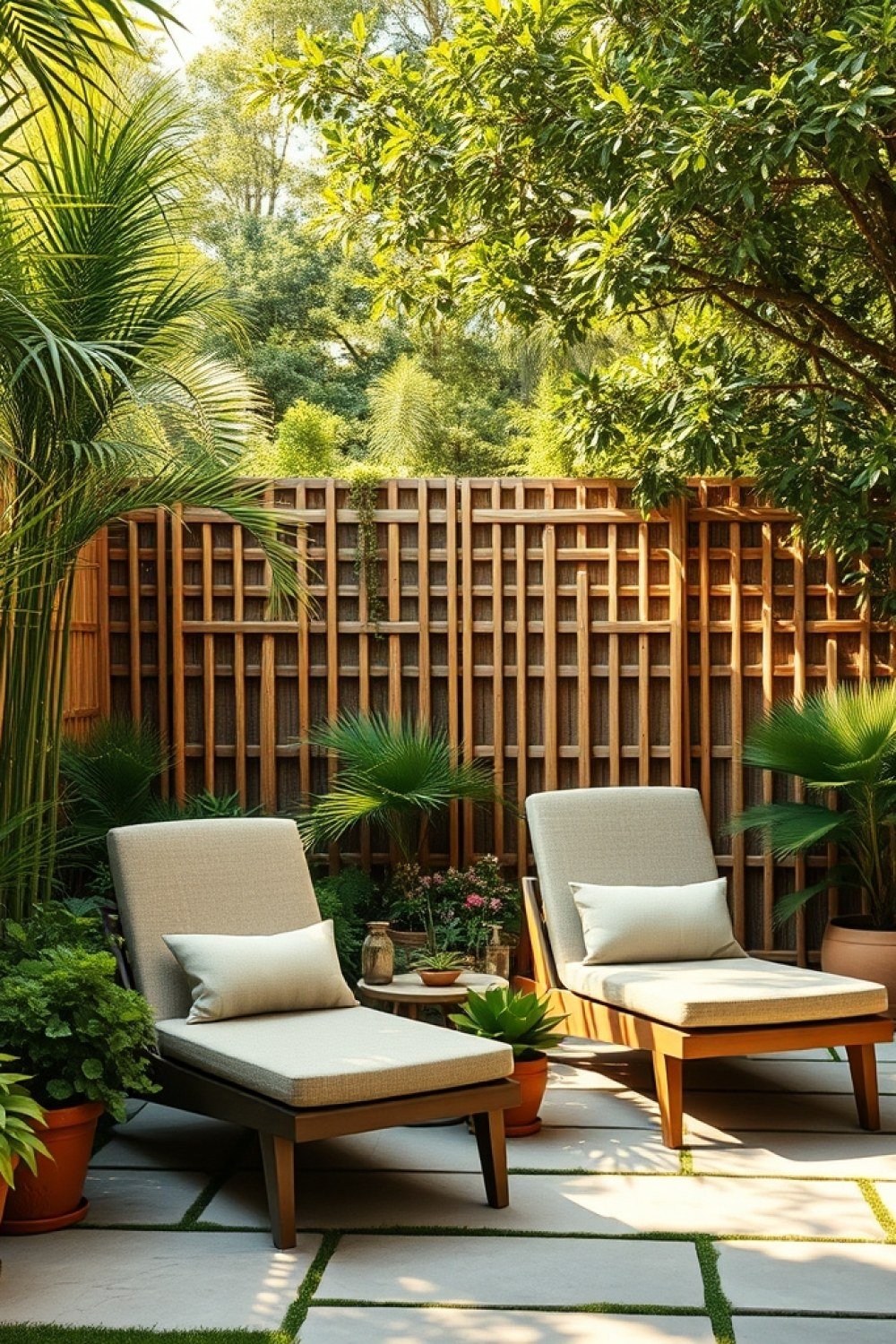
If you already have a pergola or covered patio, curtains are the quickest way to close it off. They also soften traffic noise and cut the afternoon glare.
- Best for: Pergolas and covered patios.
- Fabric: Weather-resistant like Sunbrella.
- Hardware: A ceiling track or sturdy rod.
Pick light colors to keep the space airy rather than cave-like. Tie them back during parties to reopen the view, then close them when you want to disappear.
5. Functional Art: Decorative Metal or Laser-Cut Panels
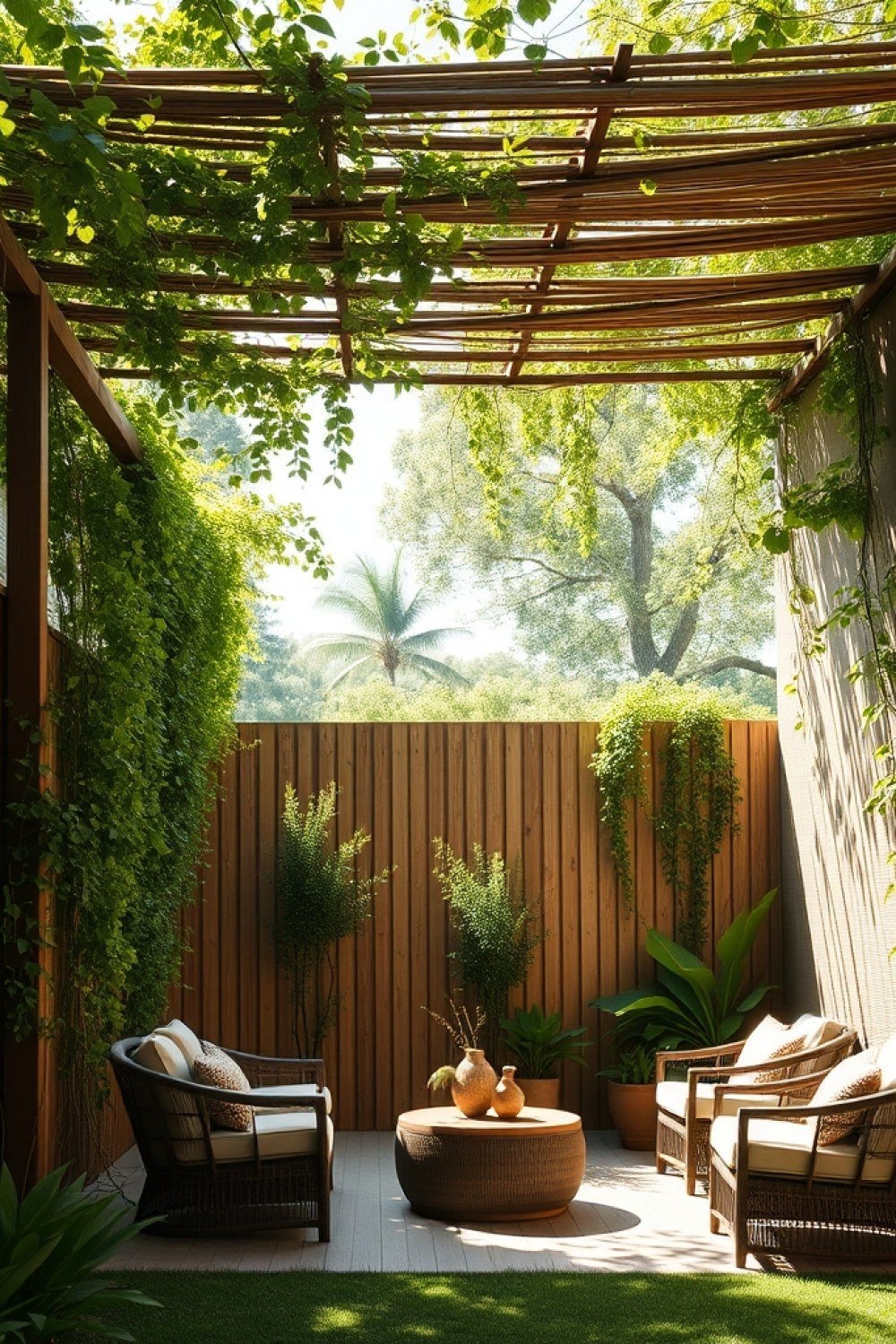
These panels turn a plain barrier into a design feature. Powder-coated steel comes in patterns like leaves or geometric shapes that cast beautiful shadows across the yard.
- Mount: On an existing fence or a freestanding frame.
- Finish: Powder-coated for rust resistance.
- Best for: Small urban yards.
They’re low-maintenance and give you privacy plus a designer touch. In a tight city lot, one panel can do the work of a whole fence line.
6. DIY Reed or Bamboo Fencing for a Natural Look
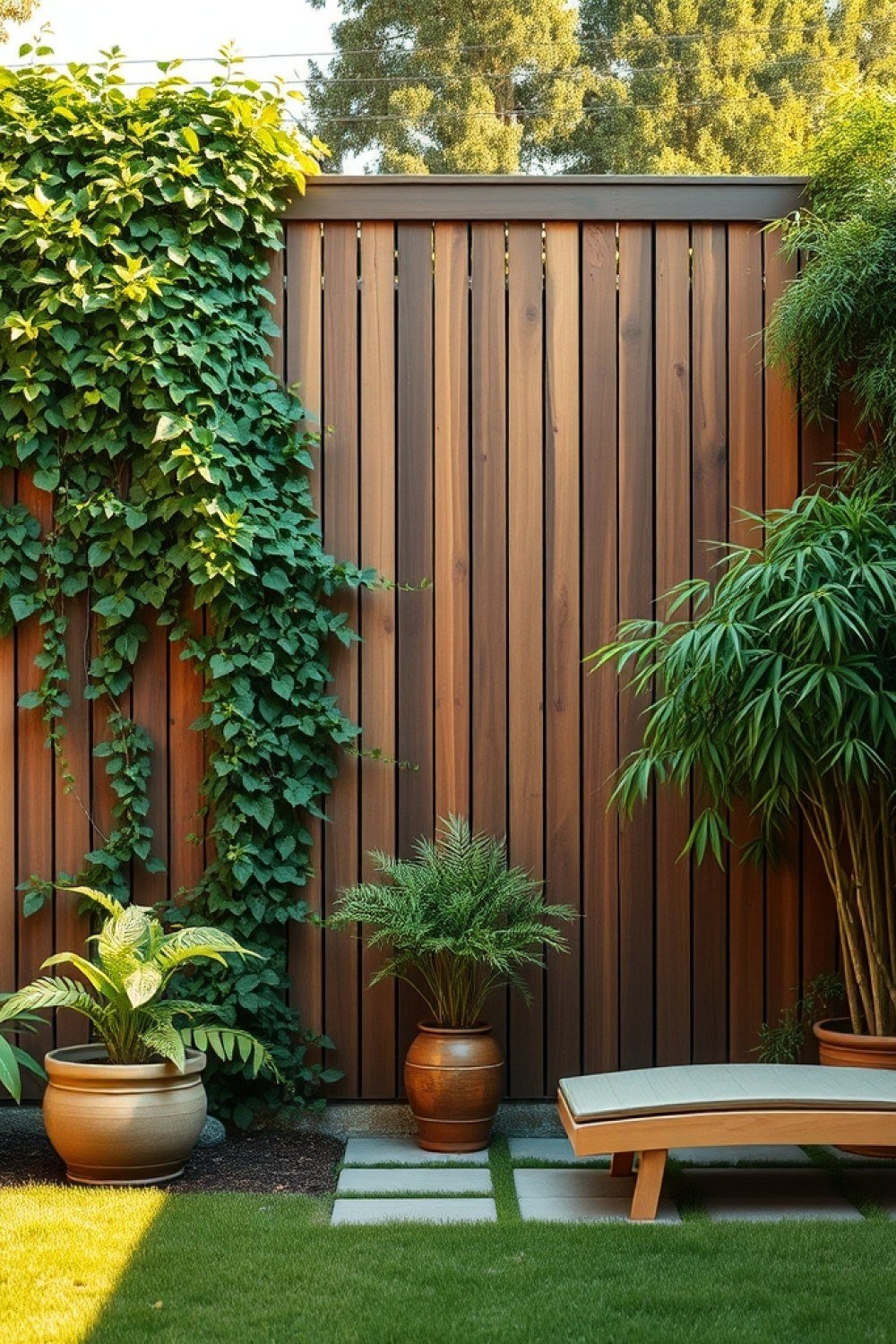
This is the affordable classic. You can attach rolls straight onto an existing chain-link or wood fence with zip ties or wire and have privacy in an afternoon.
- Install: Zip ties or wire onto an existing fence.
- Look: Instant tropical vibe and full coverage.
- Lifespan: Expect 2-3 years; replace rolls as needed.
Soak the reeds before installation to prevent cracking, which also helps them flex around corners. It’s cheap, fast, and easy to refresh when it fades.
7. Trellis with Climbing Vines for a Living Wall
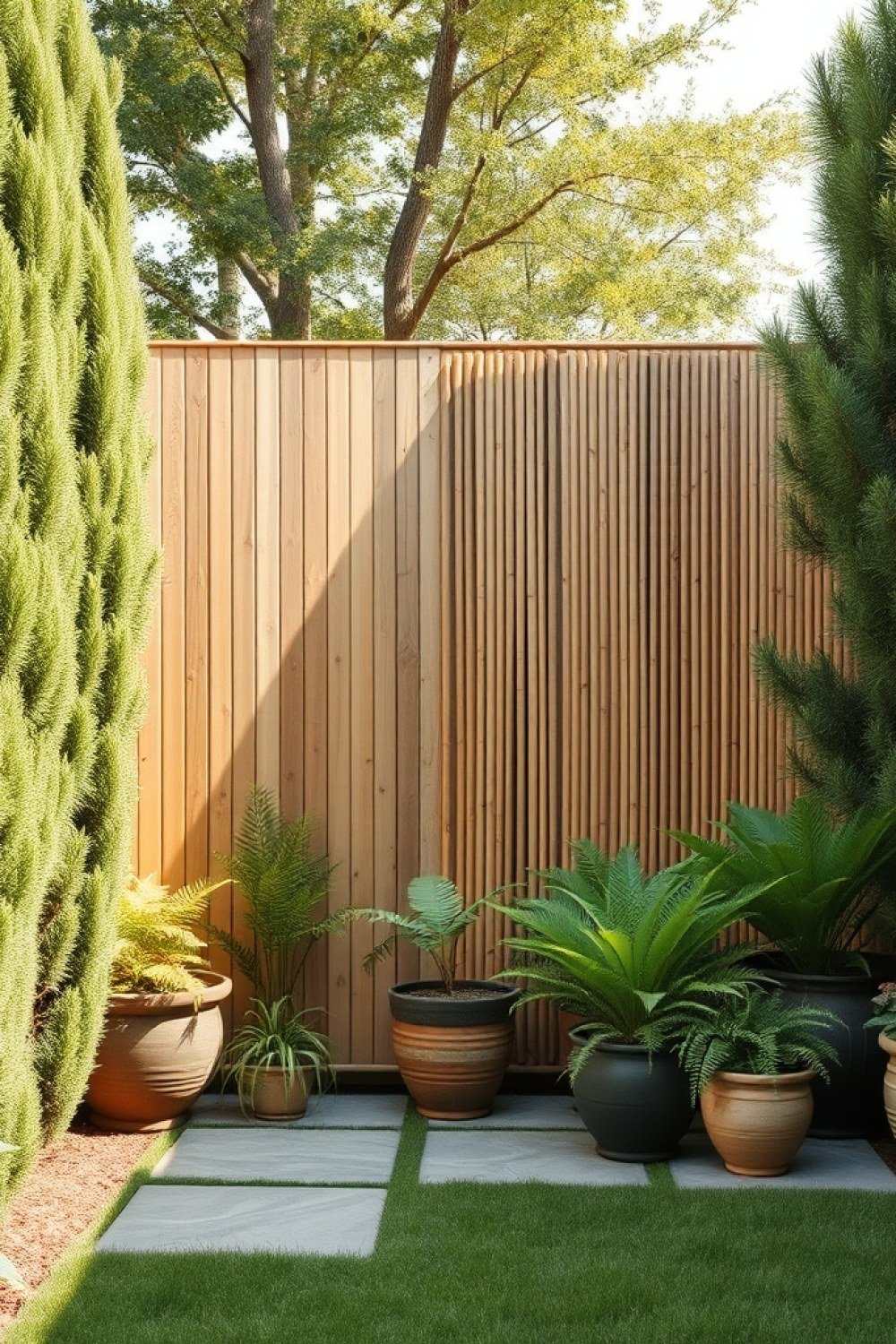
A trellis plus vines gives you greenery that grows into a screen and smells wonderful in summer. It’s softer than any fence and improves every year.
- Structure: Sturdy metal or wood trellis, at least 6 feet tall.
- Vines: Jasmine, clematis, or climbing hydrangea.
- Upkeep: Prune regularly so it doesn’t overtake the space.
For the fastest fill, pick an aggressive grower and train it early. Just stay on top of pruning or it’ll wander onto the fence, the shed, and your neighbor’s side.
8. Strategic Evergreen Trees for Long-Term Privacy
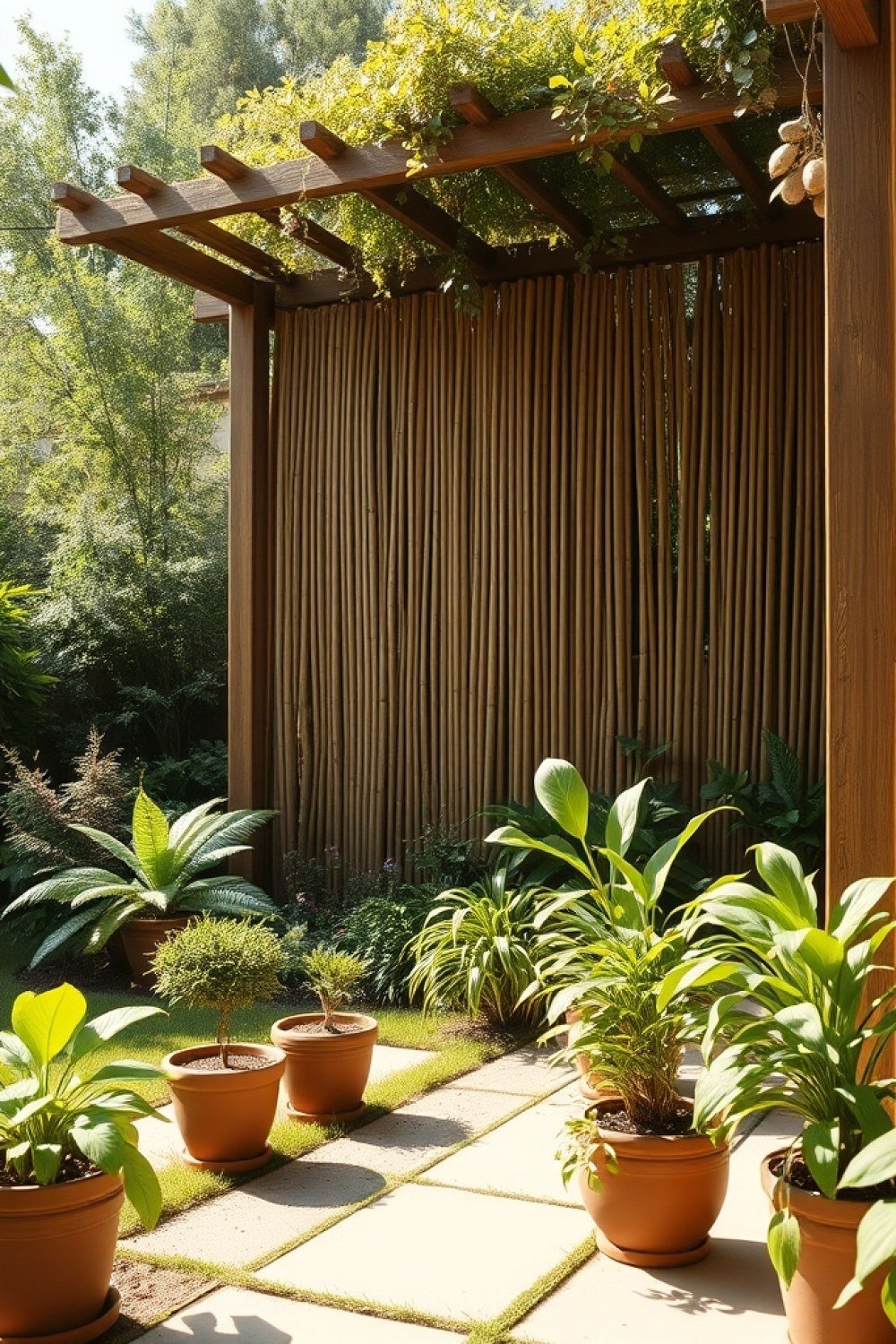
If you have the room, a row of evergreens is the set-and-forget solution. These are the tall walls that block second-story windows, not just ground-level views.
- Varieties: Arborvitae ‘Green Giant’ or Leyland cypress.
- Growth: 3-5 feet per year.
- Spacing: Plant 3-4 feet apart for a solid wall in 3-4 years.
They’re low-maintenance and deer-resistant, best for larger yards. Water deeply during droughts, especially in the first two summers while roots establish.
9. Raised Planters as a Dual-Purpose Barrier
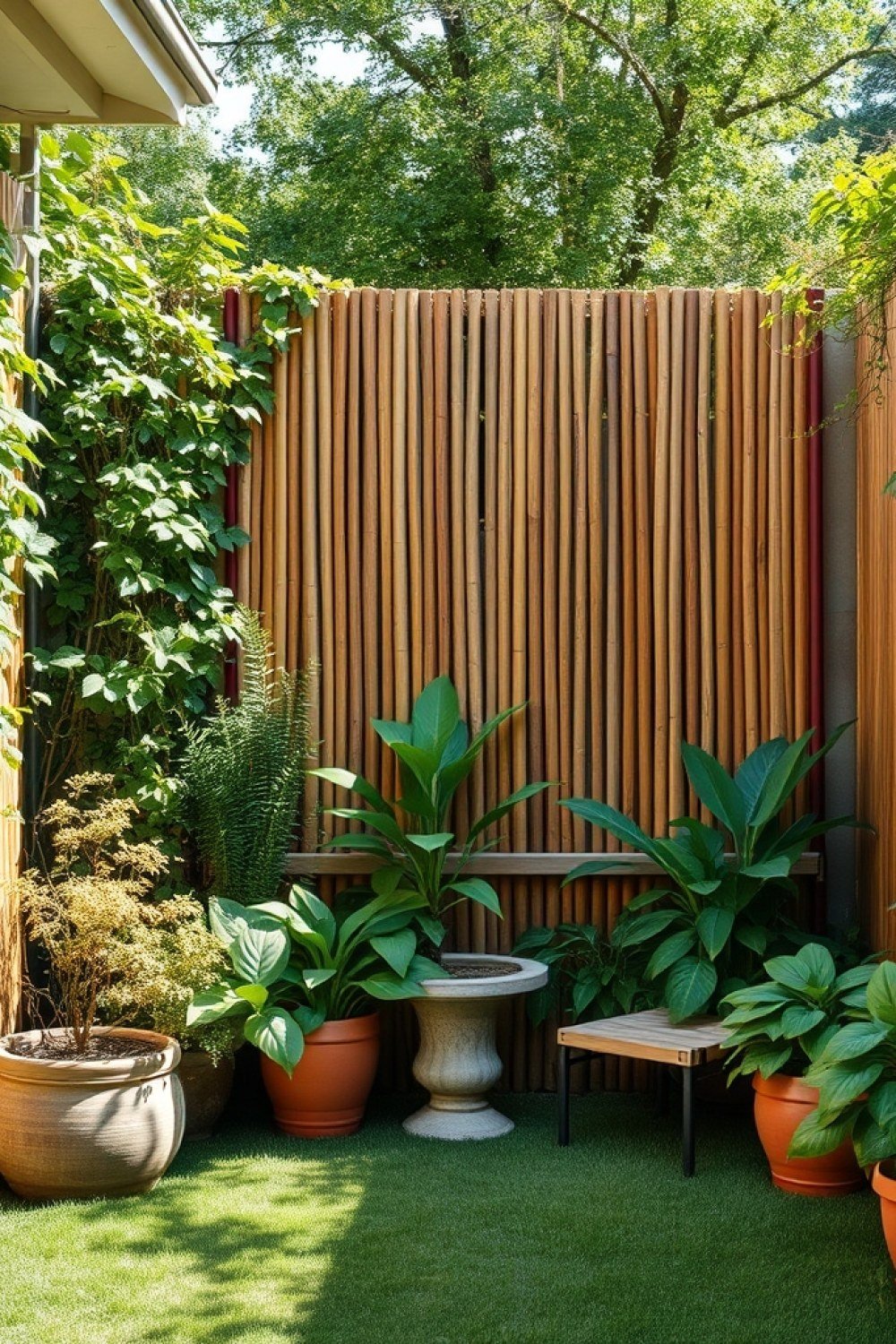
Tall planters do double duty: they mark the edge of your space and lift the screen above ground level. On a patio, they’re easier than digging into concrete.
- Height: Build or buy boxes 2-3 feet tall.
- Fill: Tall grasses or bamboo.
- Smart move: Use lightweight fill like packing peanuts to cut weight.
Line the inside with landscape fabric before adding soil so the fill stays put. Great for patios where you want privacy without a permanent structure.
10. Frosted or Textured Glass Panels for Modern Elegance
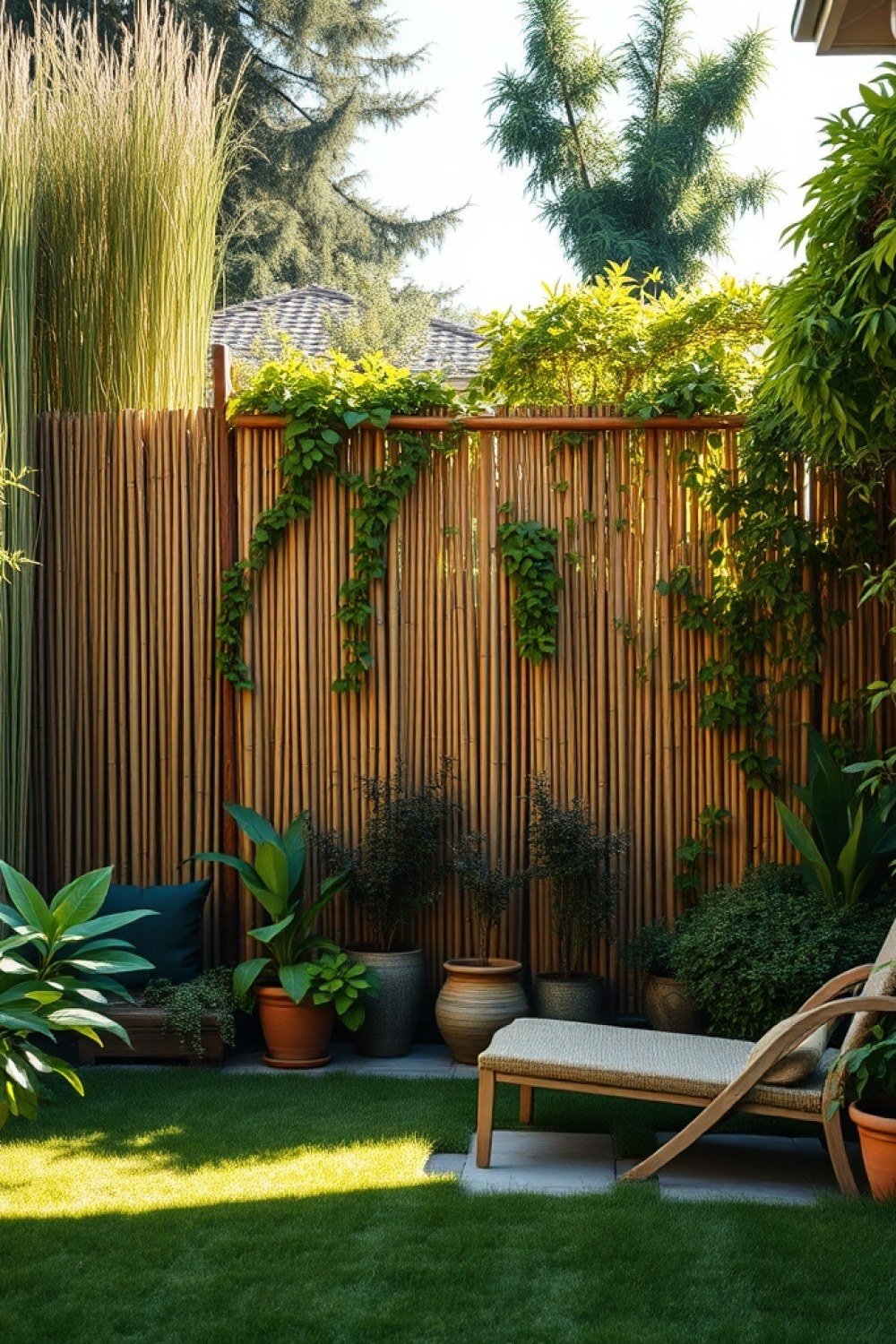
Glass panels bring light in while blurring the view out, which makes them ideal for contemporary homes and small spaces. You get a bright, open feel with real privacy.
- Material: Tempered frosted glass in a metal frame.
- Benefit: Light in, details obscured.
- Tip: Add a climbing vine for softness.
Professional installation is recommended so the panels are safely set and anchored. Once in, they need almost no upkeep and look sharp for years.
Questions About Backyard Privacy
What is the fastest way to block neighbors’ views?
Instant options include reed fencing, outdoor curtains, or shade sails—they can be installed in a day. For a more permanent solution, plant fast-growing clumping bamboo or install a horizontal slat fence. Combining a physical barrier with layered plants gives immediate and long-term privacy.
How can I block second-story windows overlooking my yard?
Use tall elements like 8-10 foot trees, shade sails angled overhead, or a pergola with a solid roof or climbing vines. Vertical screens or tall planters on a raised deck can also help. The key is to block the line of sight from above, not just at ground level.
What are the best low-maintenance privacy plants?
Evergreens like arborvitae, holly, and skip laurel are low-maintenance and provide year-round coverage. Ornamental grasses like miscanthus are also easy and add movement. Avoid fast-spreading invasives like running bamboo. Native plants require less water and care.
Do I need a permit to build a privacy fence?
It depends on your local regulations. Many areas have height limits (often 6 feet for backyards) and require permits for tall fences or structures. Check with your HOA and city before building. Also, be aware of easements and property lines to avoid disputes.
How can I make my privacy screen look good from both sides?
Choose a double-sided design like horizontal slats with finished boards on both sides, or use plantings that look attractive all around. For reed fencing, the back may be less pretty; consider adding a vine or lattice to dress it up. Communicate with neighbors—they may appreciate a nice-looking screen too.
What’s the most budget-friendly privacy solution?
DIY reed or bamboo fencing is very affordable and easy to install. Another option is to plant fast-growing annual vines like morning glory on a simple trellis. Using repurposed materials like pallets for a vertical garden is also cost-effective and creative.
Choosing the Right Privacy Solution for Your Yard
Start by naming your biggest problem: ground-level views, second-story windows, or noise. That answer points you straight to the right fix—tall trees and overhead sails for upstairs windows, reed fencing or panels for prying eyes at eye level, and curtains or layered planting when traffic noise is the issue.
Then mix one quick fix with one long-term planting so you get privacy now and a screen that keeps getting better. Check your local height limits and HOA rules before you build, and give the neighbor a heads-up before a new fence goes up. A little planning now means a backyard that finally feels like a true escape.