
10 Townhouse Backyard Ideas for Small, Narrow Spaces
A townhouse backyard is usually long, narrow, and hemmed in on all sides. That’s exactly why the standard patio-plus-lawn advice falls flat here — you don’t have the width for it, and someone’s second-floor window is looking straight down at your grill.
The good news: skinny yards respond beautifully to a few deliberate moves. Run the hardscape lengthwise, break the view into zones, and build up instead of out. Everything below is sized for tight side yards, deep-but-thin lots, and overlooked lots with a fence on every side.
Work through the list in order if you’re starting from bare ground, or cherry-pick the ones that solve your worst problem first. Most projects here are weekend-sized, and several come out cleanly if you rent or answer to an HOA.
What You’ll Need for a Narrow Backyard Project
- Measuring tape and graph paper for a scale plan
- 6-foot-wide paver or gravel area, laid lengthwise
- Columnar trees or trellis panels for vertical privacy
- Warm-white (2700K) outdoor lighting on a timer
- Pressure-treated lumber or concrete block for step risers
- Landscape fabric and steel edging to hold gravel in place
1. Run the Patio Along One Fence, Not the Middle
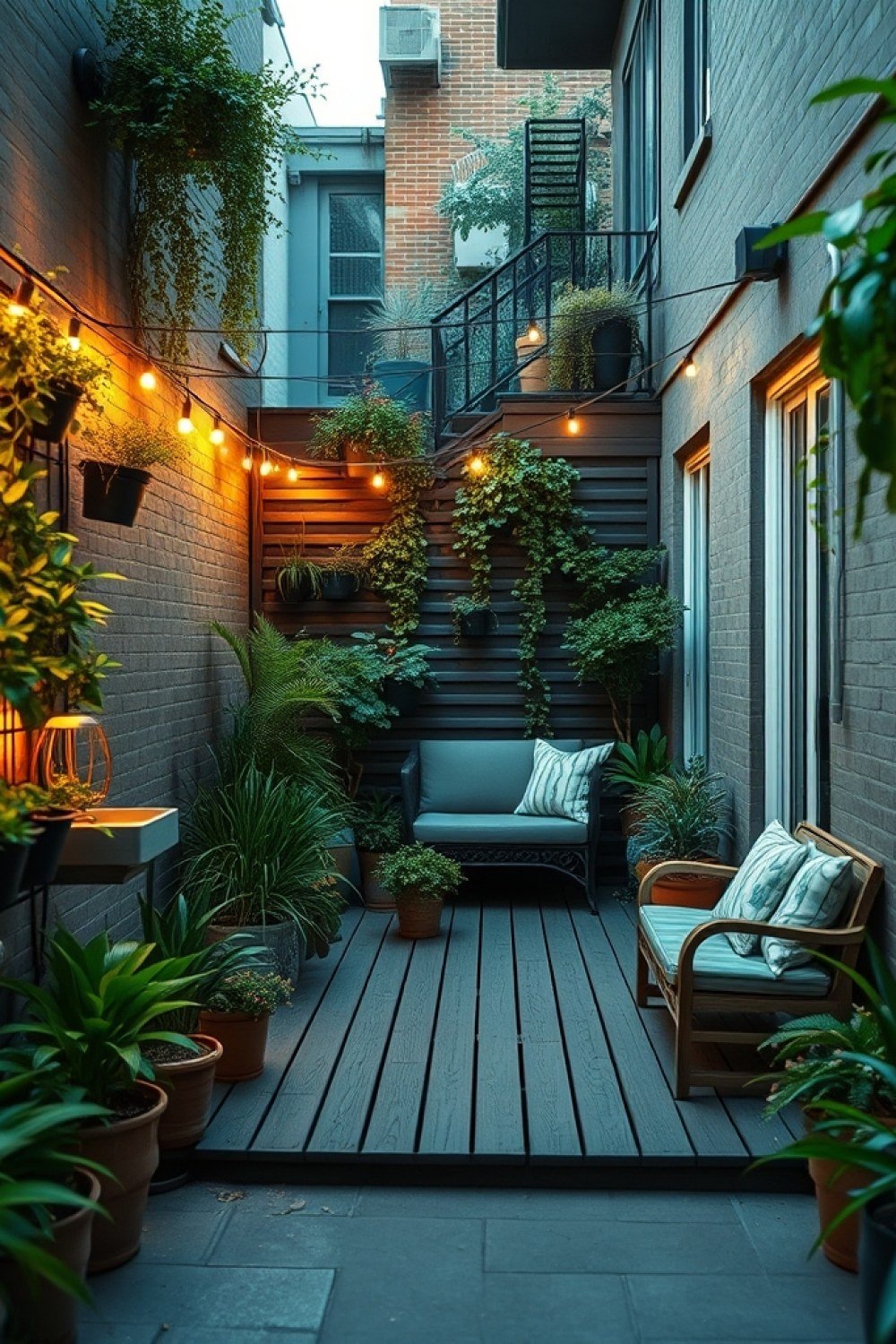
Centering furniture in a narrow yard squeezes the walkways on both sides into dead zones you never use. Push a 6-foot-wide patio against one fence line instead. That leaves one full clear lane for traffic and one bed for planting.
Lay pavers in a running bond pattern parallel to the fence, not perpendicular to it. The eye travels lengthwise, so the yard reads longer rather than wider and stubby. Keep the patio 6–8 feet deep — enough for a bistro table plus chair pull-out.
Allow 30 inches of clearance behind chairs so nobody’s scraping the fence when they stand up. If your lot is under 12 feet wide, this single move frees more usable space than any other idea on this list.
Tip: Mark the patio outline with string before you dig, then walk the lane with a laundry basket in hand — if you bump the string, it’s too tight.
2. Tier the Ground Into Two or Three Levels
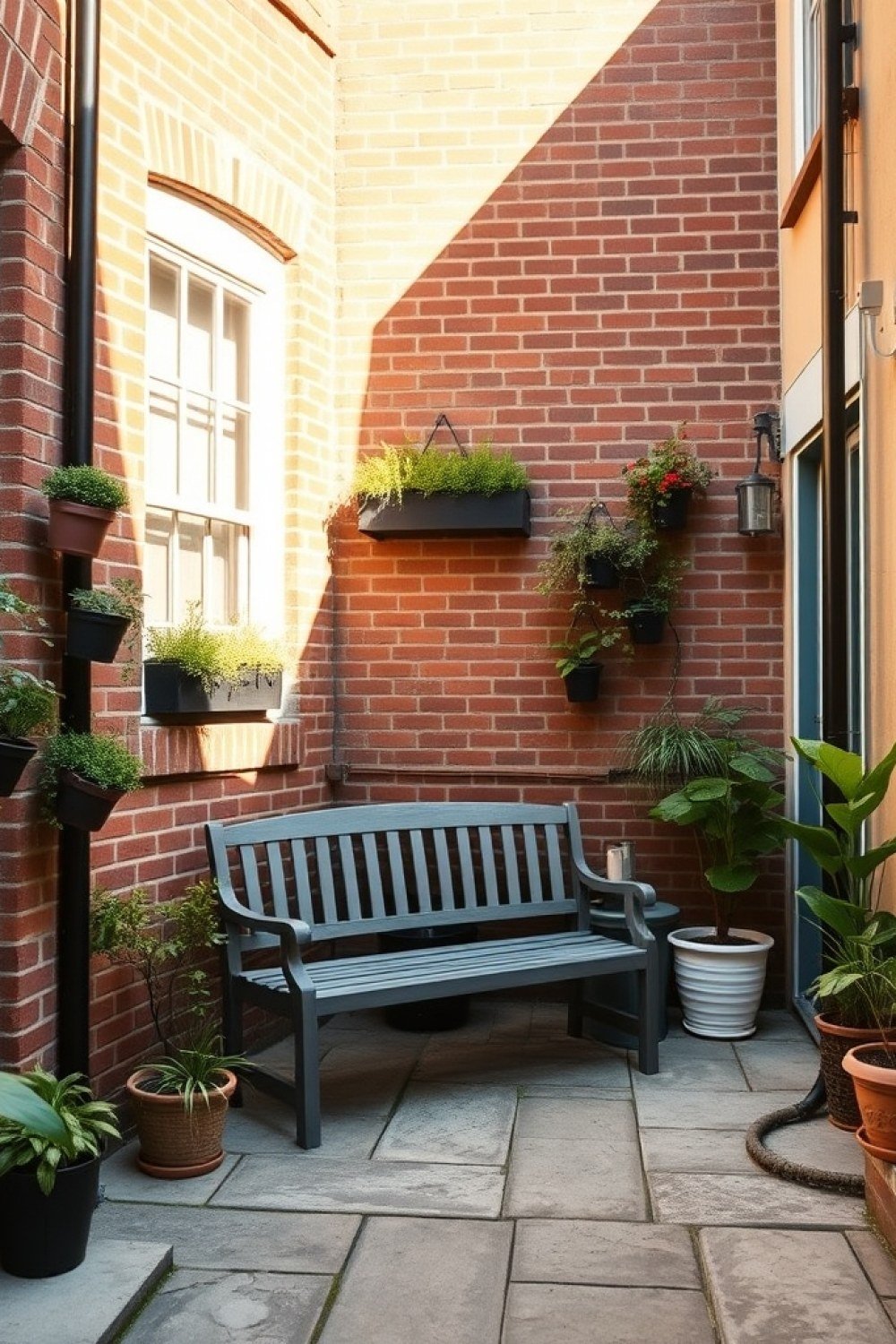
A slight grade change breaks up a tunnel-like view and creates distinct zones without adding a single square foot. Two 6-inch steps give you a dining level near the door and a lounge level at the back.
The risers double as bench seating or a spot to set drinks. Build them from 2×6 or 2×8 pressure-treated lumber, or stack concrete block for a faster, heavier option. Cap the top with a 12-inch board if you want a seat.
Light the steps with low-voltage path lights so no one trips after dark — step changes are the number one trip hazard in small yards. Two risers is usually the sweet spot; three starts to feel like stairs.
Tip: Keep each level at least 6 feet deep so a chair can sit on it without hanging over the edge.
3. Build a Slim L-Shaped Bench With Hidden Storage
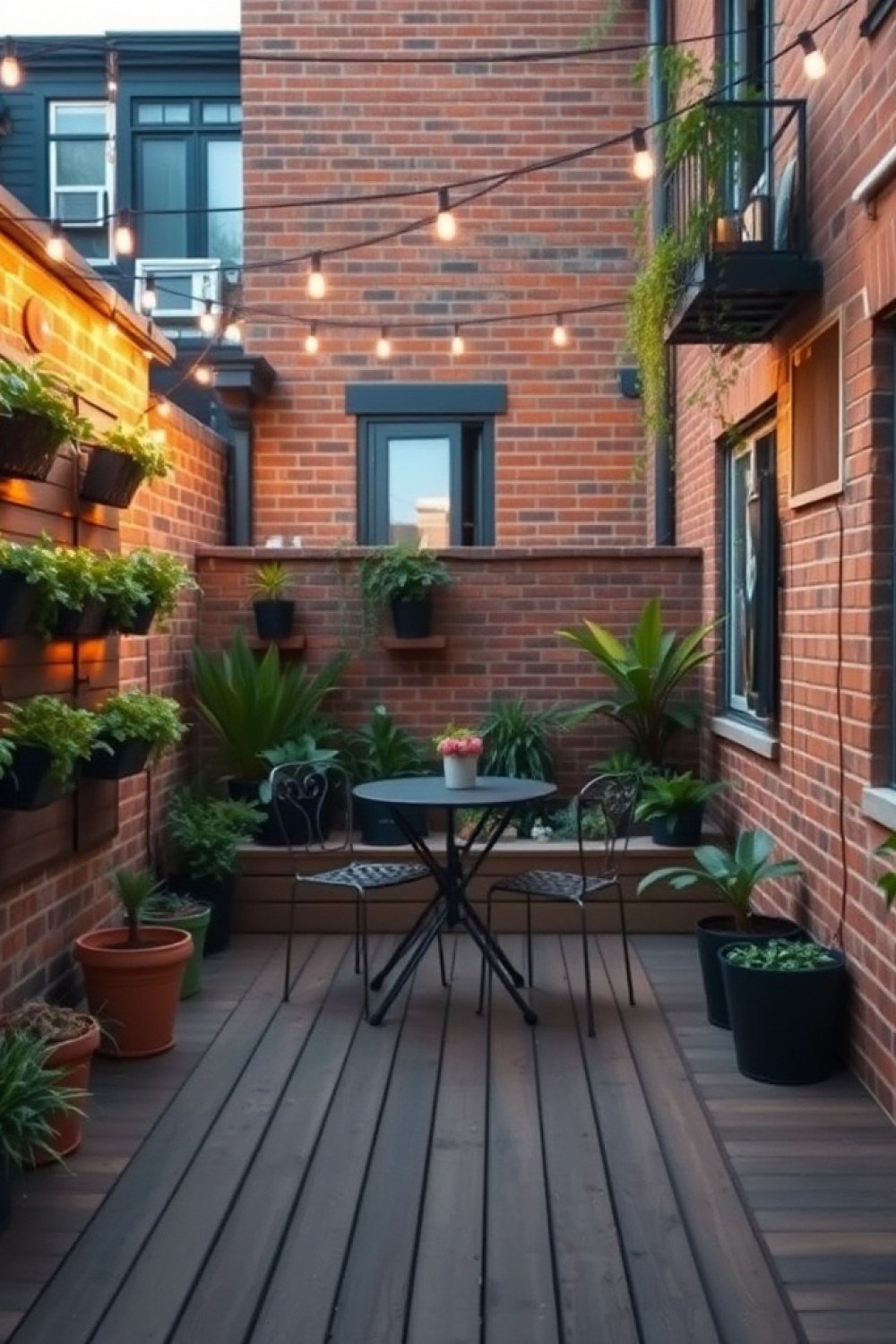
Banquette seating hugs the fence and eats almost no floor space, unlike a bulky dining set that needs clearance on all four sides. A bench 18 inches deep and 17–18 inches high fits most adults comfortably.
Frame it from 2x4s, top it with cedar or composite deck boards, and hinge the seat panels over plastic storage bins. That’s where the cushions, tools, and kids’ toys live — no shed required for the small stuff. The L-shape wraps a corner so you gain seating without a footprint.
Pair it with a narrow 24-inch-deep bistro table or a wall-mounted drop-leaf table. The corner becomes a real dining nook that seats four, and it folds flat when you’re not using it.
Tip: Slope the bench top a quarter-inch toward the front so rain runs off instead of pooling on the seat.
4. Use One Long Narrow Shed as a Visual Anchor
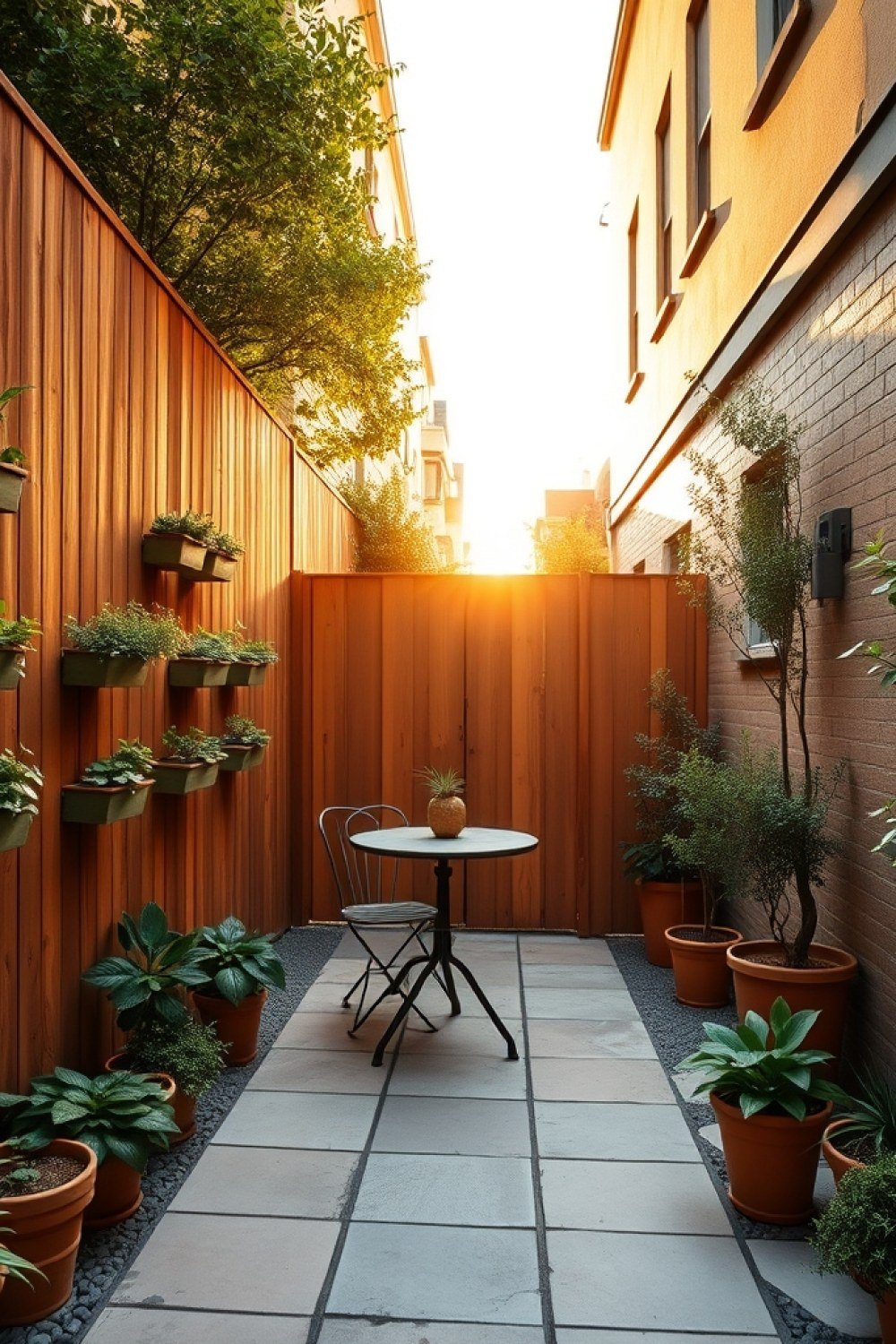
Instead of scattering small structures around the yard, buy one shed sized to the lot. Look for 4×6, 4×8, or 6×8 footprints — they fit alongside a path rather than blocking it. A single anchor reads as intentional; three small boxes read as clutter.
Paint it the same color as your fence so it visually recedes instead of shouting from the back corner. Run the ridge line parallel to the fence to avoid a bulky cross-view that chops the yard in half.
Slope the roof away from the house so runoff doesn’t sit against your foundation. Add a 12-inch gravel border underneath for drainage and weed control — it also saves you from trimming around the base.
Tip: Check your HOA’s maximum shed size before ordering; many cap it at 8×8 or require the same color as the fence.
5. Screen Up, Not Out, With Slim Columnar Trees
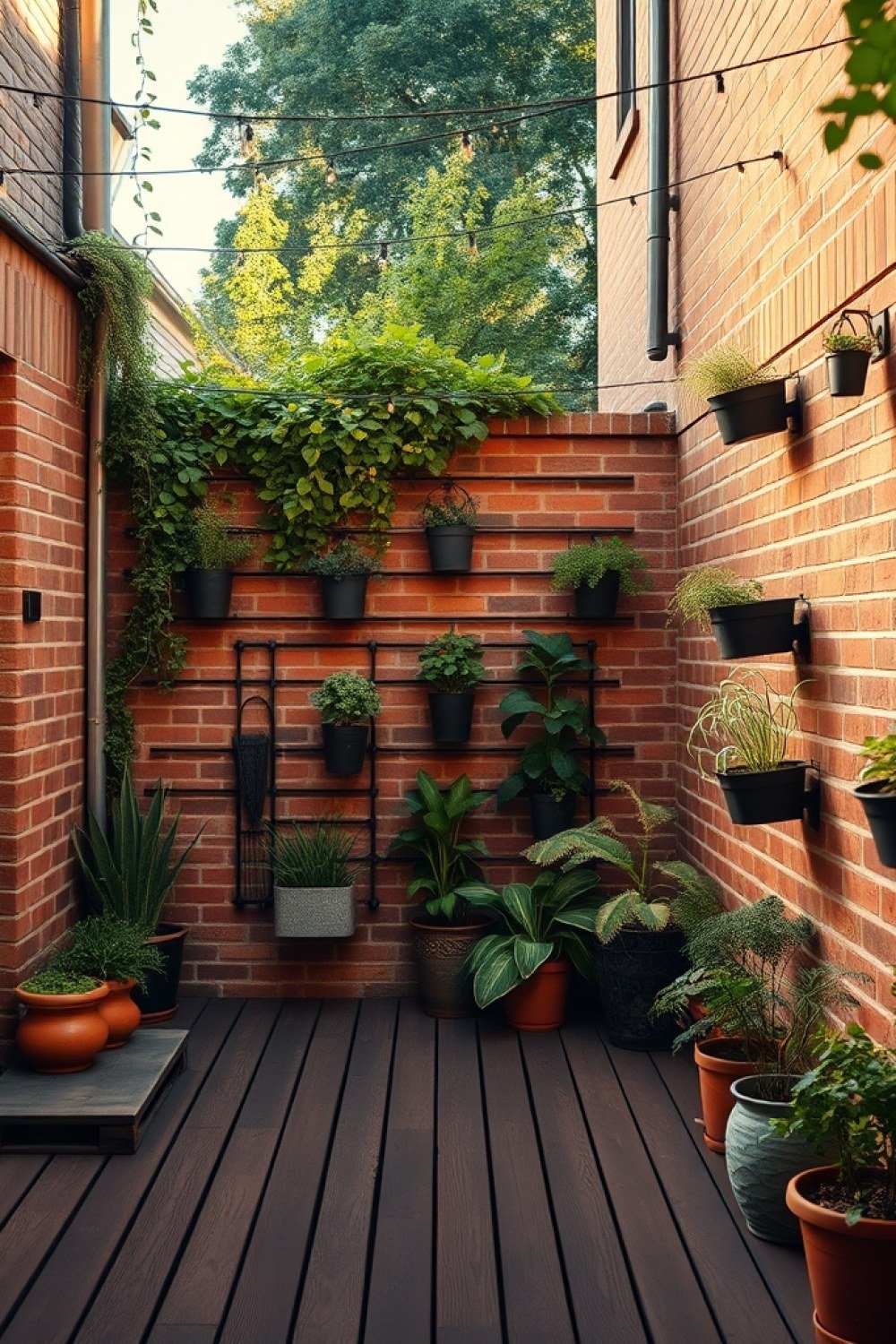
Narrow lots don’t have room for wide-canopy shade trees, but columnar varieties give you height and privacy in a 2–4 foot footprint. That’s the whole trick: grow up, not out.
‘Sky Pencil’ holly works in zones 5–9 and reaches 6–8 feet tall at just 2 feet wide. ‘Emerald’ arborvitae (zones 3–7) grows 12–15 feet tall and 3–4 feet wide. Italian cypress does the same job in mild climates.
Space them 3 feet apart for a solid screen, and plant 2–3 feet off the fence so air moves behind them and they don’t bake against the boards. Water deeply the first two summers while roots establish — that’s when most columnar plantings fail.
Tip: Plant in fall, not spring, so roots settle in before the heat arrives.
6. Lay a Gravel Path With a Purpose
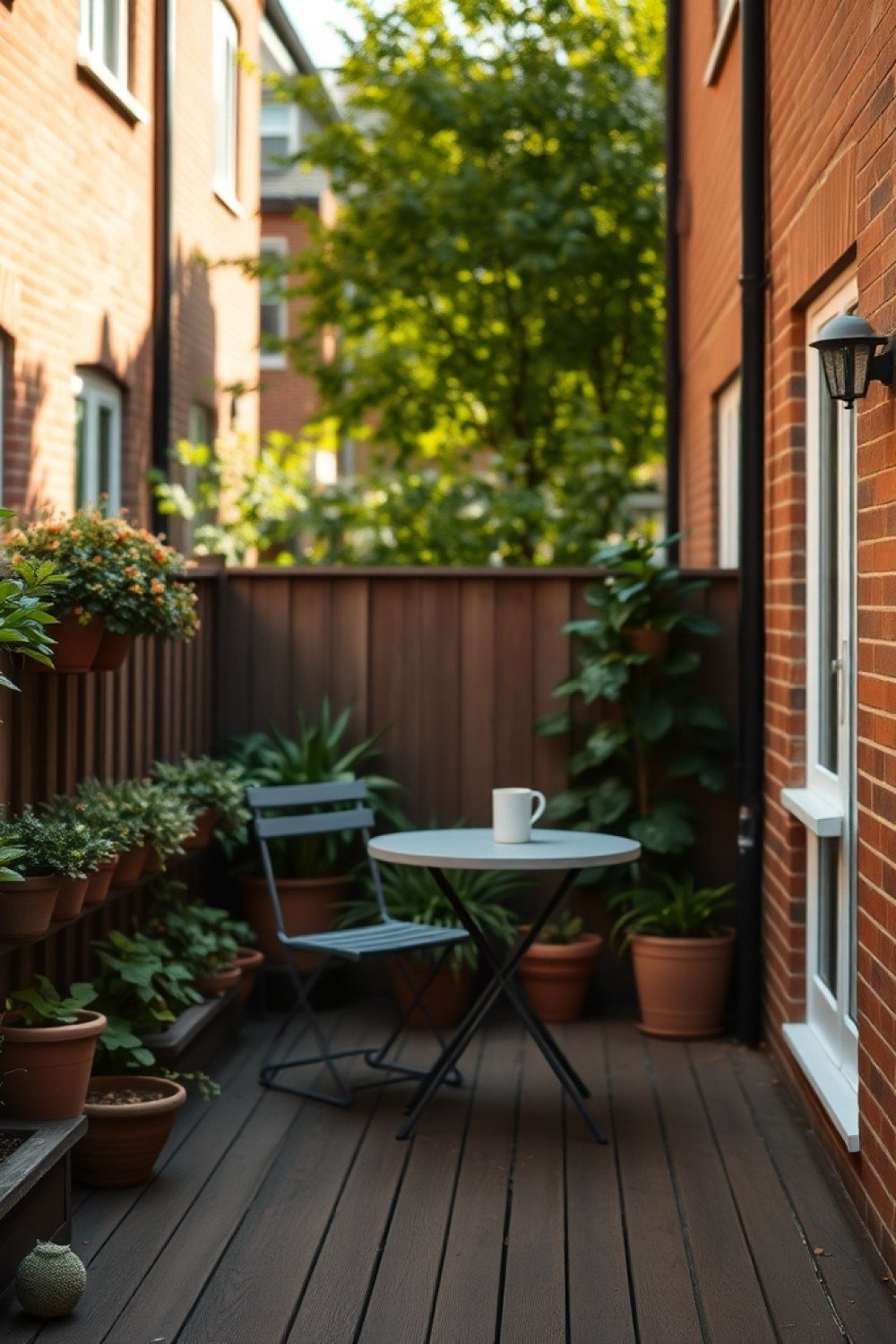
A path isn’t decoration — it’s the spine of a narrow yard, telling feet and eyes where to go. Two feet wide is enough for a single person. Make it 4 feet if you want to wheel a grill or garden cart along it.
Excavate 3 inches, lay landscape fabric, then add 2–3 inches of 3/8-inch pea gravel or crushed stone. Edge both sides so the gravel doesn’t wander into your beds. Crushed stone locks together better than pea gravel on a slope.
Curve it slightly rather than running it dead straight. The far end stays hidden, and the yard feels longer than it measures. This is the cheapest way to make a 40-foot lot feel like 60.
Tip: Run the path along the shaded side of the yard and let the sunny side stay open for planting.
7. Turn the Side Alley Into a Working Zone
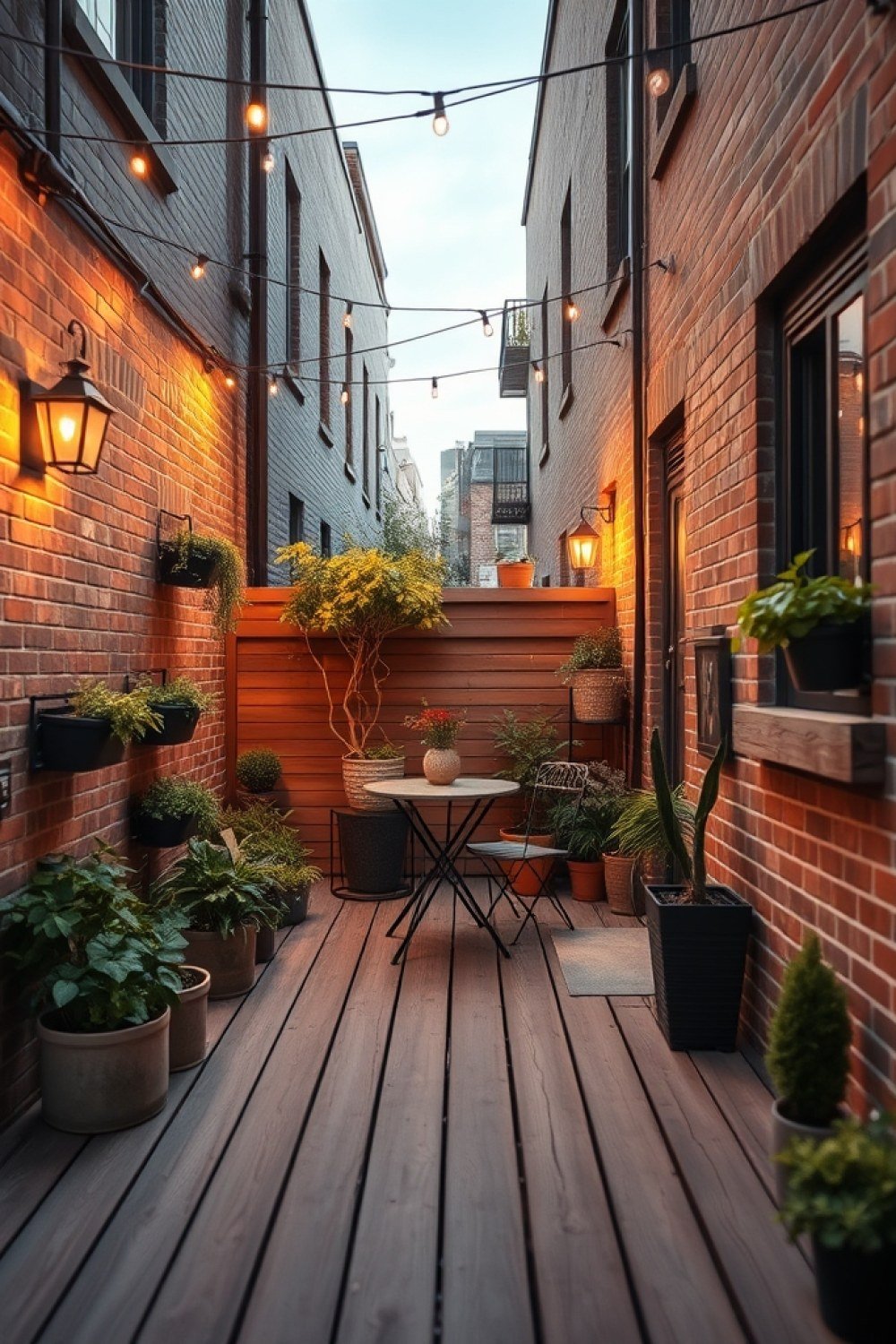
That 3–4 foot strip beside the house is prime real estate for things you don’t want to look at. Line it with a slatted screen and dedicate it to trash bins, bike hooks, a folding drying rack, or a vertical herb wall.
Keep a 36-inch clear walkway so you can actually get through with a bin in hand. Mount everything on the wall above knee height — that keeps the floor clear and the space usable. A slatted screen lets air through, which matters in a damp alley.
Add one motion-sensor light so the alley isn’t a dark no-go zone at night. This is the single most overlooked zone in a townhouse lot, and it’s free square footage you already own.
Tip: Hang a sheet of exterior pegboard on the wall above knee height for hooks, tools, and bike gear.
8. Grow Vertically With a Fence Trellis Wall
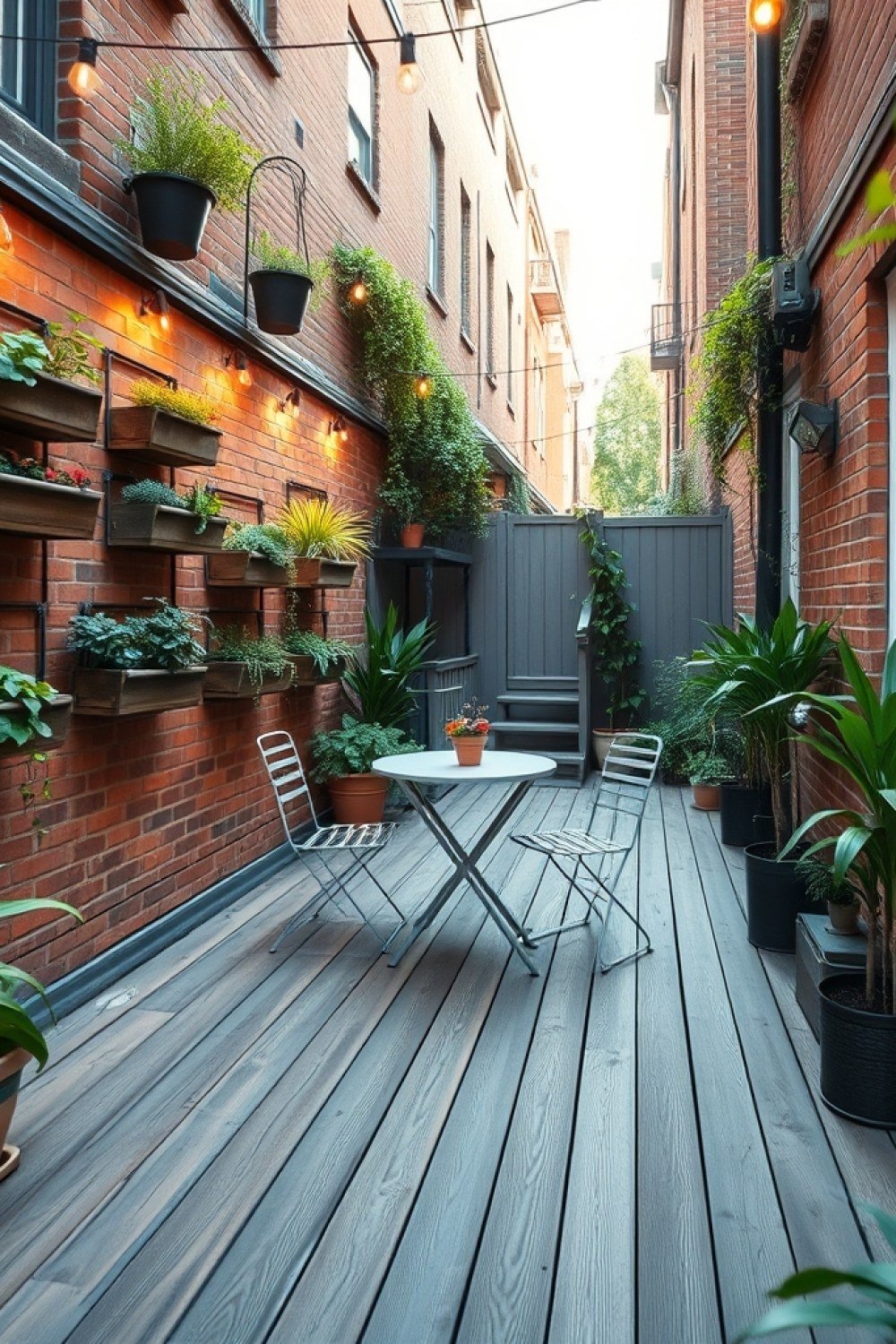
When floor space is gone, the fence becomes your garden. Attach a 2×2 cedar grid or wire trellis panels 1–2 inches off the fence board. That gap lets air move behind the vines and keeps the boards from staying wet.
Match the climber to your sun. Jasmine or climbing roses for full sun, clematis where roots are shaded but the tops get sun, or annual morning glories for a fast first-year cover that dies back clean.
Keep vines pruned off the fence top so they don’t creep into the neighbor’s side — that’s the fastest way to start a boundary dispute. Skip ivy entirely unless you want an ongoing battle with it.
Tip: Tie vines with soft garden twine, not wire, so stems don’t girdle as they thicken.
9. Make the Lawn a Shape, Not a Square
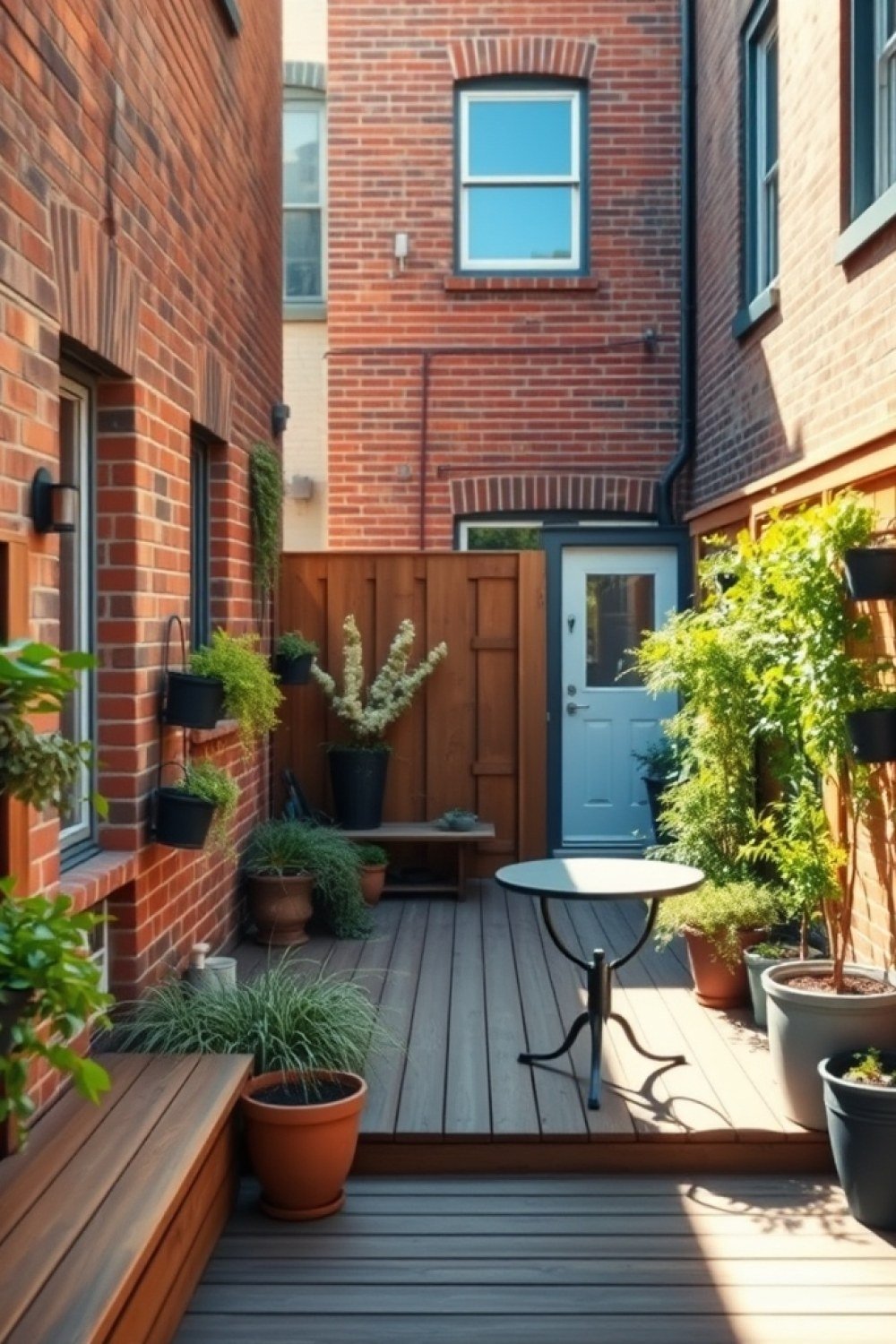
A skinny rectangle of grass looks like a leftover parking strip. Instead, cut a circle, oval, or teardrop lawn from the middle of the yard with plantings all around it. The curve reads bigger than the space and gives the eye something to follow.
Keep it small enough to mow in three passes — roughly 8×10 feet or less. Anything larger in a narrow yard just looks like you gave up on the rest of the design. Repeat the curve somewhere else, like a curved path or a round table, so the shape feels intentional.
Edge it clean with a half-moon spade each spring so the shape stays crisp. A fuzzy edge undoes the whole effect in about three weeks.
Tip: Lay a garden hose on the grass to test the curve before you cut — adjust until it looks right from the back door.
10. Zone the Night With Layered Warm Lighting
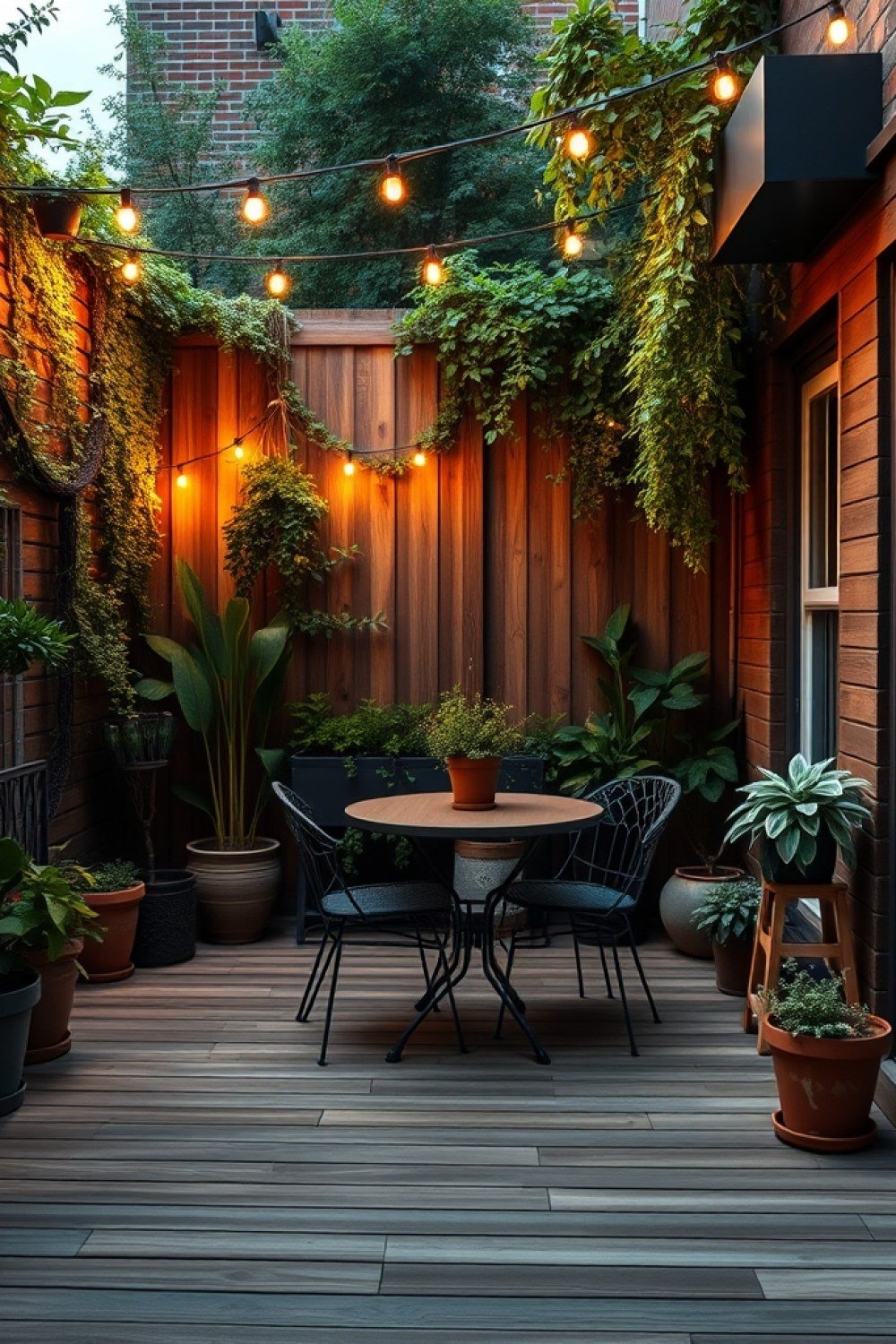
Townhouse yards are usually shaded by walls and fences, so lighting is what makes them usable after work. Run 2700K warm-white string lights along the fence top or a pergola beam. That’s your ambient layer.
Add two or three path lights at step changes so the ground reads clearly, then a single uplight at the base of a columnar tree for drama. Three layers — ambient, path, and accent — are plenty. More just turns a small yard into a runway.
Put everything on one outdoor smart plug timer set for 7–11 pm. Keep fixtures shielded so glare doesn’t hit neighboring second-floor windows. In a townhouse, lighting manners matter as much as the lighting itself.
Tip: Aim uplights up and inward, never toward a neighbor’s window — a shield or hood fixes most glare complaints.
Quick Questions
How do I make a narrow townhouse yard feel less like a hallway?
Break the sightline instead of leaving one long open corridor. Add a step or two in the ground level, curve your path, place a tall columnar tree or a bench at the far end as a focal point, and use two or three lighting zones so the eye stops along the way rather than running straight to the back fence.
What can I plant along a townhouse fence for privacy without losing floor space?
Go vertical and columnar. ‘Emerald’ arborvitae, ‘Sky Pencil’ holly, and bamboo in a root barrier all grow tall in a 2–3 foot footprint, and climbing vines on a fence trellis give you a green wall for almost no ground space. Plant 2–3 feet off the fence for airflow and prune the tops so they never overhang the neighbor’s side.
Can I do any of this if I rent or have HOA rules?
Yes — most of these ideas are reversible. Free-standing planters instead of in-ground beds, a gravel path over landscape fabric, clip-on string lights, a slatted screen on feet rather than posts in concrete, and movable furniture all come out when you leave. Check your HOA’s rules on fence height, shed size, and hardscape coverage before you buy anything permanent.