
14 Elegant Italian Backyard Ideas for Timeless Mediterranean Charm
You know that feeling when you scroll past a photo of a Tuscan terrace and your shoulders literally drop an inch? That unhurried, sun-warmed elegance is exactly what these Italian backyard ideas are built to bring home — minus the villa price tag.
Italian gardens aren’t fancy because they cost a fortune. They’re elegant because they repeat a few honest materials: terracotta, stone, cypress, citrus, wrought iron. Get those right and a plain patio starts reading as Mediterranean.
Below are 14 ideas you can recreate in a rental, a city courtyard, or a full backyard — with real measurements, plant swaps for cold climates, and the honest costs so you can decide what’s worth it.
Quick Picks
- Limbed-up pergola with grapevines — best for anyone with a sunny patio who wants dappled shade over a lunch table.
- Gravel and stone instead of lawn — best for low-water yards and anyone tired of mowing.
- Long table under a fig tree — best for families and hosts who feed a crowd often.
- String lights and lanterns for evening aperitivo — best for renters wanting maximum effect for the least money and effort.
1. Limbed-Up Pergola With Grapevines for Shaded Lunches
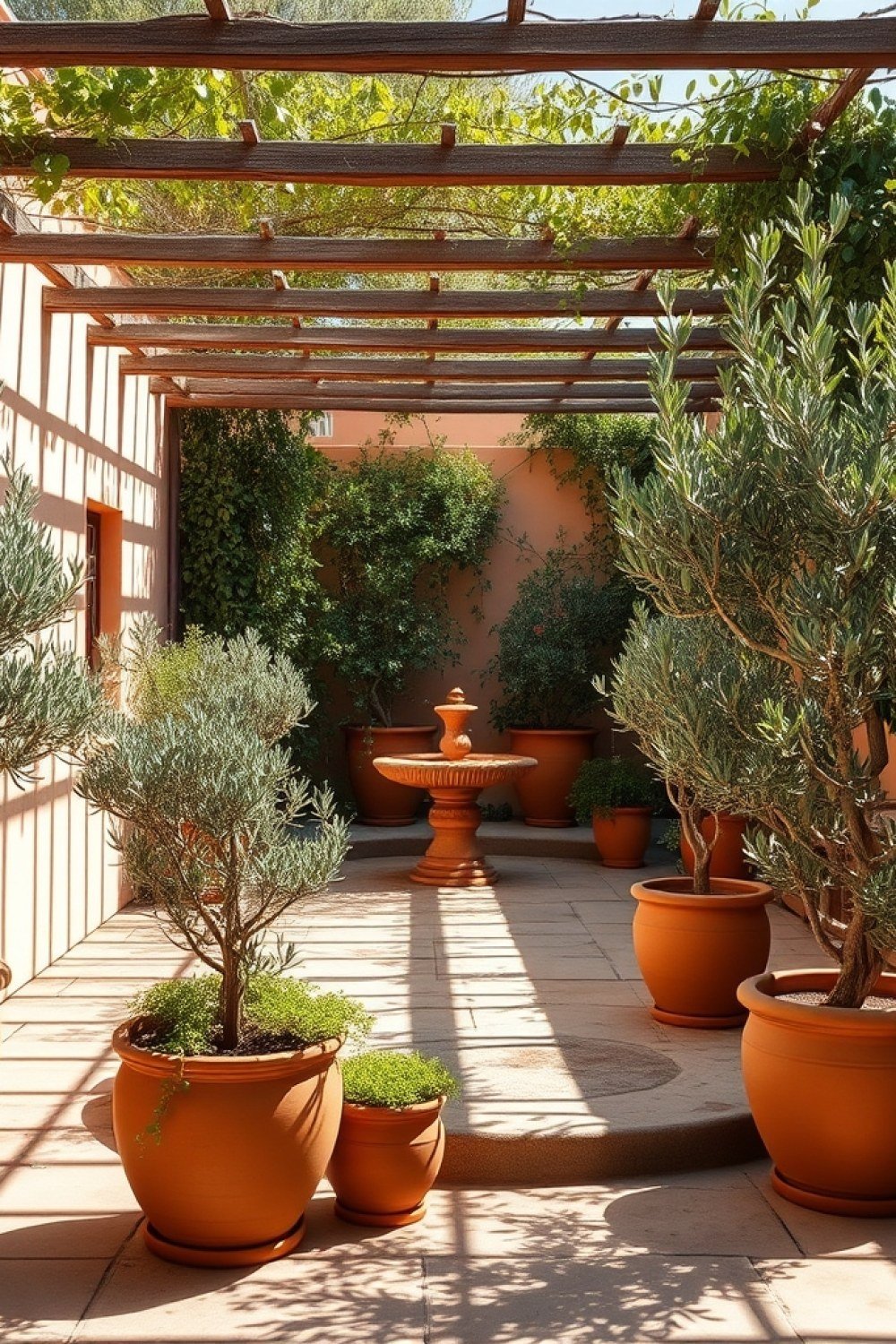
A wood pergola with climbing grapes — or wisteria in cooler zones — creates the dappled light that defines Italian outdoor dining. Set posts 8–10 ft apart, run 2×6 rafters 16 in on center, and plant vines at the base of two posts. Expect three years to full coverage.
Underneath, place one long table instead of scattered furniture. The single-table look reads as Italian; a matched patio set does not.
How to Build It
- Set four 6×6 posts in concrete, spaced 8–10 ft apart, with the beam height at 8 ft.
- Run 2×6 rafters across the top, 16 in on center, overhanging the beam by 12 in.
- Plant grape or wisteria at two post bases, 6 in from the wood, and train the first cane up a tension wire.
- Prune hard every winter to push growth along the top rather than up the posts.
2. Terracotta Pots Everywhere, in Staggered Heights
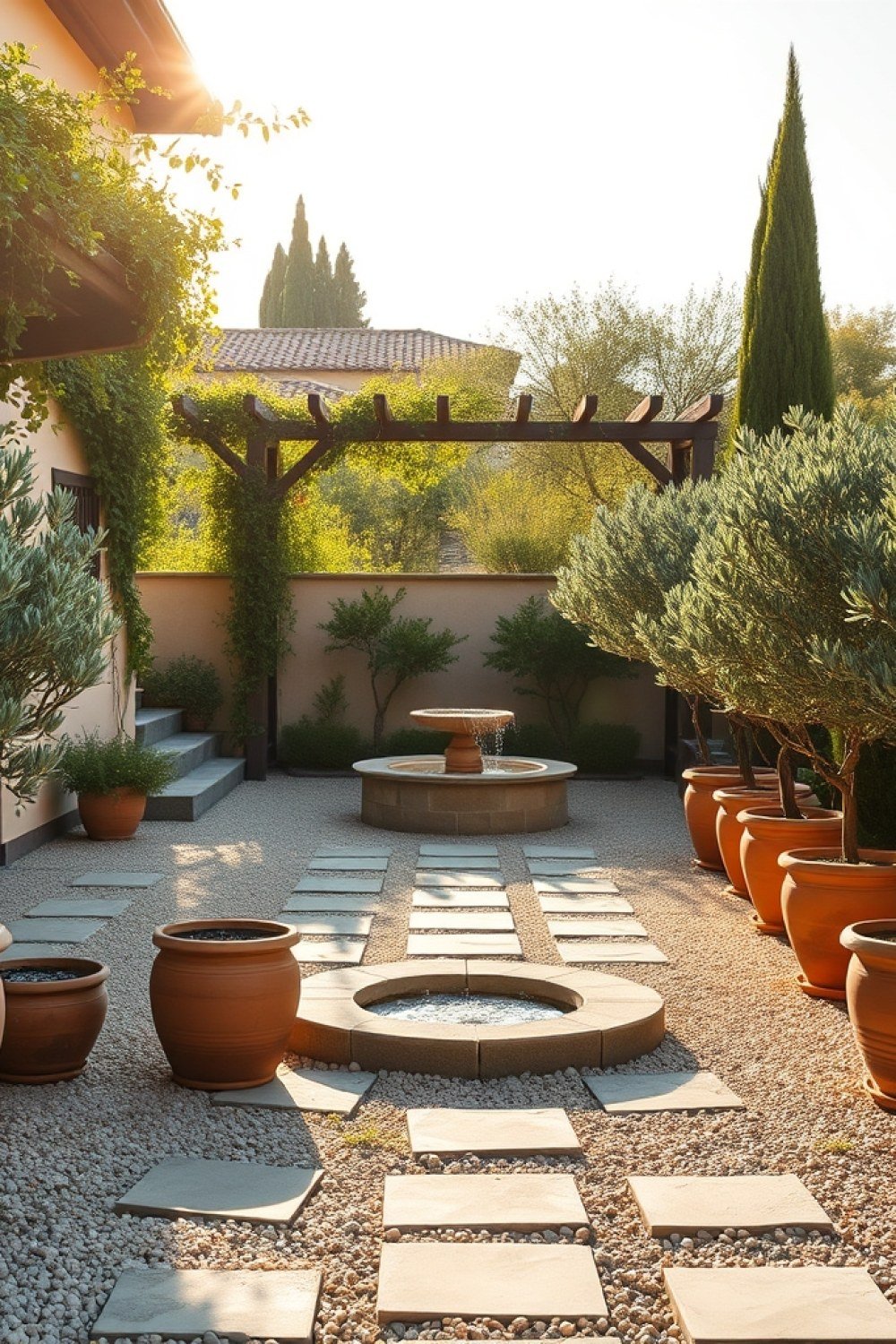
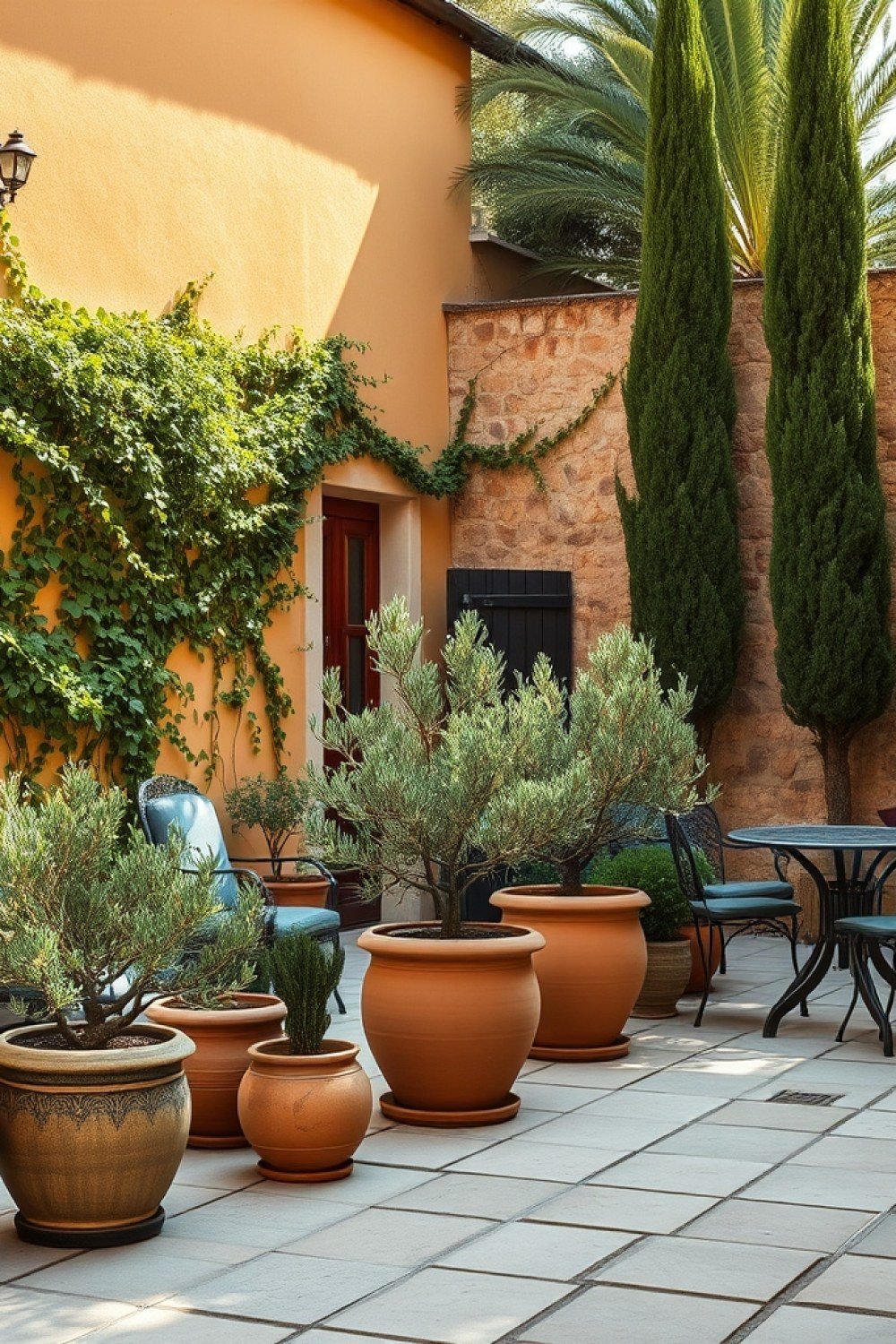
Group unglazed terracotta pots in odd-numbered clusters of three or five. Vary the heights by setting some pots on inverted pots as risers. Terracotta breathes, so it’s forgiving for herbs and citrus that hate wet roots.
Let patina and water staining stay. New, uniform pots look catalog-ish; aged ones look lived-in. Line a low wall or stair edge for the classic Italian stairway effect.
How to Style It
- Pick one pot size per cluster and repeat it — three large, or five mixed, never all different.
- Flip a spare pot upside down as a riser under the tallest plant to lift it 6–10 in.
- Leave 1 in of space below the rim when filling, so water doesn’t run straight off.
- Skip the saucers; set pots directly on gravel or stone and let them drain.
3. A Lemon Tree in a Statement Pot, Even Up North
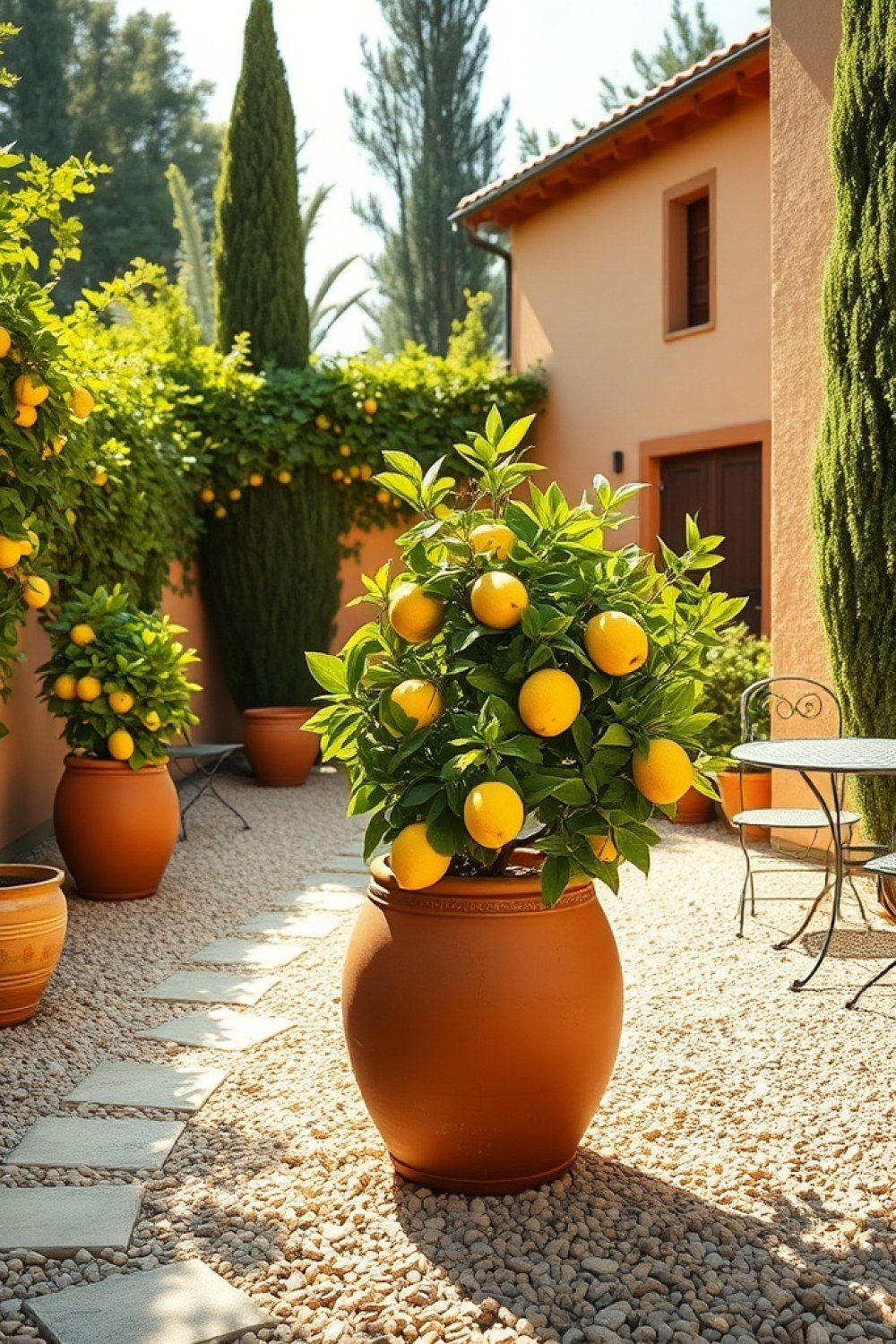
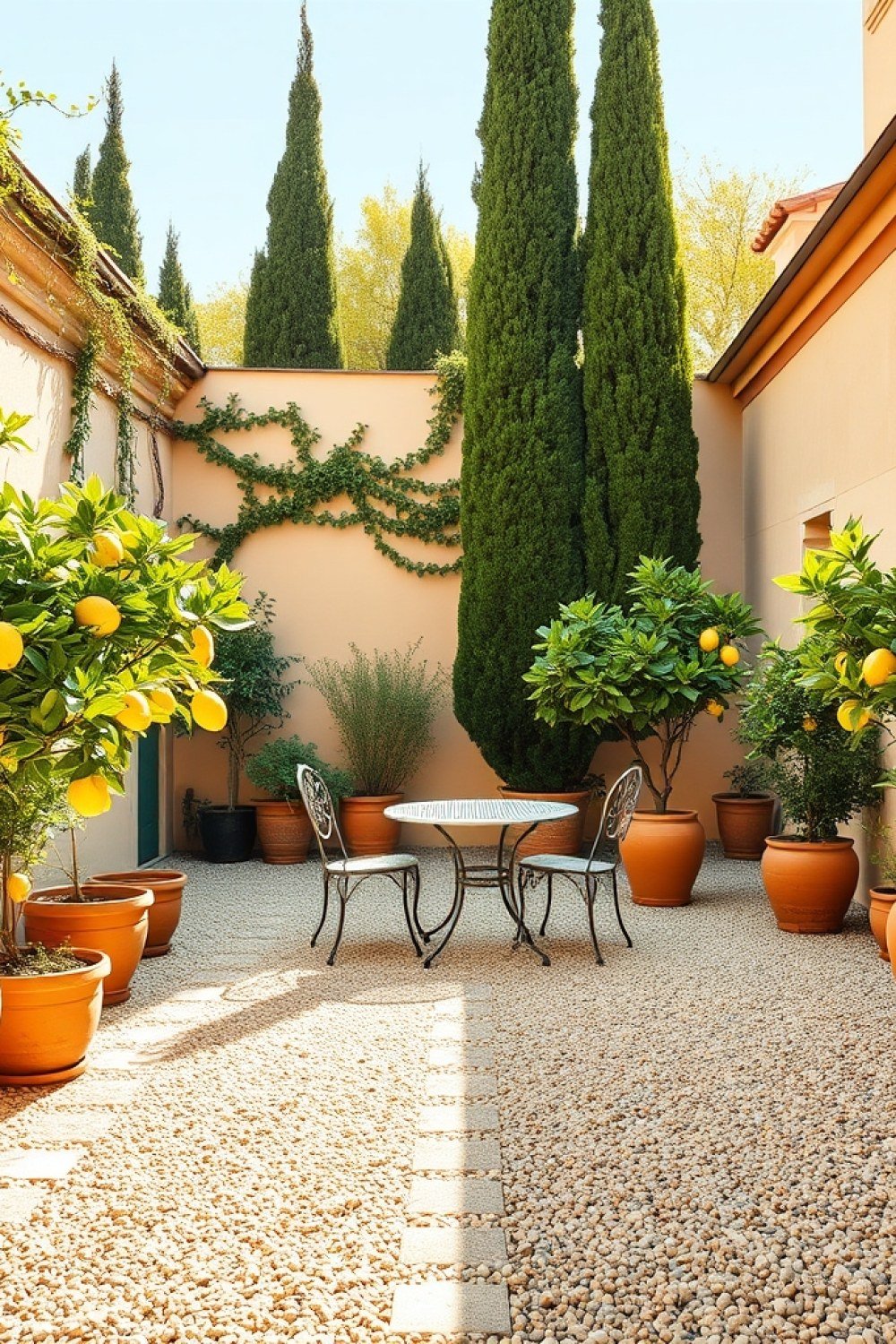
Outside zones 9–11, choose a dwarf Meyer lemon and wheel it into a garage or sunroom before the first frost. Use a pot at least 18 in wide with drainage, and mix in citrus-specific soil. One healthy lemon tree near a seating area does more for the Mediterranean feel than a dozen flowering annuals.
How to Grow It
- Set the pot on a wheeled dolly before you fill it — a planted 18 in pot is too heavy to lift later.
- Water deeply when the top 2 in of soil are dry, then let it drain fully.
- Feed with citrus fertilizer monthly from March through September.
- Move it in before night temps drop below 40°F, and cut water back by half indoors.
4. Cypress or Columnar Evergreens for Vertical Drama
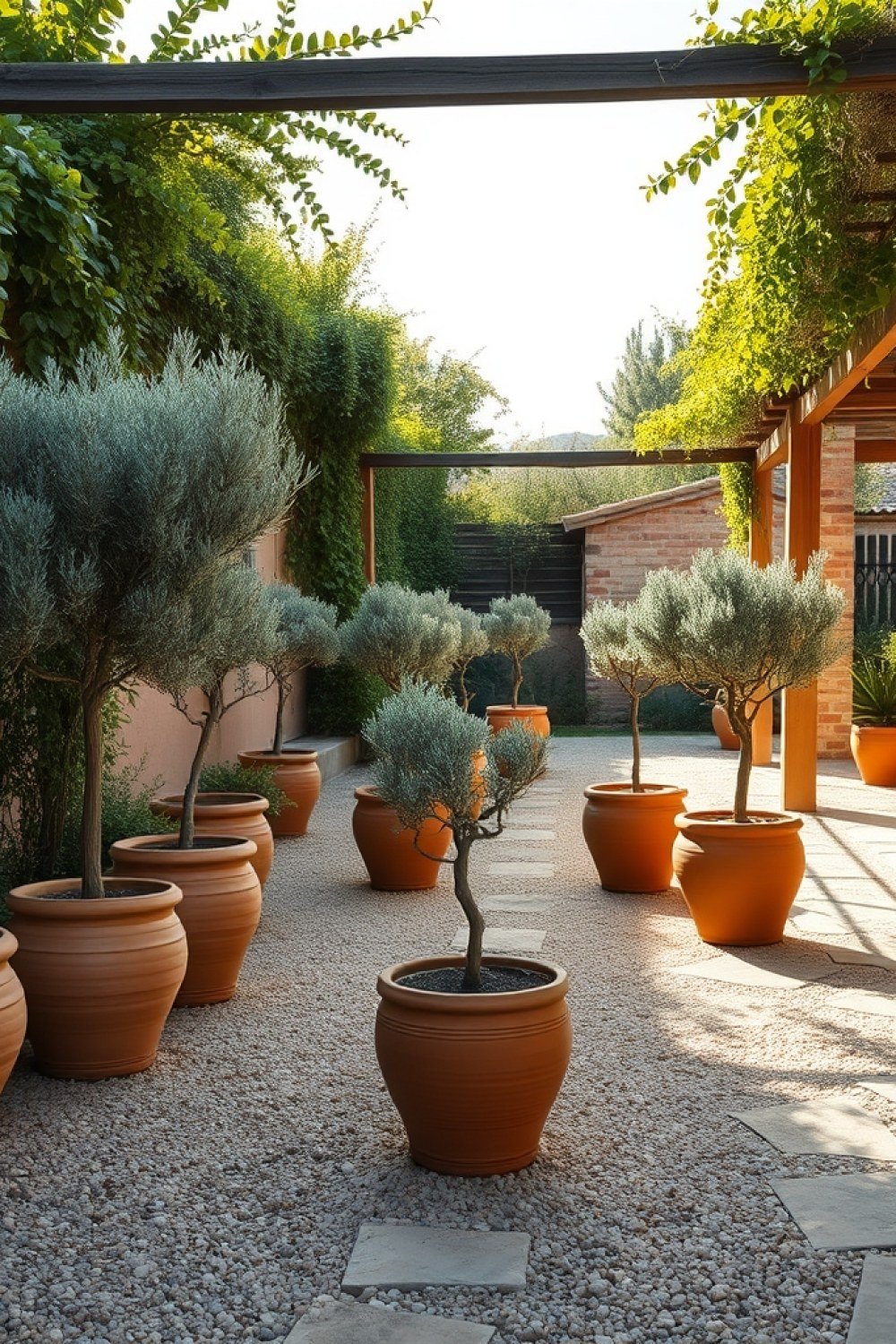
Italian cypress is the signature silhouette, but it’s disease-prone in humid areas. Italian gray alder or ‘Sky Pencil’ holly are good swaps. Plant in pairs to frame a gate, a bench, or the end of a gravel path.
They’re slow growers, so buy the tallest you can afford instead of waiting five years. A 5–6 ft specimen is worth the money.
How to Plant Them
- Dig the hole twice as wide as the root ball and no deeper.
- Space pairs 3–4 ft apart so they read as a single vertical accent.
- Water deeply twice a week for the first two summers, then taper off.
- Skip heavy pruning — shear lightly in early spring only to tidy the sides.
5. Gravel and Stone Instead of Lawn

Crushed gravel in warm gray or cream, edged with stone, gives you the piazza look and needs almost no water. Lay it 3–4 in deep over weed fabric and rake it into soft curves rather than perfect rectangles. A few flat steppers let you walk barefoot between seating zones.
How to Lay It
- Outline the bed with a rope, then dig a straight 4 in trench for the stone edging.
- Tamp the soil, roll out woven weed fabric, and overlap seams by 6 in.
- Dump gravel in piles and rake it 3–4 in deep into gentle curves.
- Set flat steppers flush, one stride apart, along the main walking line.
6. A Stone or Brick Pizza Oven Corner

Even a small countertop or prefab oven earns the corner. Build a stone or stucco base with a 36–40 in work surface beside it for dough and toppings, and keep a stack of olive-wood or oak nearby. This is the idea that turns a nice yard into the house everyone wants to be invited to.
How to Set It Up
- Choose the base location downwind of the seating area — smoke follows the breeze.
- Frame a 36–40 in counter at 36 in high, using stone veneer or stucco over cement board.
- Leave 12 in of clearance behind and beside the oven opening for heat and tools.
- Season split olive or oak for at least six months before using it as fuel.
7. Long Table Under a Fig Tree for Family Meals

A fig tree leafs out late and casts dappled, light shade — perfect over a long table instead of a heavy canopy. Choose a 6–8 ft reclaimed wood or stone-topped table with simple wooden benches; it seats eight and looks better bare than styled.
Hang one small lantern over the center. Not a chandelier — restraint is the whole point.
How to Set It Up
- Position the table so the trunk sits just beyond one end, not dead center, so roots and low branches stay clear of legs.
- Keep 3 ft of clearance on all sides for pulling out benches.
- Run a single cord or chain from an overhead branch for one lantern, centered above the table.
- Leave the surface bare except for a jug of water, glasses, and a bowl of fruit.
8. Wrought-Iron Bistro Set for Morning Coffee

Tuck a two-seat iron or rattan bistro set into a gravel nook, a balcony corner, or beside the herb bed. This is your 7 a.m. spot: one small table, two chairs, a cup, and nothing else. Clutter kills the calm.
Powder-coated iron survives weather best. Skip cushions you’ll have to haul inside when it rains.
How to Style It
- Level the ground first — a bistro table wobbles on uneven gravel.
- Give it a defined floor: 3–4 ft of gravel, decomposed granite, or a stone paver.
- Add only what you’ll carry out each morning — cup, saucer, maybe a small potted geranium.
- Face both chairs toward the view or the garden, not the house wall.
9. A Small Central Fountain or Wall Spout
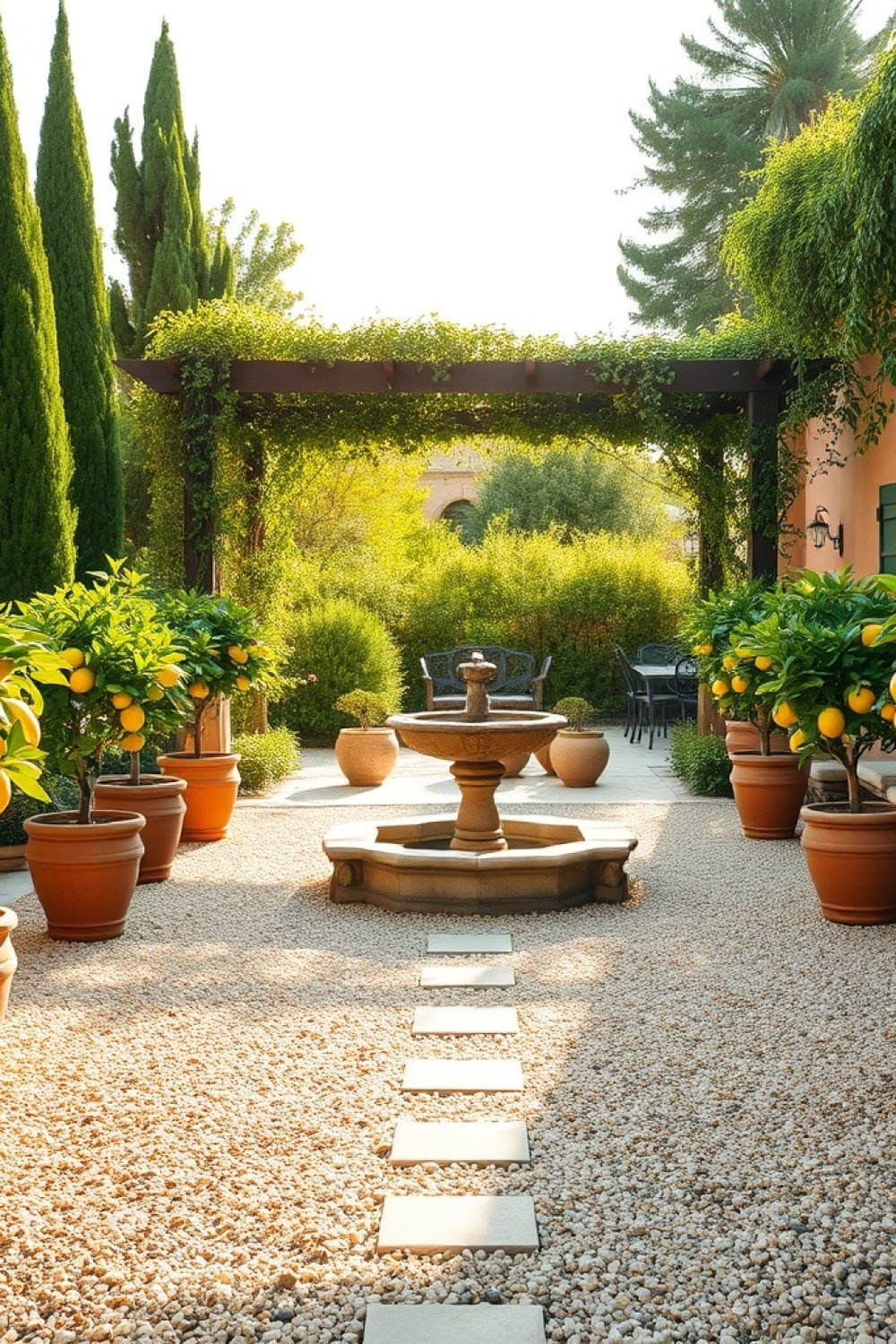
Skip the grand fountain. A low stone basin with a recirculating pump, or a simple spout mounted on a stucco wall, gives the same trickling backdrop for a fraction of the cost.
Place it where you’ll hear it from the table. Running water masks traffic noise and drops the tempo of the whole space.
How to Make It Work
- Choose a recirculating pump — no plumbing line needed, just an outdoor outlet nearby.
- Set the basin on level stone or concrete so it doesn’t tip.
- Plant mint or ivy at the base; the moisture suits both.
- Top up the water weekly in summer — evaporation is fast, and a dry pump burns out.
10. Herb Beds Within Arm’s Reach of the Grill
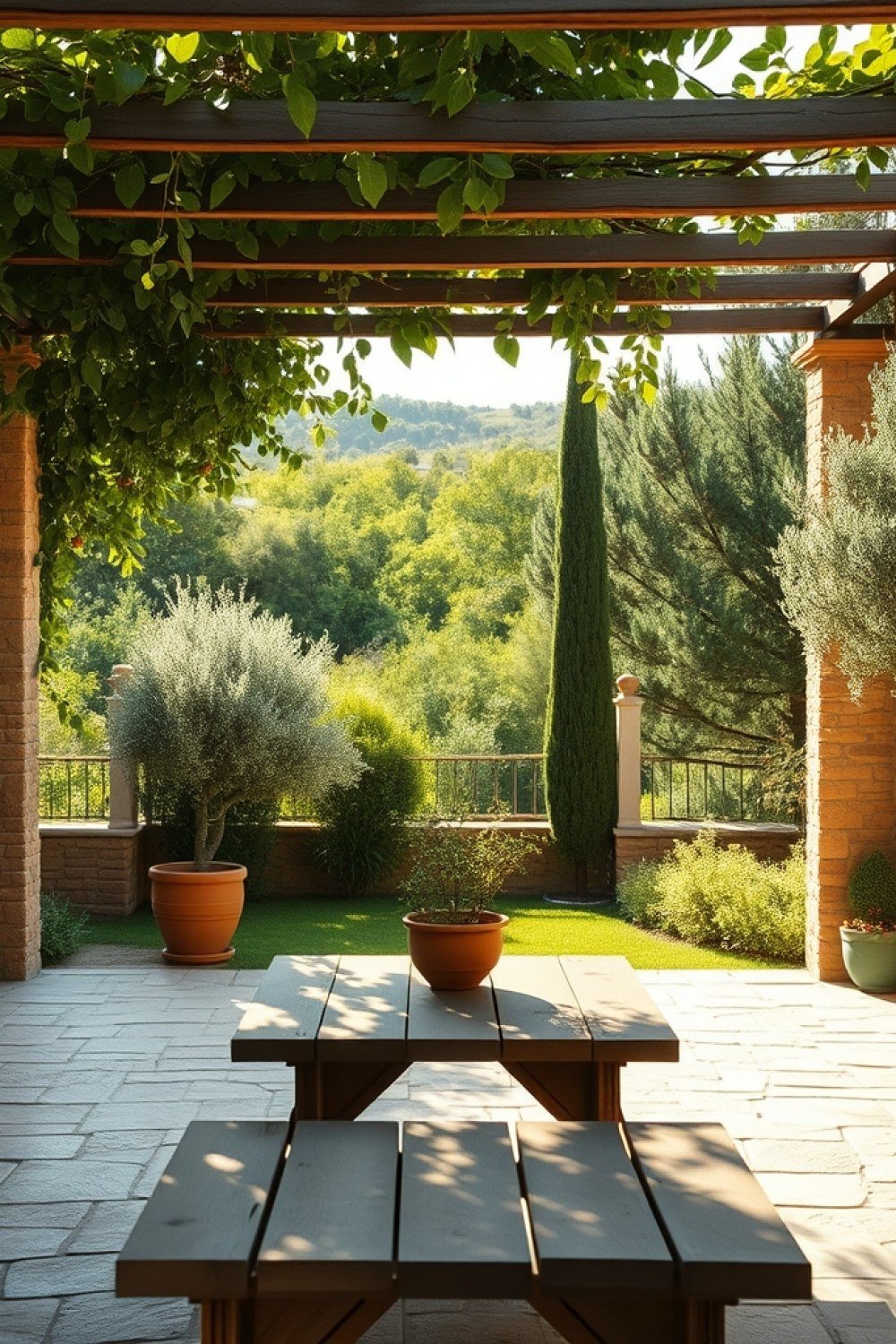
Plant rosemary, sage, oregano, and bay in a raised stone or brick bed right beside the cooking area. These are the true Italian garden herbs, all drought-tolerant, and rosemary looks sculptural year-round.
Snip while you cook. This is the most-used decor in the yard, and it earns its keep.
How to Plant It
- Build the bed 12–18 in. high so you can reach it without bending.
- Fill with gritty, fast-draining mix — two parts soil to one part coarse sand or pumice.
- Space rosemary and sage 18–24 in. apart; they spread wide and hate crowding.
- Water deeply once a week rather than lightly every day; let the top inch dry between drinks.
11. A Shaded Reading Nook With a Stone Bench
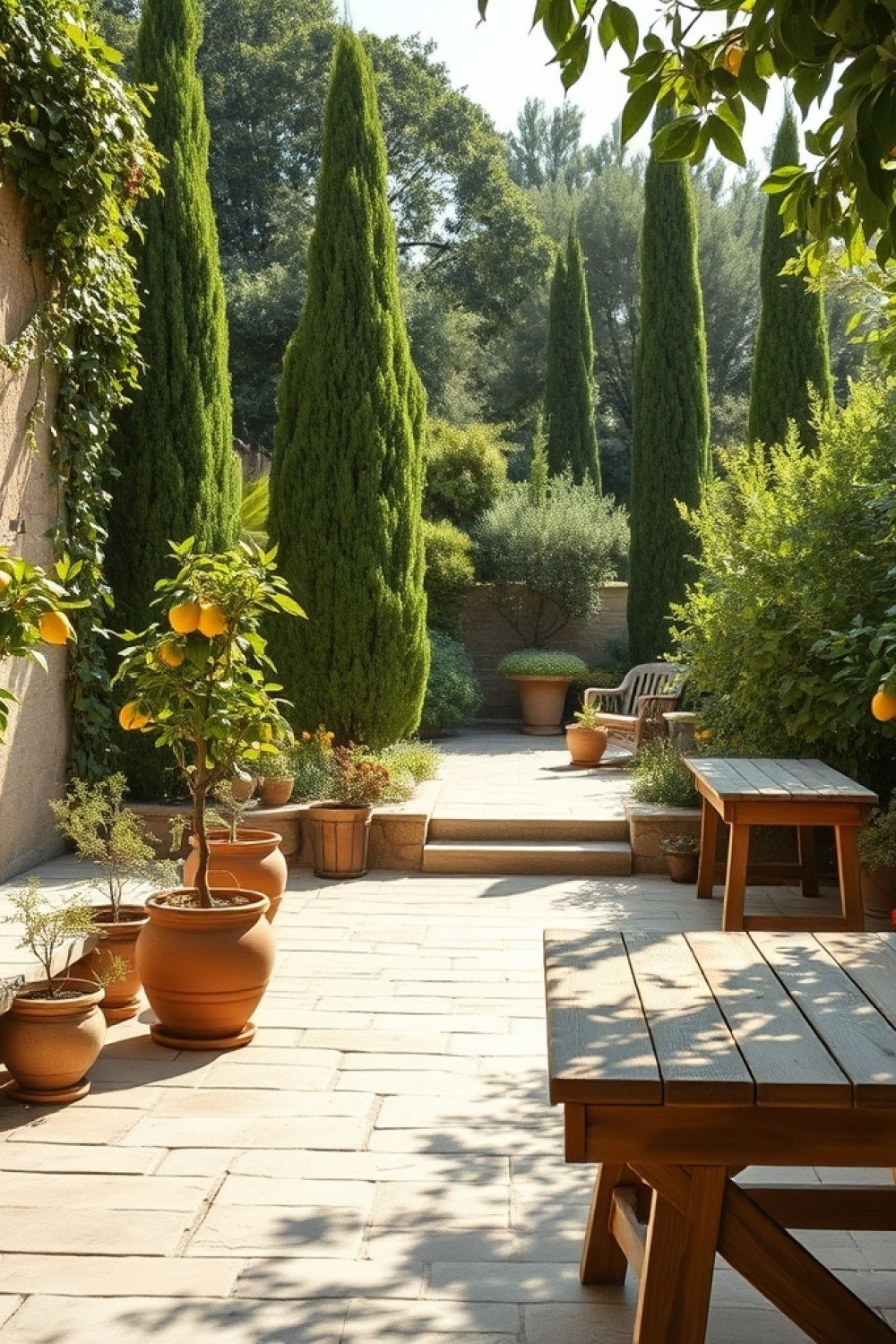
Set a simple stone or concrete bench against a stucco wall, under a pergola edge or an olive tree. Add one linen cushion and a low side table for a glass.
Keep it in the coolest corner of the yard, and resist filling it with more furniture. This is the spot for a slow afternoon.
How to Recreate It
- Pick the corner that’s shaded by 2 p.m. — usually the north or east side.
- Set the bench on a level paver or gravel pad so it stays dry.
- Add one cushion and a low stone or metal side table, nothing more.
- Plant something soft behind it — jasmine, lavender, or a climbing vine on a wire trellis.
12. String Lights and Lanterns for Evening Aperitivo
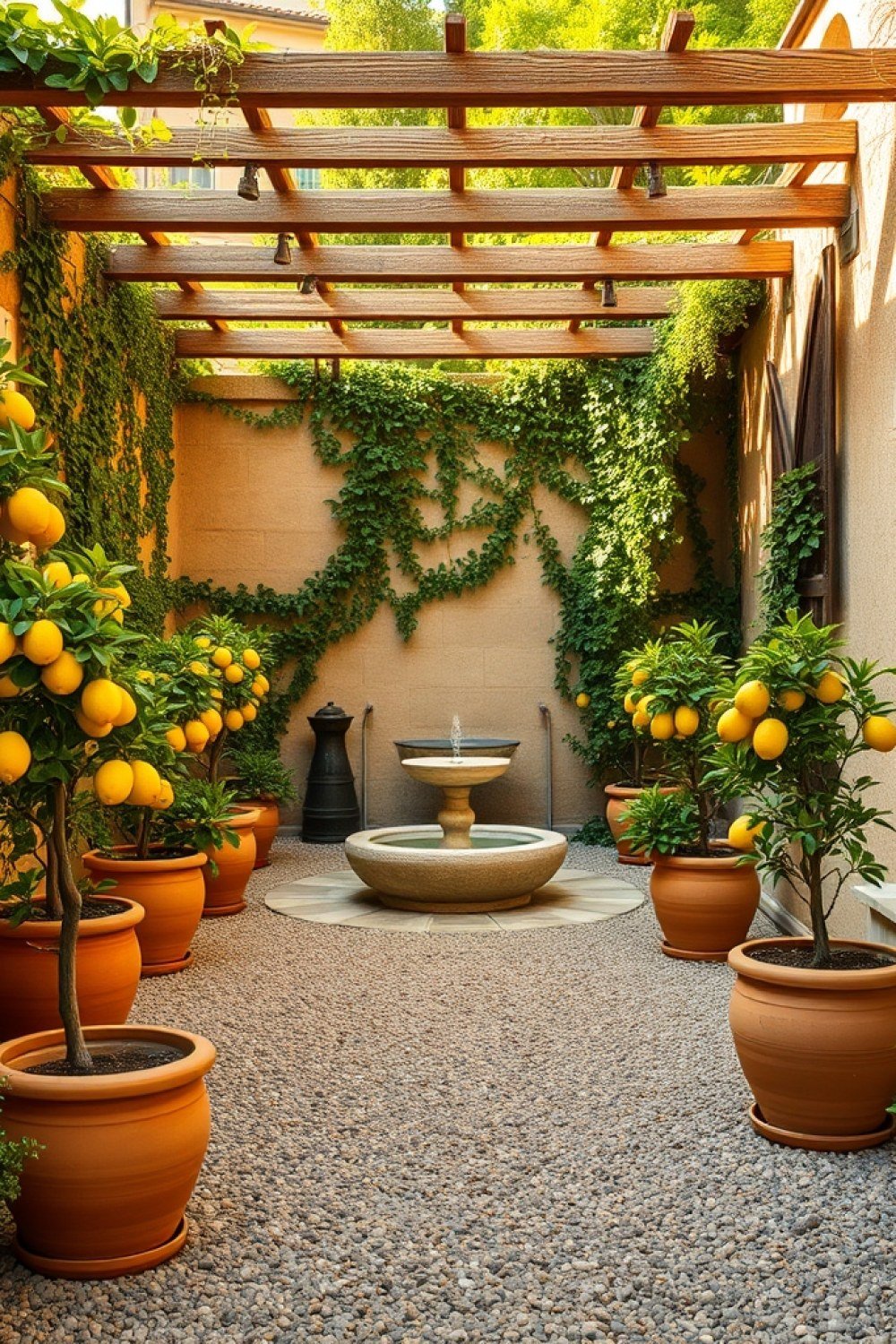
Use warm 2700K bulbs only — anything cooler reads as a parking lot. String lights across pergola rafters or between two trees, then add two or three standing lanterns with real or LED candles.
Layer the light low so faces are lit and the garden fades softly into the dark.
How to Hang Them
- Run the main string along the rafters or between two trees, keeping bulbs at least 8 ft off the ground.
- Place lanterns at ankle and table height, not overhead.
- Plug into a GFCI outdoor outlet or run solar lights to avoid cords.
- Use a timer set for dusk so the garden lights itself before guests arrive.
13. A Framed View: Arch, Gate, or Borrowed Vista
Italian gardens always give you something to walk toward. Pick your focal point first — a rusted iron arch, a salvaged wooden gate, a big terracotta urn — then lay the path to it. A gentle curve hides the view until the last few steps.
You don’t need length. Six to eight feet of path with one bend does the job. In rentals, a leaning mirror or a tall potted cypress at the fence line fakes the same borrowed vista.
How to Create It
- Stand at your usual seat and mark the first spot your eye lands. That’s where the focal point goes.
- Run the path in a shallow S or single arc — avoid straight lines, which kill the reveal.
- Edge it with gravel, brick, or tumbled pavers flush to the soil so it reads old, not new.
- Frame the view with two matching plants, one on each side, and keep everything else low.
14. Neutral Linens and Simple Table Settings Outdoors
Printed melamine reads picnic, not Puglia. Go off-white or natural linen for the runner, cream or ochre ceramic plates, and small clear tumblers. One stem or olive sprig per setting is enough. No chargers, no color scheme.
A woven basket parked at the table’s end holds bread, fruit, and corks through the meal. That’s it — one natural material, one neutral palette.
How to Set the Table
- Lay a linen runner down the center rather than placemats — fewer pieces, softer look.
- Stack a cream plate on a slightly larger ochre one if you want depth; otherwise use single plates.
- Place one glass, one fork, one knife per person. Skip the second fork.
- Set a single sprig or stem across each plate and drop linen napkins beside, not on top.
Questions About Italian Backyard Ideas
What actually makes a backyard look Italian rather than just Mediterranean?
Italian gardens lean on restraint and structure: one focal point, symmetrical planting, stone or gravel instead of lawn, and a single material palette of terracotta, cream, ochre, and green. Mediterranean style tends to be brighter and more colorful, with patterned tile and bold blooms. Italian style stays quieter and more architectural — the food, wine, and shade do the decorating.
Can I create an Italian backyard in a cold climate?
Yes — you swap the plants, not the bones. Use dwarf citrus in pots you can wheel indoors before the first frost, replace Italian cypress with columnar holly or arborvitae, and plant grapes on a pergola only if you choose a hardy variety like Concord or Marquette. The pergola, gravel, terracotta, stone, and long table travel anywhere. Only the planting needs adjusting.
How much does an Italian-style backyard makeover typically cost?
A gravel-and-pots refresh runs a few hundred dollars. A pergola with a stone base and a pizza oven runs into the thousands. The biggest visual return per dollar: terracotta pots, warm string lights, one long table, and gravel replacing some lawn. Build in phases — pergola first, hardscape second, plantings last — so you’re never paying for everything at once.
What’s the easiest Italian backyard detail to start with this weekend?
Move or buy one long table, gather terracotta pots in odd-numbered groups, and hang warm string lights overhead. Even without a pergola, that trio — long table, terracotta, warm light — reads instantly as Italian and costs the least. Layer everything else in over the seasons.
Choosing Which Italian Backyard Ideas to Build First
Prioritize according to how you’ll actually use the space every day. If your family eats outside on weeknights, start with the long table and the shaded seating around it. If a harsh summer sun keeps you indoors, the pergola or a vine-covered arbor earns its cost first. Buy the terracotta pots in odd-numbered groups — three, five — and let the gravel and plantings spread outward from wherever you sit most.
Go slowly, keep the palette tight, and let the space age instead of looking finished all at once. That unhurried patina is what makes an Italian garden feel genuine rather than staged.