
11 Backyard Dog Run Ideas That Keep Pups Happy and Yards Tidy
Most people picture a dog run as a sad dirt strip shoved in the corner — which is exactly why dogs avoid them and owners give up. The truth is a good run is designed around how your dog actually moves, digs, sniffs, and potties, not around whatever leftover space you had. Get the layout and surface right and it stops feeling like a penalty box.
The payoff is bigger than a clean lawn. A dedicated run saves your grass, cuts down on muddy paw prints across the kitchen floor, and gives your dog a place to sprint and dig without corrections. It also means fewer “go potty” standoffs at 6 a.m. in the rain.
Below are 11 backyard dog run ideas covering layout, surfaces, fencing, drainage, and cleanup — the details that decide whether yours gets used daily or ignored by spring. Pick what fits your dog’s size, energy, and digging habit, then build it once and build it right.
1. Side-Yard Strip That Disappears
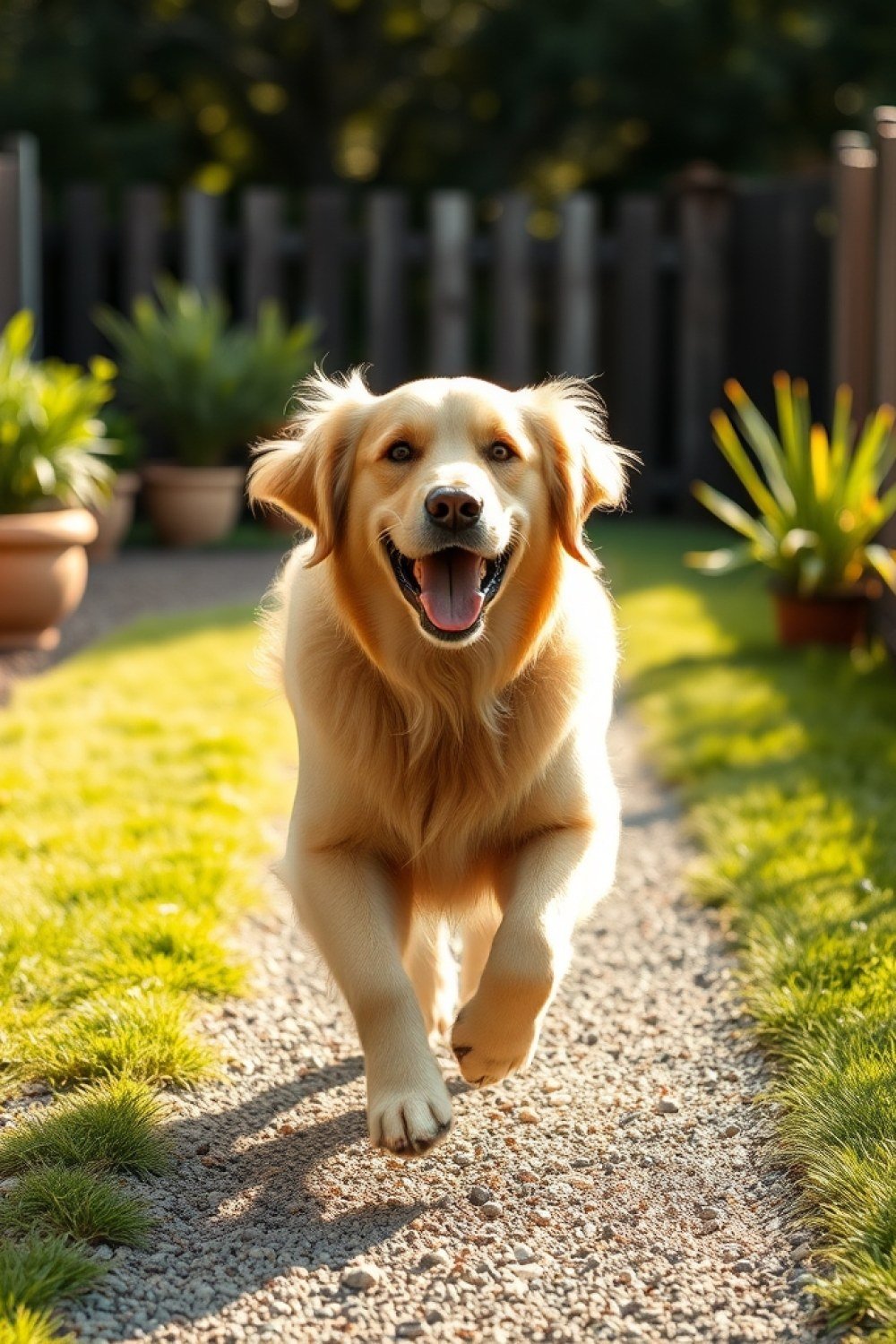
Best for: narrow lots where the 4–5 ft gap between house and fence is currently just weeds and mud.
This run takes the dead strip nothing else can use: lay 4–6 in. of 3/4 in. crushed gravel as base, top with decomposed granite or pea gravel, and pour a 2 ft concrete apron at the door so paws shed grit before the patio.
Try this: screen the street side with tall grasses or a slatted cedar panel so it reads as a design feature, not a kennel.
2. The Relief Zone Nobody Sees
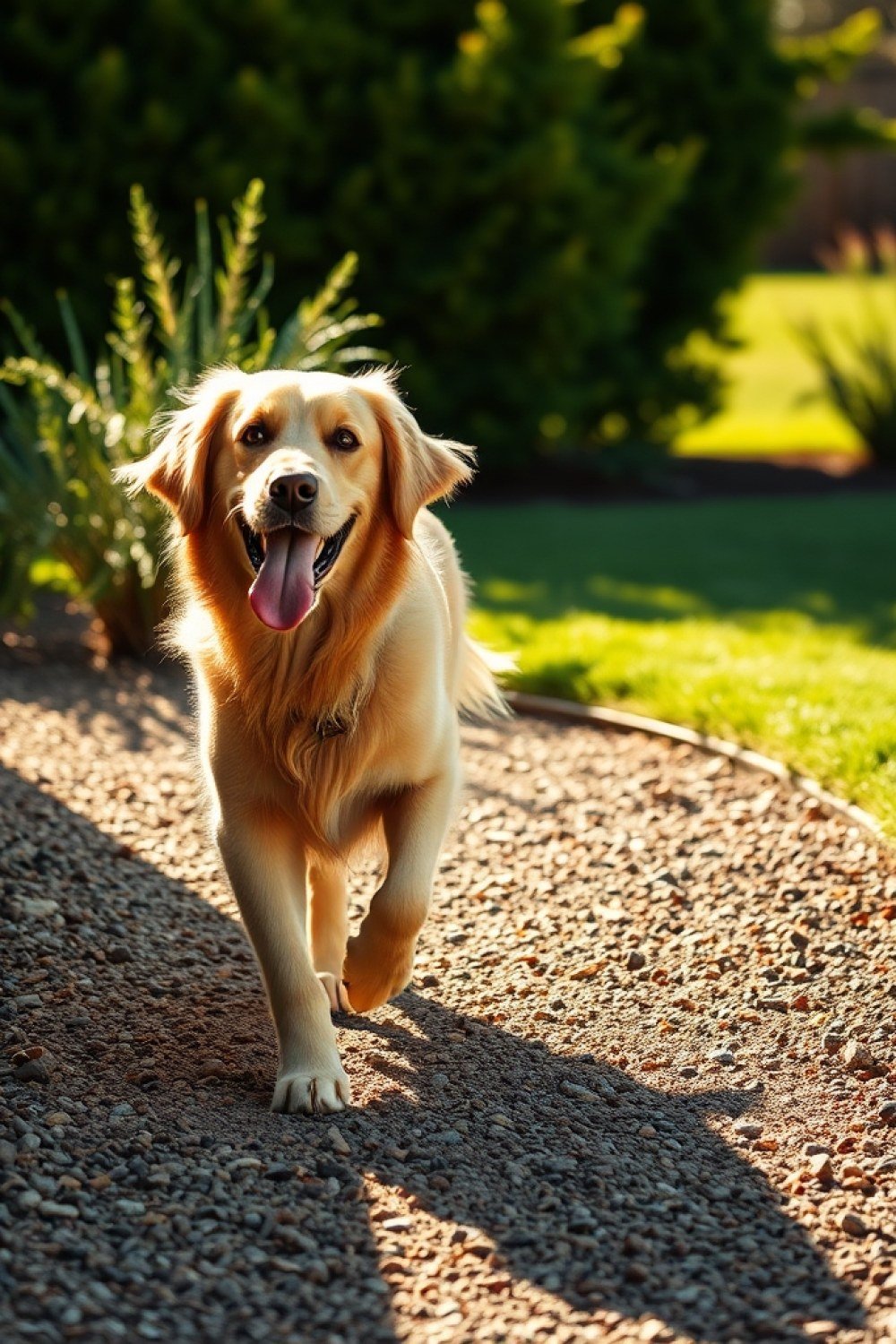
Best for: anyone tired of brown pee spots cratering an otherwise nice lawn.
Train your dog to potty on one designated 5×5 ft gravel pad and the rest of the yard stays green. Dig out 4 in., add 2 in. coarse sand, top with 2–3 in. rounded pea gravel — skip sharp crushed rock on bare paws — then edge it with steel landscape edging.
Try this: rinse weekly with a hose and an enzyme cleaner to kill odor at the source, not just mask it.
3. Turf That Actually Survives
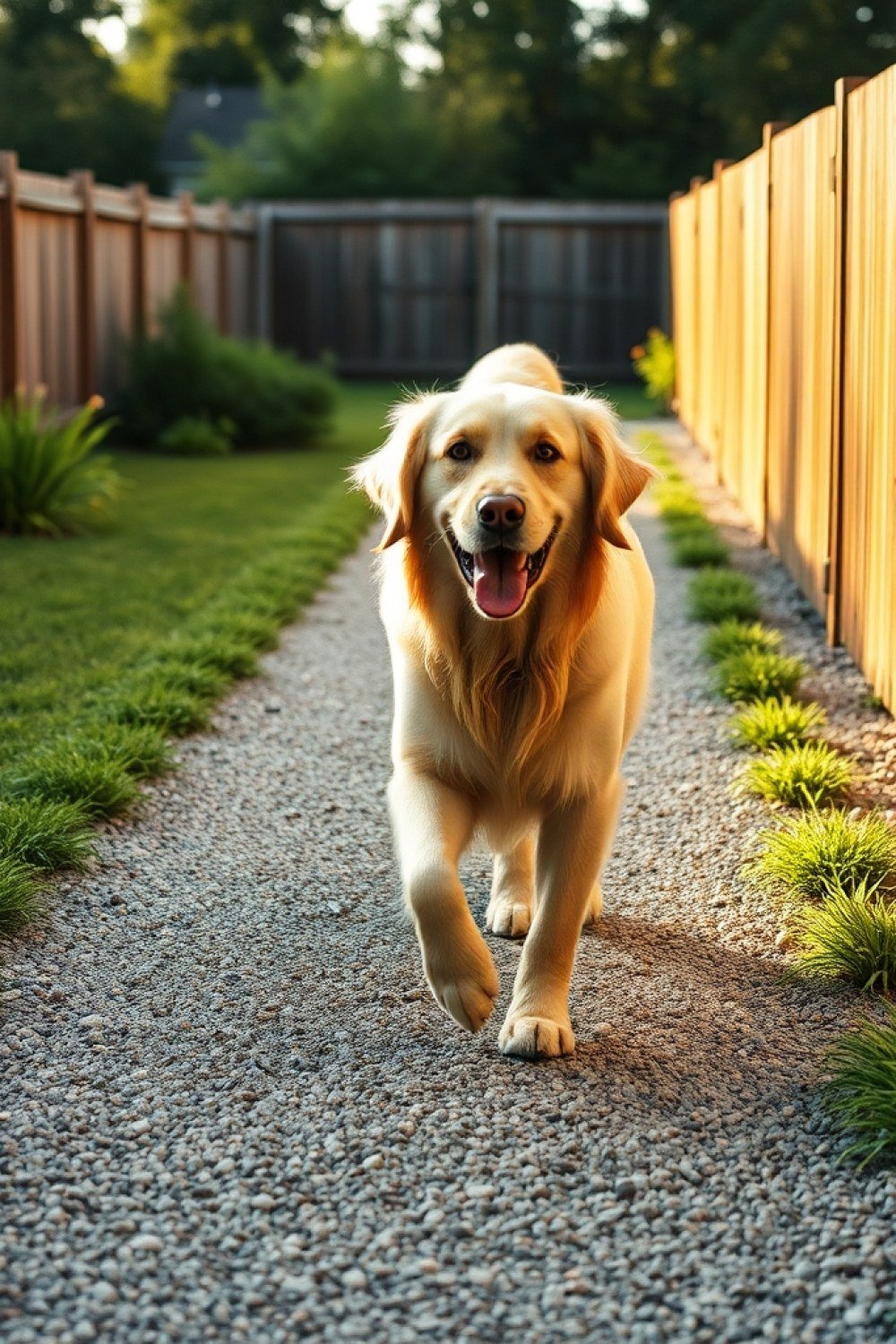
Best for: owners who want grass but have already watched fescue get shredded.
Go warm-season and tough: Bermuda, Zoysia, or Kikuyu, or pet-specific artificial turf with antimicrobial infill. Real grass needs rotation — split the run with a gate and swap halves every 2–3 weeks so worn patches recover. Artificial turf needs a 1% slope and drainage holes or it will smell within a month.
Try this: test drainage by dumping a bucket of water on the pad before you commit to the install.
4. A Dig Pit With a Purpose
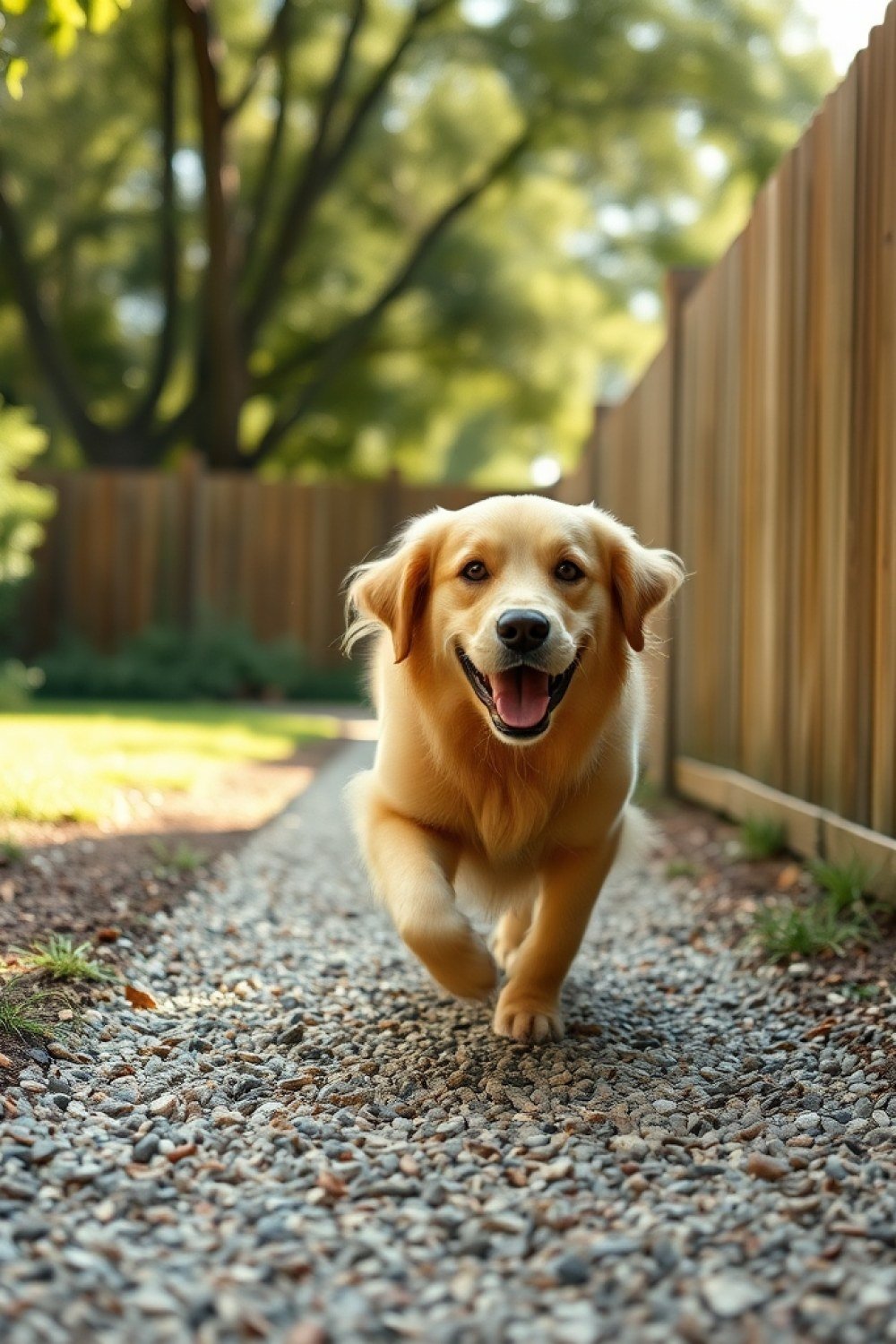
Best for: terriers, dachshunds, and any dog currently landscaping your flower beds.
Give the digger a sanctioned 4×4 ft sandbox instead of a yard full of craters. Use play sand — never construction sand, which is silica-heavy and dusty — sink a 6 in. frame of rot-resistant cedar, and bury toys and treats in it to redirect the instinct.
Try this: mark and reward every dig in the pit; when they dig elsewhere, redirect calmly back to it rather than scolding.
5. Shade That Saves Overheating
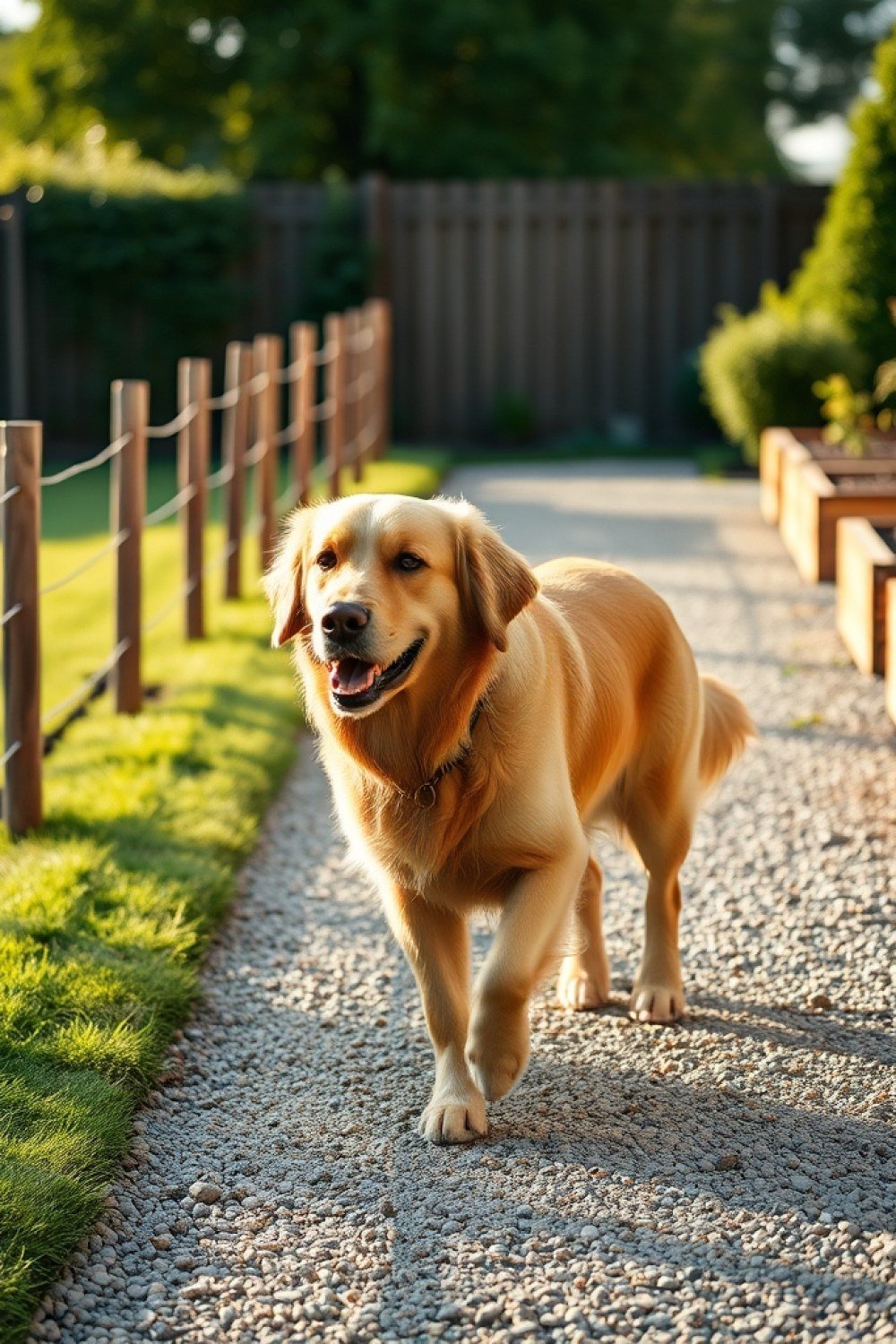
Best for: runs on the south or west side that get baked from noon onward.
A run in full sun is a run your dog won’t use in July. Plant a fast-growing shade tree on the south or west edge, or install a 10×10 ft shade sail angled toward the afternoon sun at 8–10 ft high. Add a raised cot-style bed so air moves underneath — dogs cool through their bellies.
Try this: avoid leaving them on bare concrete or gravel, which stays hot for hours after sunset.
6. Fencing Height That Matches the Dog

Best for: anyone who’s watched their dog eye the fence like a challenge.
Match height and style to your dog’s habits: 4 ft for small breeds, 6 ft minimum for athletic herders and hounds, and 6 ft with a lean-in top for climbers. Bury hardware cloth 12 in. deep and bend it outward in an L to stop diggers.
Try this: for sight-hounds and anxious dogs, add a solid privacy panel on the bottom 3 ft — they settle faster when they can’t see every passing squirrel.
7. Double-Gate Safety Air Lock
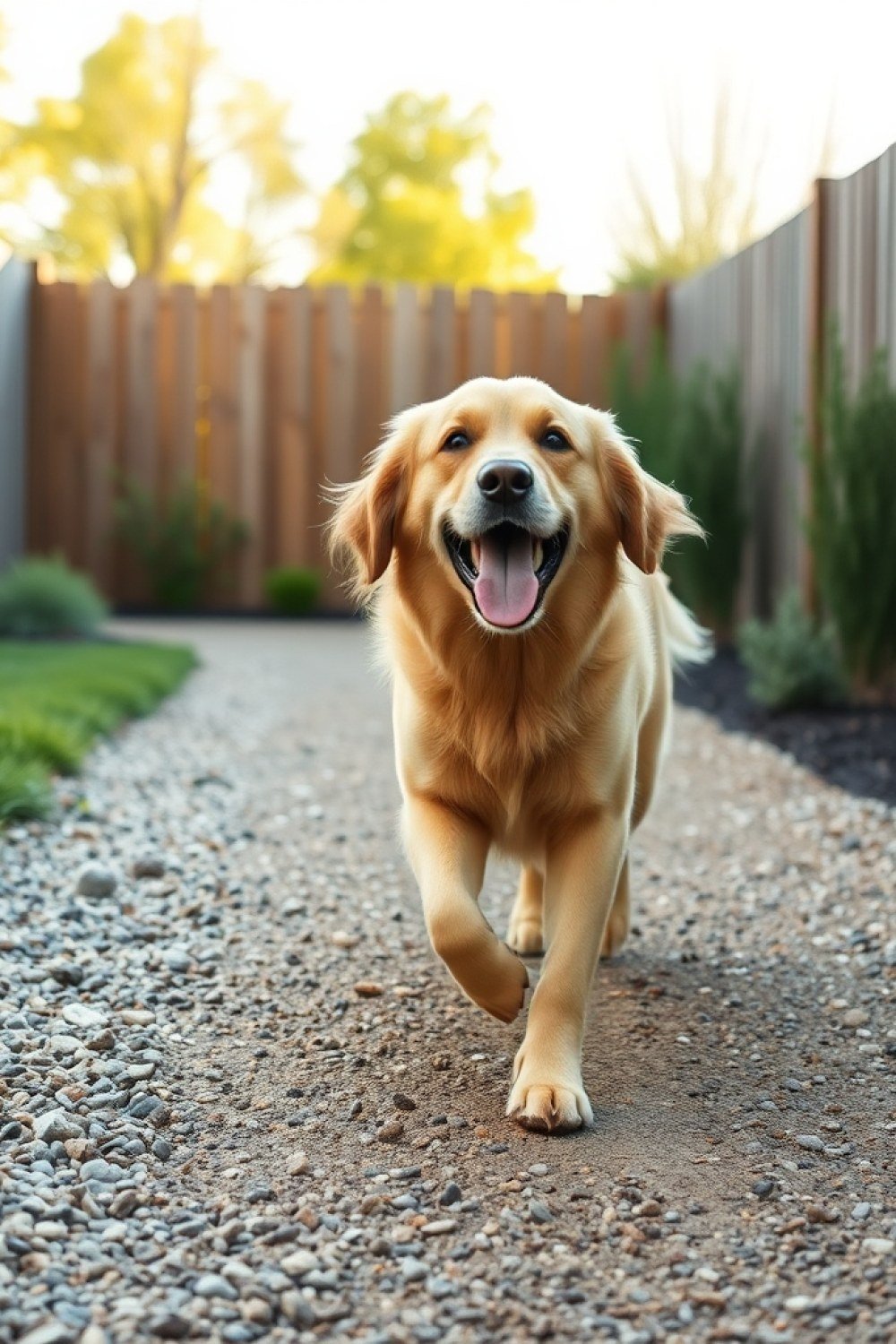
Best for: Homes where the run opens toward a driveway, alley, or unfenced front yard.
Build a 4×6 ft gated vestibule between your back door and the run so there’s no straight shot to the street. Two self-closing gates mean a delivery driver, a kid, or a gust of wind can’t accidentally free your dog.
It doubles as a towel-and-boot station, so muddy paws stop at the door instead of crossing your kitchen.
Try this: Keep a microfiber mat and paw wipes on a small shelf inside the vestibule. Add a latch that closes itself — spring hinges or a magnetic catch cost under $20.
8. Wash-Down Gravel Gives Easy Cleanup
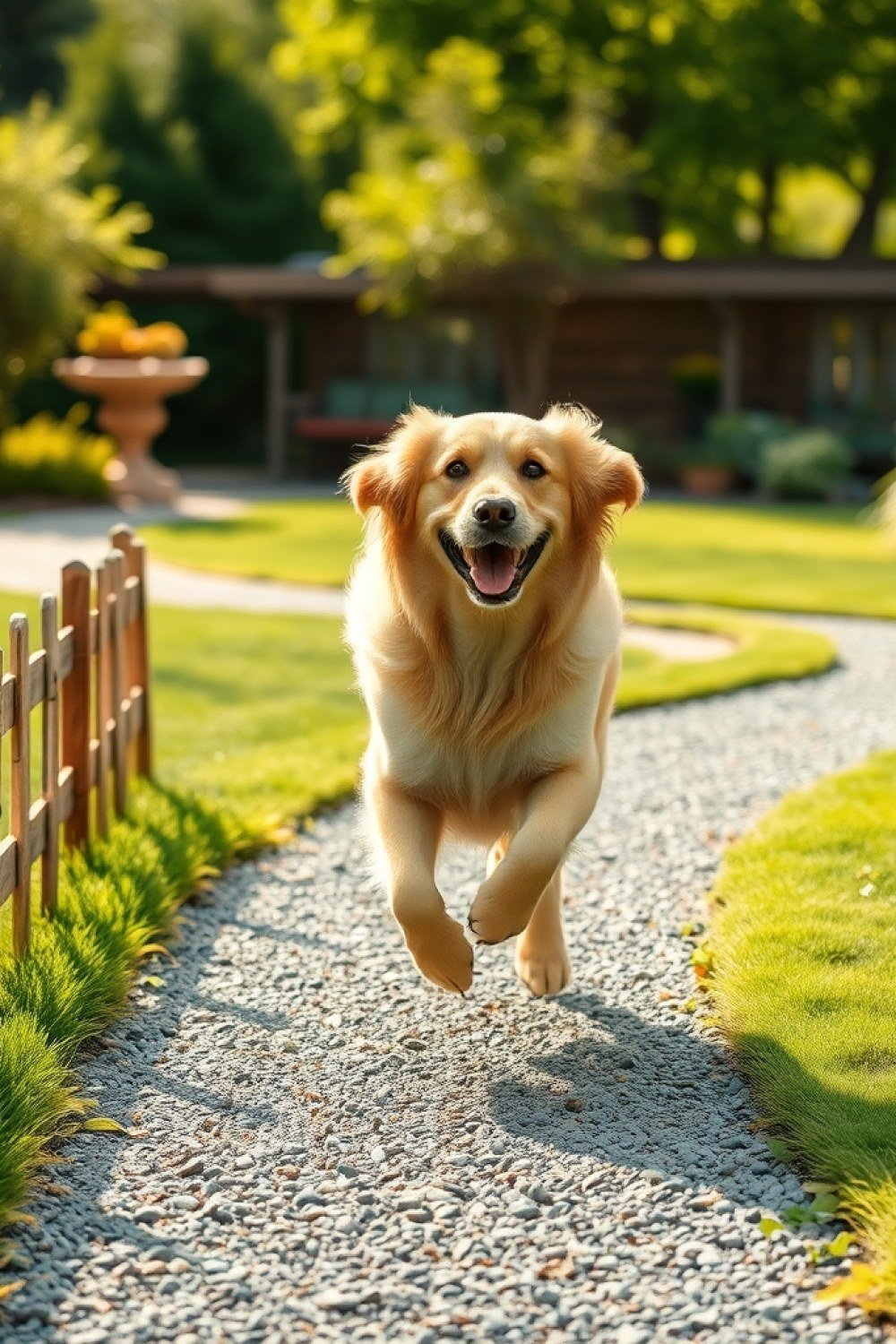
Best for: Rainy climates, diggers, and anyone tired of raking soggy turf.
Choose surfaces you can hose, not rake. Pea gravel, decomposed granite, and rubberized playground mulch all rinse clean, drain fast, and don’t turn into mud. Lay landscape fabric underneath to stop weeds pushing through.
Pitch the whole run 1–2% away from the house so water sheds instead of pooling at your foundation.
Try this: If your yard holds water, add a French drain or dry well at the low corner. A 12-inch-deep gravel-filled trench usually solves it for good.
9. A Path With a View
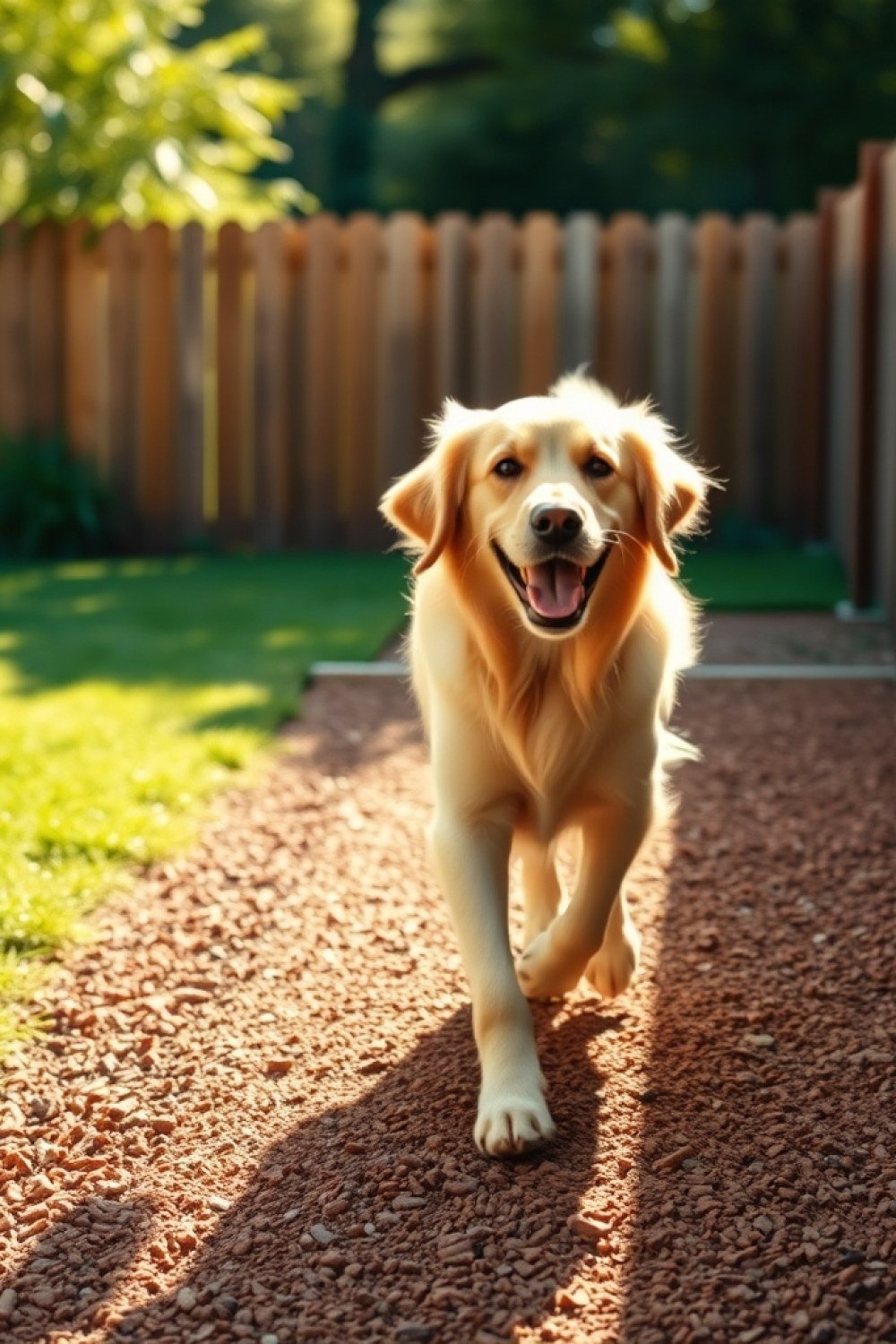
Best for: Barkers, fence-chewers, and dogs left alone while you’re at work.
Dogs patrol, so give them a reason to move: a 3–4 ft wide loop of mulch or gravel around the perimeter, with a bench-height perch at one end where they can survey the street. Curiosity beats boredom — and a bored dog is the one who digs and chews.
Rotate a few toys weekly so the run stays interesting.
Try this: Set the perch at 18–24 inches, high enough to see over a standard fence line but low enough to hop up easily.
10. Two-Zone Layout for Big Energy
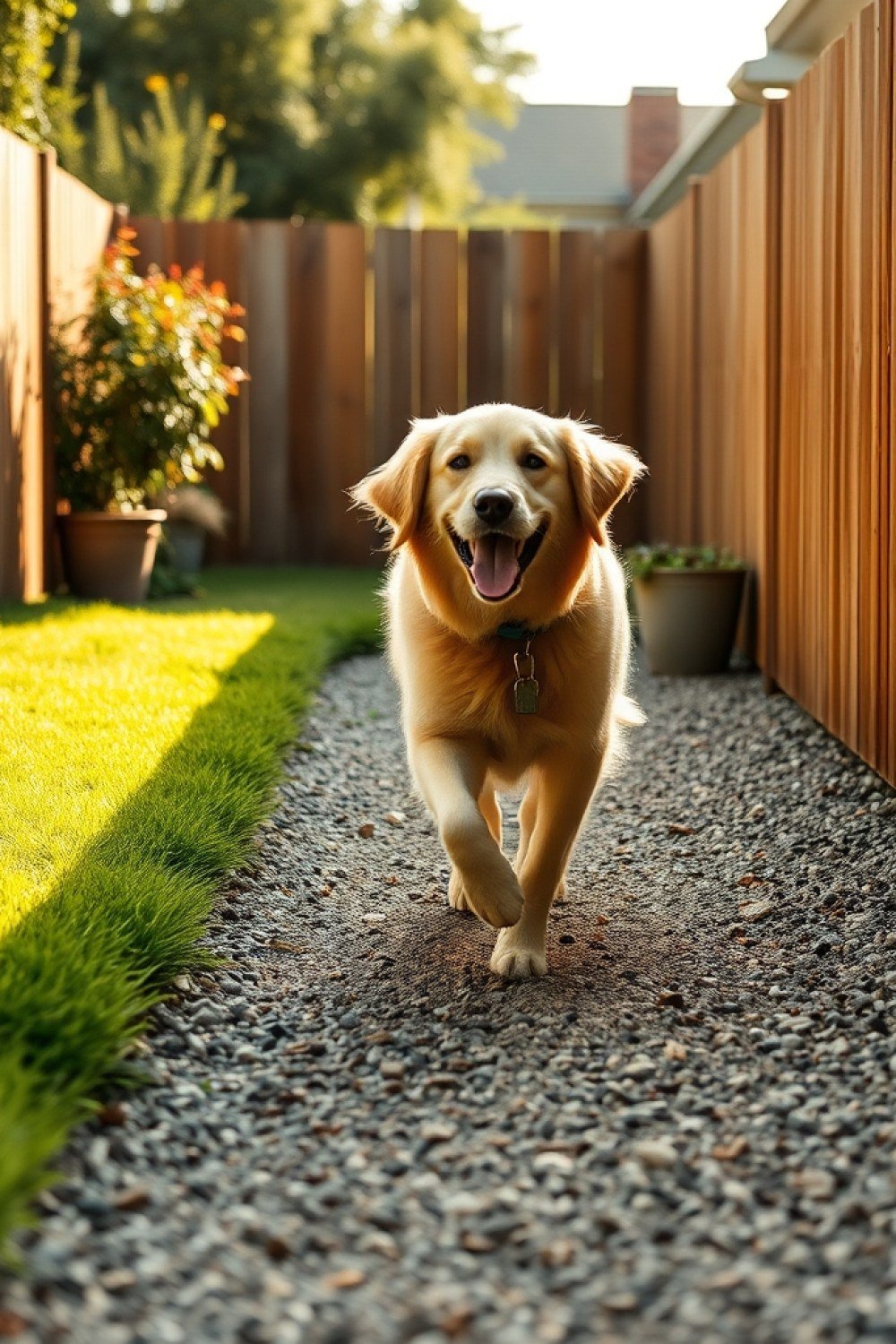
Best for: High-drive breeds — Labs, shepherds, huskies — who need to actually sprint.
Split the run into a hard-surface potty zone and a soft play zone with a gate between. The potty side gets gravel and stays clean; the play side gets turf, a flirt pole anchor, and a tunnel or ramp.
A 10×20 ft footprint is workable, but 10×30 ft is the sweet spot for a real run.
Try this: Anchor the flirt pole to a ground stake so it swings freely, and set the gate so you can close off one zone while the other dries out.
11. Pretty Enough to Live With
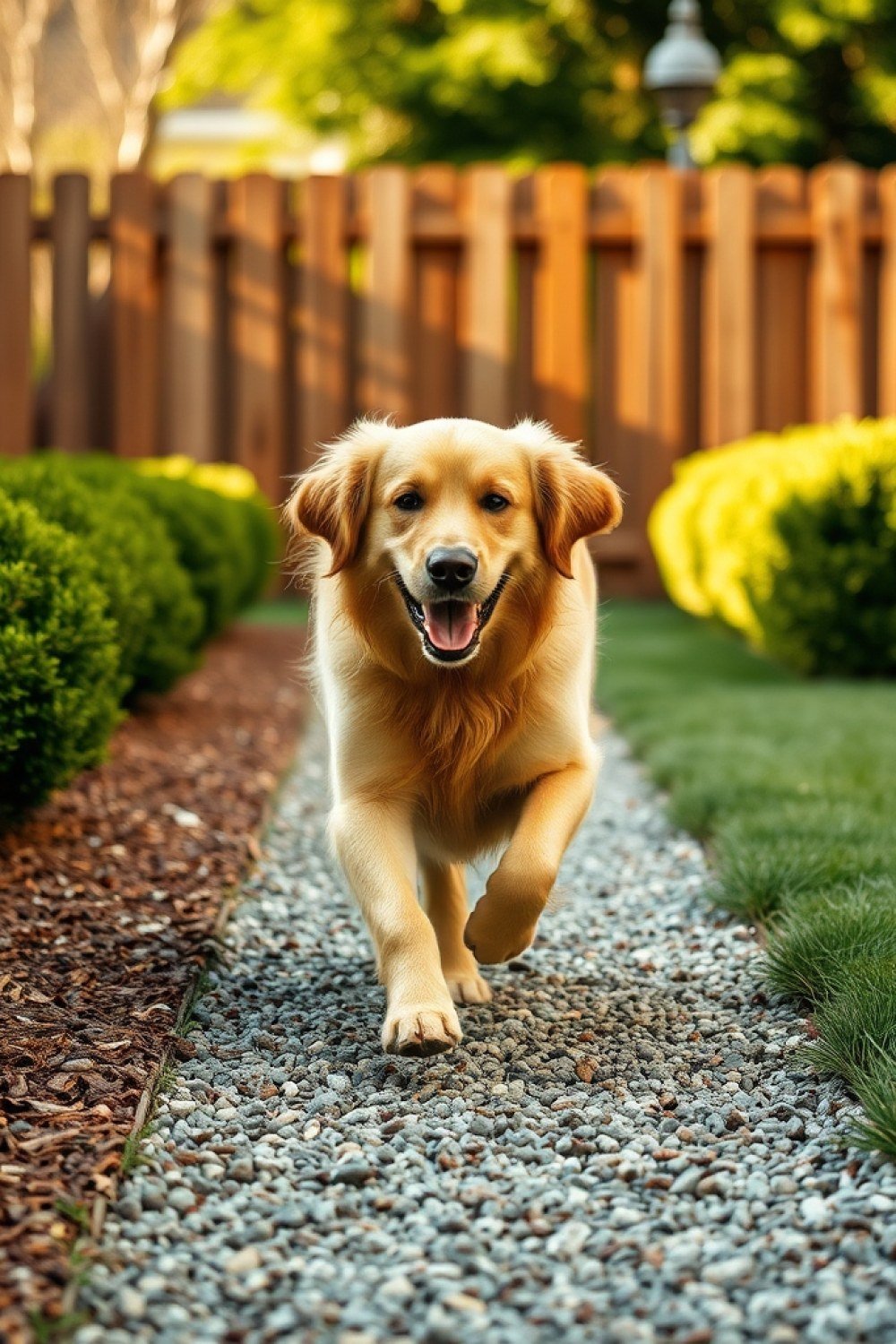
Best for: Anyone who shares the yard with guests, kids, or a partner who didn’t sign up for a dog pen.
Treat the run like a garden room: cedar or powder-coated steel fencing, a climbing vine on a trellis panel, a stone or concrete border, and gravel matched to your patio tone. Add a wall-mounted hose reel, a covered food and water station, and a small storage bench.
When it looks intentional, you’ll maintain it — and so will anyone who shares the yard.
Try this: Match your gravel color to the patio and use the same edging material to tie both spaces together visually.
FAQs
How big does a dog run need to be?
Match the run to your dog’s body and energy, not to a round number you saw online. A small breed can get by with a 4×10 ft run for potty breaks and short play sessions. Medium and large breeds do better with at least 10×20 ft, and a high-energy working breed — a husky, a heeler, a border collie — needs 10×30 ft or more so it can actually open up into a run instead of pivoting in place. If your yard is tight, go long and narrow over wide and shallow. A 5×25 ft corridor gives a dog a real sprint lane, while a 12×12 ft square mostly gives it a place to stand.
What’s the best surface for a dog run?
Pea gravel or decomposed granite over a compacted crushed stone base is the easiest surface to live with. It drains fast, rinses clean with a hose, and won’t turn into a mud pit after three days of rain. Artificial turf with antimicrobial infill is a solid second option, but only if you install it over proper drainage and give it a slight slope so water moves off instead of pooling underneath. Real grass works fine in one situation: when you can rotate the dog between two separate sections and let each one recover. One patch of grass plus one determined dog equals dirt within a season.
How do I stop my dog from digging in the run?
You don’t stop the digging — you relocate it. Build an approved dig spot like a 4×4 ft cedar-framed sandbox filled with play sand, then bury toys and treats in it so digging there pays off better than digging anywhere else. Every time your dog digs outside the box, calmly walk it over to the sandbox and redirect. Never correct after the fact. A dog cannot connect a correction to a hole it dug an hour ago, and all you’ll teach it is to be nervous when you walk toward the fence line.
Can I put a dog run on a slope?
Yes, and a slope is genuinely an advantage because gravity handles your drainage for free. Terrace the run into two or three levels using retaining timbers or concrete blocks, then add steps or a low ramp between them so your dog isn’t jumping off a knee-high ledge every time it moves. The one rule you can’t skip: the lowest point must drain away from your house and foundation, not toward it. If the fall of your yard points at the house, add a shallow swale or French drain at that low corner before you put down a single bag of gravel.
How do I keep a dog run from smelling?
Three things, in order of importance: a draining surface, daily pickup of solid waste, and a weekly rinse of the potty zone with water plus an enzyme-based cleaner that actually breaks down urine rather than masking it. Skip wood mulch entirely — it holds ammonia and gets worse every week. Watch for standing water too, since damp surfaces breed odor fast. If your run stays soggy in one spot, that’s your cue to add a French drain at the low corner rather than layering on more deodorizer.
Does a dog run need to be covered?
A full roof isn’t necessary, but partial cover earns its keep in most climates. A shade sail or a pergola panel over roughly one third of the run gives your dog a cool place to lie down in July and a dry place to wait out a rain shower, and it keeps gravel or turf from baking in direct sun and turning muddy in the wet. If you get heavy snow or you’ve got hawks in the area, a solid roof over part of the run is worth the extra cost.
Choosing the Right Setup for Your Dog and Your Yard
Start with the dog, not the Pinterest board. A digger needs a sandbox before it needs anything else. A sprinter needs length. A sunbather needs shade. Get those three questions answered and the rest of the build — gates, surfaces, covers — falls into place around them instead of fighting them.
From there, pick one hard-surface potty zone and one soft play zone, put a double gate at the door so nobody gets loose during a grocery run, and keep the footprint as long as your space allows. Build the whole thing so it looks like part of the garden — gravel that matches your paths, edging that matches your beds, a shade sail that doesn’t scream dog kennel — and you’ll keep it up for years instead of letting it slide into an eyesore by month three.