
20 Summer Backyard Ideas for Cozy, Easy Outdoor Living
Most cozy backyards are not remodeled. They are layered. A string of warm bulbs, a chair you actually want to sit in, and a patch of shade at 4 p.m. will do more for a July evening than a new deck ever could.
The mistake is treating comfort as a construction project. It is not. It is a series of small, cheap decisions — where the light hangs, where the drinks rest, what blocks the late sun — that you can make in a single weekend.
The 20 ideas below cover light, seating, shade, food, and the small comforts in between. Most cost under $50, none need a contractor, and every one works in a rental or a yard the size of a parking space.
Backyard Basics: What You’ll Need
- Outdoor extension cord or solar string lights
- Two folding chairs or a small bistro set
- Weatherproof outdoor rug (5×8 fits most patios)
- Clip-on umbrella or shade sail
- Small side table or sturdy stool
- Citronella candle or fan for bugs
1. String Lights on a Simple Pole Frame
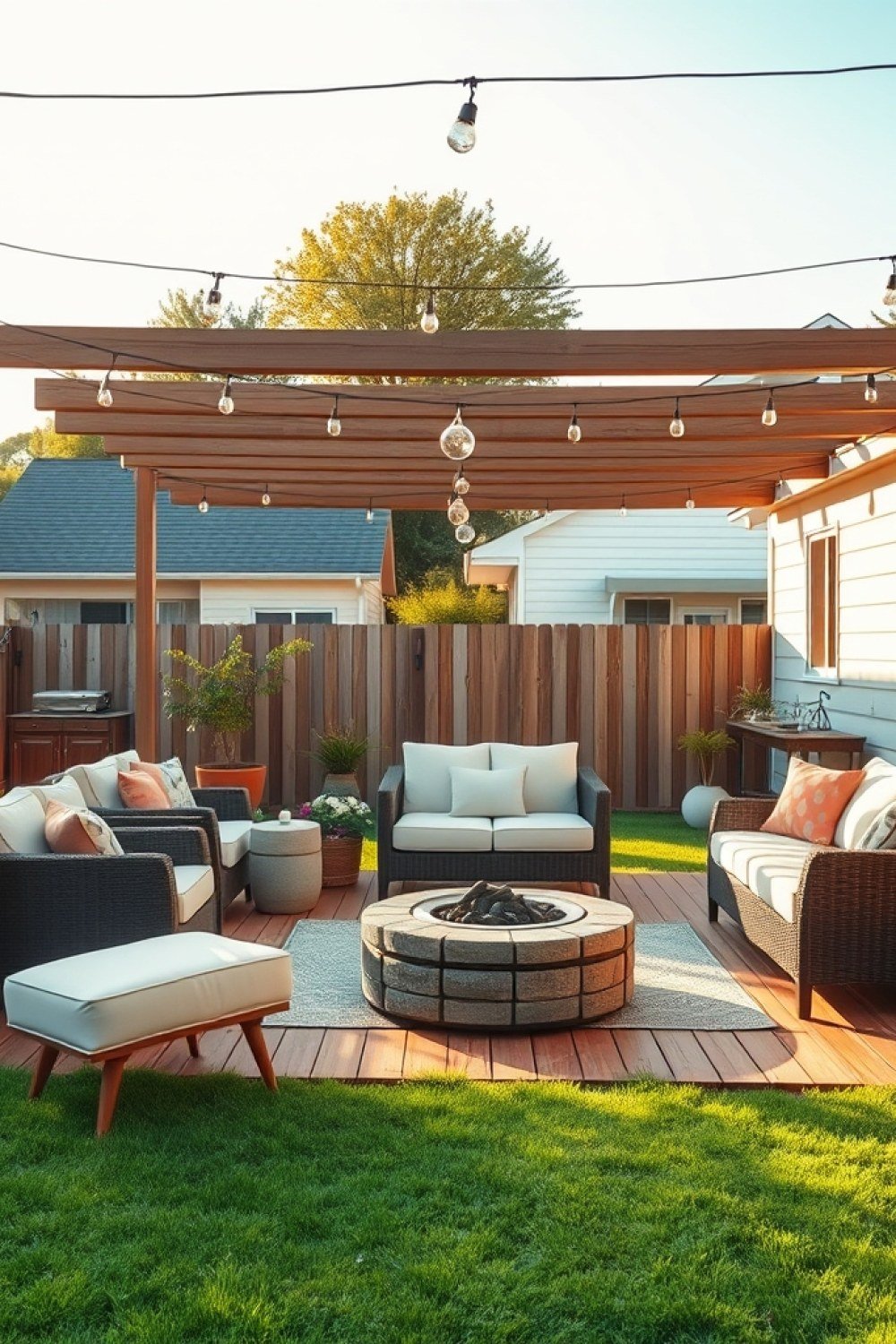
Best for: Anyone who wants the yard usable after sunset without a lighting install.
String lights do more for evening comfort than almost anything else you can buy. Sink two 8-ft wooden posts (or use shepherd’s hooks) about 10–12 ft apart, then run outdoor-rated lights on a gentle catenary curve and plug them into a smart plug set to come on at dusk.
Stick to warm white, around 2700K. Cool white runs blue and clinical, and your patio will read like a parking lot instead of a porch.
Try this: Add small cup hooks to each post so you can tighten the line after a windy night — a sagging strand catches on heads and looks tired fast. Whole setup lands under $60.
2. Layered Rugs to Soften a Patio
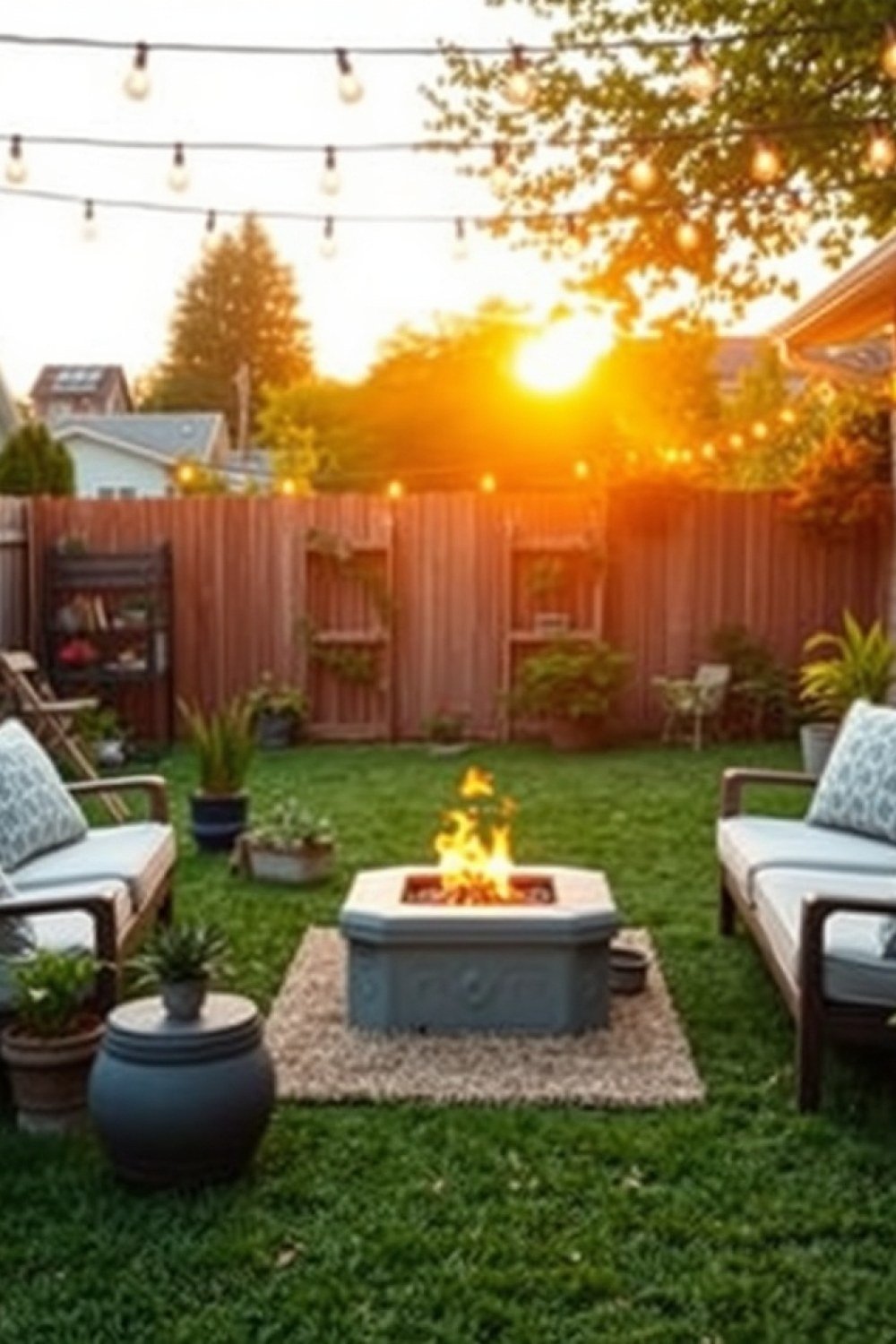
Best for: Concrete slabs and paver patios that feel cold, echoey, and unfinished.
Hard surfaces bounce sound and hold heat, which is why a bare patio never quite feels like a room. An outdoor polypropylene rug in 5×8 or 8×10 fixes that immediately — it warms the floor, muffles footsteps, and defines where furniture should sit.
For depth, layer a smaller flat-weave over a larger one, offsetting the corners slightly so both patterns show. Hose it off monthly and let it dry in the sun.
Try this: On smooth concrete or tile, add a thin rug pad underneath so the rug doesn’t slide when someone pushes back a chair.
3. A Shade Sail for Hot Afternoons

Best for: West- and south-facing patios that turn unusable between 2 and 5pm.
A shade sail costs far less than a pergola and moves or comes down when you want. A triangular or square sail (10×10 or 12×12) blocks over 90% of UV and noticeably drops the surface temperature underneath.
Anchor it to existing fence posts, or use two wall brackets plus one freestanding pole. Keep a slight slope across the fabric so rain runs off one corner instead of pooling and stretching the middle.
Try this: Tighten it drum-snug with a turnbuckle on the lowest corner — a flapping sail is noisy and shreds at the seams within a season.
4. A Fire Pit Zone for Cool Evenings
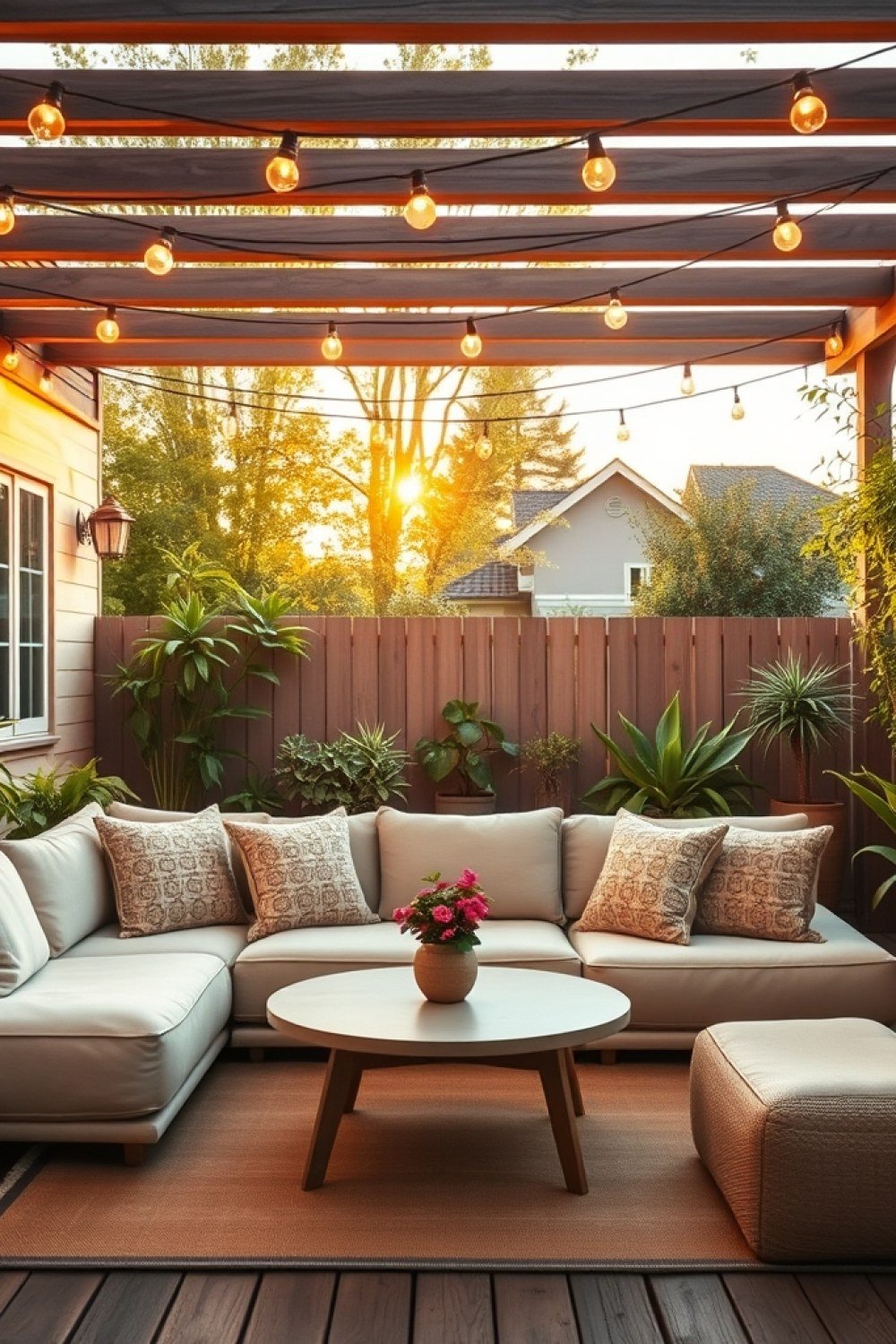
Best for: Yards that empty out once the sun drops and the temperature follows.
Even in July, evenings cool off — a fire pit buys you two or three extra hours outside and carries the space into fall. A 30-inch steel or concrete bowl is the sweet spot: big enough to feel like a gathering point, small enough to move with a hand truck.
Set it at least 10 ft from the house and 3 ft from anything flammable, including low branches. Four chairs in a loose circle around it beat six in a tight ring.
Try this: Keep a metal bucket of sand within arm’s reach for dousing, and check local burn rules before your first fire — many suburbs restrict open burning in summer.
5. A Cafe Table for Two in a Corner
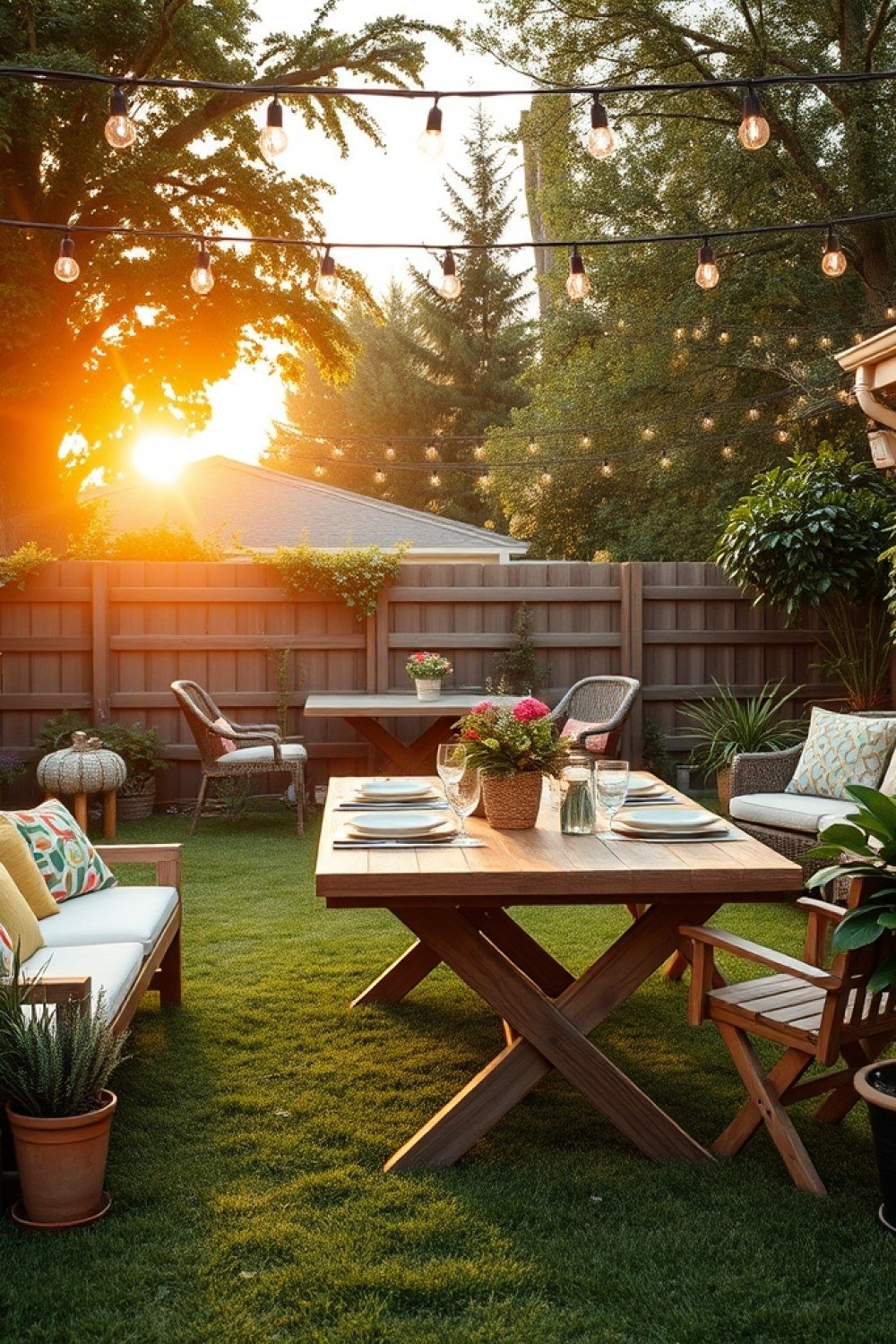
Best for: Small yards, balconies, and anyone tired of a dining set they use twice a season.
A 24–30 inch bistro table with two chairs fits into a 6×6 nook, so it works in the odd corner most yards waste. It gives you somewhere to put morning coffee, a laptop, or a glass of wine without eating the whole patio.
Powder-coated aluminum survives weather with zero fuss and stays light enough to move alone. Teak costs more but ages into a silvery gray and can be left out year-round.
Try this: Tuck it against a wall or fence and add one small potted plant beside it — the corner reads intentional instead of leftover.
6. An Outdoor Movie Setup That Stores Flat

Best for: Families and friend groups who want one memorable night a week, not permanent gear.
A 100-inch inflatable or hangable screen, a small LED projector, and a Bluetooth speaker are all it takes. Hang the screen flat against the side of the house, or stretch it between two posts if your yard is deeper than it is wide.
Everything breaks down and slides behind a door or into a closet between showings. That’s the point — no screen dominating the yard on a Tuesday.
Try this: Test your projector’s throw distance in daylight a few days ahead so you’re not fumbling with focus at 9pm. Add citronella candles and a popcorn station on a side table.
7. Planters to Define the Space

Best for: yards that feel open and shapeless, or patios that bleed into the lawn.
Large planters do the work of walls without blocking a single view. They mark where the “room” ends and give the eye somewhere to rest. Go bigger than feels right — a 16 to 20 inch diameter pot reads as architecture; a 10 inch pot reads as decoration.
Try this: Group three or five pots in odd numbers, varying heights by 6–12 inches. Fill with lemongrass, dwarf oleander, or boxwood. Stagger them slightly — a straight line looks like a fence.
8. A Cooling Water Feature
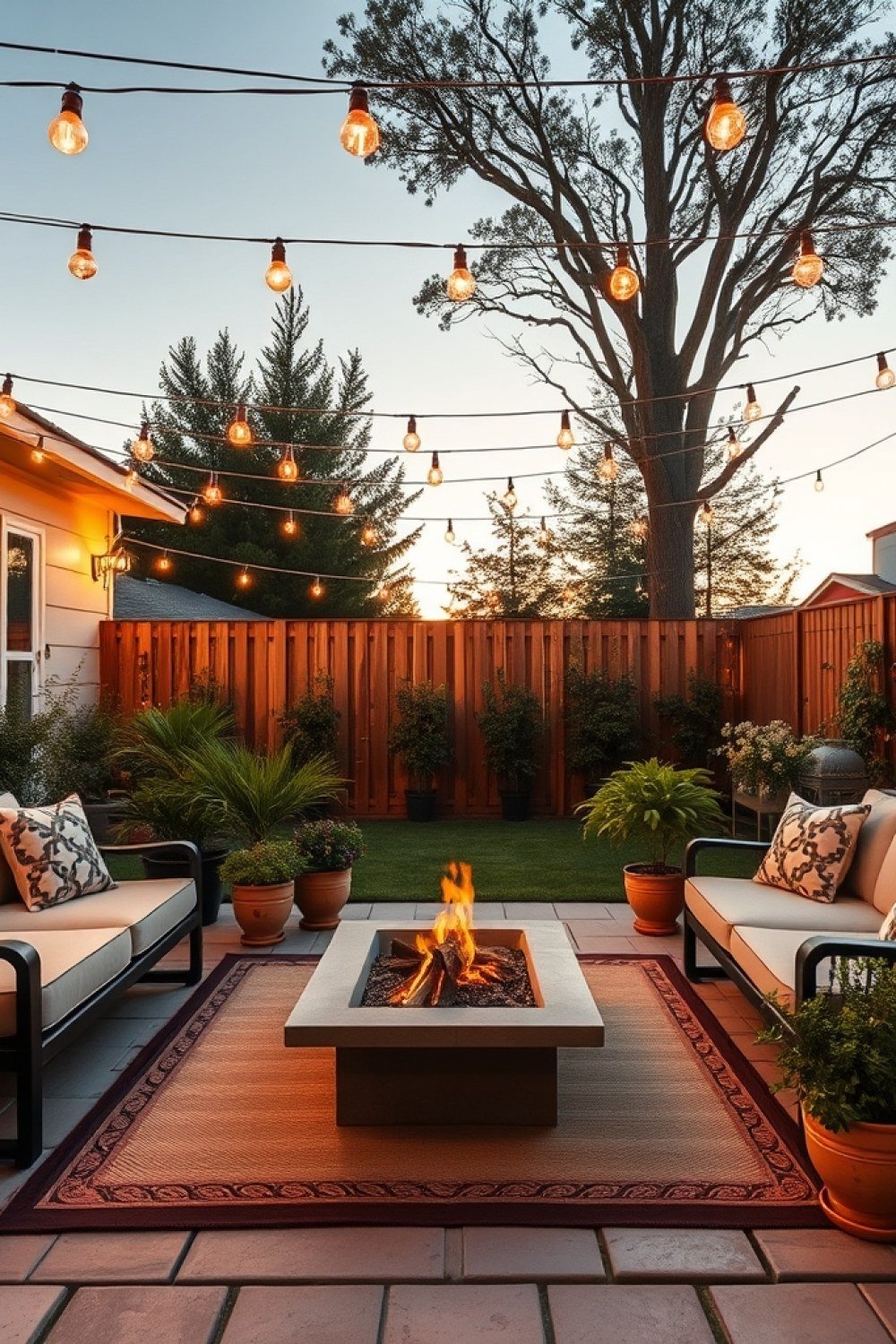
Best for: yards near a busy road, or anyone who wants the space to feel a few degrees cooler.
Moving water adds white noise that masks traffic and, psychologically, drops the temperature of the whole yard. Solar fountains and bubbling urns need zero wiring — just a spot with full sun and a level base. Place it within earshot of your main seating area.
Try this: Top off the reservoir weekly, more often in a heat wave. A pump that runs dry burns out fast, and that’s the one part you can’t fix with a garden hose.
9. Hammock or Hanging Chair for Real Naps
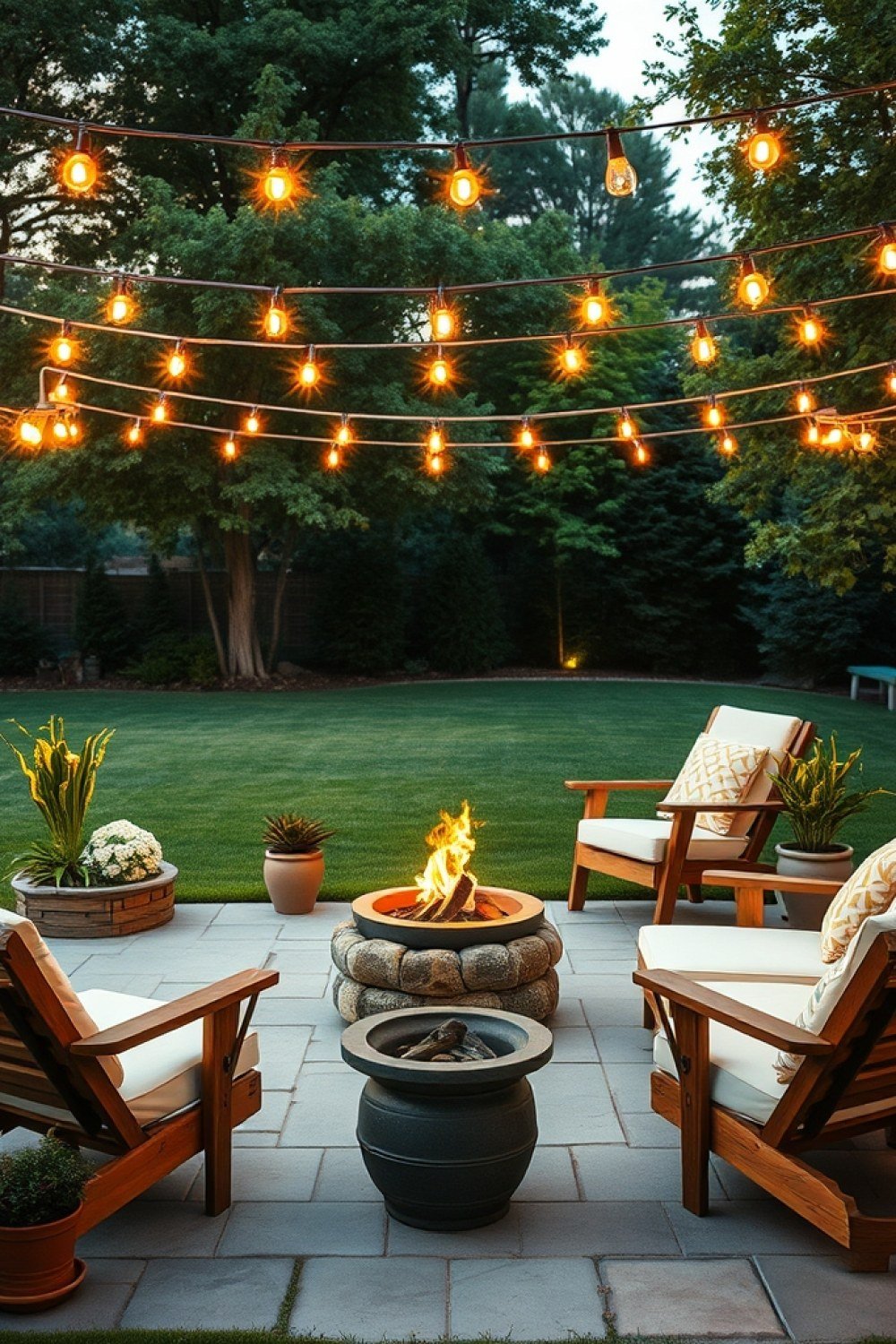
Best for: anyone who wants the yard to be somewhere you actually lie down, not just sit.
A two-point hammock with tree straps takes ten minutes to hang and stores in a bag. No suitable trees? A freestanding frame works just as well and moves with you. A hanging egg chair needs a rated beam or a dedicated stand.
Try this: Never hang a chair from a branch you’d trust for a bird feeder — they fail without warning. Add a small side table within reach for a drink and your phone.
10. An Outdoor Bar Cart on Wheels
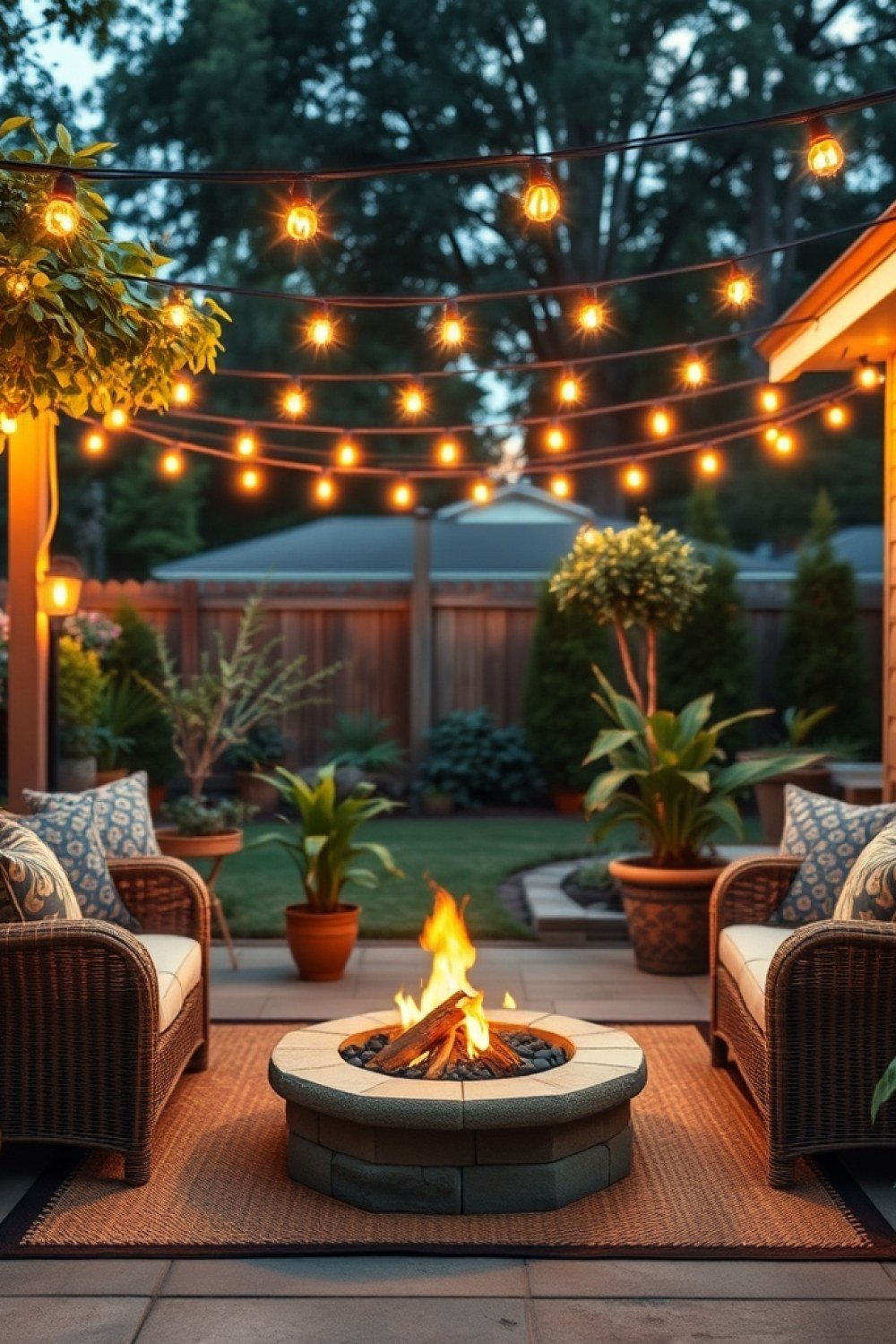
Best for: hosts who want one movable station instead of scattered tables and coolers.
A rolling cart becomes an outdoor bar, a plant stand, or a s’mores station depending on the night. Wheels matter more than finish — you’ll want to reposition it as the sun moves and shelter it when rain rolls in.
Try this: Stock it with a bucket of ice, glasses, a bottle opener, and bug spray. Wheel it into the garage between uses, or keep a fitted cover on it, so it lasts more than one summer.
11. Citronella and Bug Defense Without the Smell
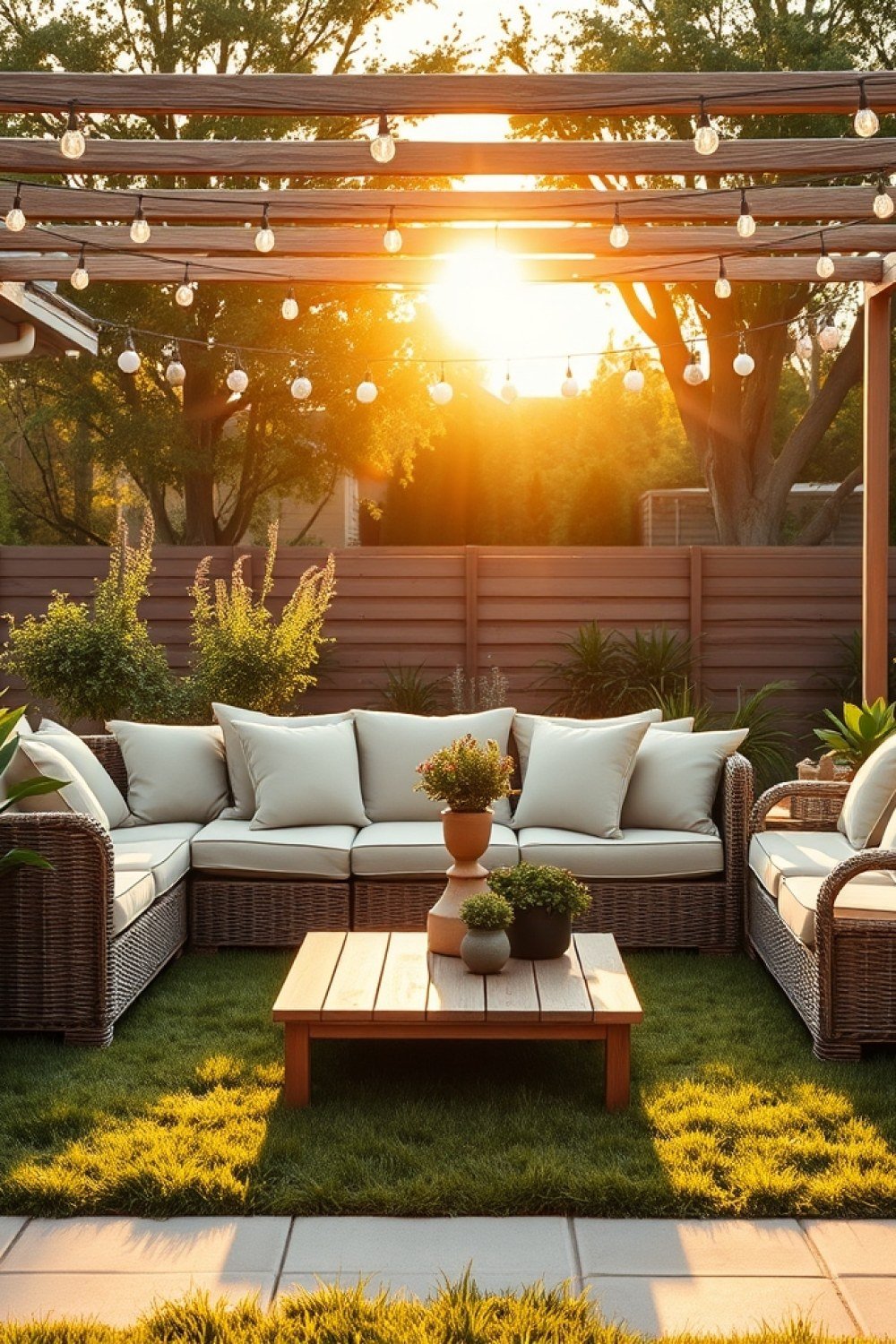
Best for: evenings when you want to stay out past dusk without smelling like a campfire.
Skip the cheap coils — they’re mostly smoke. Layer your defense instead: a fan near the seating (mosquitoes are weak flyers), a Thermacell or similar repeller, and one good citronella candle. That combination handles most nights.
Try this: Plant lemon balm, lavender, and marigolds nearby for a light natural assist. Then walk the yard weekly and empty anything holding standing water — that’s where they breed.
12. A Low Deck or Platform for Uneven Yards
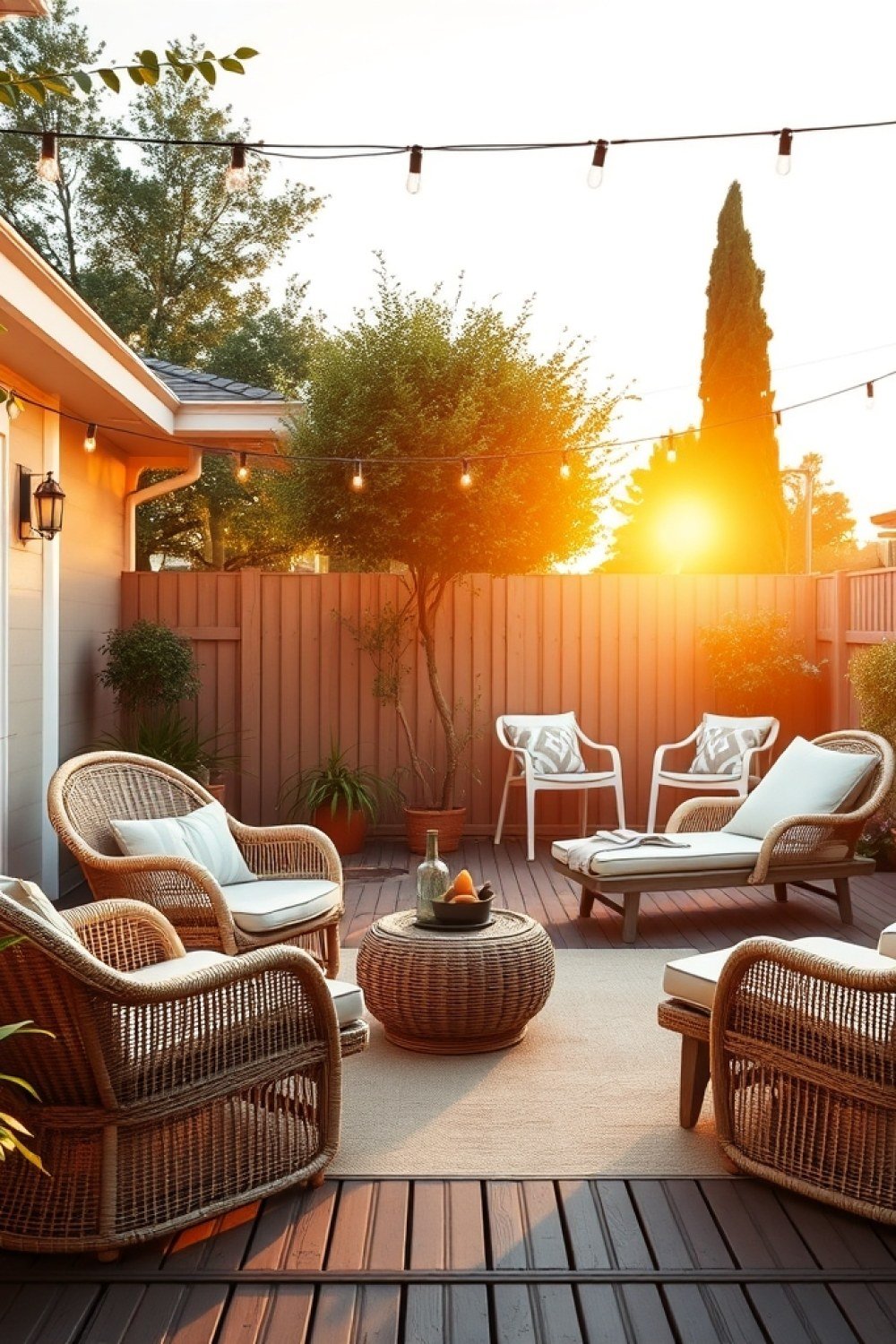
Best for: sloped, patchy, or hard-packed yards that swallow chairs and wobble tables.
A 6-inch floating deck or a large paver platform gives you a flat, clean surface fast. In most places, a deck under 200 square feet and under 30 inches high needs no permit — check locally before you dig. Composite boards skip the staining, sealing, and splinters.
Try this: Frame it with the seating you already own before you cut anything. Mark the footprint with string or a hose, live with it for a day, then build.
13. Outdoor Curtains for Instant Privacy
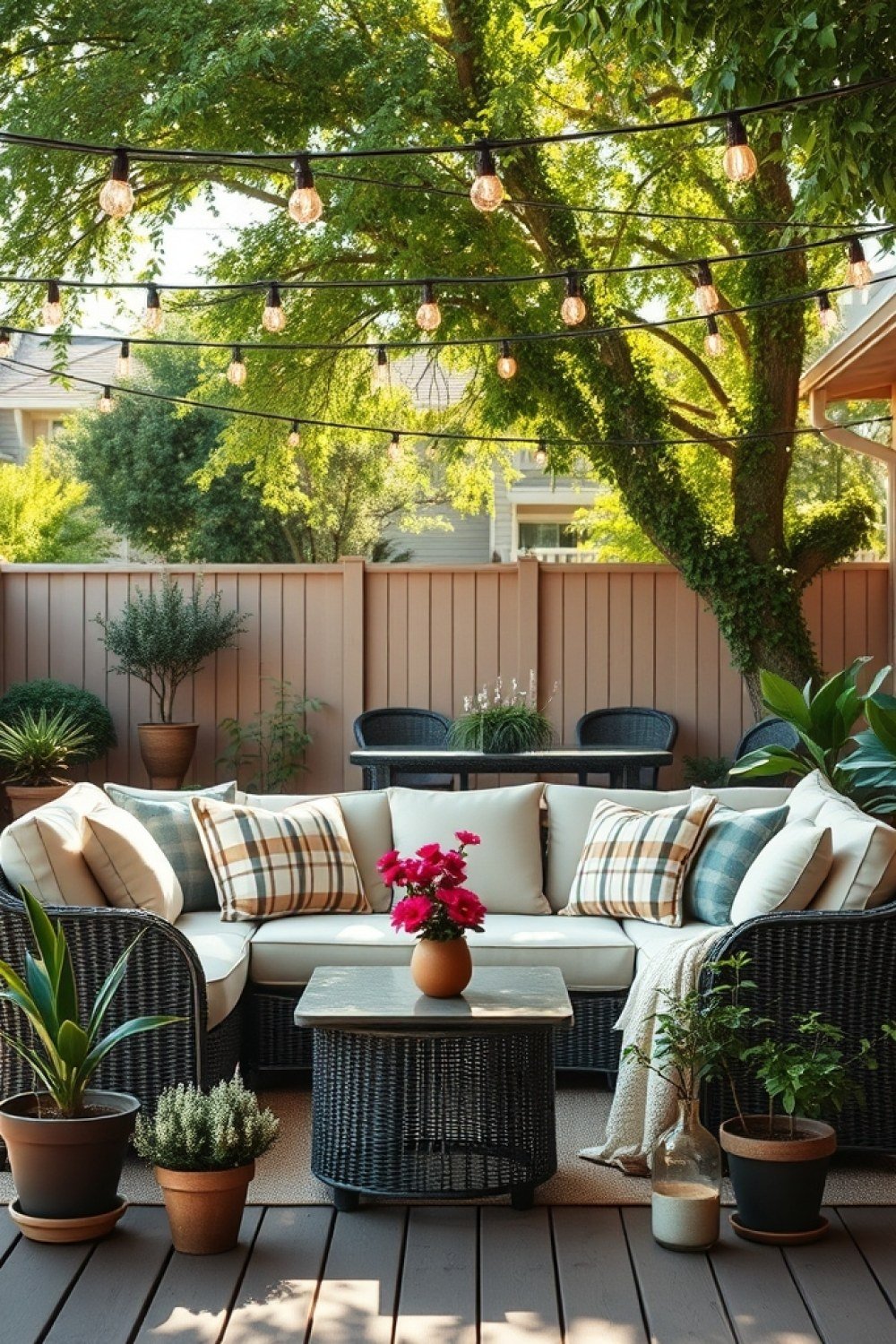
Best for: yards overlooked by neighbors or a second-story window, and west-facing patios that get blasted by late sun.
Run a galvanized cable between two posts, or use the beams of a pergola you already have, and hang weatherproof panels from it with curtain rings. They block sightlines, cut glare, and soften a hard-edged space instantly. Pick solution-dyed acrylic — the color is baked into the fiber, so it won’t fade or rot.
Try this: Tie the panels back with velcro straps on windy days so they don’t shred, and measure so the fabric just kisses the ground.
14. A DIY S’mores Station for Guests
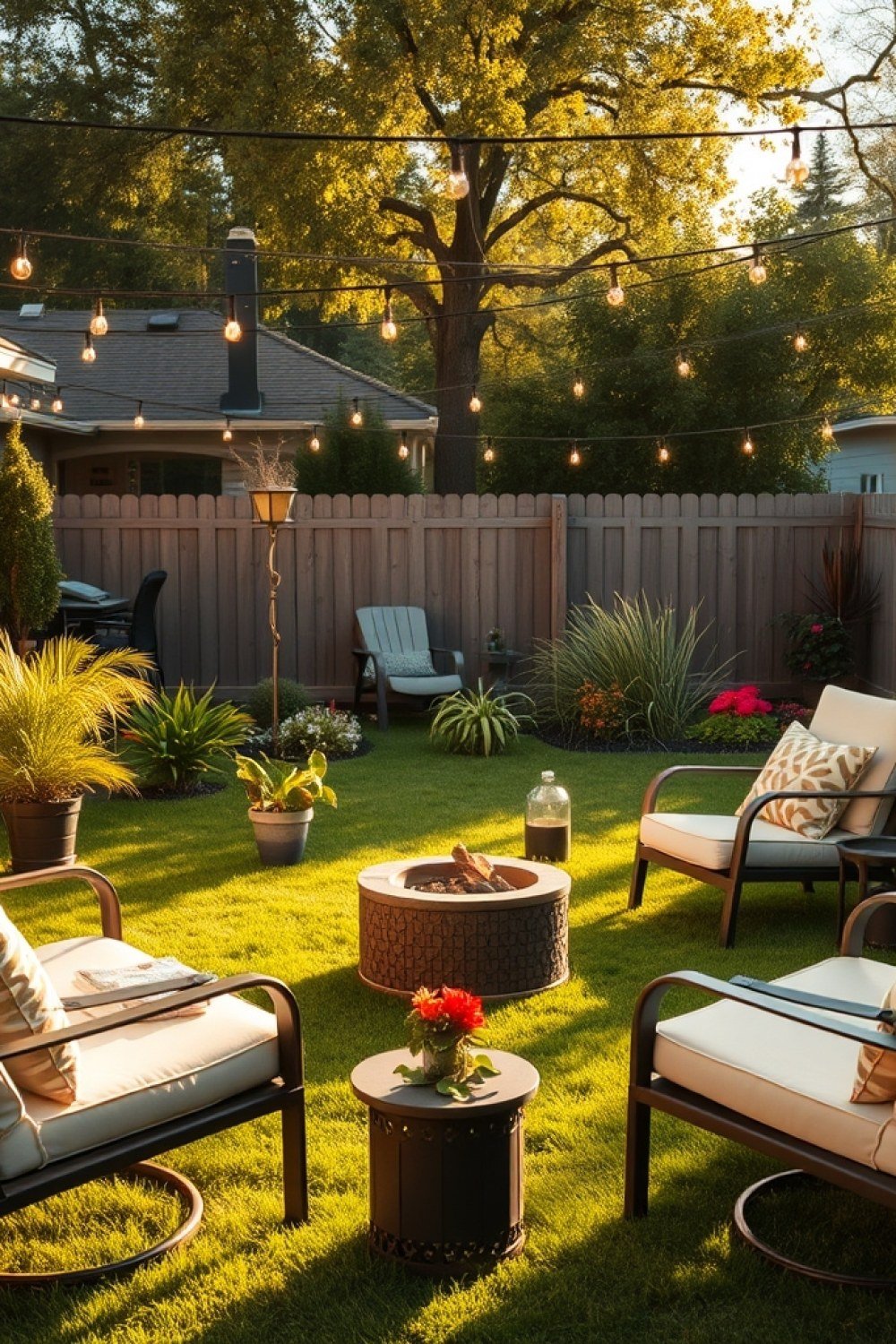
Best for: fire pit nights when you want the fun to feel planned without actually planning much.
One tray holds graham crackers, marshmallows, chocolate squares, long roasting forks, and a pack of wet wipes. Total cost is about $15, and it turns a casual fire into an event guests remember. The whole thing lives in a single tote, so setup takes under a minute.
Try this: Keep a covered bin for the roasting sticks so they stay dry, and restock the tote the same night so it’s ready next time.
15. Solar Path Lights for Easy Ambience

Best for: defining a walkway or edging a planting bed with zero wiring, zero outlets, and zero added electric bill.
Push stake lights into the ground and let the sun do the rest. Space them about 4–6 feet apart for a clean, even line — closer looks cluttered. The cheap plastic ones tend to die in a single season; spend a little more on stainless or glass and you’ll get three summers or better.
Try this: Wipe the solar panels with a damp cloth once a month so they keep charging, and move any light that sits in deep shade.
16. A Potted Herb and Cocktail Garden
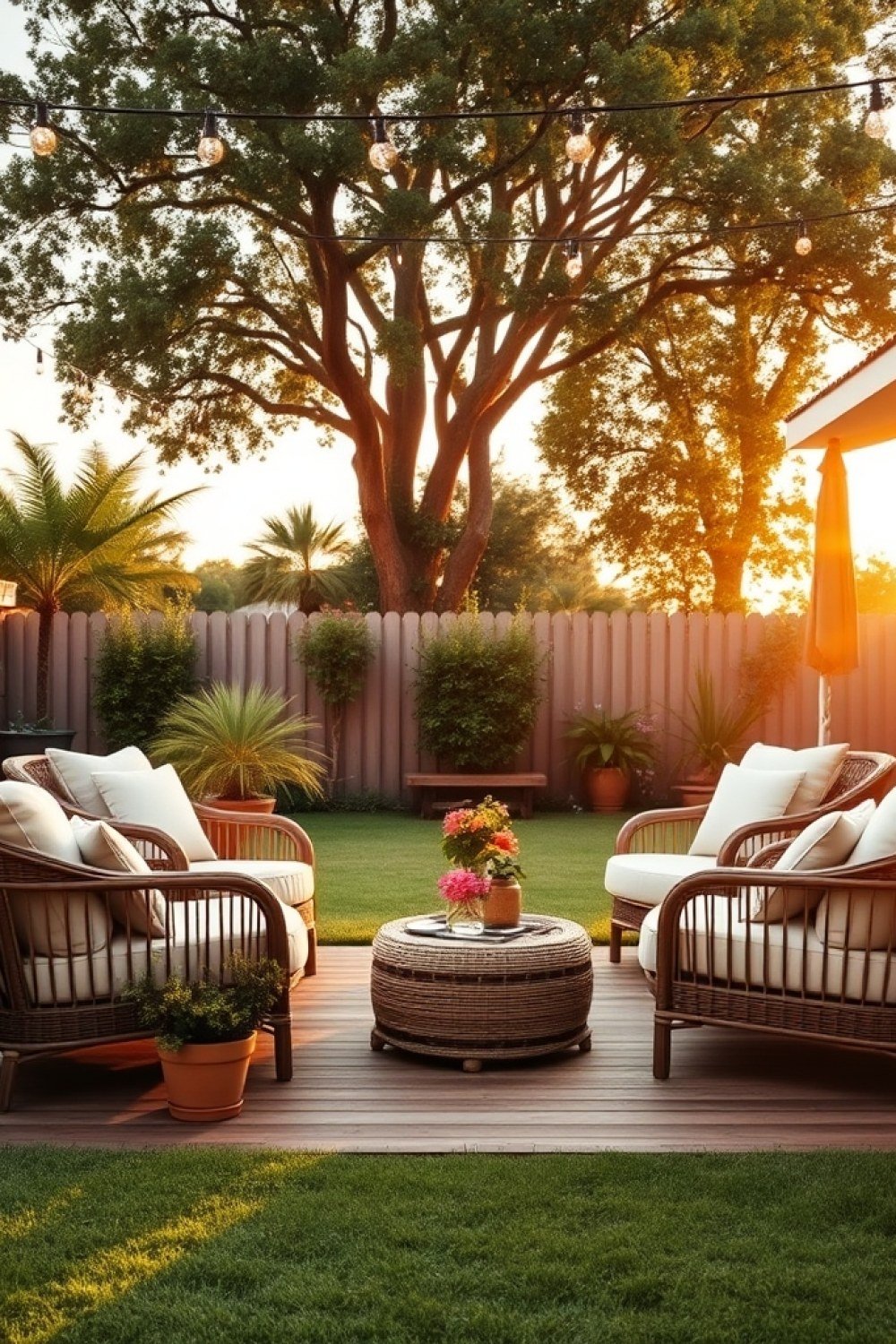
Best for: anyone who grills or mixes drinks and wants fresh herbs within arm’s reach.
Three matching pots of basil, mint, rosemary, and thyme near the grill mean you snip what you need all summer, and the yard smells incredible. Keep the pots the same style so the group reads as one intentional cluster. Give mint its own pot — it spreads and will crowd out everything else.
Try this: Water in the morning, since pots dry out fast in July heat, and pinch off basil flowers to keep the leaves coming.
17. A Cozy Reading Corner Under a Tree
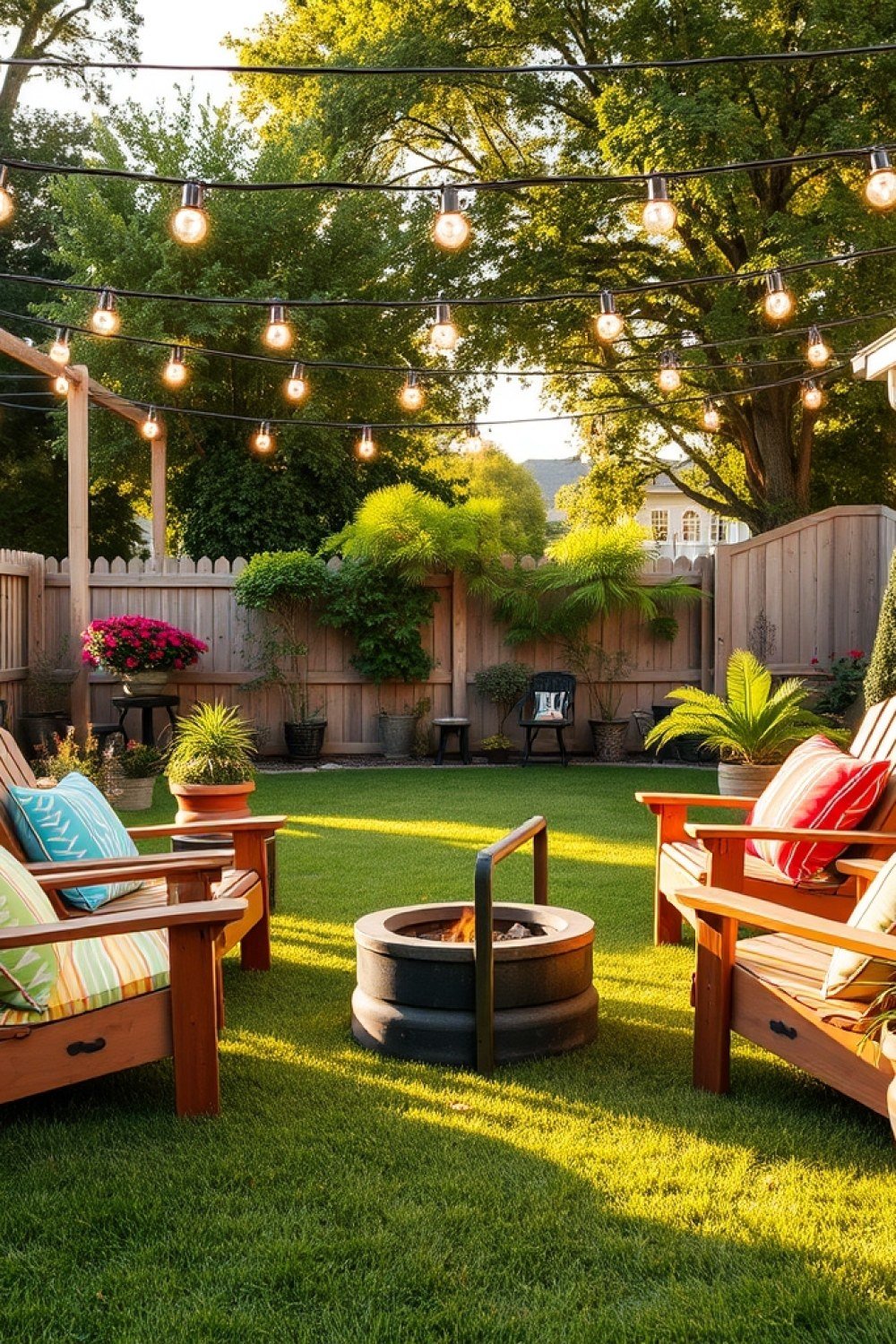
Best for: hot afternoons when you want to be outside but not in the sun.
The cheapest room in your yard is the shade you already have. A weatherproof chair, a small side table, and a lantern-style light under a mature tree make it feel intentional. Add an outdoor pillow and a lightweight throw for after sunset. Bonus: shade sits around 10 degrees cooler.
Try this: Choose a spot with dappled, not deep, shade so the light still feels inviting, and store the pillow and throw in a bin when rain is coming.
18. An Outdoor Storage Bench That Doubles as Seating
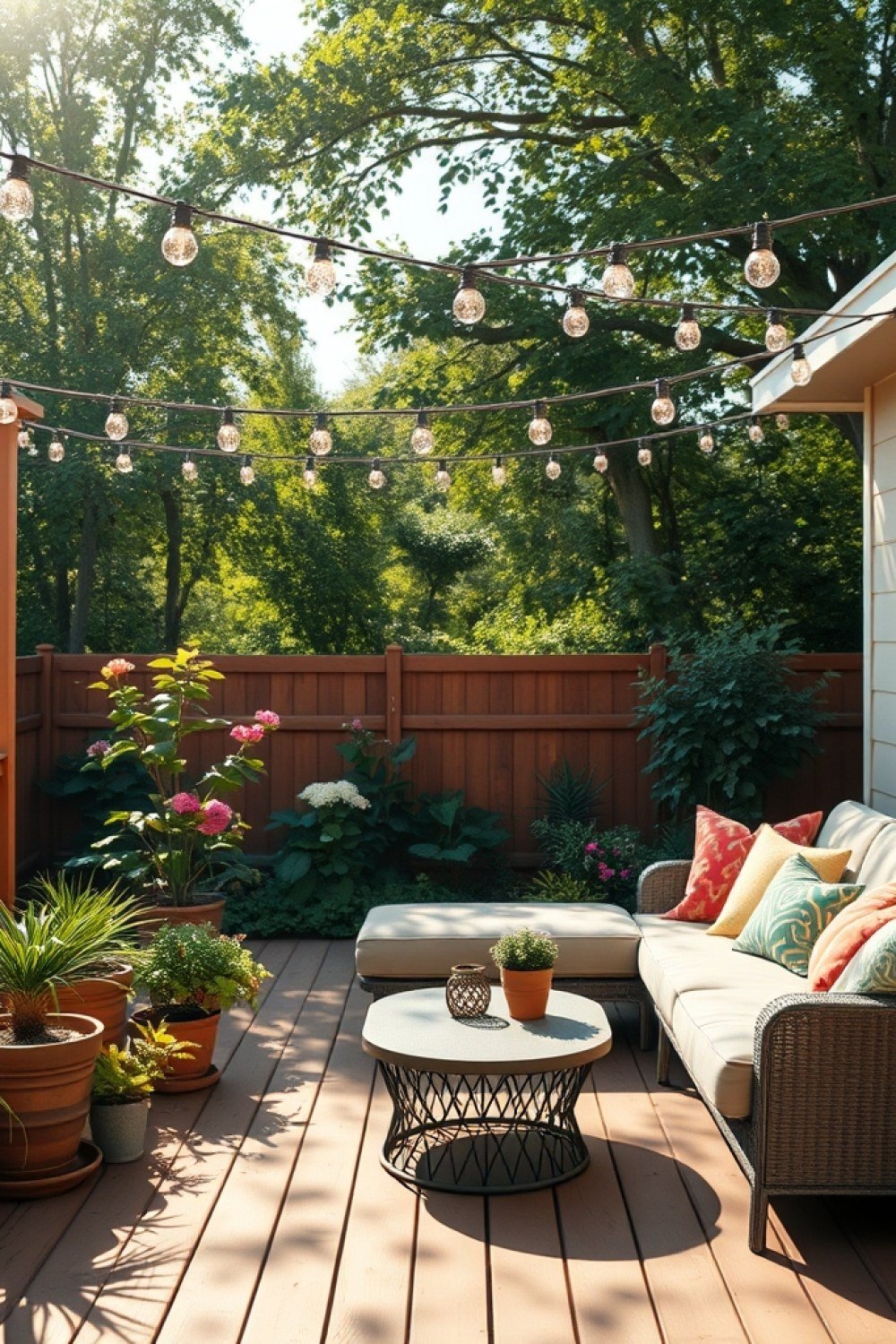
Best for: yards where cushions, bug spray, and grill tools have nowhere to live.
Without a home for the small stuff, a “cozy” yard starts to look like a yard sale. A resin or teak storage bench near the seating area keeps everything a step away — and gives you one more place to sit. Resin handles rain better; teak ages beautifully if you treat it.
Try this: Line the inside with a moisture absorber and a folded towel, and check it once a month so nothing gets musty.
19. A Grill-and-Prep Station on One Wall
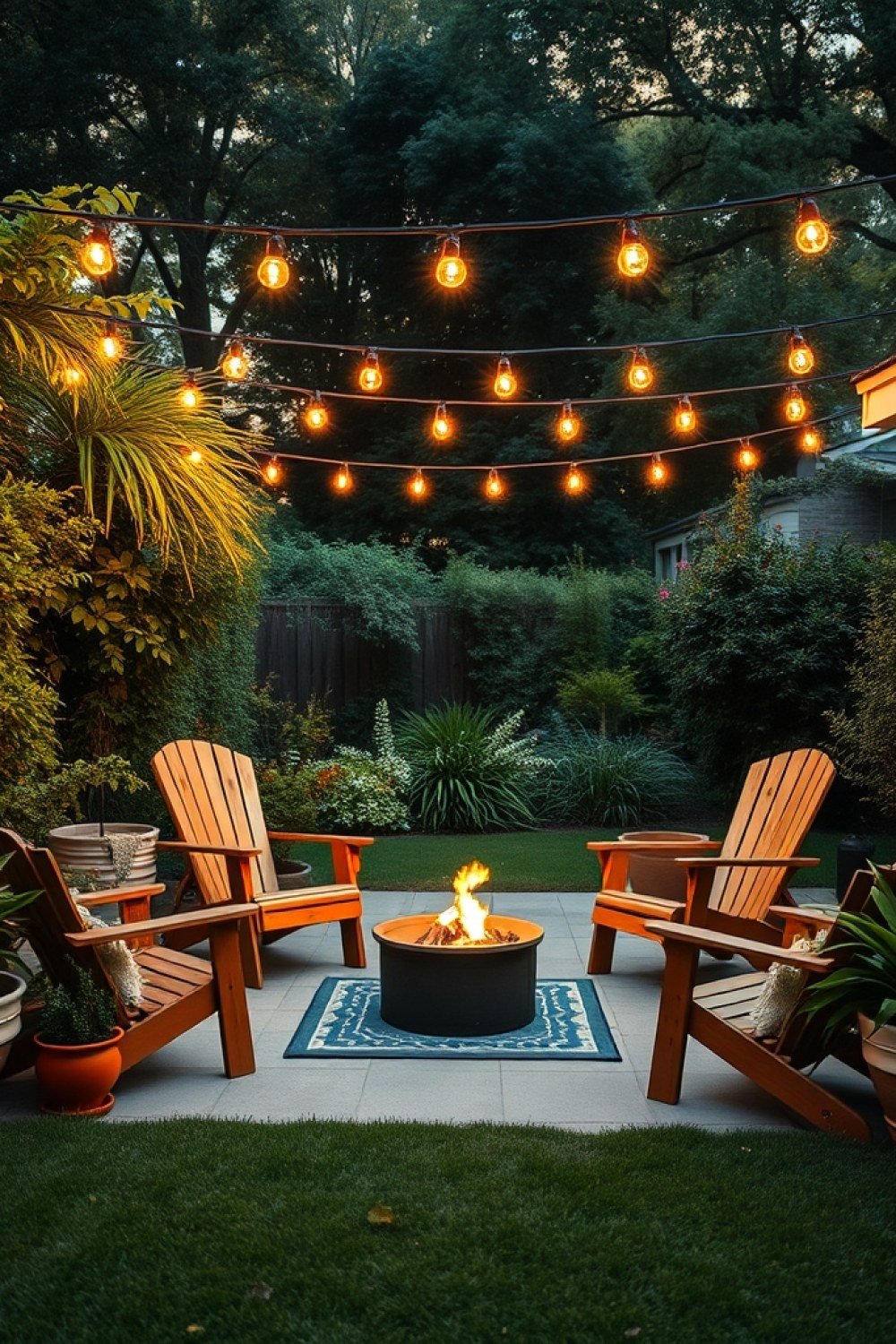
Best for: anyone who grills often and is tired of jogging to the kitchen for tongs, salt, and a plate.
Group the grill, a small prep table, a lidded trash bin, and a hook rail along one side wall or fence line. Keeping everything in one zone pushes smoke and grease away from seating, and a stainless-top table wipes clean in seconds.
Try this: Hang tongs, a spatula, and a grill brush on S-hooks at arm’s reach, and add a motion-sensor or string light overhead — cooking after dark without one is a real hazard.
20. A Blanket Basket for Cool Evenings
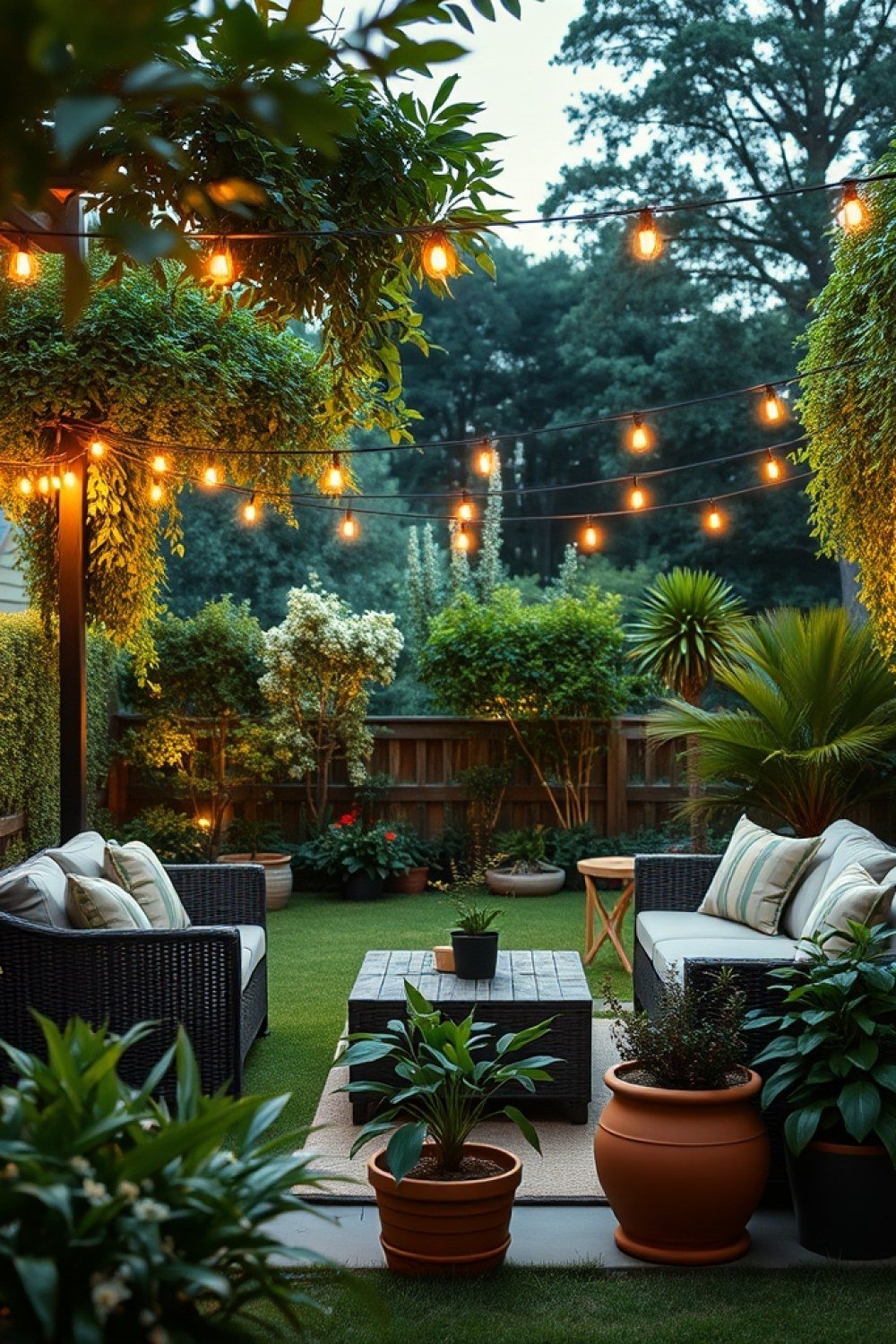
Best for: patios that empty out the moment the sun drops and the air turns cool.
A weatherproof wicker basket by the door, filled with two or three thrifted fleece or cotton throws, quietly tells guests they can stay longer. A light cotton throw is plenty for summer; save the heavy wool for fall.
Try this: Wash the throws monthly on a gentle cycle so they never turn musty, and keep a small lidded bin of dryer sheets nearby if moths are a problem.
Quick Questions
What’s the cheapest way to make my backyard feel cozy for summer?
Start with warm-white string lights and an outdoor rug. Together they usually come in under $100, and they do more work than anything else you can buy — the lights soften the space after dark, and the rug tells your eye where the “room” begins and ends. Add one comfortable seat and one place to set a drink, and you’ve covered most of what makes a yard feel lived-in rather than leftover. Buy the rug slightly larger than you think you need; a 5×8 looks mean under a two-seat setup, while an 8×10 gives chairs and a small table room to breathe.
How do I keep mosquitoes away without spraying the whole yard?
Aim a box fan at your seating area. Mosquitoes are weak fliers, and moving air keeps most of them off you without a single chemical. Empty standing water once a week — saucers, buckets, clogged gutters, the lid of the sandbox — because that’s where they breed, and a capful of water is enough. Then add one targeted measure close to where you sit: a citronella candle, a thermacell-style repeller, or a pot of lemon balm, lavender, or marigolds on the perimeter. One good barrier beats a fogged yard.
Do I need a permit for a small deck or platform?
In most US jurisdictions, a deck under 30 inches high and under 200 square feet doesn’t require a permit — but rules vary widely by city and county, and some HOAs add their own layer on top. The height and square footage thresholds are the two numbers that matter most, so measure before you call. A five-minute call to your local building department settles it, and it’s far cheaper than tearing out a platform you built in June.